

YESTERYEAR: Ritter, Caldara face off over School Finance Act
Twenty Years Ago This Week in The Colorado Statesman … A new welfare law was finally agreed upon and the Legislature narrowly averted a special session.
“That’s the art of compromise,” Gov. Roy Romer said. He added that he would sign the latest version of the state’s welfare reform law that had successfully met the requirements of new federal laws while passing muster on both sides of the Legislature’s aisle.
Earlier in the session, Romer vetoed HB97-1166 because it contained an opt-out program for four Colorado counties. He then threatened to veto SB97-120 as well because it let counties issue vouchers instead of giving minimum cash allowances set by the state.
House Speaker Chuck Berry, R-Colorado Springs, dropped his demands for more county authority and the final welfare reform compromise met with Romer’s approval.
Sen. Mike Coffman, R-Aurora, the main sponsor of SB 120 and co-sponsor of HB 1166, said that he represented a middle ground between Romer’s insistence on statewide minimums and Berry’s wish to give complete authority to the counties. Coffman said the result both “pleased and relieved” him.
“We had the House with the focus on the taxpayer, and the Senate with a focus on the poor,” Coffman said. “Our challenge was to craft a bill that was fair to the taxpayers and compassionate to the poor.”
The final version allowed counties to set up benefit programs for welfare recipients, but only after meeting statewide minimums. The bill also included job training and eduction, designed to get people off welfare and into work within two years.
It called for individual counties to negotiate “Individual Responsibility” contracts with recipients and punish violators. Romer had set criteria that were required to be in any welfare reform bill before he signed it into law.
… Ten Years Ago … Gov. Bill Ritter signed his controversial School Finance Act into law and acknowledged that supporting his proposal to amend Senate Bill 07-199 — a move that froze mill levy rates — was politically risky for Democrats in swing districts.
“I’ll die in a foxhole with legislators who look me in the eye and say, I know this is difficult, but it’s the right thing to do and I’ll do it with you,” Ritter promised.
Republicans, however, had criticized the measure as a “massive tax increase.” House Minority Leader Mike May, R-Parker, wrote in a May 7 newsletter, “It would be a lot to ask the taxpayers to give up an additional $1.7 billion over the next ten years, but the governor didn’t even ask … Now, instead of mill levies (tax rates) adjusting down when your property value increases to keep your property taxes down, the rate stays the same. Translation: tax increase.”
The mill levy freeze’s purpose was to generate extra funding for schools over the next decade. “We were elected by the voters of this state to actually fix problems. One of those problems was the state education fund and what was happening with respect to the state chair of K-12 funding over time,” Ritter said.
May, along with other Republicans, accused Ritter of circumventing TABOR by passing a funding boost for the state through the Legislature instead of putting it on the ballot, as a normal tax increase would have to be approved.
Independence Institute President Jon Caldara, who led the fight against Referendum C in 2005, announced he would file suit to try to halt the bill before it was implemented. “They’ve thumbed their noses at the constitution,” Caldara said.
Caldara went so far as to equate the plan with “fiscal date rape” in a May 9 broadcast on 850 KOA, a remark that drew a sharp rebuke from Colorado state Democratic Party Chair Pat Waak.
Waak said the Democrats welcomed “spirited debate” on any topic, but that Caldara’s comments were “anything but respectful” because they equated taxes with an “atrocity committed against women.”
The Independence Institute seemed to have Colorado Attorney General John Suthers on its side though. Caldara cited Suthers’ April opinion that said Ritter’s mill levy freeze was indeed a tax increase and so must be approved by a statewide vote.


US service member missing after Iran shot down fighter jet has been rescued, US officials say
Associated Press
associated-press@coloradopolitics.com
Updated 10 hours ago
JERUSALEM — President Donald Trump announced early Sunday that the U.S. had rescued an aviator nearly two days after he was shot down over Iran. The extraction came after a frantic search in what appears to be a remote, mountainous region of...

Low and slow meets forever: US postage stamps honor lowrider car culture | OUT WEST ROUNDUP
The Associated Press
the-associated-press@coloradopolitics.com
Updated 4 days ago
NEW MEXICO Stamps honor lowrider culture ALBUQUERQUE — From Mexican American and Chicano barrios in the American Southwest to the halls of the Smithsonian on the National Mall and even the streets of Japan, lowrider culture has become part of...

Colorado Politics Calendar Apr. 6-12
Rachael Wright, Special to Colorado Politics
rachael.wright@coloradopolitics.com
Updated 4 days ago
CoPo’s weekly political calendar will help you find political and public-policy events throughout Colorado. It includes candidate and issue campaign events, public policy meetings, court hearings, state and local party conventions, assemblies, debates, rallies, parades, speaking engagements, traveling dignitary appearances,...
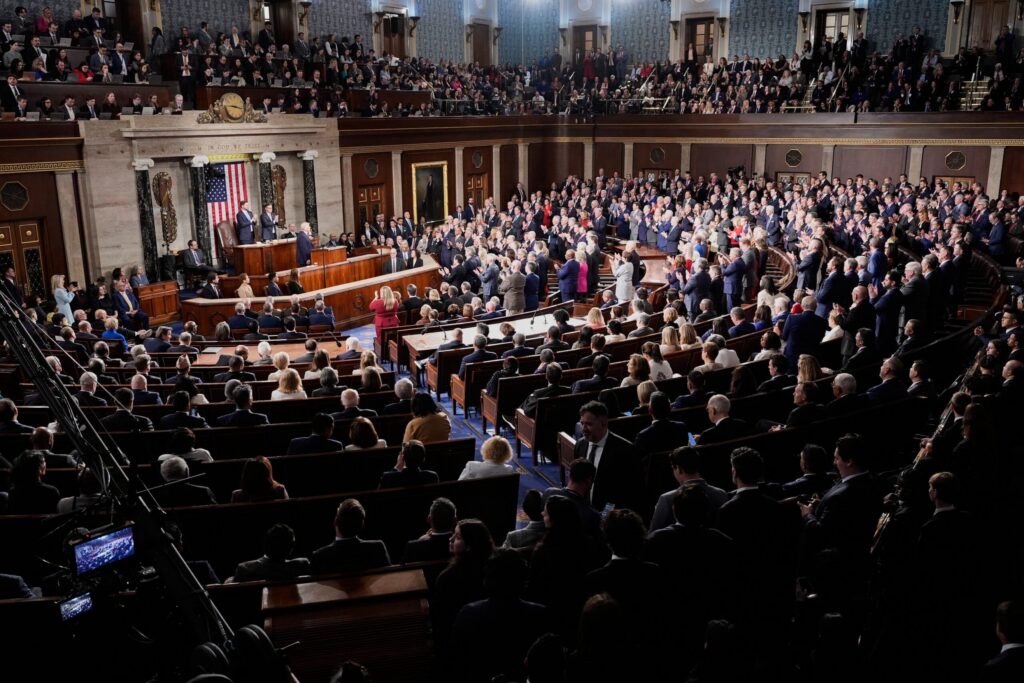
Democrats rebounding without learning necessary lessons | SONDERMANN
Eric Sondermann
eric-sondermann@coloradopolitics.com
Updated 1 day ago
“When we fight, we win!” That, reportedly, was the chant heard over and over again at the Colorado Democratic Assembly a week ago. It suggests that pugilism has been the piece missing from the Democratic toolkit. Perhaps it was just...
An April Fool’s Day to remember | Capitol M | Week of April 4, 2026
Marianne Goodland
marianne.goodland@coloradopolitics.com
Updated 3 days ago
The lighter side of the Capitol, and if light were weight, the Capitol would have lifted off better than the Artemis II rocket on April Fool’s Day. There was a plethora of Fools at the Capitol for April Fool’s Day...
Federal judge sides with Mesa County school district in ex-student’s First Amendment claims
Michael Karlik
michael.karlik@coloradopolitics.com
Updated 2 days ago
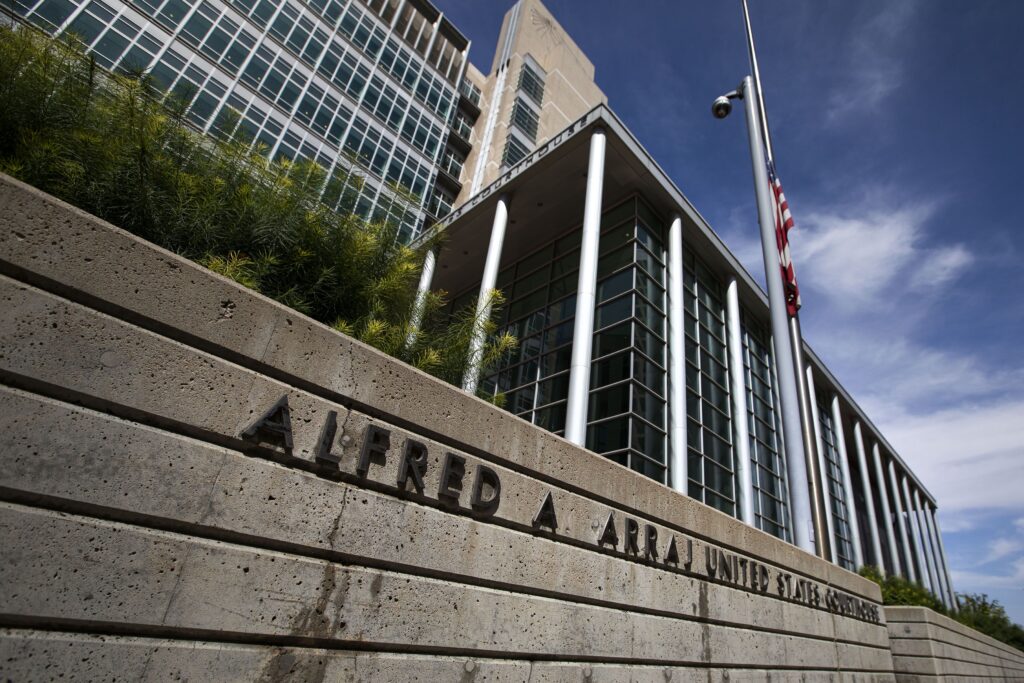
A federal judge concluded last week that Mesa County Valley School District 51 and three of its administrators did not violate the First Amendment rights of a former student when they imposed minor discipline in response to disruptive behavior. In...
Colorado Supreme Court intervenes in 4 ongoing cases
Michael Karlik
michael.karlik@coloradopolitics.com
Updated 2 days ago
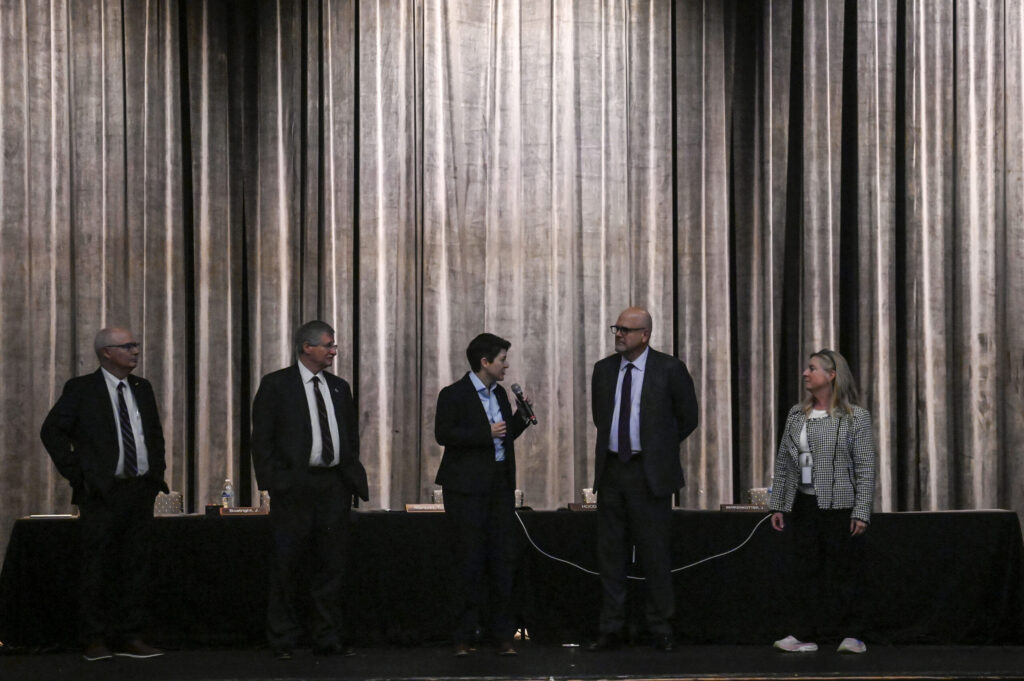
The Colorado Supreme Court recently moved to intervene in four ongoing cases, including two criminal prosecutions, a civil lawsuit, and a child welfare proceeding. At least four of the court’s seven members must agree to hear a case outside of...
Colorado ski resorts announce early closures amid historic snowpack lows, high temperatures
Kyla Pearce
kyla.pearce@gazette.com
Updated 1 day ago
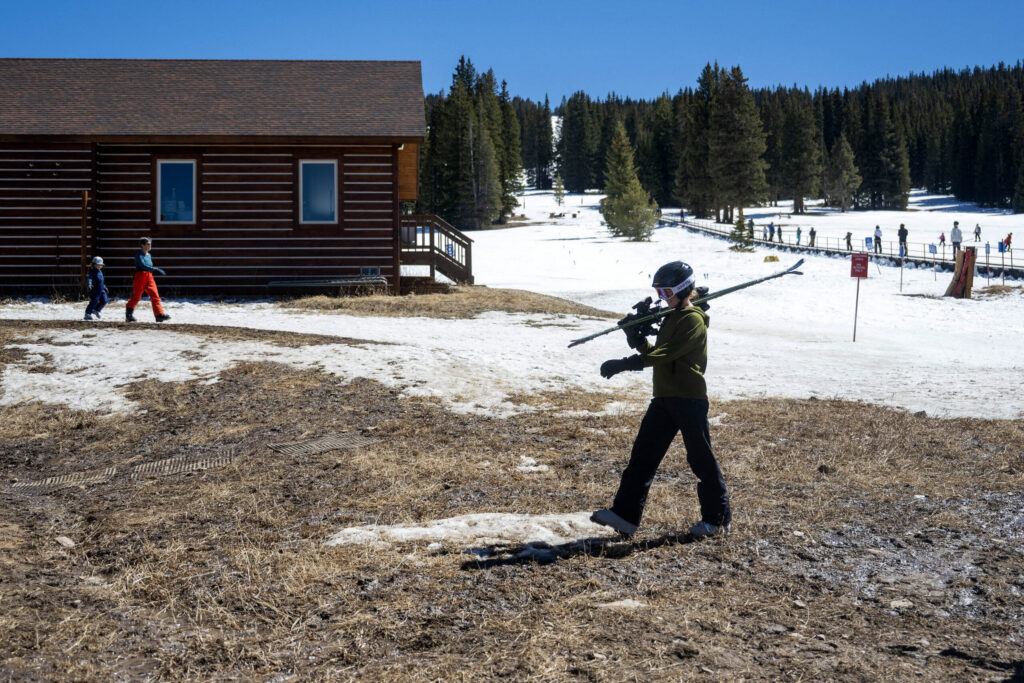
Vail Resorts is the latest area to announce season closure Wednesday As Colorado’s historically low snowpack year comes to a close and spring conditions take over the mountains, the state’s major ski resorts are announcing closing dates — some of...

Kentucky Gov. Andy Beshear set to headline Colorado Democrats’ annual fundraising dinner
Ernest Luning
ernest.luning@coloradopolitics.com
Updated 2 days ago
Kentucky Gov. Andy Beshear, one of the Democrats’ top 2028 presidential prospects, is scheduled to deliver the keynote address at the Colorado Democratic Party’s annual fundraising dinner in June in Denver, the party said Friday. Serving his second term as...
Gov. Polis names new leaders for Colorado health agencies in wake of Medicaid turmoil
Marianne Goodland
marianne.goodland@coloradopolitics.com
Updated 2 days ago
Gov. Jared Polis, on Thursday, announced he was appointing Gretchen Hammer to serve as acting executive director of the Colorado Department of Health Care Policy and Financing, and deputy executive director Stephanie Beasley to become the next commissioner of the...