

Is it Cory Gardner’s time to shine on North Korea?
Following his participation in a North Korea-focused U.S. Senate field trip to the White House April 26, Sen. Cory Gardner took the international limelight again, a place he has grown seemingly more comfortable. Gardner took the opportunity of the White House visit to call for broader sanctions against North Korea and implored the U.S. military to continue carrying out its “show of strength exercises,” countering the increasingly provocative actions of Kim Jong Un’s regime.
Gardner, who has continued to grow his influence in U.S. foreign policy on North Korea, underscored a need to shift away from the failed policy of “strategic patience” so that Pyongyang understands all options are on the table for the United States.
As tensions have intensified between the United States and North Korea, so has Gardner’s role on the international stage. Wednesday, it was national news that Gardner and his Senate colleagues met with President Donald Trump, Defense Secretary Jim Mattis, Secretary of State Rex Tillerson and National Intelligence Director Dan Goats Wednesday for a briefing on the White House’s strategy, imploring North Korea to disassemble its nuclear weapons program.
“The situation on the Korean Peninsula is at the most unstable point since the armistice,” said Gardner in a statement to The Colorado Statesman. “The briefing at the White House allowed the administration to continue to discuss the roadmap ahead for our much needed shift from the failed policy of strategic patience to our new approach of maximum pressure in ensuring the peaceful denuclearization of North Korea.”
“It was a positive step for the administration and Senate in working together to reach the United States goal of a peaceful denuclearization of the Korean Peninsula,” Gardner, a Colorado Republican, said.
Following the meeting, Trump announced new, tighter sanctions on North Korea, though details have not yet been revealed. Current sanctions on North Korea include a ban on trade.
In a joint statement, Mattis, Tillerson and Goats said the White House’s approach “aims to pressure North Korea into dismantling its nuclear, ballistic missile, and proliferation programs by tightening economic sanctions and pursuing diplomatic measures with our Allies and regional partners.”
“The United States seeks stability and the peaceful denuclearization of the Korean peninsula. We remain open to negotiations towards that goal. However, we remain prepared to defend ourselves and our Allies,” they said.
Gardner, a member of the Senate Foreign Relations Committee and chair of the East Asia, Pacific and International Cybersecurity subcommittee, was highlighted as a vocal authority on North Korea when he was labeled the “go-to person” by Florida Republican Sen. Marco Rubio during an interview with Roll Call.
And early last year, Gardner’s North Korea Sanctions and Policy Enhancement Act became law, which he co-sponsored with Sen. Robert Menendez, a New Jersey Democrat and member of the Foreign Relations Committee.
Gardner pointed to his legislation as a tool to “economically cripple the North Korean regime and to help ensure China works more faithfully with the United States, Japan, and South Korea to stop the madman in Pyongyang.” He called for the White House to fully enforce the sanctions bill.
China has long been viewed as a key in a peaceful resolution in North Korea. In an interview on Fox News Wednesday, Gardner called for China to lean on North Korea to dismantle its weapons program.
“China holds an inordinate size opportunity here to get involved and do more as it relates to this denuclearization effort.” Gardner said. “They control 90 percent of the North Korean economy. They have to do more.”
Gardner said the Trump administration could use his North Korea Sanctions Act to pressure China by targeting companies doing business with North Korea.
“We would sanction those businesses that are propping up the Kim Jong Un regime,” Gardner said.
The U.S. has recently deployed a Terminal High-Altitude Area Defense system or THADD to South Korea, to defend against missile attacks from the north, and warships to the Korean peninsula.
“The United States must also continue show of strength exercises in coordination with our allies, so that North Korea understands that all options are on the table to deter aggression,” Gardner said.
A North Korean official, in an interview with CNN, said the country’s nuclear weapons tests will never stop.
“As long as America continues its hostile acts of aggression, we will never stop nuclear and missile tests,” he told CNN.

It’s time to let unaffiliated voters caucus | Vince Bzdek
Vince Bzdek
vince.bzdek@gazette.com
Updated 23 hours ago
There’s no getting around it: Colorado’s 3,000 county caucuses, which just wrapped up recently, left half the electorate out in the cold. Since unaffiliated voters now make up 51% of all Colorado voters, a majority of Colorado electors are barred...
Governor warns energy development both a boon and a risk to Colorado | A LOOK BACK
Rachael Wright, Special to Colorado Politics
rachael.wright@coloradopolitics.com
Updated 4 days ago
Forty-Five Years Ago This Week: “The real opportunity and the dangers before us are both real,” said Gov. Dick Lamm in his January state of the state address before the Colorado General Assembly. Lamm argued that energy development would continue...
A Mile High, again: Capitol M | Week of March 21, 2026
Marianne Goodland
marianne.goodland@coloradopolitics.com
Updated 4 days ago
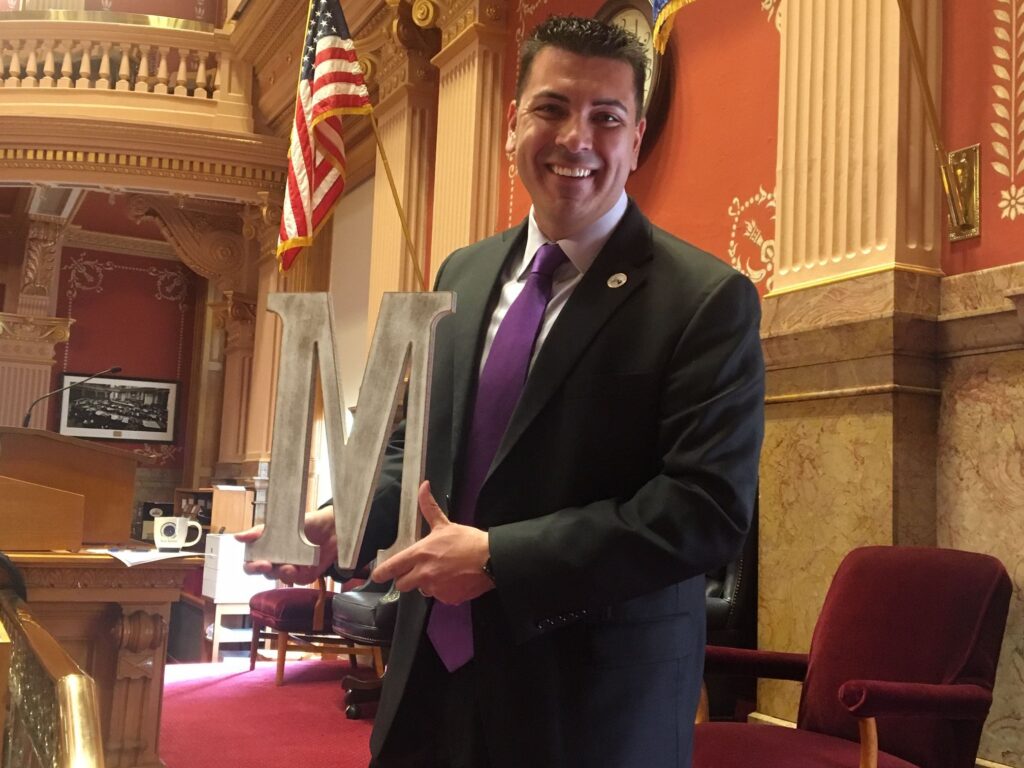
The lighter side of the Capitol, usually…. Local Journalism Day, except they forgot their very own local journalists. The state Senate on Thursday, March 19, passed a resolution recognizing Local Journalism Day. Everyone voted for it, which is good, because...

Colorado Politics Calendar Mar. 23-29
Rachael Wright, Special to Colorado Politics
rachael.wright@coloradopolitics.com
Updated 3 days ago
CoPo’s weekly political calendar will help you find political and public-policy events throughout Colorado. It includes candidate and issue campaign events, public policy meetings, court hearings, state and local party conventions, assemblies, debates, rallies, parades, speaking engagements, traveling dignitary appearances,...

The insular bubble of caucuses and assemblies | SONDERMANN
Eric Sondermann
eric-sondermann@coloradopolitics.com
Updated 3 days ago
Nearly 30 years ago, then-Federal Reserve Chairman Alan Greenspan coined the term “irrational exuberance” to describe the overheated stock market. That descriptive phrase could also apply to much of the political realm. The hype in politics often grossly exceeds the...

Lauren Boebert’s hard ‘no’ on Pentagon Iran funding request puts Mike Johnson in tough spot
Emily Hallas, Washington Examiner
emily.hallas.washington.examiner@gazetteedit.wpenginepowered.com
Updated 2 days ago
Colorado U.S. Rep. Lauren Boebert announced on Thursday that she will not support further funding for the United States’s war in Iran, marking an uphill battle for the Trump administration’s effort to secure additional financing from Congress. “I’ve already told...
Rubio gains ground in 2028 jockeying as Iran war elevates his profile
Samantha-Jo Roth, Washington Examiner
samantha-jo.roth.washington.examiner@gazetteedit.wpenginepowered.com
Updated 2 days ago
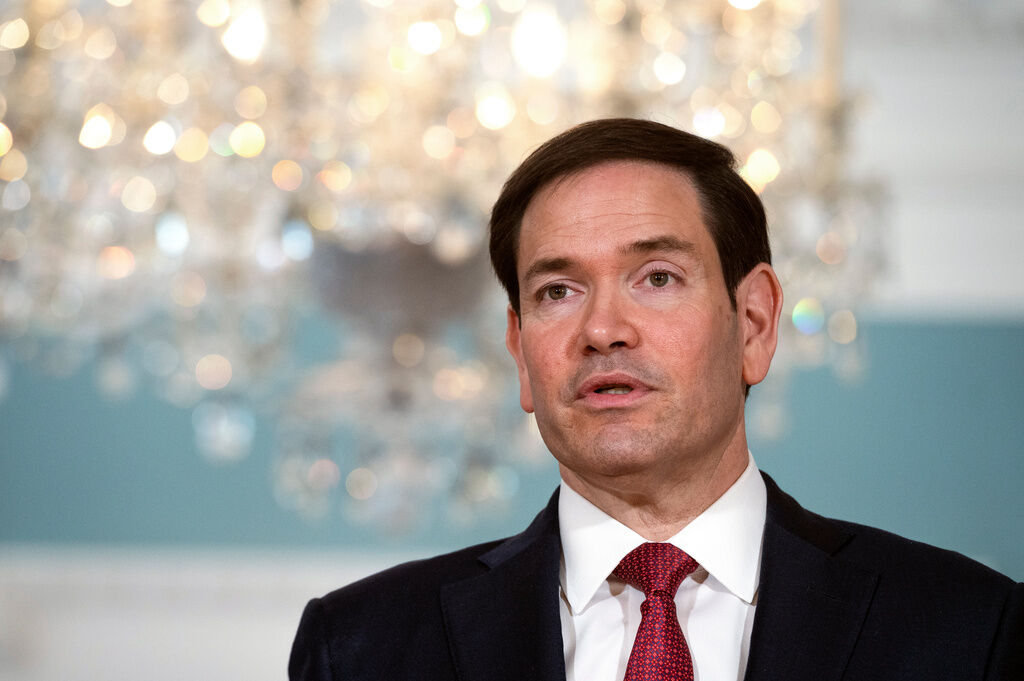
Secretary of State Marco Rubio’s high-profile role in the Trump administration’s response to the Iran war is boosting his standing in the early jockeying for the 2028 Republican presidential nomination — and positioning him as a possible rival to Vice...

Federal judge dismisses claims against medical contractor for Eagle County jail suicide
Michael Karlik
michael.karlik@coloradopolitics.com
Updated 2 days ago
A federal judge dismissed the claims against a medical contractor for the Eagle County jail and its employees earlier this month, concluding there were insufficient allegations that they violated the constitutional rights of a man who died by suicide in...

Colorado Senate committee advances bill increasing overtime threshold for farmworkers
Marianne Goodland
marianne.goodland@coloradopolitics.com
Updated 16 hours ago
The struggle to balance farmworker protections with the survival of Colorado’s family farms took center stage Thursday as senators debated two competing overtime bills. The Senate Business, Labor and Technology Committee held a rare double-bill hearing that led to a...

Colorado bill to fund mental health by raising alcohol taxes defeated in House committee
Marissa Ventrelli
marissa.ventrelli@coloradopolitics.com
Updated 19 hours ago
Colorado legislators on Wednesday narrowly rejected a second measure that would raised taxes on alcohol products in order to fund mental health care treatment in the state. Proponents said the new revenue is necessary to help pay for mental health...