

Small lot parking exemption talks continue

One proposed amendment to Denver’s small lot parking exemption was not viewed favorably by the city’s Community Planning and Development department, as a lengthy dispute over how the city should approach the issue continues.
In August, City Council approved a seven-month moratorium on the zoning code’s small zone lot parking exemption for certain projects. The moratorium was proposed by Councilmen Albus Brooks and Paul Kashmann. Due to a lack of consensus on how to proceed when the moratorium was to expire this month, a 60-day extension was recently approved by the Council.
In Denver, zone lots in mixed-use commercial districts of 6,250 square feet or smaller – typically 50 feet wide and 150 feet deep – that existed as of June 25, 2010, are exempt from off-street parking requirements. The exemption was intended to encourage small lot reinvestment and adaptive reuse of buildings.
Recent projects proposing to put multifamily micro-units on adjacent small lots with no parking generated concern from neighbors and prompted Council to impose and now extend the moratorium.
City Councilman Jolon Clark has said he may introduce as many as four amendments, including one to change the number of stories that would require parking from three to two on lots close to high frequency corridors, and from two stories to one on lots outside those corridors. Clark added his amendment would require developers to notify the neighborhood around their project of their building plans.
The Community Planning and Development department claimed requiring additional parking would “make redevelopment more challenging,” Senior City Planner Jeff Hirt told a recent meeting of the Land Use, Transportation and Infrastructure Committee.
Hirt said the department looked at how many more parking spaces Clark’s amendment would require based on a sample of 9 small lots, assuming each floor contained ten 400-square foot apartments. Under the city’s current zoning code, 16 parking spots would be required for a five-story building, Hirt noted, while Clark’s amendment would require 32 or 24 spaces, depending on the proximity to mass transit.
Hirt also said an earlier estimate of 3,371 small lots citywide was inaccurate, the latest estimate was lower but Hirt did not mention a number.
Annie Levinsky, executive director of Historic Denver and member of a city steering committee formed to help develop new small lot parking exemption language, told the Council committee she wanted to ensure the code did not encourage demolition of older buildings to make room for parking lots.
“Parking is often at odds with historic preservation,” she said, and noted the “checkerboard” pattern of buildings and parking lots along Colfax Avenue and Federal Boulevard as what she wanted the city to avoid. “I think the city should always prioritize buildings over parking.”
Joel Noble, vice chair of the city planning board, said he was not speaking for that group but noted a project in Curtis Park, near the RTD D line light rail station, was something the city should encourage.
“If you don’t have these projects here, where do you go?” he asked.
Noble also said the Curtis Park area is “ripe for an on-street parking management” approach, which considers measures such as paid parking.
The city’s comprehensive plan has many strategies for these types of exemptions, Noble added, “And if someone struggles to find housing and they want to live centrally, I think the city should allow the market to build in that area. But there’s nothing in your comp plan that says you must reduce or eliminate these exemptions.”
Noble said issues also come when “big, chunky projects are built in areas with a fine grain character.”
While Clark had the right idea, he was limited by the wrong tools, Noble added, and a proposal by Brooks is consistent with the comp plan. That proposal would have granted existing buildings a full exemption; given the first three stories of any proposed building an exemption if the small lot was located within a half-mile of a rail transit station or a quarter-mile from a high frequency transit corridor; the first two stories of any building would receive an exemption for properties outside of the defined transit area; and the remaining floors would have been required to provide parking.
His amendment would have also required a “zoning permit with informational notice” for reductions greater than 25 percent. Current parking exceptions (such as for car share or affordable housing) could mean up to a 100 percent reduction.
“The loss of character is not just parking, it’s an older house that’s lost to a new building,” Clark said. “And we don’t have to race to make sure we have housing everywhere. We’re talking about very small lots, but the sole purpose shouldn’t be to make the cheapest housing.”
Brooks noted the city has 11 mixed use projects going through the city permitting and review processes, and not all include micro housing.
“I think they’re all trying to keep with the character of their neighborhoods,” he said. “It can be a very cool type of development, but I will say, parking spaces cost. If we do have that conversation about keeping housing cheap, we’ve got to consider that as well.”
Brooks also noted that whatever small lot exemption is implemented, it could be for a short time.
“I think the long-term answer is (transportation demand management),” he said. “There is some give and take with that approach.”

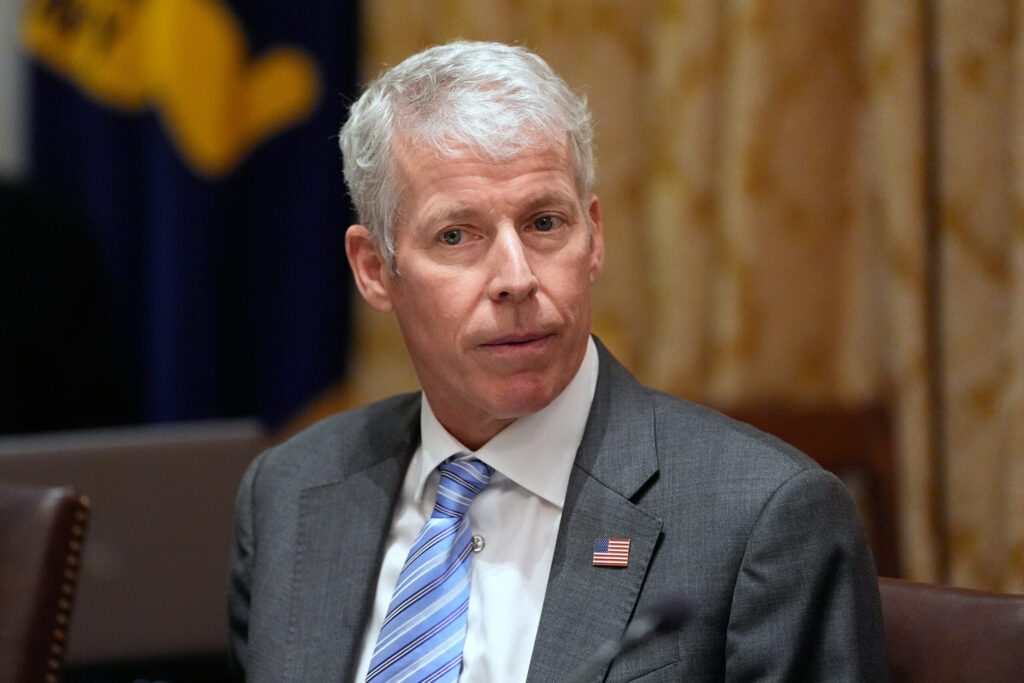
Colorado oilmen may play key role in Trump’s Venezuelan oil takeover plan
Vince Bzdek
vince.bzdek@gazette.com
Updated 8 hours ago
When President Donald Trump summoned oil executives to the White House recently to push for major investment in Venezuela, an interesting sprinkling of smaller independent companies from Denver was invited along with the big names of American oil. One of...

Colorado Politics Calendar Jan. 19-25
Rachael Wright
rachael.wright@coloradopolitics.com
Updated 3 days ago
CoPo’s weekly political calendar will help you find political and public-policy events throughout Colorado. It includes candidate and issue campaign events, public policy meetings, court hearings, state and local party conventions, assemblies, debates, rallies, parades, speaking engagements, traveling dignitary appearances,...

Elder Groff attends opening day of state legislature to cheer on son | A LOOK BACK
Rachael Wright
rachael.wright@coloradopolitics.com
Updated 3 days ago
Twenty-Five Years Ago This Week: “There is a God,” sighed former state Sen. Regis Groff, D-Denver, as he watched the Democrats assume control of the Colorado Senate for the first time in 40 years. “Now they’re in the cubbyholes,” chuckled...

Colorado appeals Trump’s rejection of federal disaster declarations for flooding, fires
The Denver Gazette
the-denver-gazette@coloradopolitics.com
Updated 1 day ago
Colorado has formally appealed the Trump administration’s decision to deny requests for federal disaster declarations tied to two wildfires and flooding last year. Gov. Jared Polis said the state asked the federal government to reconsider its denials for the Elk...
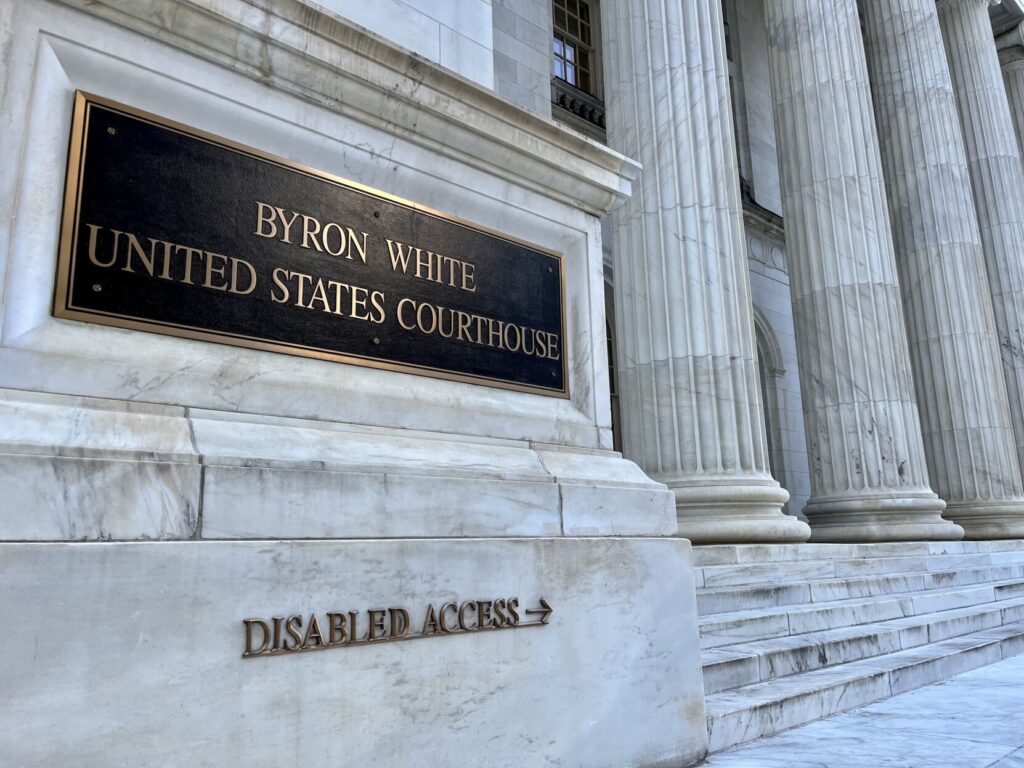
10th Circuit oral arguments to feature trial judges for first time in 12 years
Michael Karlik
michael.karlik@coloradopolitics.com
Updated 1 day ago
When the Denver-based federal appeals court convenes next week to hear oral arguments, six new faces will be staring down from the bench. No, the U.S. Court of Appeals for the 10th Circuit has not added six new members. It...

Federal judge says ICE cannot impose monitoring conditions beyond immigration judge’s order
Michael Karlik
michael.karlik@coloradopolitics.com
Updated 1 day ago
A federal judge told U.S. Immigration and Customs Enforcement on Thursday that it cannot impose additional restrictions or monitoring conditions beyond those ordered by an immigration judge when releasing a person on bond. In November, U.S. District Court Judge Gordon...
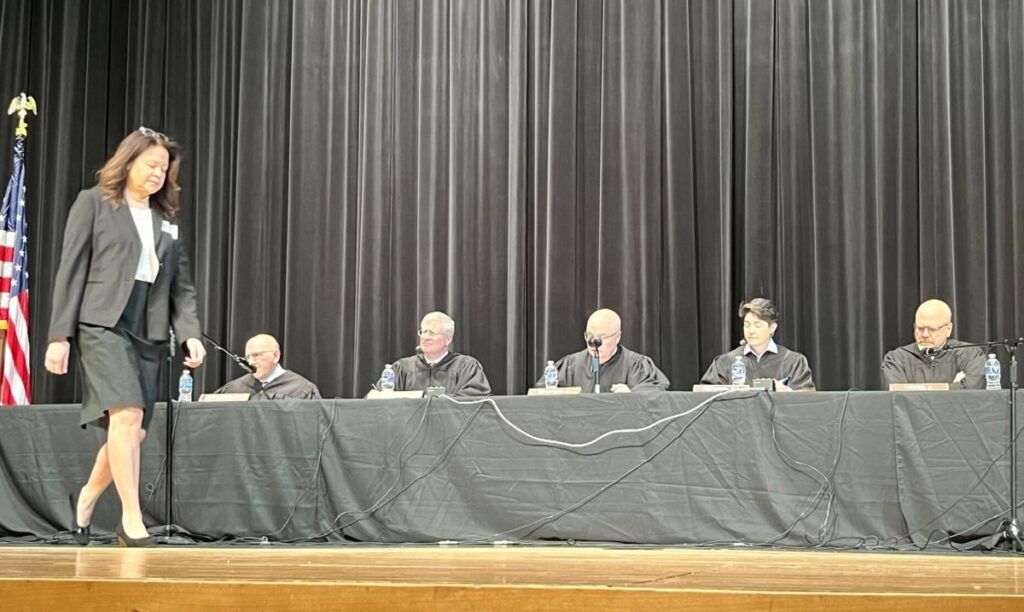
Colorado justices weigh constitutionality of student backpack search based on confidential tip
Michael Karlik
michael.karlik@coloradopolitics.com
Updated 6 hours ago
The Colorado Supreme Court considered on Wednesday whether a tip submitted through the state’s confidential school safety system provided a Douglas County administrator with reasonable suspicion to search a student’s backpack for drugs. A trial judge blocked evidence from the...
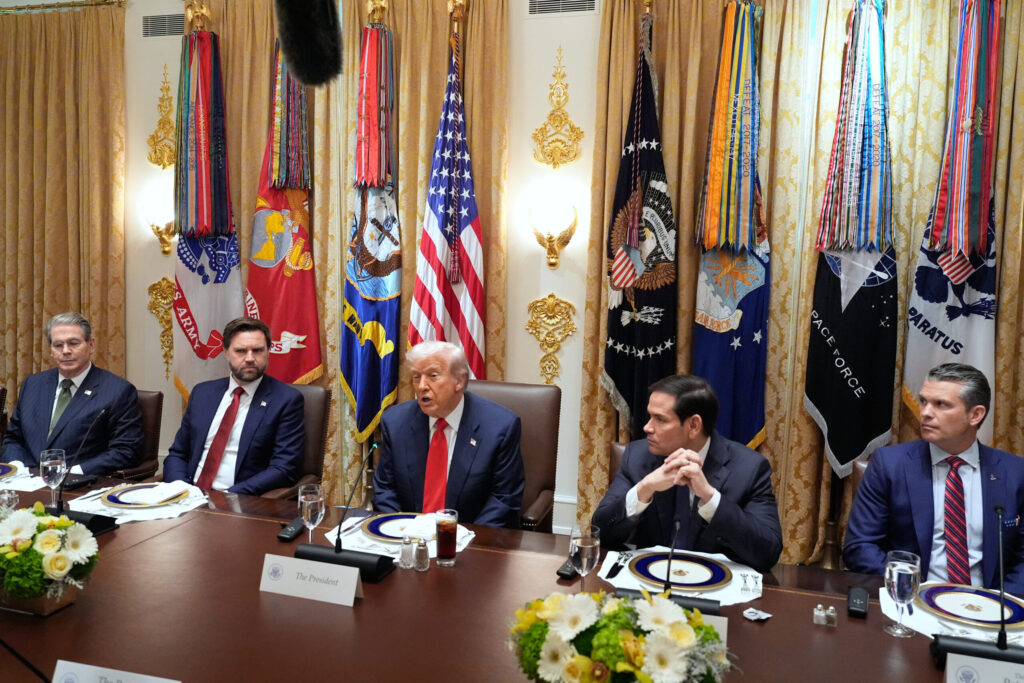
The odd couple: Vance and Rubio stick together through 2028 speculation
W. James Antle III Washington Examiner
wjamesantleiiiwashingtonexaminer@wpstage.coloradopolitics.com
Updated 1 day ago
Washington insiders keep straining to see daylight between Vice President JD Vance and Secretary of State Marco Rubio, only for the two of them to maintain a united front. Vance and Rubio met together at the White House with Denmark’s...

Democrats ready war powers blitz to exploit a Trump ‘vulnerability’
Ramsey Touchberry, Washington Examiner
ramsey.touchberry.washington.examiner@gazetteedit.wpenginepowered.com
Updated 1 day ago
Senate Democrats believe they’ve uncovered a backdoor to limiting President Donald Trump’s military operations abroad and conducting oversight despite limited minority power and few Republicans willing to buck the administration. Democrats are prepared to force a flurry of votes on...

Canada drops US-aligned tariffs on Chinese EVs in ‘landmark’ trade deal
Emily Hallas, Washington Examiner
emily.hallas.washington.examiner@gazetteedit.wpenginepowered.com
Updated 1 day ago
Canadian Prime Minister Mark Carney announced on Friday he is dropping special tariffs on Chinese electric vehicles, marking Ottawa’s latest move to deepen ties with countries it views as more “predictable” than the United States. Under the “landmark” deal, Canada...