

Point, Counterpoint: Should the Johnson Amendment be changed to allow politics from the pulpit?
Tim Neville
Throughout our country’s history, free speech from the pulpit has been critical to our political health and development. In America’s early days, church leaders actively spoke on politics, supporting or opposing politicians in their quest for public office. In American towns, churches served as an epicenter for political speech and activism. Early clergymen known as the “Black Robed Regiment” supported and participated in our struggle for independence from British rule. Even the adoption of our Bill of Rights can be credited to the political involvement of clergy. But in 1954 an event served to silence many moral voices. U.S. Sen. Lyndon Johnson, after surviving a contentious election, amended HR 8300 and the IRS tax code to silence his political opponents. It was easily adopted with little discussion or debate.
This “Johnson Amendment” sought to ban nonprofit tax-exempt groups from being able to “participate in, or intervene in any political campaigns on behalf of or in opposition to any candidate for public office.” IRS officials interpreted this as a ban on speech in support or opposition of a candidate for public office, including sermons from the pulpit, and those who fail to adhere could risk loss of their 501(c)(3) tax exempt status.
Faced with choosing to speak freely on all issues pertaining to church teachings and Scripture or remaining silent to preserve their tax-exempt status, many churches chose the latter. Despite no instance of any church losing its tax-exempt status for delivering sermons from the pulpit, the silence continued.
In September 2008, Alliance Defending Freedom (formerly Alliance Defense Fund) attacked the issue, launching its first “Pulpit Freedom Sunday” to counter the Johnson Amendment and “encourage pastors to exercise their constitutionally protected freedom to speak truth into every area of life from the pulpit.” According to its 2014 numbers, the movement included over 1,800 churches and pastors who freely preach from the pulpit on all aspects of life, including politics. Their efforts are commendable.
Yet more is needed to remove free speech barriers caused by the Johnson Amendment, and the recent national election provides that opportunity. President Donald Trump has pledged to “work very hard to repeal that language and to protect free speech for all Americans.”
Recently, U.S. Sen. James Lankford and U.S. Rep. Jody Hice introduced the “Free Speech Fairness Act.” Although not a repeal of the Johnson Amendment, the bill amends the law to allow for speech made “in the ordinary course of the organization’s regular and customary activities,” removing the threat of IRS censorship and safeguarding free speech and religious freedom. This bill has the added benefit of applying to all 501(c)(3) organizations, removing an unfair burden against free speech in nonprofit organizations. Safeguards against these organizations contributing to political campaigns or parties remain in effect and its broad application to all 501(c)(3) organizations strengthens its constitutional soundness.
We face a long legislative road to removing barriers to free speech from the pulpit. All journeys begin with a first step and adopting the Free Speech Fairness Act represents that first step.
–
Deb Walker
Critics of the Johnson Amendment claim that the free speech protections of the First Amendment are not enjoyed by faith leaders and argue that the law should be repealed. But in fact, religious expression by church leaders and houses of worship enjoys wide latitude.
The Johnson Amendment to the U.S. tax code prohibits charitable organizations that receive tax-deductible donations from endorsing or opposing any political candidate or party in their formal activities. This amendment places no restrictions on discussions or advocacy with regard to political issues such as abortion, same-sex marriage, gun control, health care and other issues of conscience. Pastors and other church leaders can engage in partisan politics when acting solely as individual citizens and may endorse a candidate just as any other citizen, as long as they do not do so when acting in the name of their church. The amendment is also neutral in that it does not single out religious organizations but applies this restriction to all 501(c)(3) nonprofits.
Part of the jurisprudence behind the Johnson Amendment is that government may not subsidize political endorsements through tax-exemption. It is estimated that more than $50 billion per year is given in charitable tax deductions. The intent is to ease the financial burden on organizations that operate for religious, educational and charitable purposes. Essentially, giving an organization “charitable” status is a way that citizens subsidize and encourage charitable activities that benefit the whole of society. That subsidy is intended to help nonprofits, religious or otherwise, more easily accomplish their mission, not to engage in political campaigns. The Johnson Amendment ensures that citizens of all faith traditions (or no faith tradition) are not inadvertently financially supporting church-based politicking. It also ensures that the government in not entangled in underwriting partisan political activity.
As further evidence of how free religious expression remains in the political arena, it is worth remembering that religious organizations openly engage in lobbying, spending hundreds of millions of dollars per year to make their views known on Capitol Hill. This includes well-known organizations such as the U.S. Conference of Catholic Bishops, the Southern Baptist Convention and the Family Research Council.
A closer look reveals that the Johnson Amendment restriction is aimed not at religious expression per se but at partisan political expression made under tax-advantaged (including religious) auspices. It is purposefully narrow. Its application is neutral and secular in that it requires nonprofits of all stripes to avoid political partisanship in exchange for enjoying tax-exemption benefits.
Those opposed to the Johnson Amendment claim that any restriction forces religious leaders to give up their constitutional right to free speech and is intended to silence religious groups from speaking to issues of morality. This is simply untrue. A limited restriction on partisan political speech by a tax-exempt nonprofit does not equal silencing. Such restrictions protect the integrity of nonprofits and their ability to focus on serving our communities not beholden to any particular candidate or party.
–
Tim Neville represents District 16 in the state Senate. He lives in Jefferson County. Deb Walker is the executive director of Citizens Project. She lives in Colorado Springs.


The delicate, ever-changing dance between politics and religion | SONDERMANN
Eric Sondermann for Colorado Politics
eric_sondermann_for_colorado_politics@coloradopolitics.com
Updated 2 days ago
The dance, really a marathon that brings to mind the classic movie “They Shoot Horses, Don’t They?”, has been going on as long as there have been governments and organized religion. That is to say that this delicate tango has...
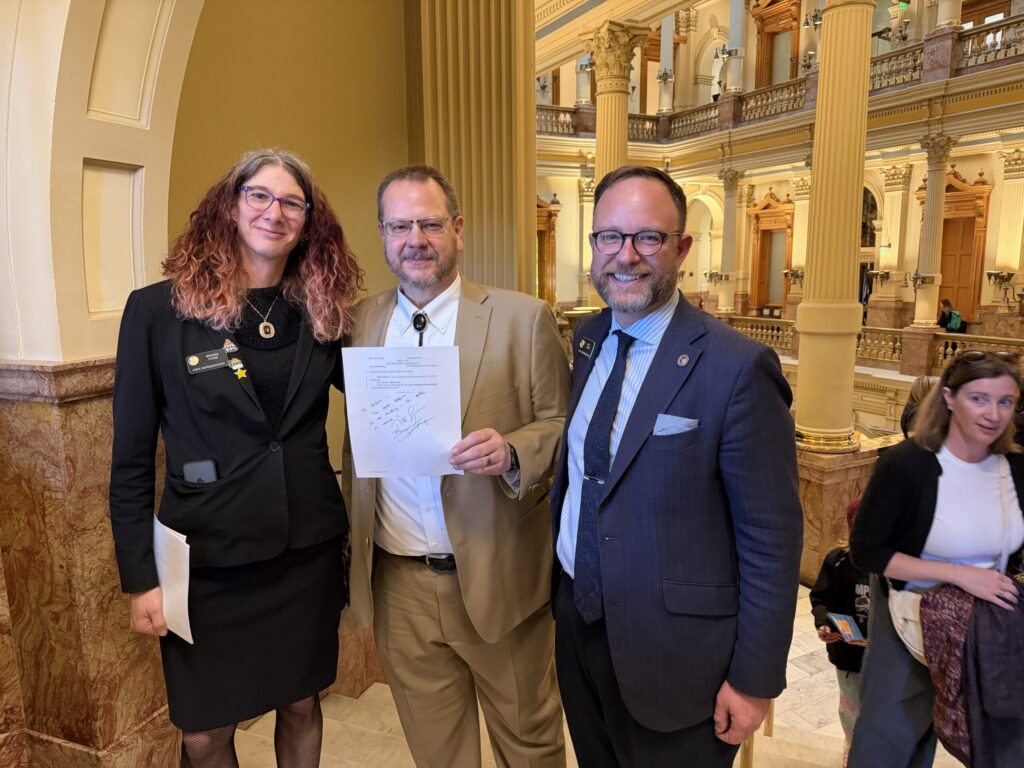
Roasts, get yer roasts, here: Capitol M | Week of March 14, 2026
Marianne Goodland
marianne.goodland@coloradopolitics.com
Updated 3 days ago
The lighter side of the Capitol, especially in the past week Apparently, the pending and eventual switch to daylight stupid time has put people in some pretty funny moods. And thank goodness! On March 4, the Senate approved the appointments...
Polly Baca elected to DNC | A LOOK BACK
Rachael Wright, Special to Colorado Politics
rachael.wright@coloradopolitics.com
Updated 3 days ago
Forty-Five Years Ago This Week: After her loss to Republican U.S. Rep. Hank Brown the previous year in the race for the 4th Congressional District, state. Sen Polly Baca-Barragan, D-Thortnon, was elected as one of the three vice-chairs of the...
Colorado Politics Calendar Mar. 16-22
Rachael Wright, Special to Colorado Politics
rachael.wright@coloradopolitics.com
Updated 3 days ago
CoPo’s weekly political calendar will help you find political and public-policy events throughout Colorado. It includes candidate and issue campaign events, public policy meetings, court hearings, state and local party conventions, assemblies, debates, rallies, parades, speaking engagements, traveling dignitary appearances,...
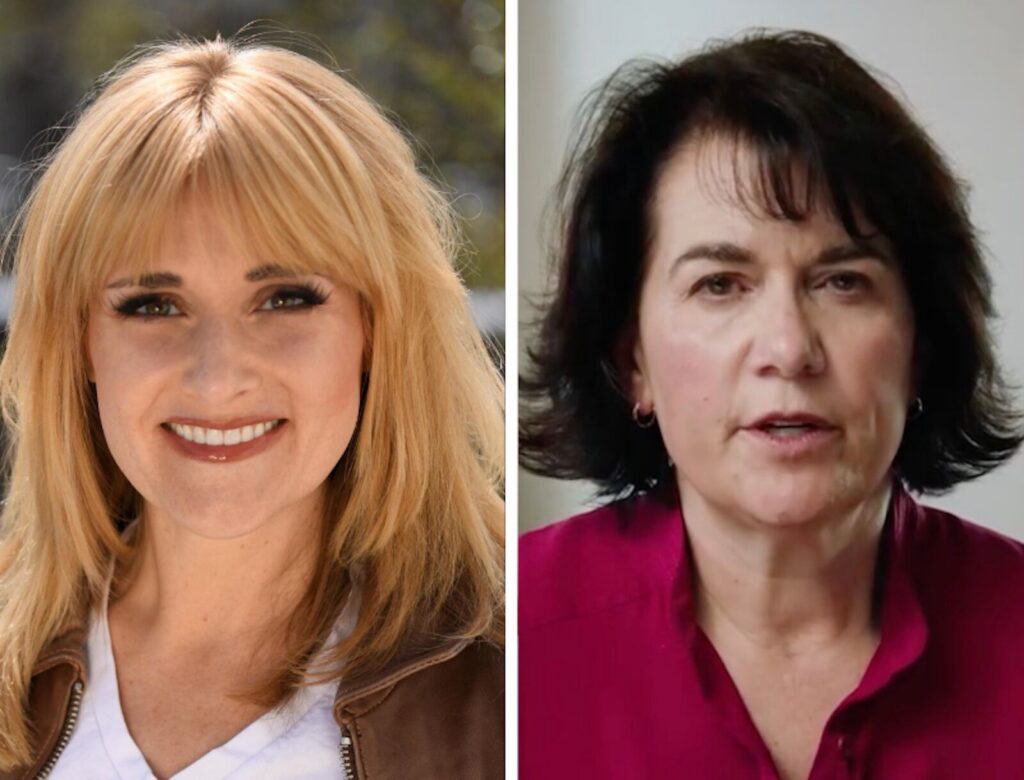
Boebert challenger Eileen Laubacher joins lawsuit aimed at blocking her from Democratic assembly
Ernest Luning
ernest.luning@coloradopolitics.com
Updated 8 hours ago
A Denver District Court judge on Thursday permitted Democratic congressional candidate Eileen Laubacher to join a lawsuit filed by one of her primary opponents seeking to prevent Laubacher from participating in the party’s assembly process in a bid to qualify...
House Ethics Committee to begin hearing on Weinberg complaint
Marianne Goodland
marianne.goodland@coloradopolitics.com
Updated 14 hours ago
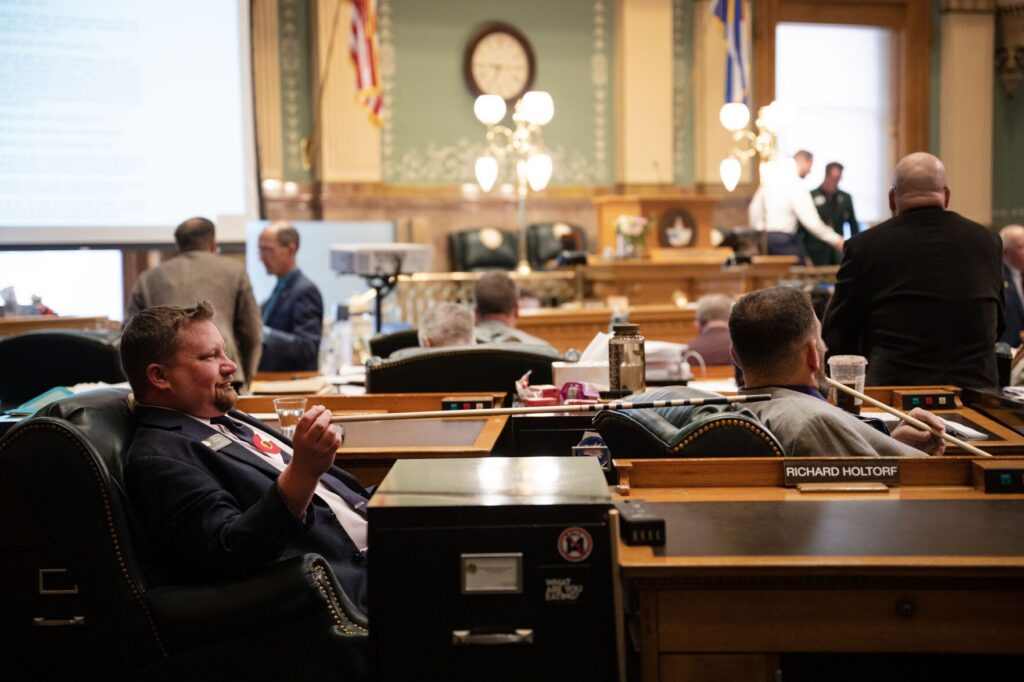
The House Ethics Committee on Tuesday will begin a hearing requested by Rep. Ron Weinberg, R-Loveland, tied to an ethics complaint filed against him by Rep. Brandi Bradley, R-Roxborough Park. The ethics committee had found probable cause on two issues...

Iran war enters next phase of destroying entire missile supply chain: Hegseth
Brady Knox, Washington Examiner
brady.knox.washington.examiner@gazetteedit.wpenginepowered.com
Updated 16 hours ago
Secretary of War Pete Hegseth said the war with Iran was entering a new phase, as the United States was focusing on destroying Tehran’s defense industrial base. At a Friday Pentagon briefing, Hegseth and Gen. Dan Caine, chairman of the Joint...
Jeffco Public Schools found in violation of Title IX
Sage Kelley
sage.kelley@denvergazette.com
Updated 11 hours ago
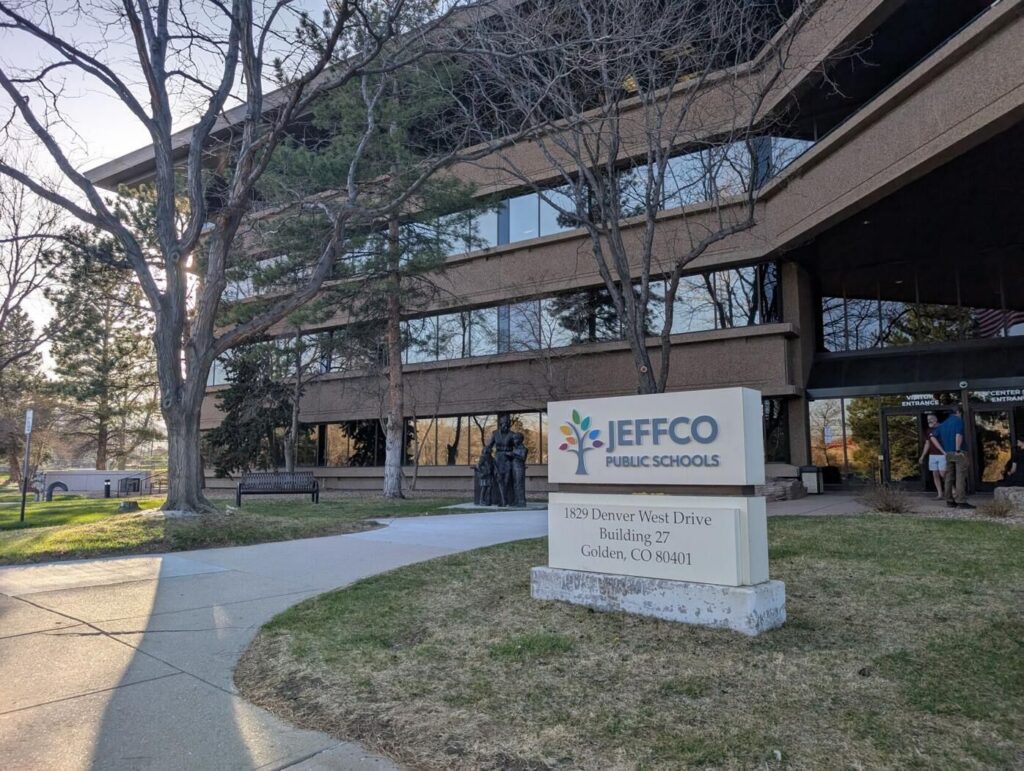
Civil rights office: Male students occupy 61 roster positions on girls’ sports teams The U.S. Department of Education announced Friday that the Jeffco Public Schools district violated Title IX by permitting male students to access female bathrooms and compete in...
Colorado plans to slash interim committee work amid budget woes
Marianne Goodland
marianne.goodland@coloradopolitics.com
Updated 7 hours ago
In a tight-budget year, the work of interim committees — those off-session groups that look at transportation, agriculture, water, healthcare, wildfires, pensions, and anything else lawmakers want to look at — is on the chopping block. And this year, no...
Xcel Energy: Power shutoff ‘likely’ Saturday in Boulder, Jefferson counties
Dan Boniface
dan.boniface@denvergazette.com
Updated 12 hours ago
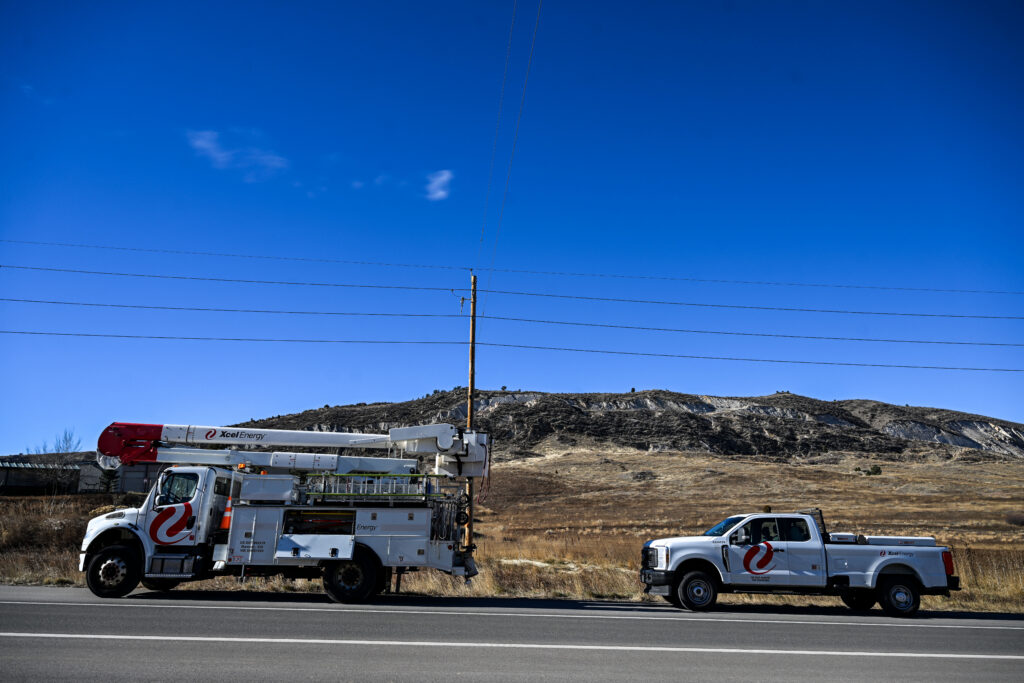
Up to 43,000 residents in parts of Boulder and Jefferson counties should be prepared to have their power shut off Saturday afternoon, Xcel Energy said. The power company said it was “planning for a likely Public Safety Power Shutoff (PSPS)...