

Growth limit proposal survives protests
A proposed initiative to limit growth survived two protests before the Colorado Secretary of State‘s Initiative Title Setting Review Board, although some wording changes were made to clarify and address some of the concerns.
The Wednesday, Jan. 4, hearing concerned what is being called Initiative 4 for the 2018 general election ballot, a measure proposed by Dan Hayes of Golden that would place a 1 percent annual increase limit on new housing building permits in 2019 and 2020 in 10 Front Range counties: Adams, Arapahoe, Boulder, Douglas, El Paso, Jefferson, Larimer and Weld. That limit would stay in place unless amended or repealed by voters in each county, starting in 2021.
The measure would also allow the rest of Colorado’s counties to set local housing growth limits through voter-approved initiatives and referendums, as well as specifying the number of signatures needed to put housing limits on the ballot in the future and how petitions can be challenged.
Legal arguments focus on details
Attorney Jason Dunn with Brownstein Hyatt Farber Schreck represented Kopp and explained while the measure provides processes and procedures for local governments to seek a limit on housing growth, a separate subject is created with the 1 percent annual housing growth limit in specific Front Range counties and municipalities in those counties.
The measure would make a fundamental change to the constitutional home rule relationship in Colorado by giving counties authority over home rule municipalities, if they could impose growth limits within those municipalities, Dunn wrote in his motion for a rehearing.
“This fundamentally changes county and municipal relations that are over a century old,” he told the board. “This gives counties the right to basically rewrite municipal development codes.”
Dunn also claimed the measure would change the election process by allowing only one challenge each to the petitions and sufficiency of signatures.
“So you’ll have a race to the courthouse to be the first challenge,” he stated. “And there’s no appeal right if that challenger is turned down.”
Dunn also wrote that the measure’s 1 percent limit on housing growth in specific Front Range counties and local jurisdictions in those counties is the main feature of the measure, so it should appear upfront in the title. Dunn added he thought the 1 percent limit for two years was actually a limit in perpetuity, since it would take voter approval to change or remove the limits. He also claimed that the use of the phrase “such cities and counties” made the title ambiguous and must be redrafted.
Finally, Dunn wrote that a fiscal abstract prepared by the Colorado Legislative Council was misleading because it states that “limits on housing permits will also impact the distribution of construction employment, retail trade and population within Colorado.” He called the language vague and added it failed to adequately show the measure’s housing growth limitations will negatively affect construction and retail businesses and employees in the Front Range counties where growth would be limited.
Attorney Mark Grueskin with Recht Komfeld represented Smith and argued many of the same concerns and objections. In his written motion for a rehearing, Grueskin claimed the title fails to state the counties, by initiative, “may… uniformly” restrict growth within their boundaries without requiring any such restriction to be uniform. He also said the title fails to state that, for two years (2019-2021), there is no right of initiative or referendum on growth limits in the 10 counties.
“I think this is misleading voters to say they can create an initiative except in these 10 named counties,” he told the board.
Grueskin called the wording of the title “wildly open-ended” about how counties could apply growth limits.
“I think if it was the intent of the proponents to implement uniform restricted growth, it would have said that,” he added. “Instead, it reads that counties can pick and choose where to restrict growth and allows the county to supersede any local jurisdiction in that county.”
Grueskin also wrote that the measure’s fiscal impact statement prepared along with the abstract fails to actually state “whether there is a fiscal impact for the initiated measure,” as required by statute. And he added the abstract’s statement of “Local government revenue and spending” does not provide an estimate or projected estimates of such revenue and spending, or state and local government recurring expenditures, or a “statement of the measure’s economic benefits for all Coloradans,” or an “estimate of the amount of any state and local fiscal liabilities if the measure is enacted” as required.
Larson Silbaugh with the Legislative Council wrote the impact statement and abstract and told the board the lack of figures was in part due to unknowns, such as which counties would rescind the 1 percent limit after two years.
Measure supporter defends intent
Hayes said Grueskin had “opposed everything I’ve done in the last 20 years,” and added that the only way to approach growth control is at the county level. Hayes authored the City of Golden’s growth control measure several years ago.
Hayes also said under current laws, local ballot measures are subject to appeals for years, “And that’s why it had to be addressed at the state level. There’s nothing in here that talks about zoning, only regulating growth.”
He noted the fiscal impact statement and abstract had no numbers “because this has never been done before, we’re talking about a mammoth effect” on the state and local economy.
“Rapid growth increases the cost of roads, schools and everything,” Hayes added. “We already have inadequate money to pay for those things because under the Gallagher amendment, houses generate less property revenue than businesses. So I think this is about as good as we can get.”
Deputy Secretary of State Suzanne Staiert said she believed the title as approved met the single subject requirement, “although I’m not saying how artfully it was done.”
The board proposed wording changes to address some of the concerns, including a more chronological listing of the processes in the proposal.


Federal judge declines to dismiss strike-breaking nurses’ lawsuit over wage violations
Michael Karlik
michael.karlik@coloradopolitics.com
Updated 3 hours ago
A federal judge last week declined to dismiss 39 nursing employees’ claims for compensation against a Greenwood Village-based company for its alleged violations of state and federal law. U.S. Nursing Corporation employs health care professionals to cross the picket lines...
Appeals judge argues prior decision on defendant’s ‘3-strikes’ sentence was wrong
Michael Karlik
michael.karlik@coloradopolitics.com
Updated 4 hours ago
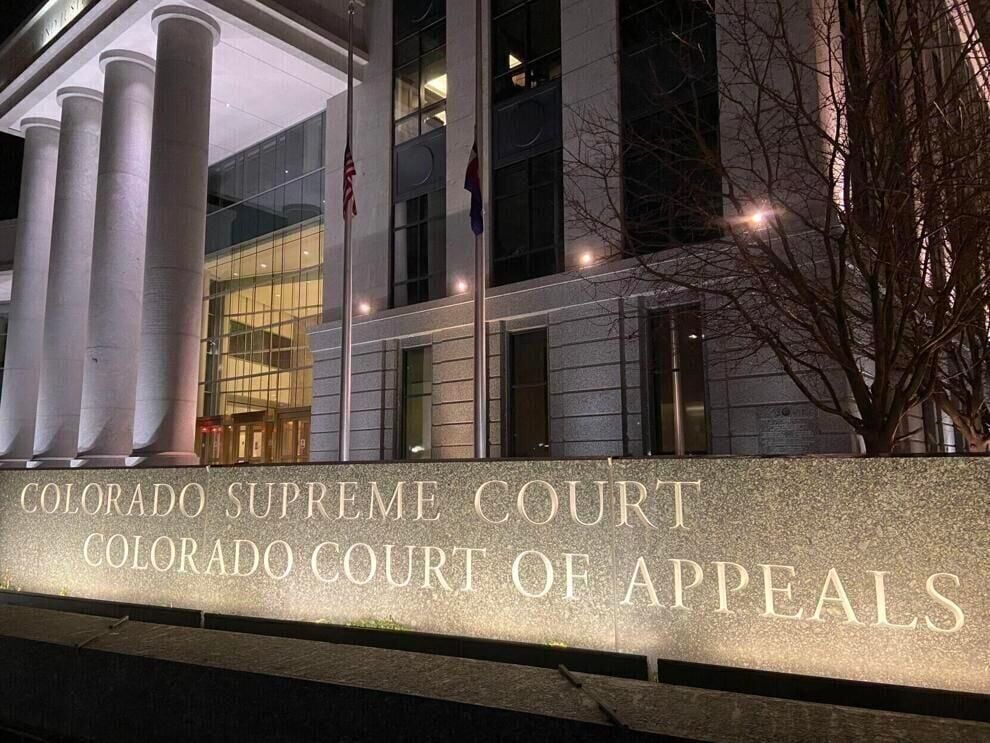
A member of Colorado’s second-highest court argued on Thursday that a defendant stands wrongfully sentenced under the state’s “three-strikes” law, and an earlier appellate decision saying otherwise was incorrect. A three-judge Court of Appeals panel agreed that Kiki Lamount Douglas’...

Xcel gets an earful from public for power shutoffs in Colorado
Scott Weiser
scott.weiser@gazette.com
Updated 1 hour ago
Residents, business owners and local officials gave Xcel Energy an earful during a hearing convened by Colorado’s utility regulators on Wednesday, accusing the power company of using power shutoffs as a liability dodge that burdens communities. Xcel’s ability to trigger...

Where government funding talks stand as Congress careens toward partial shutdown
Ramsey Touchberry, Washington Examiner
ramsey.touchberry.washington.examiner@gazetteedit.wpenginepowered.com
Updated 6 hours ago
The federal government is expected to enter a partial shutdown starting Saturday, but it could be short-lived as Senate Democrats and the White House negotiate new restrictions for President Donald Trump’s sweeping deportation agenda. A procedural vote to advance a...

Colorado lawmakers roll out bipartisan plan aimed at lowering home insurance risk
Marianne Goodland
marianne.goodland@coloradopolitics.com
Updated 7 hours ago
Homeowners’ insurance rates continue to rise, prompting a bipartisan group of lawmakers to introduce a bill Wednesday aimed at reducing damage from hail and wildfire. The measure would encourage homeowners and homeowner associations to take additional mitigation steps and, in...

Appeals court overturns convictions after Douglas County judge let biased juror serve
Michael Karlik
michael.karlik@coloradopolitics.com
Updated 4 hours ago
Colorado’s second-highest court reversed a defendant’s robbery-related convictions and 18-year prison sentence on Thursday because a Douglas County judge allowed a biased juror to serve. During Ahmarion Kaliel Shead’s trial in January 2023, one juror, identified as “J.H.,” indicated on...

From child actors to ‘kidfluencers’: Colorado lawmakers consider digital-age Coogan Act
Marissa Ventrelli
marissa.ventrelli@coloradopolitics.com
Updated 10 hours ago
Jackie Coogan had been an actor since birth, or just about. His first acting gig was as a toddler in the 1917 silent film “Skinner’s Baby,” where he played the titular infant. At age 7, he starred alongside Charlie Chaplin...
Colorado Democratic Rep. Jason Crow’s reelection campaign hauls in over $750K in 4th quarter
Ernest Luning
ernest.luning@coloradopolitics.com
Updated 10 hours ago
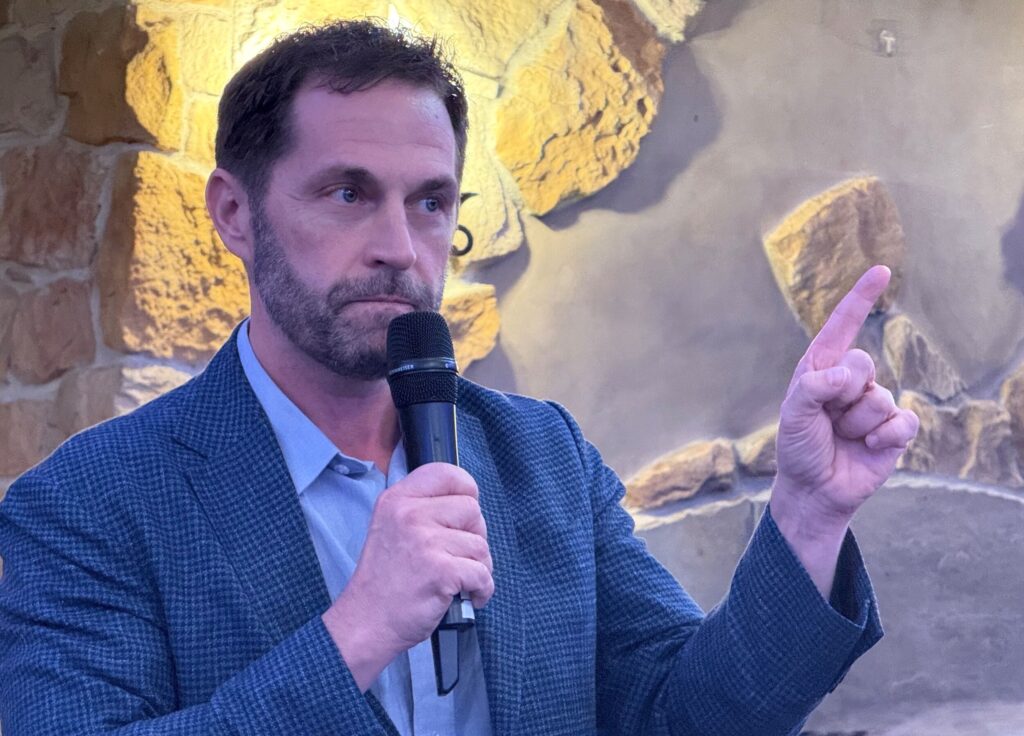
U.S. Rep. Jason Crow raised more than $750,000 in the final three months of 2025, marking the Aurora Democrat’s largest quarterly haul since his first run for Congress in Colorado’s 6th District, when he unseated a Republican incumbent, according to...
Colorado hit a population milestone in 2025; numbers ‘don’t lie,’ but what do they say?
Stephanie Earls
stephanie-earls@coloradopolitics.com
Updated 11 hours ago
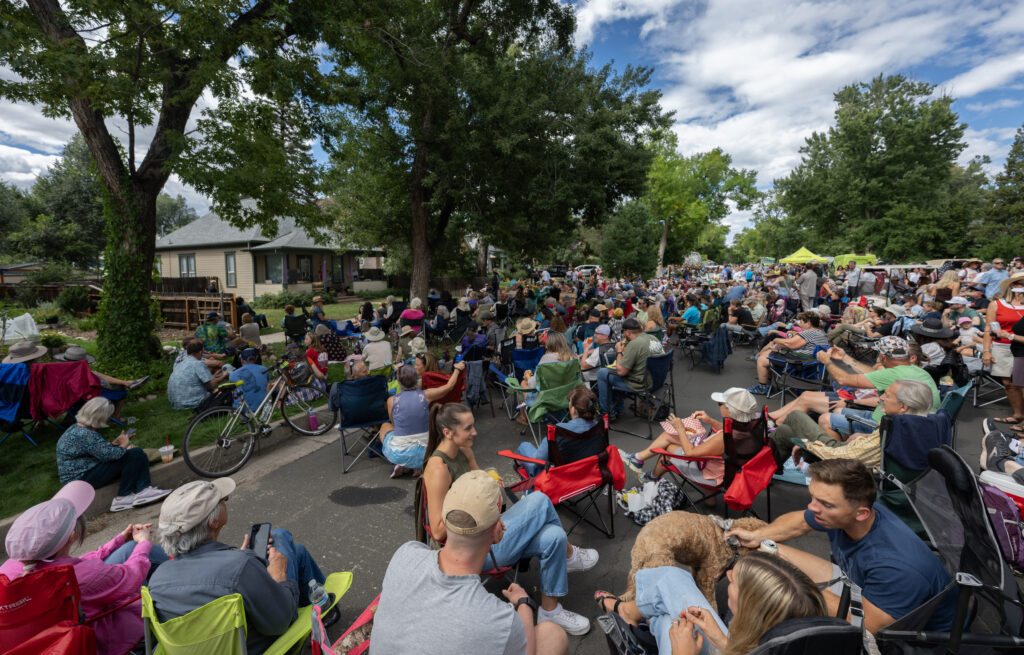
Colorado is: full Standing room only How ‘bout, More crowded than it was but less crowded than we thought? Local takeaways from the U.S. Census Bureau’s most recent data drop are too complex for bumper sticker treatment, but here’s the...

We tested vapes in Colorado for signs of hemp. This is what we found.
Christopher Osher
chris.osher@gazette.com
Updated 14 hours ago
This article was produced for ProPublica’s Local Reporting Network in partnership with The Denver Gazette. Sign up for Dispatches to get our stories in your inbox every week. Leaders in the Colorado marijuana industry have complained in recent years that...