

Denver struggles with off-street parking while White House makes suggestions
The White House last week unwittingly added its opinion to Denver’s dilemma in deciding how many parking spaces should be required for new real estate developments.
An Obama administration policy paper recommended against local rules requiring expansive parking lots for residential and office projects.
Instead, cities should encourage residents to depend more on public transportation, the White House says.
“Parking requirements generally impose an undue burden on housing development, particularly for transit-oriented or affordable housing,” the policy paper says. “When transit-oriented developments are intended to help reduce automobile dependence, parking requirements can undermine that goal by inducing new residents to drive, thereby counteracting city goals for increased use of public transit, walking and biking.”
The Obama administration policy announcement follows a Denver City Council moratorium, passed just weeks earlier, that seeks to prevent developers from avoiding the need to build off-street parking by invoking the city’s small-lot parking exemption.
Council members are concerned about what they believe is a pattern among developers of implementing too few parking spots into their housing projects. This based on a comparison between available parking and the density of the housing as Denver’s downtown gentrification continues at a fast pace.
In some cases, real estate developers can earn the most money by building dense housing for mortgage or rent-paying residents. Depending on their location, parking spaces sometimes provide less income for the developers.
Denver requires developers to build parking spaces for large, downtown projects but exempts lots of 6,250 square feet or less in mixed-use areas. In other words, buildings constructed on small lots are not required to include off-street parking.
The zoning code for small lot parking spaces was enacted by City Council a decade ago but was invoked only once until recently. Denver’s rapid development has resulted in more applications for the exemption in the past year.
The Denver City Council responded in August by imposing a seven-month moratorium on the exemption for small lot development projects.
Councilman Albus Brooks said the Council needed more time to figure out an appropriate way of handling the parking problem.
Parking space requirements are equally contentious with Denver-area real estate developers.
“I think that minimum parking space requirements are pretty outdated as a concept,” said Christopher Frampton, managing partner for the Denver division of real estate development company East West Partners. “I think it’s a suburban ethos being brought into an urban setting. I hope they don’t do that.”
Downtown parking spaces along 16th and 17th streets are examples of problems that can arise from minimum parking space requirements, Frampton said.
He described them as “big and ugly.”
“They were built at a time when people thought you had to have three parking spaces for each 500 square feet of office space,” he said.
Other cities, such as New York and San Francisco, have shown that good urban planning can avoid the need for large parking space requirements, Frampton said.
He also said big parking space requirements could defeat city officials’ goal of making housing more affordable in Denver.
“You can’t increase affordability and at the same time decrease density,” Frampton said.
His comments largely mirrored statements in the White House policy paper entitled the “Housing Development Toolkit.”
The paper warned that strict zoning “reduced the ability of many housing markets to respond to growing demand,” which could make affordable housing scarce in expensive areas.
In addition to reducing off-street parking requirements, the White House recommended taxing vacant property, increasing urban density and making building permits more easily accessible.
Strict zoning should be replaced by flexible zoning that gives developers more discretion on how to build projects, the Obama administration suggests.
“These more flexible zoning regulations include 40-50 foot increases in building height, parking requirement reductions and abbreviated fees and approval processes for development changes,” the policy paper says.
The paper used Washington, D.C. as an example of how quickly rising housing prices – similar to Denver – can hurt the most vulnerable residents if the density of housing is not increased.
Washington “saw a 31 percent increase in family homelessness last year amid a 14 percent increase in homelessness overall,” the policy paper says.
Bill Mosher, senior managing director of real estate development company Trammell Crow’s Denver office, said he was unaware of the City Council’s parking code moratorium.
He added, “We provide parking for all of our projects.”


Denver police chief on mask ban, mayor’s orders: ‘What enforcement looks like, I’m not exactly sure’
Deborah Grigsby
deborah.smith@denvergazette.com
Updated 5 hours ago
Denver bans wearing of face masks by law enforcers, use of city property to stage immigration operations As Denver takes steps to restrict federal agents conducting immigration enforcement in the Mile High City, its police chief said he is unclear...
Colorado lawmakers move to curb eminent domain powers after Xcel dispute
Marissa Ventrelli
marissa.ventrelli@coloradopolitics.com
Updated 11 hours ago
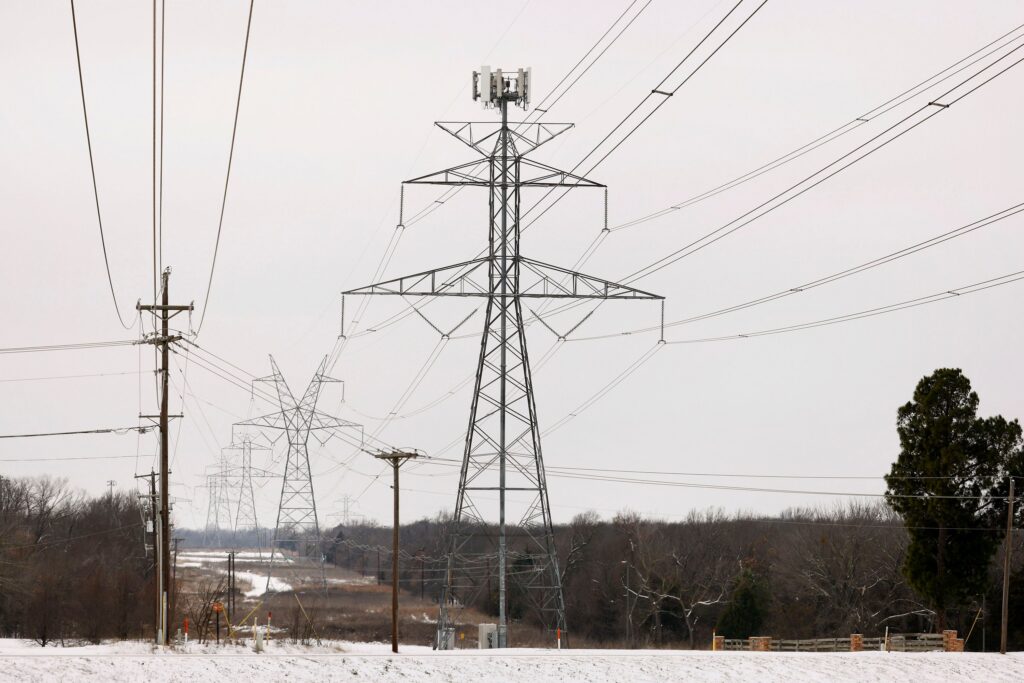
After months of backlash over Xcel Energy’s use of eminent domain in eastern Colorado, lawmakers representing Elbert and El Paso counties are advancing legislation that would bar utilities from initiating property takings until they’ve secured state approval and all required...

As parents claim some AI chatbots encourage teen suicide, Colorado legislators eye regulation
Marissa Ventrelli
marissa.ventrelli@coloradopolitics.com
Updated 8 hours ago
Juliana Peralta of Thornton was a vibrant, happy kid, said her mom, Cynthia Montoya. Then, in the final months of 2023, Cynthia began to notice a change in her 13-year-old daughter. Peralta had become more withdrawn and was on her...

Trump to attend dignified transfer of six US service members killed by Iran
Christian Datoc, Washington Examiner
christian.datoc.washington.examiner@gazetteedit.wpenginepowered.com
Updated 9 hours ago
President Donald Trump will attend the soon-to-be-held dignified transfer of six American service members killed so far by Iran in Operation Epic Fury. White House press secretary Karoline Leavitt made the announcement during her Wednesday press briefing. “These heroes represent...

Judge declines to block potential Boebert challenger from going through assembly process in Colorado’s 4th CD
Ernest Luning
ernest.luning@coloradopolitics.com
Updated 12 hours ago
Congressional candidate Eileen Laubacher, one of the Democrats seeking to challenge Republican U.S. Rep. Lauren Boebert, can participate in the party’s caucuses and assemblies pending a court hearing later this month, a Denver judge ruled Tuesday in response to a...
Sanctuary cities declined 17,864 requests to hold illegal immigrants for ICE in 2025: Noem
Anna Giaritelli Washington Examiner
anna-giaritelli-washington-examiner@coloradopolitics.com
Updated 12 hours ago
Sanctuary cities and counties declined to turn over 17,864 illegal immigrants in police custody to Immigration and Customs Enforcement in 2025, according to the Department of Homeland Security. Homeland Security Secretary Kristi Noem testified before the House Judiciary Committee on...

Federal judge dismisses malicious prosecution claim against former Denver prosecutor
Michael Karlik
michael.karlik@coloradopolitics.com
Updated 13 hours ago
A federal judge concluded on Monday that a former Denver prosecutor could not be sued for allegedly causing the arrests of two plaintiffs after they failed to appear for trial on the scheduled date, even though the trial had been...

Judicial discipline commission reports increased transparency, increased submissions
Michael Karlik
michael.karlik@coloradopolitics.com
Updated 14 hours ago
The Colorado Commission on Judicial Discipline received 473 misconduct complaints about judges in 2025, which was nearly 29% higher than in 2024 and substantially greater than any time in the past decade. However, only 31 complaints were referred to the commission...

Colorado Gov. Jared Polis ignites fierce debate after raising clemency questions in Tina Peters case
Marianne Goodland
marianne.goodland@coloradopolitics.com
Updated 7 hours ago
Gov. Jared Polis ignited a political firestorm Tuesday night after weighing in on the prison sentences of two former Colorado officials — a Democrat and a Republican — convicted of attempting to influence a public servant. The comments quickly fueled...

Colorado Supreme Court signals intervention in dispute over treatment for trans children
Michael Karlik
michael.karlik@coloradopolitics.com
Updated 1 day ago
The Colorado Supreme Court ordered Children’s Hospital Colorado on Tuesday to explain why it should not direct the organization to resume providing certain types of services to transgender children in compliance with the state’s non-discrimination law. Last month, a Denver...