

Coloradans deliver icons to families of martyred Christians in Egypt
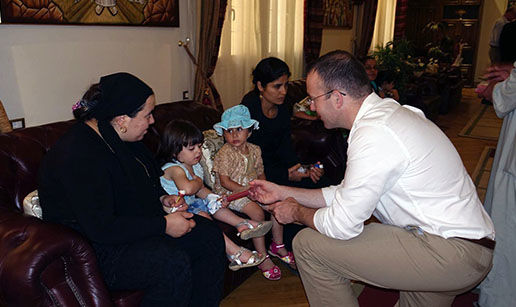
A delegation from Colorado traveled more than 14,000 miles earlier this month to meet with families of the Egyptian Coptic Christians beheaded last year by militants aligned with ISIS. They made the trip to honor the families’ loss and in hopes of spreading the word about what one calls the “ongoing holocaust of Christianity in the Middle East.”
“Just knowing that someone outside their village, outside their little province, knows the sacrifices they made and appreciates their suffering would mean the world to them,” said George Athanasopoulos, a Republican congressional candidate and one of four Americans who made the journey to Egypt and back.
“The worst thing is to suffer in obscurity.”
A horrific video of the beheadings – posted by the Islamic State of Iraq and the Levant, it depicts 21 migrant workers clad in orange jumpsuits kneeling on a beach in Libya as their executioners loom over them, wielding long knives – caught the world’s attention in February 2015. The next week, Coptic Orthodox Pope Tawadros II announced the church would commemorate the men as martyrs.
On Tuesday, July 12, after flying to Frankfurt, Germany, and then on to Cairo, Athanasopoulos and his traveling companions – Father Andre of the St. Rafka Maronite Church in Lakewood, talk radio host Peter Boyles and conservative activist Mike McAlpine – traveled another 160 miles south of Cairo to the village of Samalut, on the west bank of the Nile, where many of the families live.
Their mission: deliver icons depicting the 21 martyrs, a gift from the Assumption Greek Orthodox Cathedral of Denver, along with cash donations secured by Father Andre through the St. Rafka Mission of Hope and Mercy In The Middle East. Along the way, they met with religious leaders of many faiths, bearing a message of cooperation and gathering insight they hope to share back home.
“If we can build some awareness, if we can make this an issue – I don’t know what greater foreign policy crisis exists in the world today,” Athanasopoulos says. “It’s all over the Middle East, you have displacement of entire peoples. It’s not just Christians, it’s anyone who isn’t an ultra-orthodox Muslim. That’s just wrong. We’ve seen it come to our shores in San Bernardino, in Orlando.”
Athanasopoulos says the meeting couldn’t have gone better with the family members of the martyrs, who were bussed in to a church in Samalut to meet the Americans in order to avoid drawing the attention of local radicals.
“Two of the widows, I handed them the icons and they began to cry, right there,” he says. “It was emotional for us, too. These little kids – they live in such horrific poverty. They have the breadwinner of their family who has been beheaded by these psychos in Libya.”
ISIS in Libya had placed a bounty on Christians – amounting to about $10 apiece, Athanasopoulos says – and when the situation began to deteriorate there in late 2014, a group of migrant workers from Egypt boarded a bus to return home, but the bus driver instead delivered them to the radicals.
“Those guys were in a pinch, they had to work,” Athanasopoulos says. “One of the widows had six kids. The only work he could find was in Libya. Things are so horrific here that someone will turn in a busload of people to be beheaded to make $200.”
Athanasopoulos pauses before he continues with his account.
“It’s always hard to talk with families that have lost somebody, but this was different because they were executed for the world to see, and their only crime was being Christian,” he says.
“These people had committed no crimes, and for them to be deprived not just of the head of the household but – I can’t overstate how important that person is in this society, it’s not like these women can go off and marry someone else or there’s a social safety net to take care of these orphans. They were poor to begin with, and now they’re poor beyond measure.”
He stops again for a moment.
“You’re trying to put on a brave face for the kids. Many of them don’t understand. The kids are laughing, and the mothers are crying.”
Then he turns attention to the somewhat mysterious 21st victim, who wasn’t from Egypt.
Known as Matthew Ayairga – or Ayariga, accounts differ – the migrant worker from Chad, or perhaps from Ghana, was in the company of the Egyptians and was delivered alongside them to the terrorists.
Although he wasn’t a Christian, the story goes, when Matthew was asked by their captors if he rejected Jesus, he was so moved by their expressions of faith that he sealed his fate by replying, “Their God is my God.”
“He was born to give testimony to Christ and join our martyrs in heaven,” Athanasopoulos says, reading from a story about the Coptic Christians. “He has become one of us and is accompanied with the saints in glory.”
The journey to Egypt was shrouded in secrecy, Athanasopoulos says, partly because the Coloradans would be traversing unsafe territory under the control of the Muslim Brotherhood and other groups sympathetic to ISIS. It’s a destination for some Christian pilgrims – the Holy Family of Bethlehem stayed there during their flight to Egypt – but it’s not a common tourist spot.
“I’ve been to the Middle East. I’ve been to war zones,” says Athanasopoulos, a recently retired Army major who served four tours in Iraq. “This is not like that. My wife told me, ‘Yes, you have gone to those places, but you used to bring 80,000 of your closest armed friends.'”
After his return, Athanasopoulos told The Colorado Statesman in a telephone call that the trip had sometimes been tense but was without incident.
“It was good,” he said. “No one got kidnapped or killed or anything, so that was a plus.”
Athanasopoulos, a Greek Orthodox parishioner, says plans for the trip germinated after he met Father Andre, a Lebanese-born Maronite Christian, at an ecumenical gathering to discuss the plight of Christians in the Middle East.
“In Iraq,” he says, “I’d seen the atrocities committed against not just Christians but other religious minorities. We were kindred spirits about this.”
After the ISIS-inspired mass shooting at a nightclub in Orlando, he says, “We began talking about the American people not seeing the threat as it is.”
In addition to challenging U.S. Rep. Ed Perlmutter, the Democratic incumbent in the 7th Congressional District, this year, Athanasopoulos was also a delegate to the Republican National Convention in Cleveland last week – he spent just a day in Denver after the trip, then headed to the RNC – and says part of the reason he went to Egypt was to help fellow Republicans understand what’s going on beyond the sensational headlines.
“The threat posed by ISIS is one of the top concerns in American politics today,” he says. “However, Republicans are inartful describing the threat. They also sometimes have difficulty relating a threat many Americans see as being halfway around the worlds, relating it to their lives in the United States. That’s one of the reasons to go. If it’s abstract, it doesn’t mean that much. But if you see pictures, you hear first-hand accounts, all of a sudden it’s a little more real.”
The group had a one-on-one meeting with Pope Tawadros II, who arranged for their safe travel to Samalut, and met with the Muslim imam, known as the sheikh, who presides over the mosque in Cairo’s Tahrir Squar. They also were able to meet with the patriarch of Alexandria, whose Orthodox See includes all of Africa.
“In terms of gaining an understanding of the threat we face, I think we’ve been wildly successful,” Athanasopoulos said after the group had landed back in the United States. “It’s not just from the Christian side we’ve heard about the threat; we’ve also heard about it from the Muslim side.”
“The sheik,” he said, “was wildly illuminating. He was saying, it’s not all Muslims – you have to differentiate. If you have organizations targeting Americans and you name those enemies, then those are your enemies. You name that strain – it is not all Islam.”
The Muslim leader, Athanasopoulos said, delineated distinctions in Islam that Americans don’t appreciate. “I would hope that Republicans, when we talk about this, can be a little more nuanced,” he added.
The lessons, he says, were clear.
“We have to confront the religious underpinnings of the threat we face today. We cannot focus exclusively on people or on tactics or on the means of attack. We have to confront the religious underpinnings of the threat. Al-Qaeda, the Islamic State, Al-Qaeda on the Arabian Peninsula, Boko Haram – all these organizations are ultra-orthodox Islamic organizations. Unless you confront the fact that there are religious underpinnings, you cannot begin to defeat them. We can defeat Al-Qaeda, then the Islamic State shows up. We defeat the Islamic State and someone else will show up.”
Dealing with the underlying causes of the problem, he says, will involve dilemmas that Americans don’t want to face.
“We can confront tactics and means and groups, but we are not going to beat them unless we confront the ideology, the underlying religious foundation, which is built largely with oil dollars flowing out of Saudi Arabia and the Gulf countries, and that requires some tough diplomatic choices,” Athanasopoulos says.
“For the Republican Party to be able to talk about this effectively in the United States and not alienate 1.5 billion Muslims around the world, they have to learn the nuances,” he says. “If you say ‘Muslims’ or ‘Islamic terrorists,’ that talks about the entire religion, and that is inaccurate. It’s also inaccurate for Democrats to call Islam the religion of peace – there are strains, there are nuances. Unless we talk about it intelligently, now are we ever going to defeat it?”
– ernest@coloradostatesman.com

Colorado’s 661‑page budget read aloud after Rep. Bradley invokes procedural rule
Marianne Goodland
marianne.goodland@coloradopolitics.com
Updated 10 hours ago
A rarely used procedural move by Rep. Brandi Bradley, R‑Roxborough Park, has thrown the Colorado House into an extended slowdown, after she invoked her right to have the 661‑page state budget bill read aloud in full. While unprecedented, once Bradley...
Literal reading of budget bill complicates Colorado legislators’ plans for GOP assembly
Marianne Goodland
marianne.goodland@coloradopolitics.com
Updated 9 hours ago
Republican Rep. Brandi Bradley’s decision to force the full reading of the state budget — called the “long bill” for its obvious length — has not only slowed House business to a crawl but also disrupted her colleagues’ plans for...
10th Circuit provides guidance on police searches of cloud-based data
Michael Karlik
michael.karlik@coloradopolitics.com
Updated 11 hours ago
The Denver-based federal appeals court provided guidance to law enforcement agencies on Monday for ensuring that searches of cloud-based accounts comply with the Fourth Amendment’s requirements. A three-judge panel of the U.S. Court of Appeals for the 10th Circuit noted...

Inflation jumped to 3.3% in March as Iran war drove up oil prices
Zach Halaschak, Washington Examiner
zach.halaschak.washington.examiner@gazetteedit.wpenginepowered.com
Updated 14 hours ago
Inflation spiked in March, rising nine-tenths of a percentage point to 3.3% on the year, as towering energy prices drove up the headline number. The Bureau of Labor Statistics reported the update to the consumer price index on Friday. The...
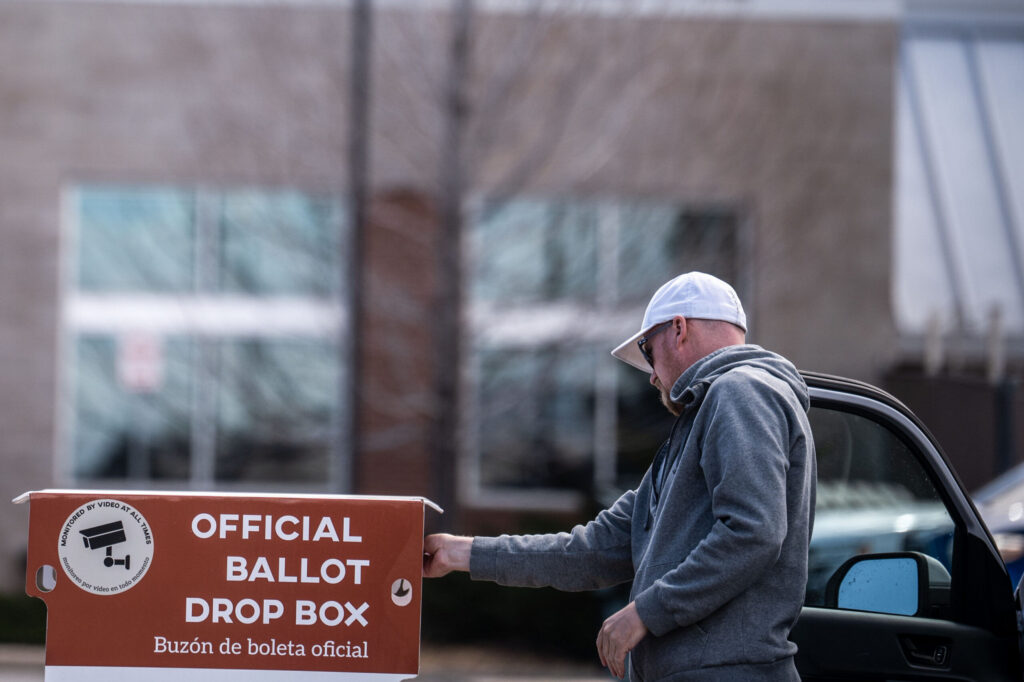
Colorado GOP votes down bid to ask court to prevent unaffiliated voters from voting in June primary
Ernest Luning
ernest.luning@coloradopolitics.com
Updated 10 hours ago
Members of the Colorado Republican Party’s executive committee rejected a proposal Thursday night to seek an emergency injunction in federal court to prevent unaffiliated voters from participating in the state’s upcoming June primary election. The proposed motion, backed by Colorado...
Federal judge releases man after 2 immigration judges disobey order
Michael Karlik
michael.karlik@coloradopolitics.com
Updated 15 hours ago
A federal judge released a man from immigration detention on Thursday after two different immigration judges disobeyed his order in the same case. “At this point, the Court has granted Respondents two bites at the apple to prove detention of...
City of Northglenn, state fail to reach agreement on mental health facility amid safety concerns
Marissa Ventrelli
marissa.ventrelli@coloradopolitics.com
Updated 9 hours ago
The City of Northglenn said it was unable to reach an agreement with the state on a pair of transitional living facilities for individuals with mental health conditions run by the Colorado Department of Human Services. The facilities, located across...
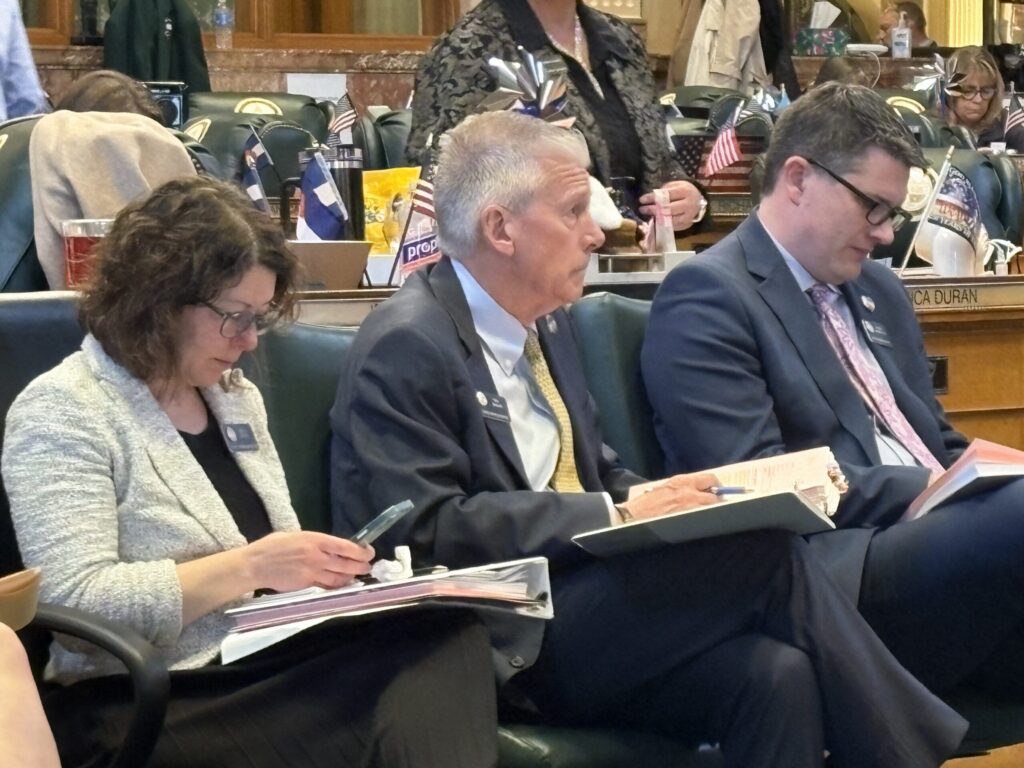
Colorado lawmakers grapple with spending cuts amid $1 billion-plus deficit
Marianne Goodland
marianne.goodland@coloradopolitics.com
Updated 1 day ago
The battle over Colorado’s budget for next year — which stalled in the House over a procedural maneuver — entered a more difficult phase on Thursday, when legislators grappled with hundreds of millions of dollars in proposed reductions to balance...
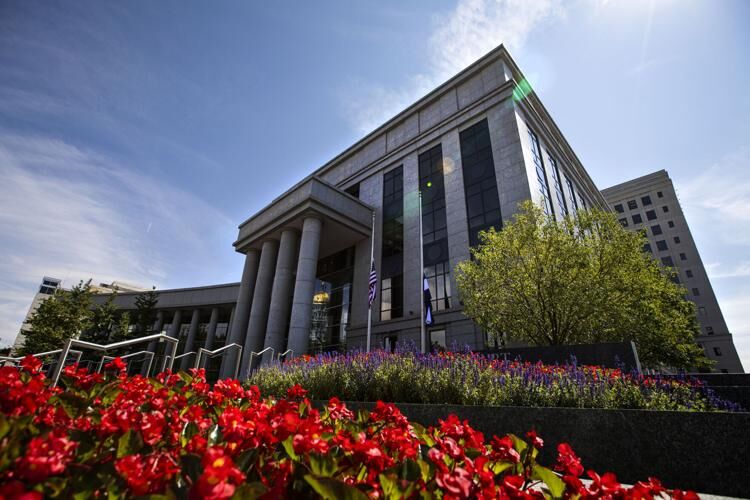
New rules for private judges in Colorado include discipline oversight, campaign contributions
David Migoya
david.migoya@gazette.com
Updated 5 hours ago
The Colorado Supreme Court recently determined the state’s private judges — retired jurists appointed to oversee civil cases that rarely get public scrutiny — can now make political contributions freely and without reserve, overruling a prohibition that had been in...

Colorado bill reshaping RTD board advances
Marissa Ventrelli
marissa.ventrelli@coloradopolitics.com
Updated 1 day ago
A proposal to reshape the Regional Transportation District’s leadership easily cleared a committee vote Wednesday, advancing the bill sponsors say is needed to revive a transit system still struggling to regain riders and public trust. Critics have countered that, while...
PREV
PREVIOUS

Denver Council debating moratorium on popular architectural design for developers
Whether or not a specific form of architectural design will continue to be allowed or banned by the City of Denver is currently a topic of debate between council members. The Council’s willingness to put a moratorium in place on developers using a “garden court” form design in their projects seems to hinge on whether […]

Aaron Harber interviews Jerry Springer at the Democratic National Convention