

Romanoff: Coloradans weigh in on barriers to mental health care
More than one million Coloradans experience a mental health or substance-use disorder each year. Only 40 percent receive treatment.
What stops so many Coloradans from getting the mental health care they need? And what can we do about it?
Mental Health Colorado – the state’s leading advocate for the prevention and treatment of mental illness – is taking those questions on the road. As part of our statewide listening tour – “A Conversation with Colorado” – we convened public forums in Pueblo on March 30 and Greeley on May 24. (We head to Fort Collins on June 28; details are available at mentalhealthcolorado.org).
Here are some of the findings we’ve gathered so far:
1) Cost poses one of the biggest barriers to mental health care. More than 60 percent of the respondents in Pueblo and Greeley – and nearly as many in the statewide Colorado Health Access Survey – cited “concern about the cost of treatment” as the reason they (or someone they knew) didn’t get the care they needed.
2) A lack of insurance remains a significant barrier to care. While the percentage of uninsured Coloradans has fallen dramatically in recent years, two-thirds of the respondents in the statewide survey, as well as a majority of the participants at our Pueblo forum, listed a lack of insurance among the obstacles to mental health care.
3) Stigma continues to stop many Coloradans from getting the mental health care they need. Fully 40 percent of the statewide respondents, and similar percentages in Pueblo and Greeley, said they (or someone they knew) “did not feel comfortable talking about personal problems with a health professional.”
4) An even larger share of the respondents in Pueblo (54 percent) and Greeley (48 percent) said they (or someone they knew) didn’t get mental health care because they were “concerned about what would happen if someone found out.” The corresponding figure in the statewide survey was considerably smaller (28 percent).
5) Waiting lists and scheduling difficulties impede access to mental health care. One-third of the respondents in the statewide survey said they had found it hard to get an appointment. That problem seemed more pressing among our Pueblo participants (46 percent) than among their counterparts in Greeley (27 percent).
A caveat: The participants in our listening tour are self-selected; they may not mirror Colorado’s population as a whole. But they do bring a broad range of perspectives. One-third of the Pueblo and Greeley respondents, taken together, said they had provided mental health care. The same percentage had experienced a mental health or substance use disorder. And more than two-thirds had family members with such disorders.
Few of the participants (only 7 percent in Pueblo and 14 percent in Greeley) pronounced themselves “very satisfied” with the mental health services in their community. Dissatisfaction was far more pronounced in Pueblo (59 percent) than in Greeley (29 percent). The remaining participants (34 percent in Pueblo, 57 percent in Greeley) described themselves as “somewhat satisfied.”
Participants offered no shortage of suggestions for improving mental health services. Among the most common: engage the news media, educating the public about existing resources; increase the number of psychiatric beds; recruit more qualified providers; and expand school-based programs.
The need for more information formed the most frequent refrain throughout our discussions. Asked why children in their community didn’t get the mental care they needed, for example, roughly 70 percent of the participants in both Pueblo and Greeley said parents didn’t know where to go. Nearly as many respondents also said the children’s symptoms had not been identified.
We’ll report more findings from our listening tour in the months ahead. You can take part – and share your stories and suggestions – by visiting mentalhealthcolorado.org.
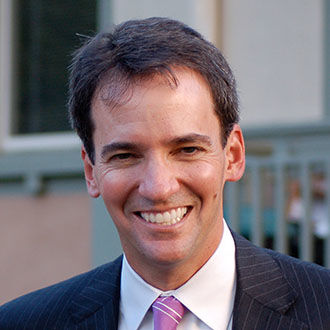
Andrew Romanoff is the president and CEO of Mental Health Colorado. He served as speaker of the Colorado House of Representatives.


Law enforcement officers shouldn’t wear masks | Jon Caldara
Jon Caldara
jon-caldara@coloradopolitics.com
Updated 3 days ago
Should police wear masks? Denver’s City Council thinks no — and is even trying to outlaw it for federal agents operating in the city (because if there’s one thing municipal governments do well, it’s bossing around Washington). Like so many...

A day in the life of the Capitol: Capitol M | Week of Feb. 14, 2026
Marianne Goodland
marianne.goodland@coloradopolitics.com
Updated 3 days ago
The lighter side of the Capitol, usually. If you were walking around the Capitol on Feb. 12, there was plenty to see and to be amused (or delighted) by. Let’s start with the high school kids from Greeley’s District 6....
Michael Bennet and ‘the question’ | SONDERMANN
Eric Sondermann
eric-sondermann@coloradopolitics.com
Updated 1 day ago
The train usually runs only one way. The route goes from the state Capitol to Washington, D.C. State legislators become members of Congress; governors become senators. See Hickenlooper, John. Including our junior senator, no matter his years, a total of...
Colorado judges lean left — just look at the numbers | George Brauchler
George Brauchler
george-brauchler@gazette.com
Updated 2 days ago
Colorado’s judicial selection system is heavily skewed toward Democrats and defendants. It is time to drop the pretense that our system adequately minimizes the impact of partisan political influences on the selection of the judicial branch. In less than two...
‘There will be costs,’ warns Jason Crow after failed indictments for ‘illegal orders’ video | TRAIL MIX
Ernest Luning
ernest.luning@coloradopolitics.com
Updated 2 days ago
U.S. Rep. Jason Crow, the Aurora Democrat who represents Colorado’s 6th Congressional District, signaled this week that he’s considering pursuing legal action against members of the Trump administration after a federal grand jury in Washington declined to indict Crow and...
Two front pages, one false choice for Colorado lawmakers | OPINION
Maya Wheeler
maya-wheeler@gazette.com
Updated 2 days ago
Every day, the headlines remind us how fragile safety can be. Stories of violence, loss, and families searching for answers are becoming far too common — and they demand serious, thoughtful policymaking. Recent reporting on federal immigration enforcement has been...
Hardworking Coloradans deserve dignity, right to access wages they earned | OPINION
Colorado Politics
colorado-politics@coloradopolitics.com
Updated 3 days ago
By Monica Duran and Sean Camacho Across Colorado, too many families are doing everything right, yet still cannot make ends meet every month. Inflation has driven up the cost of groceries, rent, childcare and gas, while wages remain unchanged. For...
Penny-wise, pound-foolish cut threatens Colorado’s physician pipeline | OPINION
Colorado Politics
colorado-politics@coloradopolitics.com
Updated 2 days ago
By Stephanie Sandhu The lead in HBO’s hit series “The Pitt” serves as the wise and experienced attending physician in an urban emergency department. Dr. Michael “Robby” Robinavitch, played by Noah Wyle, provides level-headed guidance to residents trying to make...
Colorado’s data centers should pay their own way | OPINION
Colorado Politics
colorado-politics@coloradopolitics.com
Updated 4 days ago
By Sara Schueneman As energy costs soar and corporations look for new places and sweetheart deals to build data centers, consumers risk being electrified by a bill before the Colorado General Assembly. If signed into law, the Data Center &...
Will Colorado’s Trump-and-Polis-approved education grift-gift continue? | Paula Noonan
Paula Noonan
paula-noonan@coloradopolitics.com
Updated 3 days ago
If President Donald Trump says it’s free money and Gov. Jared Polis says it’s free money, is it really free money? Both the president and governor claim the Great Big Beautiful Bill’s voucher for education scholarships is “free money.” The...
PREV
PREVIOUS
Scheffel: Session showcased clear divide on economic issues
It is often overlooked that much of what the General Assembly can do in any given session, from the annual budget on down, directly depends on the strength and vitality of Colorado’s private sector economy. The state’s economy is the team of horses that pulls everything else along, including government. Virtually every dollar spent at […]

May: Terrorism and economic warfare
It’s a one-two punch meant to bring about a Middle East without Jews Tel Aviv’s Sarona Market bills itself as the “heartbeat of Israeli culinary art.” Dozens of small restaurants and shops offer cheese, wine, bread, fish, olives, pasta, burgers – pretty much anything you can imagine and quite a bit that you probably cannot. […]