

Group of Colorado Republicans challenge RNC delegation, charging rules violations
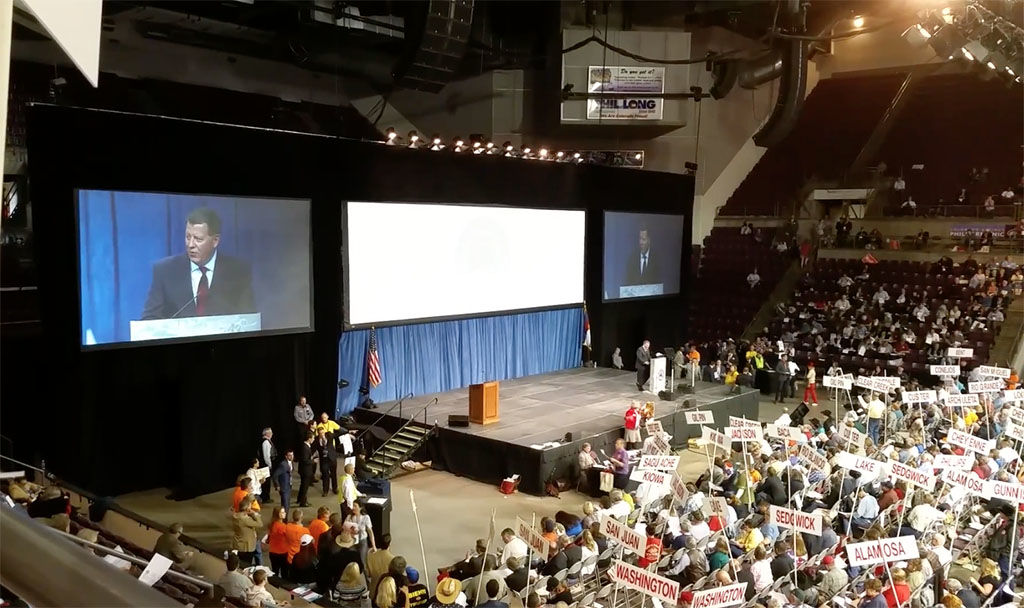
Three Colorado Republicans are asking the Republican National Committee to unseat national convention delegates elected in April, alleging that the state party botched the election process to such an extent that the results should be thrown out.
Another Republican is preparing a challenge – the deadline to file is Saturday – charging that the ballot for Republican National Convention delegates didn’t include her corresponding number, so it was impossible for anyone to vote for her, among other complaints.
“The conduct of the April 9 State Convention did not permit the will of the body to be determined with a reasonable degree of certainty,” charges a lengthy “Notice of Contest” document filed Monday with the RNC’s Standing Committee on Contests, adding, “The combination of significant violations of election rules and the chaotic environment of the convention resulted in an inaccurate, unfair, and reckless election and certification of at-large delegates that must not stand.”
State Republicans convened in Colorado Springs on April 9 to elect 13 delegates and an equal number of alternates to the RNC, which takes place July 18-21 in Cleveland. Republicans also picked 21 delegates and 21 alternates at earlier congressional district assemblies and are sending as automatic delegates state GOP chairman Steve House, Republican National Committeeman George Leing and Republican National Committeewoman Lily Nuñez.
State Republican officials said they had just received the notice of contest on late Monday afternoon and would have no comment until they’d had a chance to review it.
The contest notice asserts that the election was conducted in a “reckless, non-compliant manner,” including multiple violations of both state and national party rules and bylaws, including noncompliant ballots, inaccurate tabulation, erroneous and incomplete lists of delegate candidates and massive voter confusion.
For starters, the document alleges, party rules require that RNC delegate candidates’ names and presidential preferences appear on the ballot, but instead the ballot was just a long optical-scan card with hundreds of numbers. Adding to the confusion, some of the numbers appeared out of sequence and some were missing entirely, while the companion list of candidate names kept changing and many were listed with inaccurate corresponding numbers.
“I’m just speechless at all the things the state party allowed to happen with this convention,” Kathryn Porter, one of the three Republicans who filed the contest Monday, told The Colorado Statesman.
Former state GOP Secretary Lana Fore and Republican activist Susan Sharp Carr have also signed onto the contest.
Filing a contest to a state’s RNC delegation starts a complicated process that operates somewhat like a court appeal. The committee – made up of nine RNC members elected by region with a chairman appointed by the RNC chairman – meets several times to consider challenges to state delegations and makes a recommendation to another committee before the national convention convenes.
Porter and Fore, both El Paso County residents, were delegates to the state convention and ran for the RNC slots. Sharp was a delegate to the Pueblo County convention but not the state convention.
Porter has crossed swords with House – he told two RNC delegates they couldn’t bring her as a guest to the convention, saying her work as a blogger meant she instead had to apply for media credentials – but maintains there’s nothing personal, she is simply trying to make sure the state GOP fixes its election procedures.
“I’m doing this to hold the party accountable,” Porter said. “I feel like our state party leadership is talking about winning elections, but I think we first must win the hearts and minds of Republicans who have lost faith in the party.”
The contest notice includes a lengthy list of what it terms “widespread, pervasive violations of the Rules that resulted in the improper selection and certification of all Colorado at-large delegates and alternates.”
Allegations include everything from using a forbidden ballot format to failing to provide microphones on the floor at the World Arena so delegates could raise objections or ask questions during the balloting.
The three contestants also argue that the state GOP acted unfairly by projecting the names and ballot numbers of a slate of candidates backed by the campaign of Texas Sen. Ted Cruz on a screen for more than 20 minutes as Cruz addressed the convention.
As it turns out, the 16 members of the Cruz slate took the top 16 positions – all 13 delegates and the top three alternates – by a wide margin. (Cruz was locked in a close struggle with billionaire Donald Trump for delegate support at the time the convention took place but suspended his campaign several weeks later.)
“Election irregularities were prevalent and of such magnitude that the results selecting the 26 Respondents are materially inaccurate, unverifiable, and unreliable,” the notice reads.
The contestants are asking the RNC to appoint Porter and Fore as delegates, taking the place of two delegates “chosen to be decertified at the discretion of (the) committee.” In addition, they’re asking that three more delegates be removed and replaced with others “as representatives of the 610 candidates who were treated less favorably.”
“What we hope to achieve is,” Porter said, “is we would like to see five seats for grassroots delegates as representative of the hundreds, maybe thousands who were treated unfairly. They were treated unfairly because of the negligence at a level I can’t even imagine, the way this convention was run.”
Denver Republican Molly Sullivan was also a national delegate candidate and is preparing a separate challenge based on a different list of rules violations.
She says House basically dared her to file the contest when she raised questions recently about delegate election procedures and asked to see some records.
“We will take no further action on this matter until your contest has been filed and the committee has decided how we should proceed,” House told Sullivan in a June 3 email obtained by The Statesman. He sent her the procedures for filing a contest in a separate email.
“It’s a toxic reaction to an interest in establishing wrongdoing or accountability and what can be done in the future,” Sullivan said. “It’s taking the hardest line possible. It’s the nuclear option. I feel pushed into the corner because the state party is effectively saying, you’re not going to get this information unless you take on an incredibly difficult challenge at a high level that’s going to be very expensive and very draining and in the national spotlight.”
Sullivan was assigned ballot number 513, according to the ballot supplement – a pamphlet listing delegate candidates with corresponding punch-card numbers and presidential preferences – but the optical-scan ballot didn’t have a 513, instead listing 512, 523 and 514 in sequence. (The same 523 was assigned to another candidate and appeared further down the ballot in its normal sequence.) While she argues no one could vote for her based on the faulty ballot design, she says that wasn’t the only problem.
“The ballot was just egregious – it had hundreds of extra numbers than there were people running, and it didn’t follow the party rules by having their names on it. On top of that, the booklet was wrong,” she said.
Sullivan, who just finished law school at the University of Denver and is studying for the bar exam, said that filing a contest over RNC delegates was the last thing she wanted to do this summer.
“I was going to take a year off of politics, and this is what the universe threw at me. Extraordinary times sometimes call for doing the right thing,” she said. “It’s not that I lost – that’s not the issue. The level of disregard for the rules and the level of rebuke and ‘screw you’ for trying to acknowledge it or fix it, that’s what’s wrong.”
CORRECTION: The ballot used to select at-large delegates to the Republican National Convention at the Colorado state convention was an optical-scan ballot, not a punch-card ballot, as this story originally said.

Denver police chief on mask ban, mayor’s orders: ‘What enforcement looks like, I’m not exactly sure’
Deborah Grigsby
deborah.smith@denvergazette.com
Updated 11 hours ago
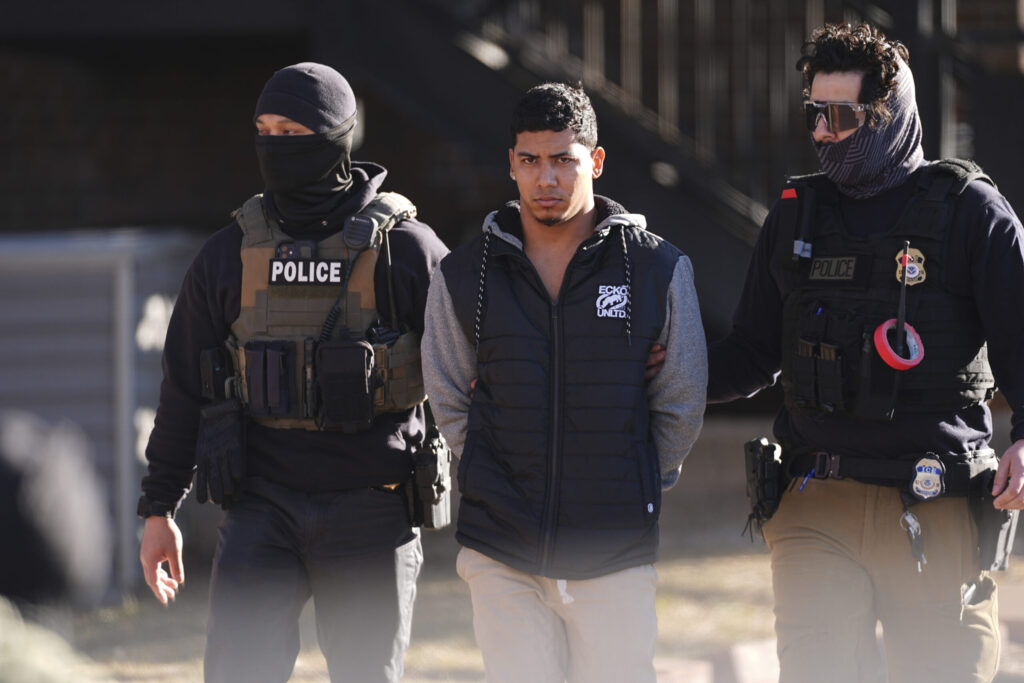
Denver bans wearing of face masks by law enforcers, use of city property to stage immigration operations As Denver takes steps to restrict federal agents conducting immigration enforcement in the Mile High City, its police chief said he is unclear...
Colorado lawmakers move to curb eminent domain powers after Xcel dispute
Marissa Ventrelli
marissa.ventrelli@coloradopolitics.com
Updated 16 hours ago
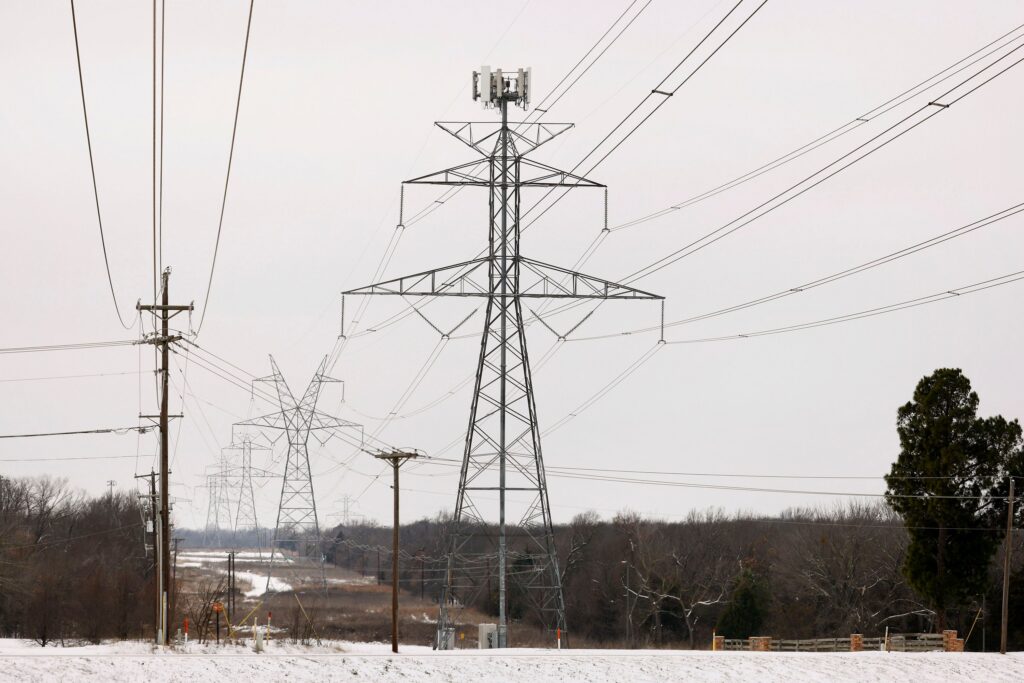
After months of backlash over Xcel Energy’s use of eminent domain in eastern Colorado, lawmakers representing Elbert and El Paso counties are advancing legislation that would bar utilities from initiating property takings until they’ve secured state approval and all required...

As parents claim some AI chatbots encourage teen suicide, Colorado legislators eye regulation
Marissa Ventrelli
marissa.ventrelli@coloradopolitics.com
Updated 13 hours ago
Juliana Peralta of Thornton was a vibrant, happy kid, said her mom, Cynthia Montoya. Then, in the final months of 2023, Cynthia began to notice a change in her 13-year-old daughter. Peralta had become more withdrawn and was on her...
Trump to attend dignified transfer of six US service members killed by Iran
Christian Datoc, Washington Examiner
christian.datoc.washington.examiner@gazetteedit.wpenginepowered.com
Updated 15 hours ago
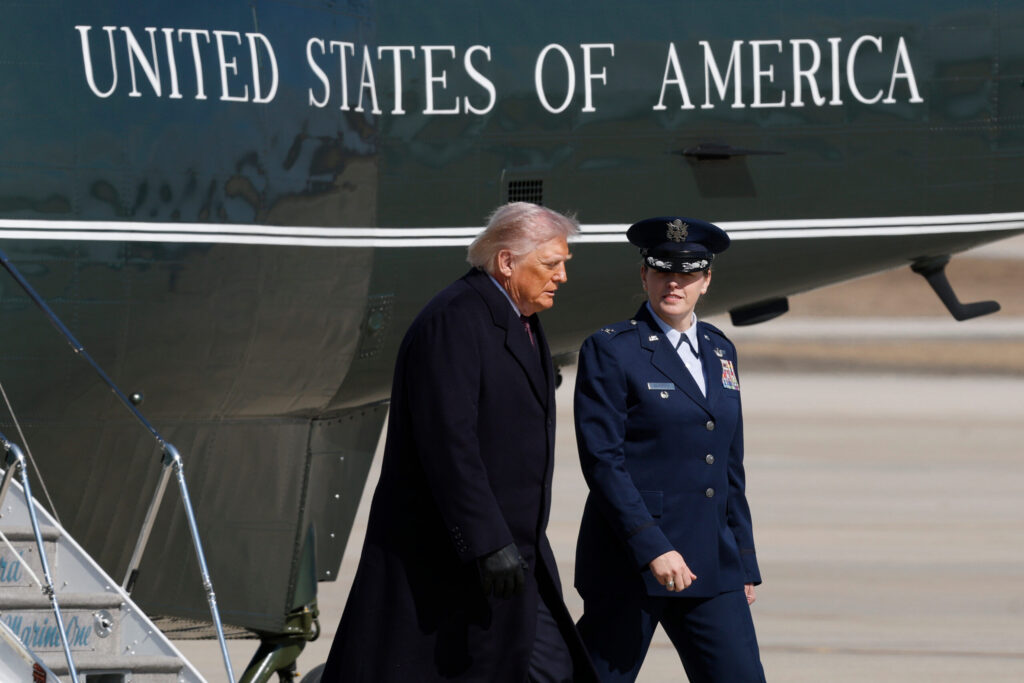
President Donald Trump will attend the soon-to-be-held dignified transfer of six American service members killed so far by Iran in Operation Epic Fury. White House press secretary Karoline Leavitt made the announcement during her Wednesday press briefing. “These heroes represent...

Judge declines to block potential Boebert challenger from going through assembly process in Colorado’s 4th CD
Ernest Luning
ernest.luning@coloradopolitics.com
Updated 17 hours ago
Congressional candidate Eileen Laubacher, one of the Democrats seeking to challenge Republican U.S. Rep. Lauren Boebert, can participate in the party’s caucuses and assemblies pending a court hearing later this month, a Denver judge ruled Tuesday in response to a...
Sanctuary cities declined 17,864 requests to hold illegal immigrants for ICE in 2025: Noem
Anna Giaritelli Washington Examiner
anna-giaritelli-washington-examiner@coloradopolitics.com
Updated 30 minutes ago
Sanctuary cities and counties declined to turn over 17,864 illegal immigrants in police custody to Immigration and Customs Enforcement in 2025, according to the Department of Homeland Security. Homeland Security Secretary Kristi Noem testified before the House Judiciary Committee on...
Federal judge dismisses malicious prosecution claim against former Denver prosecutor
Michael Karlik
michael.karlik@coloradopolitics.com
Updated 18 hours ago
A federal judge concluded on Monday that a former Denver prosecutor could not be sued for allegedly causing the arrests of two plaintiffs after they failed to appear for trial on the scheduled date, even though the trial had been...
Judicial discipline commission reports increased transparency, increased submissions
Michael Karlik
michael.karlik@coloradopolitics.com
Updated 19 hours ago
The Colorado Commission on Judicial Discipline received 473 misconduct complaints about judges in 2025, which was nearly 29% higher than in 2024 and substantially greater than any time in the past decade. However, only 31 complaints were referred to the commission...
Colorado Gov. Jared Polis ignites fierce debate after raising clemency questions in Tina Peters case
Marianne Goodland
marianne.goodland@coloradopolitics.com
Updated 12 hours ago
Gov. Jared Polis ignited a political firestorm Tuesday night after weighing in on the prison sentences of two former Colorado officials — a Democrat and a Republican — convicted of attempting to influence a public servant. The comments quickly fueled...

Colorado Supreme Court signals intervention in dispute over treatment for trans children
Michael Karlik
michael.karlik@coloradopolitics.com
Updated 2 days ago
The Colorado Supreme Court ordered Children’s Hospital Colorado on Tuesday to explain why it should not direct the organization to resume providing certain types of services to transgender children in compliance with the state’s non-discrimination law. Last month, a Denver...
PREV
PREVIOUS

Chaps, Gardner continue to prove Senate District 12 GOP primary is one to watch
Like many of the political races this year, the race for the Senate District 12 Republican primary has not been a cakewalk for either contender. In a race that is nearly deadlocked, current House District 15 Rep. Gordon Klingenschmitt and Robert “Bob” Gardner, a former state representative, are locked in an intensive struggle for the […]

Campaign chair calls on Dem state House candidate to withdraw, citing criminal record, ‘misrepresentations’
A member of the Aurora Public Schools Board and Democratic state House candidate who describes his occupation as “Life Visionary” appears to have taken his knack for self-invention to extreme heights, an investigation by The Colorado Statesman has revealed. Eric Durane Nelson, 38, one of two Aurora Democrats in a primary for the House District […]