

Helping or hurting: Navarro bill would spotlight executive pay at failing schools

Swing district state Rep. Clarice Navarro, R-Pueblo, is sponsoring an education bill that aims to spotlight administrator pay at schools and in school districts that are struggling to meet minimum state performance standards.
House Bill 1162 is set to be heard by the House Education Committee Monday. It would require school boards to give advance public notice and hold public meetings when considering boosting the salaries of district superintendents or principals or vice principals in any district or at any school that has been placed on one of the state’s “priority improvement” or “turnaround” plans.
“There are 180 schools in Colorado that are in failing status,” Navarro told The Colorado Statesman. “In my district, we have 19 of those schools. I think it’s important that our communities are aware of school status, how it’s affecting our kids and why our principals, superintendents, CFOs continue to get raises when we are in a failing status. I’m not sure the public is aware.”
Navarro is serving her second term representing House District 47, which runs east and west of Pueblo. She won her seat in presidential-election-year 2012 by 1,200 votes. She has been a sort of dream politician for a state Republican Party that has struggled to win over young people, ethnic minorities and women. Navarro is all three and she doesn’t shy from taking up issues in which she can celebrate individual responsibility and public accountability. Pass or fail, she’ll surely be touting this bill on the stump this year in a state where education politics have come to dominate local elections.
But a group that represents school administrators told The Statesman that the bill would do more harm than good. They said it oversimplified the issues it aims to address and it will work mainly to dissuade qualified principals and administrators from taking difficult jobs at low-performing schools and districts where their experience is most needed.
Ignacio School District Superintendent Rocco Fuschetto received a $5,000 raise in fiscal year 2014 and a $2,000 raise in fiscal year 2015. His salary and raises are detailed in public records that Navarro requested when she was considering running her bill. It was one of the requests she filed for records on school districts across the state that are operating under improvement plans.
Fuschetto said his pay increases were part of a salary schedule that was established when he was hired six years ago and that the $2,000 increase in 2015 was a less than the $5,000 he had been scheduled to make.
Fuschetto said it was unfair to characterize the Ignacio schools as failing. He described a host of issues his students face that makes it difficult for them to do well on the state’s standardized tests. He invited Navarro and any other lawmakers who might be interested to visit his district. He notes that Ignacio is home to a little more than 700 residents and hosts a student population that is largely Native American and Hispanic.
“This is performance pay basically,” Fuschetto said about Navarro’s bill. “But I keep saying this continuously: (Poor performance on) one test doesn’t mean that the Ignacio School District is a bad school district. Forty percent of my students are Native Americans and there is research out there that shows Native Americans learn differently. Standardized tests are not written for Native American students or minority students.
“The more important issue (legislators) need to deal with is the whole school finance issue,” Fuschetto added. Solving the widely acknowledged school funding shortage in Colorado would be a more effective way of addressing school shortcomings “than to just pick on administrators of schools that are really working to improve and without knowing what the community is like.”
Navarro concedes that the issue is complicated and the challenges are real but she thinks transparency and greater community accountability will help.
“It’s absolutely vital that our communities know what is going on in our schools, know that our students are in failing school districts and our administrators continue to get pay raises while our kids are being held in a failing status. It’s just not acceptable,” she said.
Bruce Caughey, executive director of the Colorado Association of School Executives, of which Fuschetto is a member, said the one reliable effect of the Navarro bill would be to drive experienced administrators away from troubled schools.
“First of all, I’d be really interested in hearing what the theory of action is in terms of improving a school by adding one more barrier to securing a good leader for that school,” Caughey said. “It’s difficult enough for veteran principals to take on underperforming schools. I know for certain that it would make experienced professionals think twice before taking on a school in this category.”
Caughey also said it could open up administrators to disgruntled employees using the process to complain about an administrator’s efforts to change the culture and direction of a school.
Navarro said Thursday that she reached out this week to the Colorado Department of Education for feedback on her bill but had yet to hear back.
Jeremy Meyer, spokesman for CDE said the state board hasn’t yet taken a position on the bill, but he said the salaries of school officials are set entirely by local communities and the local school boards. “The CDE plays no role in setting those,” he said.
Navarro hopes seasoned administrators will continue to take on difficult jobs, but at the end of the day, she said, making sure that poor-performing schools were being transparent about pay rates and that parents had a say in how money was being spent was the most important thing.
“It’s public record, anyone can look at it, so it’s not in the intent of the bill to hurt a failing school,” she said. “Maybe (parents) think the money would be better spent inside the classroom, on books, on smartboards.”
She said her bill doesn’t seek in any way to thin local administrative control.
“It’s still the school board’s discretion (to increase pay). All I am saying is let the public have more awareness.”


Colorado Politics Calendar Aug. 3-9
Rachael Wright, Special to Colorado Politics
rachael.wright@coloradopolitics.com
Updated 3 days ago
CoPo’s weekly political calendar will help you find political and public-policy events throughout Colorado. It includes candidate and issue campaign events, public policy meetings, court hearings, state and local party conventions, assemblies, debates, rallies, parades, speaking engagements, traveling dignitary appearances,...
The primary political reform and precondition for all others | SONDERMANN
Eric Sondermann
eric-sondermann@coloradopolitics.com
Updated 3 days ago
In its current state, the American political system has no end of ailments. Far too many factors accelerate polarization and work against moderation and narrowing the differences. Media, and the way so many citizens limit themselves to agreeable, reinforcing sources,...
Susemihl wins surprise victory to replace Steve Durham as Colorado Springs state senator | A LOOK BACK
Rachael Wright, Special to Colorado Politics
rachael.wright@coloradopolitics.com
Updated 3 days ago
Forty-five years ago this week: In a closed session, the vacancy committee for Colorado’s Senate District 12 selected attorney Peter Susemihl to complete Sen. Steve Durham’s, R-Colorado Springs, term. Durham resigned his seat to become Region 8 Director of the...

10th Circuit partially revives lawsuit over 2020 Denver protest injuries
Michael Karlik
michael.karlik@coloradopolitics.com
Updated 19 hours ago
The Colorado-based federal appeals court revived a man’s claims against Denver on Friday after concluding a trial judge resolved the case in the city’s favor without analyzing two of the three instances of alleged excessive force and other constitutional violations....

At conservative summit, Colorado Republican leaders concede Democrats’ election edge
Marissa Ventrelli
marissa.ventrelli@coloradopolitics.com
Updated 2 minutes ago
Four Republican state lawmakers told attendees at a gathering of conservative leaders on Friday they doubt their party can win statewide races, noting that Colorado’s electorate has been shifting toward Democrats but adding they see an opening in several pockets....
Federal judges find Colorado immigration judge violated several orders
Michael Karlik
michael.karlik@coloradopolitics.com
Updated 20 hours ago
Multiple federal judges in Colorado have freed people from immigration custody after determining that one immigration judge violated their directives for properly conducting bond hearings. For nearly a year, Colorado’s U.S. District Court has faced a flood of “habeas corpus” petitions...
Q&A with Mike Pence | Former vice president says GOP’s populist turn from conservatism isn’t permanent
Ernest Luning
ernest.luning@coloradopolitics.com
Updated 52 minutes ago
Former Vice President Mike Pence says he’s concerned that the Republican Party has taken a populist turn away from bedrock conservative principles during President Donald Trump’s second term, but he believes the party will return to its roots when Trump...
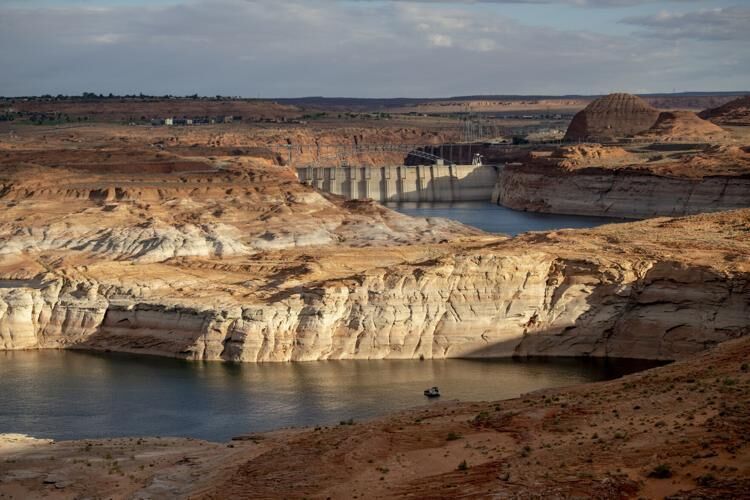
New federal plan sets short-term rules for Colorado River management
Marianne Goodland
marianne.goodland@coloradopolitics.com
Updated 19 hours ago
Interior Department’s plan spares Colorado from mandatory cuts for now After years of stalled negotiations among the seven states that rely on the Colorado River, the federal government on Friday released its own plan for managing the drought-strained system. Calling...
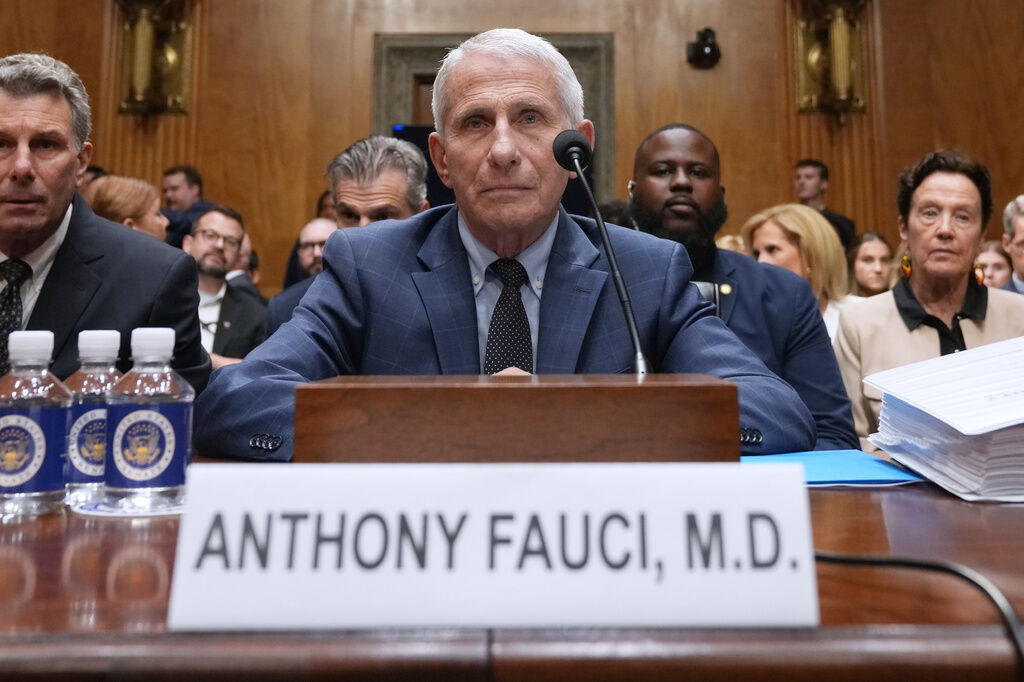
Fauci’s diary details blooming outrage toward ‘far right,’ softness toward Biden and China
Hudson Crozier
hudson.crozier@washingtonexaminer.com
Updated 24 hours ago
Dr. Anthony Fauci increasingly railed against “far right” critics of his approach to COVID-19 issues while describing strong support from the Biden White House in his pandemic-era diary, which was recently released by Congress. The former National Institute of Allergy...
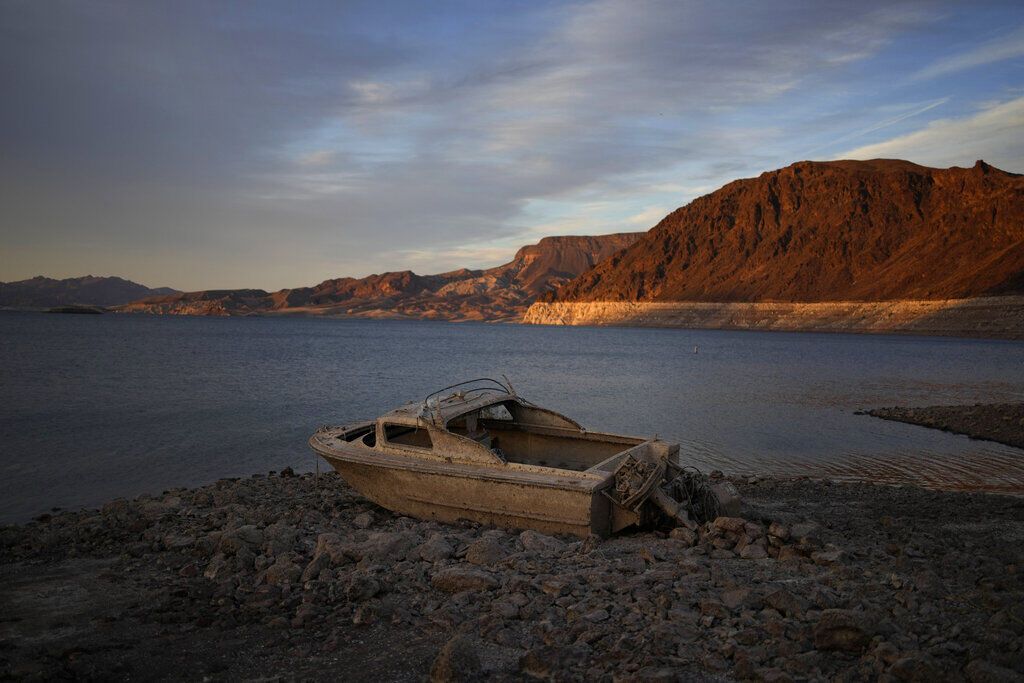
Colorado is spared mandatory cuts under federal Colorado River proposal
The Associated Press
the-associated-press@coloradopolitics.com
Updated 1 day ago
California, Arizona and Nevada to take less water under plan While Colorado has been spared from mandatory reductions, Arizona, California and Nevada would take less water from the Colorado River under a proposal announced Friday by the federal government to...
PREV
PREVIOUS

‘CHiPs’ and ‘Chaps’: Klingenschmitt motorcycle bill crashes in first House hearing
The large framed photo of 1970s television star Erik Estrada as Frank “Ponch” Poncherello, the dashing motorcycle-riding patrolman in the NBC hit “CHiPs,” failed to persuade. So did state Rep. Gordon “Dr. Chaps” Klingenschmittt, R-Colorado Springs, sponsor of a bill that would have allowed motorcyclists to ride between cars when traffic slows to a crawl. […]

Senate Shenanigans: Ulibarri amendment momentarily guts Neville 'right to work' bill
An anti-union right to work bill sponsored by state Sen. Tim Neville, R-Littleton, was briefly turned on its head Friday in the Republican-controlled Senate when an amendment submitted by pro-labor Sen. Jessie Ulibarri, D-Westminster, gained unanimous support even though it stripped Neville’s bill, SB16-070, of all the crucial right-to-work language that defined it. Neville, speaking […]