

Rural districts make two-day pitch at Capitol, draw talk, smiles, no promises
Leaders from advocacy groups Club 20, Action 22 and Progressive 15 told The Colorado Statesman they thought the trip helped focus the legislative conversation on the needs of the counties they represent — the 59 counties that often feel slighted by the five urban and suburban counties that dot the I-25 “metro corridor,” from Pueblo in the South to Fort Collins in the North.
“The real intention of doing this joint trip is to highlight the way rural communities have the same issues, whether they’re in western Colorado or on the Front Range. So developing those relationships across the Continental Divide and advocating on behalf of rural Colorado as a whole gives us strength,” said Christian Reece, executive director of the Western Slope group Club 20.
The groups hosted panel discussions on health care, education and transportation. Reece said the organizations planned to make the trip an annual affair. The Capitol buzzed with the visit. Everyone knew what the groups came to discuss. Democrats, who mostly represent the state’s urban counties, have vowed this election year to dedicate more attention to rural issues.
“We’re used to being out voted by the population centers along the Front Range. It’s not a new challenge by any means,” said Peter Dawson, an Action 22 board member and Baca County Commissioner. “Getting the three groups together and getting 100 or more people rather than 20 people together in one place, it attracts attention. We’ve had meetings (in the past) where the legislators outnumbered the other participants.”
The groups met mostly with rural legislators, who are predominantly Republican, and they pushed the lawmakers to rethink opposition to a hospital provider fee legislative change championed by Gov. John Hickenlooper and Democratic lawmakers. The plan would remove the fee from the state general fund, which would mean the fund could grow by additional hundreds of millions of dollars before automatic Taxpayer Bill of Rights revenue limits kick in and trigger the state to issue taxpayer refunds.
The politics of the proposed fee change have stoked fires at the Capitol for weeks. The fee featured, directly or indirectly, in most of the start-of-the-session speeches given by legislative leaders and the governor.
Many of the Republican lawmakers who spoke to the organizations flatly said they wouldn’t support the fee change, calling it a temporary and unconstitutional fix. But members from the organizations thought that the conversation about the fee succeeded in at least signaling the desperation in rural districts for greater resources.
“We all support moving (the fee) into an enterprise fund,” Cathy Shull, executive director of Progressive 15, told The Statesman. “The big thing with that for us is it will free up transportation dollars.
“We know the (hospital provider fee change) isn’t the final answer on transportation funding,” she said, “but the rural areas are the ones most affected by transportation budget cuts. We’re so far behind. We don’t have the congestion issue like Denver, but we have maintenance issues — and the funding for those is the easiest to cut.”
Sen. Kerry Donovan, D-Vail, told the groups she was proud to be the only Democratic member of the Senate whose district includes rural counties. She said she thought debate over the hospital provider fee and the budget could translate to new partnerships between rural groups and Front Range Democratic lawmakers.
“Our job is to take in as many opinions as possible,” she said. “We need to think of a long-term approach.”
Rep. Terri Carver, R-Colorado Springs, told the groups that she was working to make the state’s transportation funding process better reflect rural Colorado needs. Her House Bill 1018 would see the State Transportation Advisory Committee make funding recommendations to the state’s transportation commission and to the Colorado Department of Transportation. Her House Bill 1031 would realign the transportation commission districts, which Carver said underrepresent rural communities.
Carver also called for transportation funds to be distributed locally, something she has pushed for in the past, in order to better address smaller projects. She said too much money goes to major projects, which tend to benefit metro areas.
At an education forum, few solutions were offered for how to get more money to rural school districts. Colorado budget writers over the course of years have famously borrowed hundreds of millions from education funding to pay for other programs.
New Colorado Education Commissioner Richard Crandall said addressing the challenges facing rural Colorado schools, including the inability to retain qualified teachers, was a top priority.
Rep. Jim Wilson, R-Salida, defended the state’s education system. He said the news isn’t all dark and that critics should consider the large number of successful small schools in the state.
“Until we change the conversation from what’s wrong with education in Colorado to what’s right in education in Colorado, we are going to struggle,” he said. “We have good things happening, and we’ve got to utilize that. We have to change the conversation because, trust me, on both sides of the political aisle in this building, people believe there’s nothing right with education in the state.”
–ramsey@coloradostatesman.com

More people are now leaving Colorado than moving here from other states | Vince Bzdek
Vince Bzdek
vince.bzdek@gazette.com
Updated 7 hours ago
By Vince Bzdek It’s finally happened. Buried in all the self-congratulatory reports about Colorado reaching the 6 million mark in population last year was news that should be keeping our political leaders up at night. For the first time in...
Colorado state legislator plans introduction of victim compensation bill | A LOOK BACK
Rachael Wright, Special to Colorado Politics
rachael.wright@coloradopolitics.com
Updated 3 days ago
Forty-Five Years Ago This Week: “People to whom I’ve talked to say, ‘Yes’,” said Sen. Barbara Holme, D-Denver, “victims of crime should be compensated.” Holme said she would introduce a victim compensation bill in the upcoming legislative session, but the...
The governor and the inmate: Trying to make sense of Polis and Peters | SONDERMANN
By Eric Sondermann
by-eric-sondermann@coloradopolitics.com
Updated 3 days ago
Amidst the excess of news and outrage competing for our attention, much time and oxygen have been expended in trying to make sense of Jared Polis’s angst-ridden consideration of a sentence reduction for Tina Peters, former county clerk and now...

Colorado Politics Calendar Feb. 2-8
Rachael Wright, Special to Colorado Politics
rachael.wright@coloradopolitics.com
Updated 3 days ago
CoPo’s weekly political calendar will help you find political and public-policy events throughout Colorado. It includes candidate and issue campaign events, public policy meetings, court hearings, state and local party conventions, assemblies, debates, rallies, parades, speaking engagements, traveling dignitary appearances,...
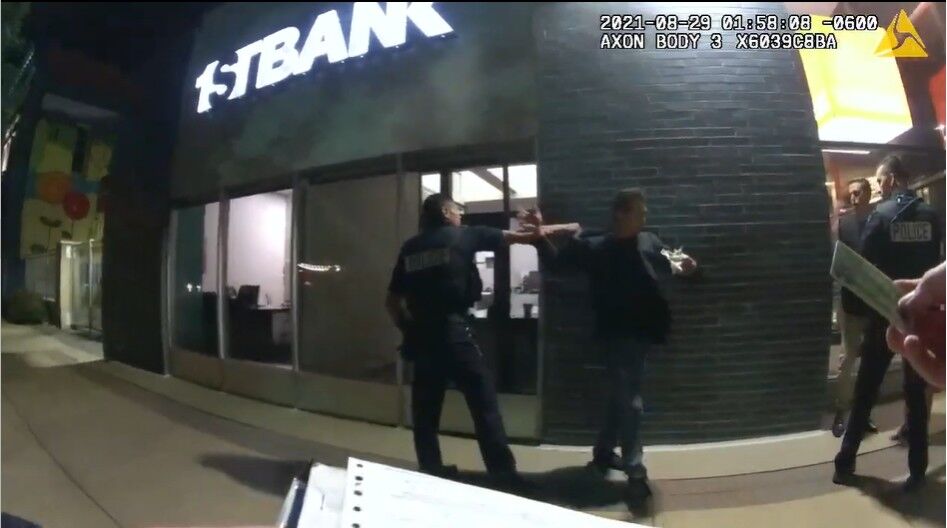
Federal judge green-lights excessive force trial against Fort Collins officers
Michael Karlik
michael.karlik@coloradopolitics.com
Updated 1 day ago
A federal judge concluded last week that a jury will need to resolve whether two Fort Collins police officers violated a man’s constitutional rights by using excessive force after he refused to accept a citation. In a Jan. 21 order,...
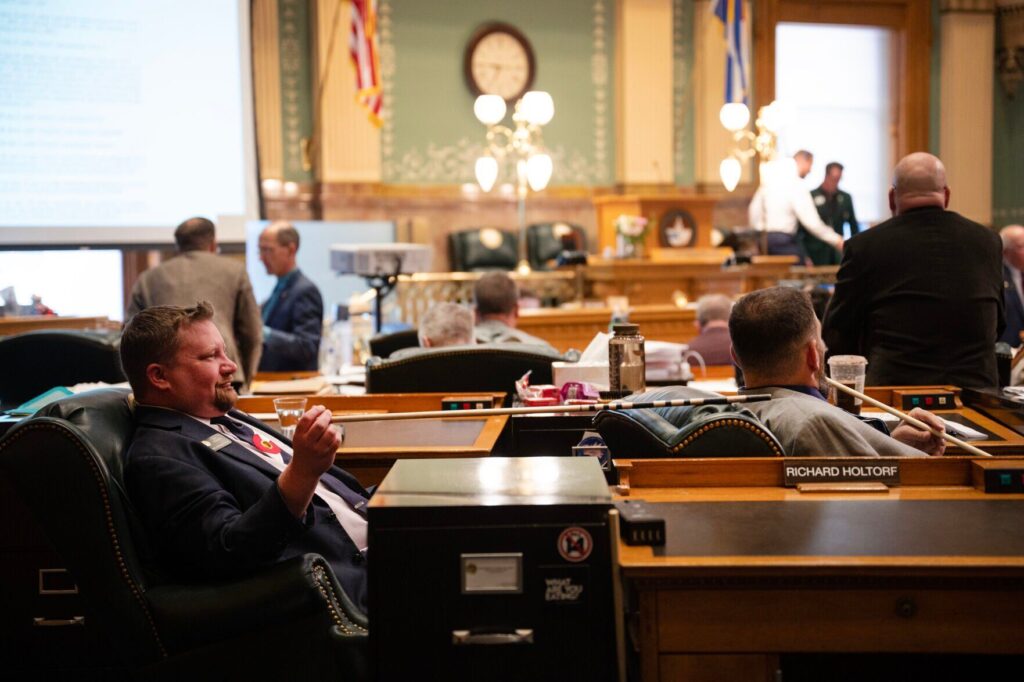
Colorado House launches ethics review of Rep. Ron Weinberg filed by fellow GOP legislator
Marianne Goodland
marianne.goodland@coloradopolitics.com
Updated 1 day ago
The Colorado House will convene an ethics committee to review a complaint filed by Rep. Brandi Bradley, R-Roxborough Park, against fellow Republican Rep. Ron Weinberg, R-Loveland. It will be the first time since 2012 that the House has formed an...
Colorado lawmakers reverse course, OKs $2.4M funding for additional prison beds
Marissa Ventrelli
marissa.ventrelli@coloradopolitics.com
Updated 1 day ago
The Colorado legislature’s budget panel changed course on Wednesday, reversing its previous decision to deny the Department of Corrections $2.4 million request to pay for additional prison beds. Last week, JBC members voted, 4-2, to deny the department’s request, with...
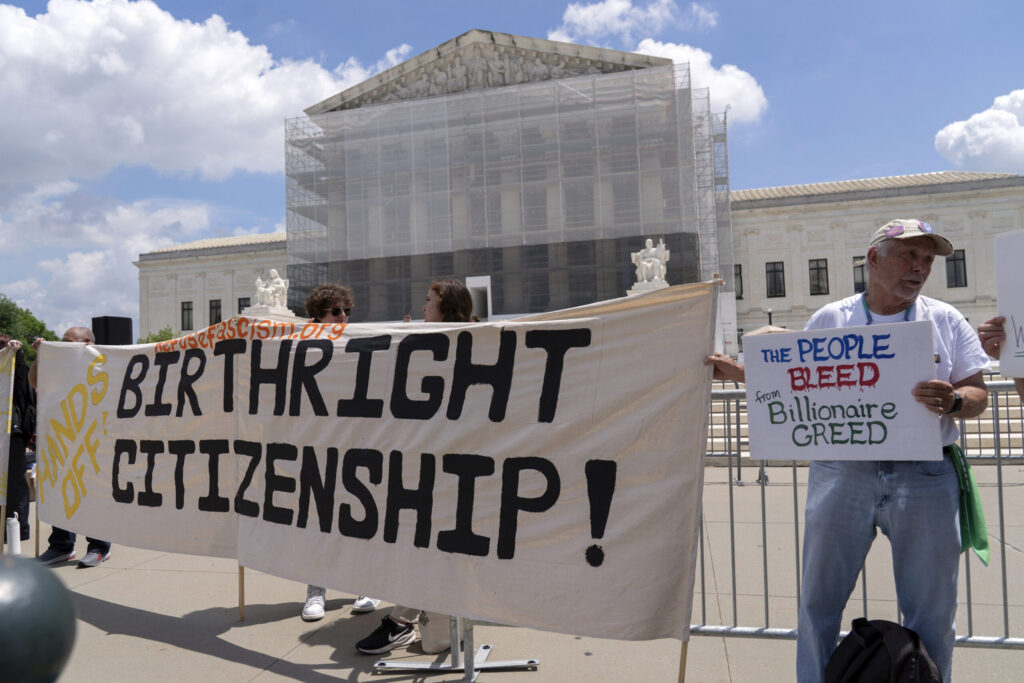
Trump allies urge Supreme Court to uphold his birthright citizenship order
Jack Birle, Washington Examiner
jack.birle.washington.examiner@gazetteedit.wpenginepowered.com
Updated 1 day ago
The Supreme Court will soon hear a landmark challenge over precisely who can enjoy the birthright citizenship granted under the 14th amendment, and the Trump administration and its allies are urging the high court to side with the president’s view....
Trump sues IRS and Treasury for $10 billion over tax return leak
David Zimmermann Washington Examiner
davidzimmermannwashingtonexaminer@wpstage.coloradopolitics.com
Updated 1 day ago
President Donald Trump filed a $10 billion lawsuit against the IRS and Treasury Department as one of the plaintiffs on Thursday, alleging a former IRS employee leaked his confidential tax records over six years ago. The federal lawsuit, filed in...

Party-line vote sends ‘red flag’ law expansion to Colorado Senate
Marissa Ventrelli
marissa.ventrelli@coloradopolitics.com
Updated 1 day ago
A panel of Colorado state senators voted along party lines Tuesday to advance a bill that would further expand who can ask a judge to temporarily restrict a person’s access to firearms under Colorado’s extreme risk protection order law. The...
PREV
PREVIOUS

Perlmutter draws Republican opponent who vows to end immigration
Republican Bruce Baker, a member of the Westminster City Council, is challenging five-term U.S. Rep. Ed Perlmutter, a Golden Democrat, on a platform of ending immigration into the United States and slapping a punitive tariff on all imports into the country. “We need to end immigration — all immigration, not just illegal immigration,” Baker told […]

Coffman outraises Carroll in 4th Quarter, sits on $1 million
U.S. Rep. Mike Coffman, an Aurora Republican, came out slightly ahead of his challenger, state Sen. Morgan Carroll, D-Aurora, in fourth quarter fundraising but has more than twice as much cash in the bank, according to documents the two 6th Congressional District campaigns will file with the FEC. Coffman raised $313,219 for the quarter and […]