

Crummy: Colorado oil and natural gas regulations protect the environment

Caitlyn Seeley George’s attempt to capitalize on the tragic Gold King Mine spill to further her group’s extreme agenda to ban fracking is outrageous (“Orange is not the new black when it comes to toxic spills,” in the Sept. 11 Colorado Statesman online edition). Even more disconcerting is that Seeley used misleading and false information in an attempt to scare readers to join her cause.
The fact is, Colorado’s stringent oil and natural gas regulations have been called a model for the nation. Through collaborative efforts by environmentalists, regulators and the energy industry, Colorado was the first state in the country to pass groundbreaking methane regulations, require water sampling both before and after drilling and publicly disclose all chemicals — and their concentrations — in fracking fluid. That information is available to anyone on FracFocus.org.

While George alleges it is inevitable that fracking will pollute drinking water and that oil spills are rampant in Colorado, the facts again prove her wrong.
The EPA has never found an instance of hydraulic fracturing contaminating Colorado groundwater. And after a multi-year, comprehensive review, the EPA found there is “no widespread, systemic impacts” on the country’s drinking water. The few cases of impacted groundwater in other states — which the EPA noted were small, compared to the number of hydraulically fractured wells — were primarily due to improper well construction, which is preventable.
Colorado’s tough laws require that each individual well be encased in multiple layers of protective, industrial-grade steel casing, which is surrounded by cement to ensure groundwater remains safe during fracking. Not only do operators test the groundwater before and after drilling, companies conduct mandatory integrity tests and keep detailed logs to provide evidence that steel and cement well casings are working properly.
Additionally, smart and strong regulations — supported by the industry — further protect against oil spills. In 2014, the volume of oil spilled decreased by 38 percent. The fraction of oil spilled — 0.03 percent — is the lowest in 16 years and means the industry is containing more than 99.99 percent of all produced oil.
Last year, stricter spill reporting requirements updated existing law so that any spills over 1 barrel (42 gallons) must be reported within 24 hours. Naturally, as a result of this stricter rule, more incidents have been reported. Yet, overall, the volume of oil spilled continues to decrease — proving that Colorado’s regulatory framework works.
In Colorado, responsible energy development continues to thrive because regulators, environmentalists, residents and industry consistently come together to seek solutions. This year, collaboration by Gov. John Hickenlooper’s Oil and Gas Task Force led to proposals aimed at solving land-use conflicts surrounding energy production. Once approved, these new regulations will further bolster the state’s already stringent regulations.
One of the many facts George chooses to ignore is that Colorado’s oil and natural gas industry is made up of employees who are protective of our land, air and water. They live here, play in the mountains and grasslands and raft and fish in our waterways. They want what most Coloradans want: responsible energy development that protects our environment while boosting our economy and putting us on a path towards energy independence.
Technology is making drilling for oil and natural gas safer than ever before. That fact ought to be celebrated, not twisted and distorted in order to scare Coloradans.
Karen Crummy is the strategic communications adviser to Coloradans for Responsible Energy Development.


Colorado GOP chair Brita Horn says she’ll resign next month, points to ‘divide within our party’
Ernest Luning
ernest.luning@coloradopolitics.com
Updated 57 minutes ago
Colorado Republican Party Chair Brita Horn said Thursday that she will resign her position next month following the GOP’s state assembly, citing what she described as an enduring divide” within the party “marked by vitriol and hostility.” Horn’s announcement came...
Colorado justices skeptical of appellate court’s limitation on prosecution’s appeal
Michael Karlik
michael.karlik@coloradopolitics.com
Updated 2 hours ago
The Colorado Supreme Court seemed skeptical on Tuesday that Denver prosecutors should be barred from appealing a trial judge’s permanent dismissal of a criminal case, based upon the sequence of events after the original ruling. Prosecutors charged Quinn M. Jebe...
Federal judge: Government violated order shielding man from deportation in ‘one-off mistake’
Michael Karlik
michael.karlik@coloradopolitics.com
Updated 4 hours ago
A federal judge acknowledged on Thursday that the government violated his order by deporting a man in immigration detention during his pending court case, but it “serves nobody’s interests” to require the government to return him. On Feb. 18, Tesfami...

Wolf depredation payouts in Colorado top $700K for 2025, double annual funding
Marianne Goodland
marianne.goodland@coloradopolitics.com
Updated 5 hours ago
The Colorado Parks and Wildlife Commission approved more than $706,000 in wolf depredation claims for 2025 during its March meeting last week, an amount that exceeds the state’s annual wolf compensation fund by more than double. The commission also rejected...

U.S. intelligence report suggests Iranian regime is not at risk of imminent collapse
Washington Examiner Staff, Washington Examiner
washington.examiner.staff.washington.examiner@gazetteedit.wpenginepowered.com
Updated 4 hours ago
Washington Examiner Recent U.S. intelligence reports have assessed that after nearly two weeks of Operation Epic Fury, Iran’s government leadership is not in danger of imminent collapse. The evaluation comes after 12 days of regular military strikes by United States...

Colorado committee recommends rejecting alcohol, marijuana tax hike to fund mental health care
Marissa Ventrelli
marissa.ventrelli@coloradopolitics.com
Updated 7 hours ago
In a rare move, Colorado’s Capital Development Committee unanimously recommended that another legislative committee reject a bill asking voters to approve higher excise taxes on alcohol and marijuana to fund a new mental health hospital in Aurora. Sponsored by Rep....
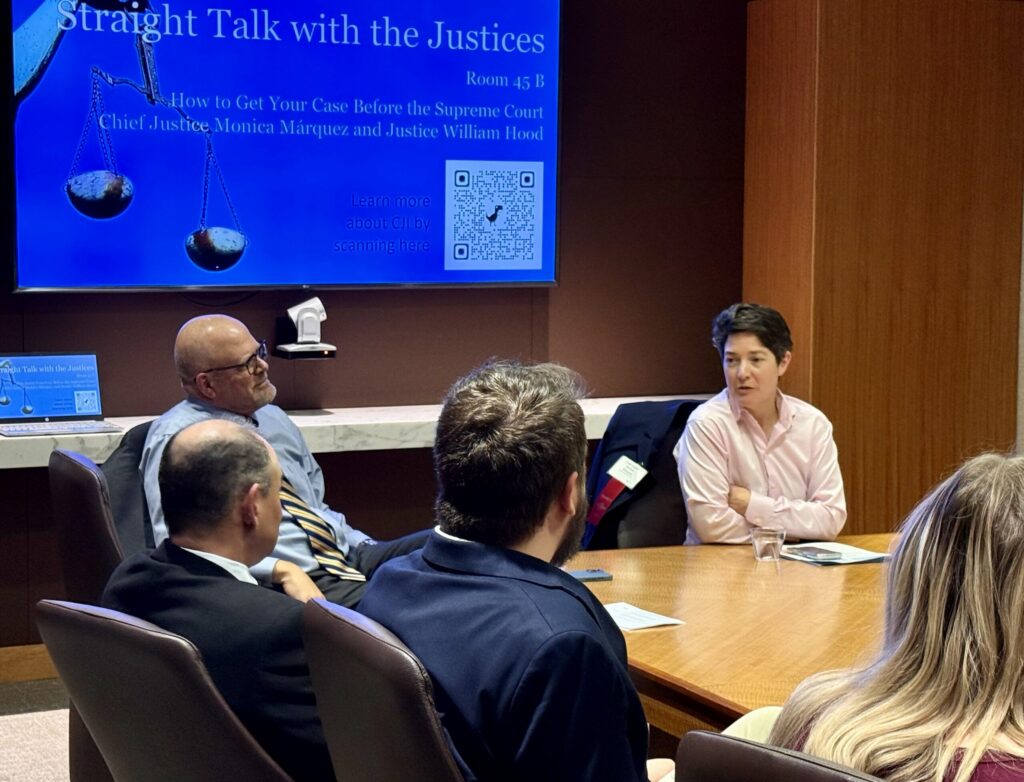
Colorado Supreme Court lifts curtain on decision-making at legal event
Michael Karlik
michael.karlik@coloradopolitics.com
Updated 7 hours ago
Members of the Colorado Supreme Court sat down with lawyers on Wednesday to answer questions about behind-the-scenes topics, including what happens immediately after an appeal is argued, why they might intervene in an ongoing case, and the consequence of a...

Senate, House leaders propose bill to cut outdated Colorado regulations and expand agency oversight
Marissa Ventrelli
marissa.ventrelli@coloradopolitics.com
Updated 1 hour ago
A bipartisan group of Colorado’s top legislative leaders is pushing a bill that would require periodic reviews of state regulations and expand lawmakers’ ability to scrutinize agency programs during oversight hearings. Senate Bill 137, sponsored by Senate President James Coleman,...
House Republicans split over SAVE America Act pressure campaign
David Sivak, Washington Examiner
david.sivak.washington.examiner@gazetteedit.wpenginepowered.com
Updated 11 hours ago
House Republicans are torn over how difficult to make life for the Senate as a band of rebels pressures Majority Leader John Thune (R-SD) to pass a national voter ID bill. Speaker Mike Johnson (R-LA) has cautioned House conservatives that...

Republican Jeff Crank, Democrat Jessica Killin qualify by petition for Colorado’s 5th CD primary
Ernest Luning
ernest.luning@coloradopolitics.com
Updated 11 hours ago
Republican U.S. Rep. Jeff Crank and Jessica Killin, one of the Democrats challenging the first-term incumbent, have both qualified for the primary ballot in Colorado’s 5th Congressional District after turning in a sufficient number of petition signatures, state election officials...
PREV
PREVIOUS
Noonan: Will DPS-style charter system work in Jeffco?
Former state Sen. John Andrews asked Jeffco school board members and candidates at a forum if they would welcome Denver Public Schools’ charter school system in Jeffco. I said I would not, while Ken Witt, John Newkirk, and Julie Williams, the three board members facing recall, all said they would. (I’m running for the seat […]

Hickenlooper announces Colorado Climate Plan
Gov. John Hickenlooper on Wednesday laid out a sweeping strategy for combating greenhouse gas emissions called the Colorado Climate Plan. Citing a state report that found “Colorado has warmed substantially in the last 30 years and even more in the last 50 years” and projects that temperatures will spike another 2.5 degrees by 2050, the […]