

Kogo a no go for governor in ’86, but Holly Coors keeps door open
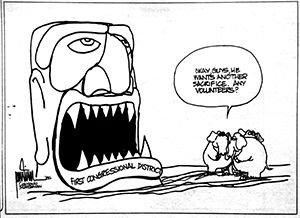
Thirty Years Ago this week in The Colorado Statesman … As a service to the proliferating field of candidates weighing runs for governor — incumbent Dick Lamm was stepping down in 1986 after serving three terms — the newspaper produced a Generic Gubernatorial Campaign Speech, “[s]uitable for everyday campaign use and moth swatting.” Based on pages of interviews with a half-dozen potential candidates published in the previous week’s Denver Post, the all-purpose speech, composed by Statesman theater critic Miller Hudson, “should prove completely satisfactory for everyday use with either Democratic or Republican audiences.” “My fellow Coloradans, never have the challenges facing our state been greater,” the speech began. “We truly stand at a crossroads.” The state was changing and voters were looking for solutions, a generic gubernatorial candidate might point out. “Our infrastructure … is deteriorating at an alarming rate at the same time that we are attempting to attract new businesses to Colorado. If we are to compete successfully for economic developments, we must demonstrate a willingness to run our state government like a business,” the generic speaker could say. “We need to forge an alliance between the public and private sectors,” everyday candidate continues, establishing “an agenda that protects the unique Colorado lifestyle so important to each of us.” Nearing the end of the stump speech, a candidate might orate, “I challenge my opponents in this race to outline their agendas for Colorado with the same specificity that I am providing in this campaign.” As generic cheers fill the air, ValuTime candidate concludes: “You deserve to know how the candidates for governor plan to maintain Colorado’s quality of life, ensure a sound public infrastructure, promote economic growth and manage the state government like a business — without tax increases or encroachments on individual property rights. If I can do it, as I have today, so can they!” …

… Meanwhile, former four-term U.S. Rep. Ray Kogovsek, a Pueblo Democrat, cheerfully batted away suggestions he might run for governor, saying at a Capitol press conference that the press corps bore some blame for the formal announcement he wasn’t running. “It’s basically your fault that I started thinking maybe I’d make a good governor,” he chuckled. No sooner had he decided to give up his congressional seat than reporters started speculating he’s make a good governor, he noted. But the answer, for at least a good while, he said, would be that he was enjoying running his new consulting and lobbying firm. In another six or eight years though — after putting his kids through college and paying off his house — Kogo said he might consider a return to the public arena. …
… Golden Republican Holly Coors, on the other hand, was keeping her options open as a prospective 1986 candidate for governor. Following her return from Nairobi, Kenya, where she had spent a few weeks as a member of the United Nations Conference on Women delegation, Coors said she planned to decide within a few months whether to toss her hat in the ring. The 1980 and 1984 chair of the Colorado Reagan campaign would be a formidable candidate, but truly hadn’t yet decided, said Colorado GOP executive director Kay Riddle. …

… Another potential gubernatorial candidate, Boulder marathon runner Frank Shorter, drew a scathing rebuke from Statesman publisher Bob Sweeney. “He should stick to something that he understands, running on foot, not running the state of Colorado or off at the mouth,” Sweeney wrote in his in his Statesmanlike column. “Would Frank Shorter advise a beginning jogger to enter a marathon race without proper training, practice, tennis shoes, diet and coaching? It is about as ridiculous for Frank Shorter to enter politics as a novice entering an Olympic race. Both contests take professional training, mental discipline, homework, personality and, in some cases, even diet.”
Fifty Years Ago this week in The Colorado Statesman … State Sen. Roy Romer, D-Denver, hailed the signing of the Medicare program into law by President Lyndon Johnson as “one of the outstanding social advancements in the history of the United States.” The measure, he said at a Democratic Club meeting in Denver, “marks a new era of enlightenment for our nation; an era in which even our poor citizens can look forward to a life freefrom the terrible economic burdens which so often accompany the infirmities of old age.” Romer also laid into Colorado’s two Republican senators, Gordon Allott and Peter Dominick, “[who] saw fit to turn their backs on the needs of the nation’s senior citizens and to vote against this progressive and desirable legislation.” Allott, who was up for reelection the next year, was already facing a raft of potential challengers, including Romer. “It must be of major concern to the many thousands of needy Colorado senior citizens who will benefit from Medicare to know that Senator Allott has publicly labeled the program ‘crackpot.’ I feel confident that they, along with other Coloradans, will express their disapproval in the voting booths in 1966.” …

… Former U.S. Rep. Byron Johnson, an economics professor at the University of Colorado Boulder, argued that Colorado should consider abolishing the General Assembly and instead establish a unicameral legislature made up of 40 members serving staggered, four-year terms. Such a body would be a continuing organization, its bills carrying forward from one year to the next. With only half the legislature turning over every two years, lawmakers could more easily avoid the political pressures that keep election-year sessions unproductive. “At present, the second session is a frankly political one, or the terms of at least 82 of the 100 members expire. They are looking at the next election and partisan advantage is sought in every vote.”


Kwame Spearman warrants plenty of criticism, not cancellation | SONDERMANN
By Eric Sondermann
by-eric-sondermann@coloradopolitics.com
Updated 2 days ago
All of us are flawed humans, some more so than others. This is the tale of Kwame Spearman who burst onto Denver’s business and political scene a handful of years back. His ride has taken a downhill trajectory. Within the...
Colorado Politics Calendar Mar. 30-Apr. 5
Rachael Wright, Special to Colorado Politics
rachael.wright@coloradopolitics.com
Updated 21 hours ago
CoPo’s weekly political calendar will help you find political and public-policy events throughout Colorado. It includes candidate and issue campaign events, public policy meetings, court hearings, state and local party conventions, assemblies, debates, rallies, parades, speaking engagements, traveling dignitary appearances,...
Federal judge upholds constitutionality of Colorado campaign contribution limits
Michael Karlik
michael.karlik@coloradopolitics.com
Updated 8 hours ago
A federal judge upheld Colorado’s individual campaign contribution limits as constitutional on Thursday, finding that three Republican plaintiffs failed to prove the campaign finance framework violates their First Amendment rights. U.S. District Court Senior Judge John L. Kane recognized that...
Appeals court rejects theory that existing tax revenue undermines need for new fees
Michael Karlik
michael.karlik@coloradopolitics.com
Updated 13 hours ago
Colorado’s second-highest court rejected a plaintiff’s claim on Thursday that the tax revenue generated by an existing activity should prevent local governments from imposing new fees aimed at regulating the activity. The question stemmed from Colorado’s unique constraints on taxation...
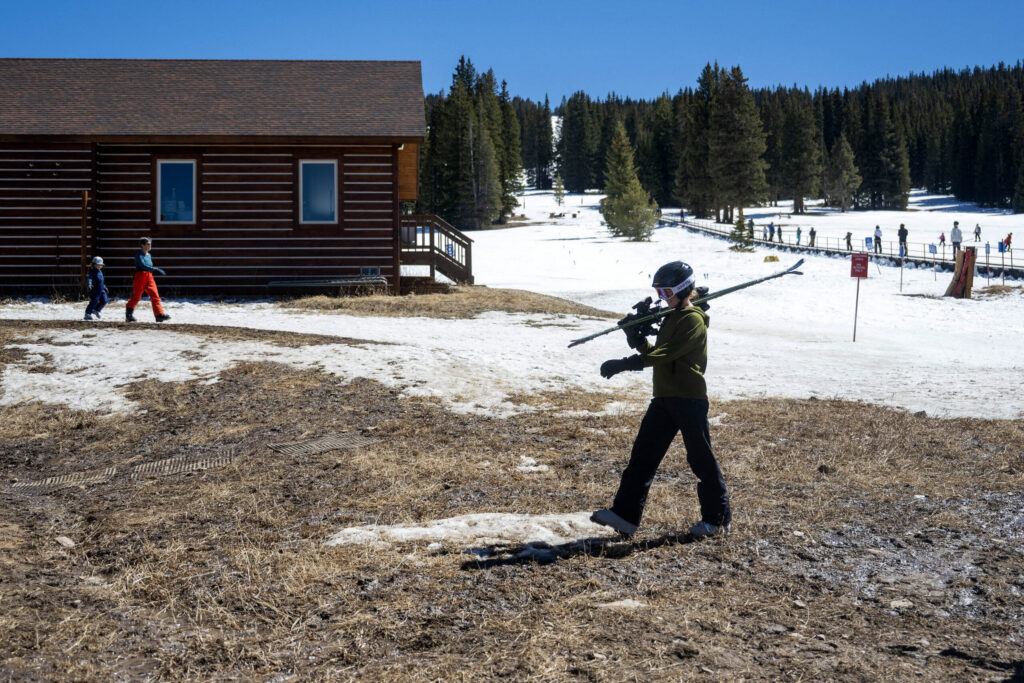
Colorado ski resorts announce early closures amid historic snowpack lows, high temperatures
Kyla Pearce
kyla.pearce@gazette.com
Updated 14 hours ago
As Colorado’s historically low snowpack year comes to a close and spring conditions take over the mountains, the state’s major ski resorts are announcing closing dates — some of which are weeks before historic closing dates. Most of Colorado’s ski...
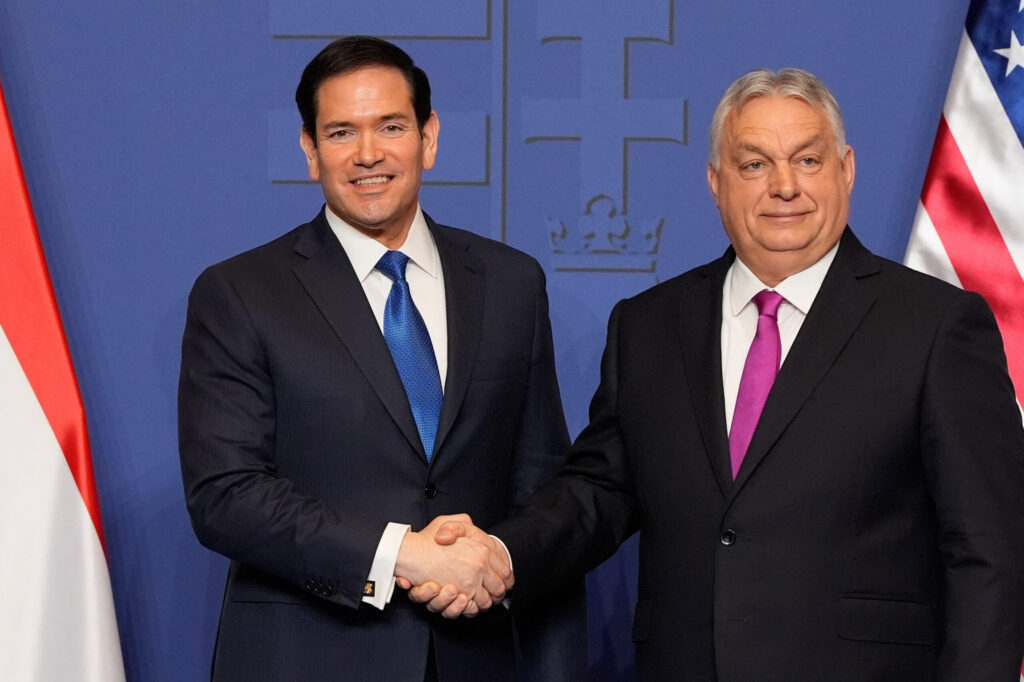
Marco Rubio’s star power rises at CPAC 2026
Mabinty Quarshie and Samantha-Jo Roth, Washington Examiner
mabinty.quarshie.and.samantha-jo.roth.washington.examiner@gazetteedit.wpenginepowered.com
Updated 16 hours ago
GRAPEVINE, Texas — Secretary of State Marco Rubio’s popularity is growing and could possibly boost him to one of the top two spots in the 2028 GOP presidential race, if attendees at the Conservative Political Action Conference are to be believed. ...

Boulder police investigate sexual assault, ‘drugging’ at bar near CU
Matt Kyle
matt.kyle@denvergazette.com
Updated 17 hours ago
The Boulder Police Department is investigating reports of sexual assault and “suspected drugging” involving underage girls at a bar. There may be additional victims who have not yet come forward, the department said in a news release. The bar, Scrooge...
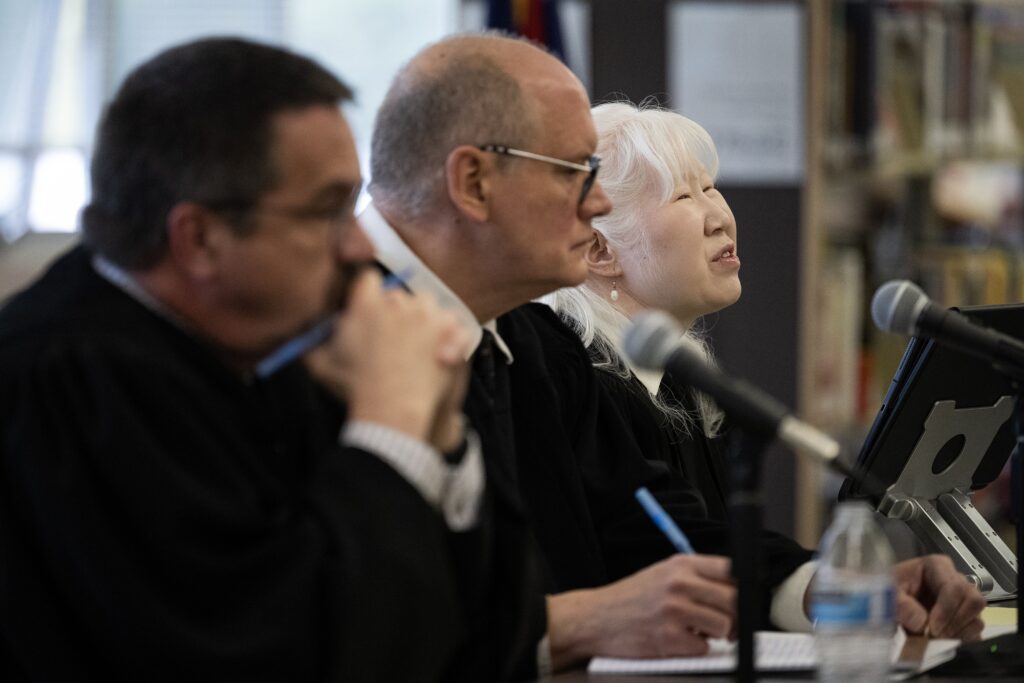
Appeals court finds no illegal sentence when defendants forfeit time-served credit
Michael Karlik
michael.karlik@coloradopolitics.com
Updated 19 hours ago
Colorado’s second-highest court ruled on Thursday that criminal defendants may agree to relinquish the credits they earned while incarcerated pending trial, despite a state law guaranteeing that such time “shall be deducted” from a person’s sentence. Kerry Ellis Endsley pleaded...
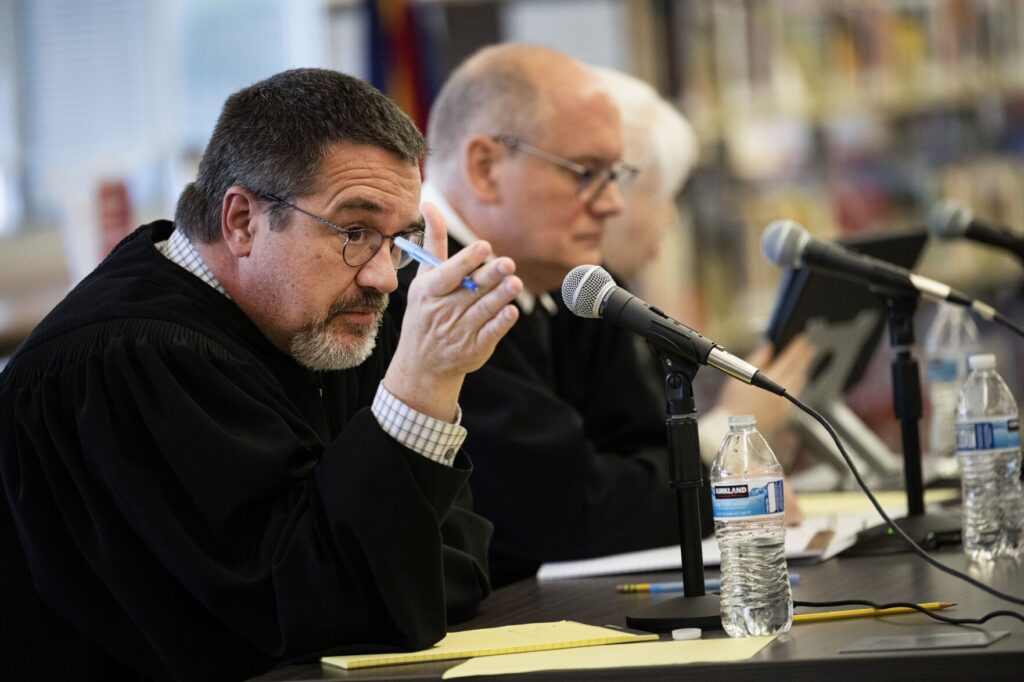
Appeals court reinstates Garfield County arson charge
Michael Karlik
michael.karlik@coloradopolitics.com
Updated 2 days ago
Colorado’s second-highest court reinstated a Garfield County defendant’s arson charge on Thursday, concluding a trial judge improperly credited a witness’s claim that she alone was responsible for starting the fire. A sheriff’s deputy responded to a brush fire near Parachute...

Democratic US Sen. John Hickenlooper qualifies for Colorado primary by petition, will skip assembly
Ernest Luning
ernest.luning@coloradopolitics.com
Updated 1 day ago
U.S. Sen. John Hickenlooper has qualified for Colorado’s Democratic primary after the first-term incumbent submitted enough valid petition signatures to make the ballot, state officials said. Hickenlooper is facing primary challenges from state Sen. Julie Gonzales, D-Denver, and university professor...
PREV
PREVIOUS

Guest Column: EPA mandates on carbon emissions should be challenged
On Aug. 3 the Obama administration declared war on the Colorado economy. In the name of saving the planet from “climate change,” Coloradans will be required to pay sharply higher utility bills while restructuring our power generation plants to implement the costly – and likely unlawful – federal mandates for lower carbon emissions. Under this […]

Death penalty for George Brauchler’s senate candidacy! shout Democrat wonks
Just recently, the friendly swotters down the street at ColoradoPols.com surmised in their usual mischievous fashion that Douglas County DA George Brauchler has been forever and irrepa-rably damaged – no, not by sending Tweets from the courtroom and ? uster-ing a blustering judge – but because he sought from a jury the death penalty for […]