

Colorado crowdfunding law goes into effect

Colorado this week becomes the newest state to allow start-up businesses and entrepreneurs an opportunity to “crowdfund” for in-state investors.
With new rules put in place, the state’s Division of Securities also hopes to avoid some of the problems that intrastate equity crowdfunding has run into elsewhere.
Crowdfunding, which has been around for about 15 years, is a way for an entrepreneur or business to raise funds by soliciting contributions, usually over the Internet.
There are two types: rewards-based crowdfunding, where a donor might get something of value in return but not stock or equity in the business. Among the best-known crowdfunding sources are Kickstarter, GoFundMe and Indiegogo. Musicians and filmmakers have used rewards-based crowdfunding to raise money for various projects — among the best known is the effort by actress Kristen Bell to crowdfund a movie based on her Veronica Mars TV series.
Equity-based crowdfunding, however, provides a donor with stock or equity in a project, and is the subject of House Bill 15-1246 and of federal legislation passed in 2012.
During the 2015 legislative session, the Colorado General Assembly nearly unanimously passed crowdfunding legislation. House Bill 15-1246 was co-sponsored by House Speaker Pro Tem Dan Pabon, D-Denver and Rep. Pete Lee, D-Colorado Springs, with sponsorship in the Senate by Senate Majority Leader Mark Scheffel, R-Parker and Sen. Owen Hill, R-Colorado Springs. Gov. John Hickenlooper signed it in April.
The bill follows action taken by Congress several years ago and a rewards-based crowdfunding project that succeeded beyond its wildest dreams.
The rush to establish equity-based crowdfunding heated up in 2012, after Oculus Rift, a company that makes virtual-reality devices, raised more than $2 million on Kickstarter. The company was then sold to Facebook for $2 billion. According to a 2014 article in Salon, had the investors gotten company stock instead of T-shirts, their return on investment would have been close to 1,000 percent.
Congress in 2012 passed the Jumpstart Our Business Startups Act, with a provision allowing states to pass their own equity crowdfunding laws, requiring that businesses and investors reside within the state. Colorado’s congressional delegation was on board with the JOBS Act, co-sponsored by Democratic Reps. Ed Perlmutter and Jared Polis and Republican Scott Tipton. Sen. Michael Bennet, a Democrat, was a Senate co-sponsor.
The law required the Securities and Exchange Commission to put in place rules for interstate equity crowdfunding within nine months, but the rules haven’t been finalized more than two years after the legislation’s deadline. SEC Commissioner Mary Jo White said last month she expects them to be in place by the end of the year.
But states haven’t been willing to wait. At least 20 have already passed laws or rules allowing for intrastate equity crowdfunding.
The state Commissioner of Securities released Colorado’s rules last week, and the law went into effect on Wednesday.
According to the rules, the process starts with registering an offering with the Division of Securities, part of the Department of Regulatory Agencies. Transactions must be conducted by “online intermediaries,” who don’t have to be licensed by the division. Division spokesman Jillian Sarmo told The Colorado Statesman this week state regulators believe the rules include sufficient safeguards to protect consumers.
Under the Colorado law, a start-up business or entrepreneur can raise up to $1 million with the potential to increase that to $2 million if a business submits audited financial statements to the division. Investments are limited to $5,000 per person, although other states have allowed up to $10,000. Securities Commissioner Gerald Rome said in March he thought $5,000 was an appropriate amount. “When you make investments, you need a balanced portfolio,” he told the House Business Affairs Committee. This type of investment may appeal to investors with annual incomes of $50,000 or $60,000, he said. “Our thought was no more than 10 percent (of an investor’s annual income).”
There’s another type of investor who can put in more than $5,000, under both federal securities laws and the Colorado law: an accredited investor, whose net worth tops $1 million or who has an annual income of more than $200,000. Investors in that category don’t face limits on how much they can sink into a business.
The most important element of Colorado’s equity crowdfunding rules is location, location, location. All parts of a transaction must take place within the state. An investor must be a Colorado resident and the business or entrepreneur must also be located in Colorado. It isn’t enough that a company could have a registered agent in the state, according to Rome’s testimony in March. In addition, 80 percent of the proceeds raised through an offering must be spent in Colorado.
According to the legislation’s fiscal note, the division expects no more than three to five filings per year. Sarmo said that, while there is great interest — both from companies seeking investors and from intermediaries — the low expectation is based on numbers from other states. Given that Colorado entrepreneurs and small businesses don’t have experience with these kinds of offerings, it could take time for everyone to get up to speed, she said.
“When a posting goes up for an offering on the Internet, the intermediary will be required to explicitly state the offering is only available to state residents,” Sarmo told The Statesman. In addition, before any documents related to that offering can be viewed by a potential investor, the investor will have to confirm that he or she is a Colorado resident.
The division expects to complete work on each offering within a 30-to 60-day window, Rome said in testimony on the bill.
Eli Regalado, CEO of Denver-based Mad Hatter Agency, made a case for allowing equity crowdfunding in Colorado. He told the committee his company has helped raise more than $1 million in rewards-based crowdfunding in the last two years but noted that type of crowdfunding works well only if “you have something tangible.” If it’s software or an app, the population at large doesn’t understand it, he contended.
For a new company, that means the owner is stuck looking for large investors or an “angel investor,” someone who provides substantial capital to a start-up business.
Equity crowdfunding will provide the first round of capital for a start-up, Regalado said. Once that’s in place, the company can start a second round with more traditional investors.
Chris Votoupal of the Clean Tech Industries Association echoed the point. “Access to capital is the most critical issue for these clean tech sector companies, and the most difficult to obtain,” he told the business committee.
The range of businesses that could use intrastate crowdfunding is unlimited, according to Michael Pieciak, the corporate finance chair for the North American Securities Administrators Association. In June, Pieciak identified dozens of small businesses that could take advantage of equity crowdfunding, ranging from exercise studios and farms to medical device companies and defense contractors.
But securities experts warn that equity-based crowdfunding will do little more than separate investors from their money. In the 2014 Salon article, Southwestern Law School Professor Michael Dorff said the concept was appealing — “Kickstarter, but with stock” — but he also called it a disaster waiting to happen.
Crowdfunding investors aren’t the same as angel investors, he said. Angel investors do their homework — they invest in companies and industries they know well, and even then those investments often fall through, he said. Angel investors only make a profit on about 10 percent of their investments, offsetting other losses.
“It’s definitely an experiment,” Sarmo said this week. “But as far as Colorado rule-making goes, our rules are more detailed, and we’ve had the benefit of seeing how it took place in other state. … We have great confidence that the right things are in place.”

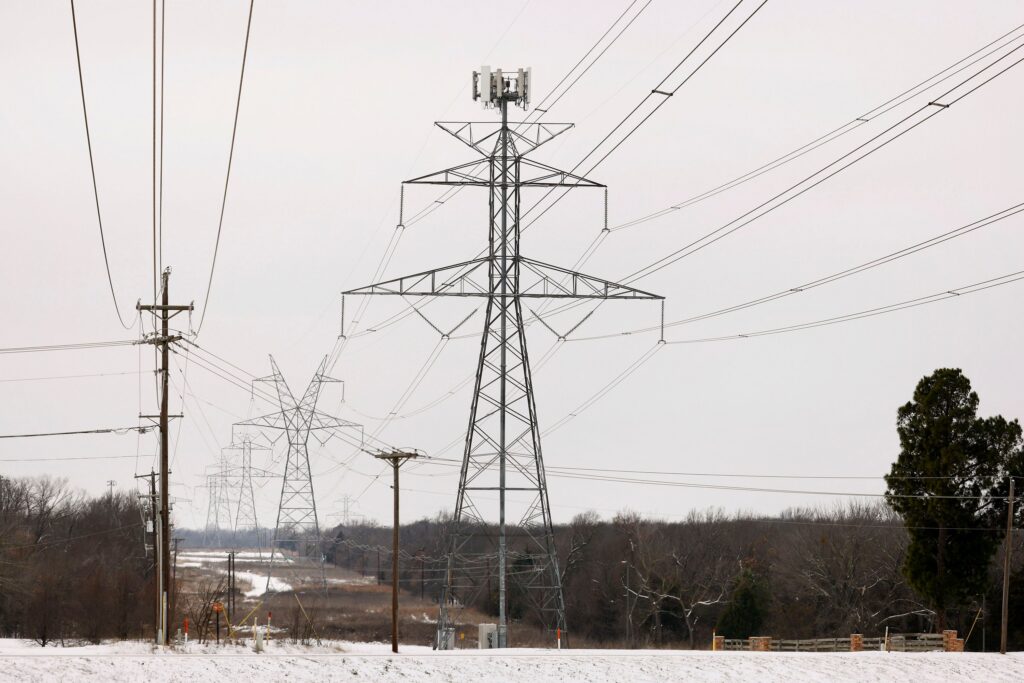
Colorado lawmakers move to curb eminent domain powers after Xcel dispute
Marissa Ventrelli
marissa.ventrelli@coloradopolitics.com
Updated 4 hours ago
After months of backlash over Xcel Energy’s use of eminent domain in eastern Colorado, lawmakers representing Elbert and El Paso counties are advancing legislation that would bar utilities from initiating property takings until they’ve secured state approval and all required...

As parents claim some AI chatbots encourage teen suicide, Colorado legislators eye regulation
Marissa Ventrelli
marissa.ventrelli@coloradopolitics.com
Updated 36 minutes ago
Juliana Peralta of Thornton was a vibrant, happy kid, said her mom, Cynthia Montoya. Then, in the final months of 2023, Cynthia began to notice a change in her 13-year-old daughter. Peralta had become more withdrawn and was on her...

Trump to attend dignified transfer of six US service members killed by Iran
Christian Datoc, Washington Examiner
christian.datoc.washington.examiner@gazetteedit.wpenginepowered.com
Updated 2 hours ago
President Donald Trump will attend the soon-to-be-held dignified transfer of six American service members killed so far by Iran in Operation Epic Fury. White House press secretary Karoline Leavitt made the announcement during her Wednesday press briefing. “These heroes represent...

Judge declines to block potential Boebert challenger from going through assembly process in Colorado’s 4th CD
Ernest Luning
ernest.luning@coloradopolitics.com
Updated 4 hours ago
Congressional candidate Eileen Laubacher, one of the Democrats seeking to challenge Republican U.S. Rep. Lauren Boebert, can participate in the party’s caucuses and assemblies pending a court hearing later this month, a Denver judge ruled Tuesday in response to a...
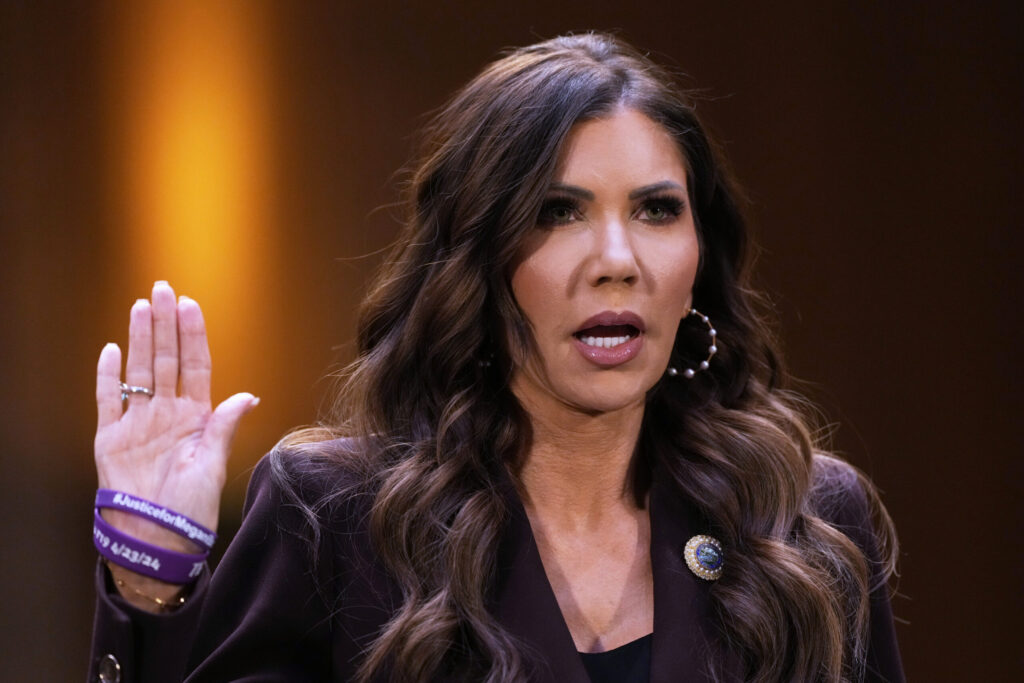
Sanctuary cities declined 17,864 requests to hold illegal immigrants for ICE in 2025: Noem
Anna Giaritelli Washington Examiner
anna-giaritelli-washington-examiner@coloradopolitics.com
Updated 5 hours ago
Sanctuary cities and counties declined to turn over 17,864 illegal immigrants in police custody to Immigration and Customs Enforcement in 2025, according to the Department of Homeland Security. Homeland Security Secretary Kristi Noem testified before the House Judiciary Committee on...

Federal judge dismisses malicious prosecution claim against former Denver prosecutor
Michael Karlik
michael.karlik@coloradopolitics.com
Updated 5 hours ago
A federal judge concluded on Monday that a former Denver prosecutor could not be sued for allegedly causing the arrests of two plaintiffs after they failed to appear for trial on the scheduled date, even though the trial had been...

Judicial discipline commission reports increased transparency, increased submissions
Michael Karlik
michael.karlik@coloradopolitics.com
Updated 6 hours ago
The Colorado Commission on Judicial Discipline received 473 misconduct complaints about judges in 2025, which was nearly 29% higher than in 2024 and substantially greater than any time in the past decade. However, only 31 complaints were referred to the commission...

Colorado Gov. Jared Polis ignites fierce debate after raising clemency questions in Tina Peters case
Marianne Goodland
marianne.goodland@coloradopolitics.com
Updated 2 hours ago
Gov. Jared Polis ignited a political firestorm Tuesday night after weighing in on the prison sentences of two former Colorado officials convicted of attempting to influence a public servant. The comments quickly fueled speculation about possible clemency for former Mesa...

Colorado Supreme Court signals intervention in dispute over treatment for trans children
Michael Karlik
michael.karlik@coloradopolitics.com
Updated 1 day ago
The Colorado Supreme Court ordered Children’s Hospital Colorado on Tuesday to explain why it should not direct the organization to resume providing certain types of services to transgender children in compliance with the state’s non-discrimination law. Last month, a Denver...

Trump faces first domestic test on Iran conflict with Senate war powers vote
Ramsey Touchberry, Washington Examiner
ramsey.touchberry.washington.examiner@gazetteedit.wpenginepowered.com
Updated 1 day ago
Administration officials are scrambling to sell members of Congress on President Donald Trump’s military operations in Iran ahead of bipartisan attempts to limit his war powers in the Middle East without approval from lawmakers. The Senate and House are set...
PREV
PREVIOUS

Goldin-Dubois: Colorado well positioned to achieve EPA carbon limits
The Clean Power Plan issued by the U.S. Environmental Protection Agency on Aug. 2 represents the first-ever national limits on carbon pollution from power plants and is a critical step in addressing climate change. Over the past five decades, Republican and Democratic administrations alike, have set limits on emissions of arsenic, mercury and sulfur and […]

Coloradans split over EPA's Clean Power plan
It is either the greatest thing since sliced bread or a drastic action that will lead to breadlines. The debate over President Obama’s Clean Power Plan left little room for middle ground this week, as environmentalists hailed the Environmental Protection Agency’s tough new climate rules, while others geared up for what could be a lengthy […]