

Biennial panelists wrestle with questions of drug legalization

The Biennial of the Americas Festival in Denver closed with a symposium designed to goose the interest of delegates last Thursday evening called “Legalization: The Next phase in the War on Drugs?” Gov. John Hickenlooper was joined by former Chilean President Ricardo Lagos; Dr. Nora Volkow, director of the National Institute on Drug Abuse; and moderator Tina Brown, former editor at Vanity Fair and The New Yorker. Arguing in favor of legalization was Ethan Nadelmann, executive director of the Drug Policy Alliance, and speaking against was Kevin Sabet of Smart Approaches to Marijuana.
Nadelmann was a ball-of-fire proselytizer for relaxed national drug policies aimed at rejecting what he termed the “failed prohibitionist policy of the past 60 years.” He congratulated Colorado for having taken the lead by legalizing marijuana. “You’ve made it possible for our politicians to come out of the closet,” he said. “The venal forces of capitalism are now at work. This is a revolution that will be hard to reverse.” Taking a swipe at the United States and its habit of jailing non-fiolent drug offenders, Nadelmann complimented the European Union for deciding to treat addiction as a health issue rather than a criminal habit.
Sabet, who has advised the last three presidents on drug policy, pointed out that the marijuana of the ’60s has just 2-3 percent active THC, compared to as much as 10 times that amount in today’s weed. He warned against a growing marijuana industry that is likely to follow the same path worn by Big Tobacco. “The industry targeted the young, the poor, the black and the stupid,” he warned. While agreeing the War on Drugs has failed miserably, he objected to the “false dichotomy of legalization or prohibition.” Although the audience was clearly with Nadelmann, Sabet suggested freezing any further policy experimentation until a thorough clinical and laboratory analysis can be completed.
Brown launched the panel discussion with a question to Lagos, who revealed the cultural differences that prevail in the Americas. From a continent where politicians frequently speak for two and three uninterrupted hours, Lagos pulled out his cue cards and launched into an argument framed around the statement, “Just say maybe!” He pointed to five decades of failure battling drugs and the emergence of a multi-billion dollar narco-trafficking industry that controls the prices paid to producers as well as those charged to users.
Hickenlooper reported that Colorado had mostly learned “what not to do,” although he acknowledged there was no observable “widespread social decay, at least not yet.” In terms of surprises, he added, “Regulated producers and retailers have proven a responsible industry. They show up wearing suits and ties. Perhaps our only surprise has been edibles.”
Volkow criticized public policy for “stigmatizing users, when drugs provide a way out of despair for many Americans. If you live with no hope, no job, no sense of purpose, then drugs offer an escape.” She also raised concerns about rewiring brain development in teens but acknowledged that abuse, poverty and stress produce similarly undesirable results. Regular use of marijuana has been found to inhibit the endogenous and natural production of cannabinoids in the brain. For 7-16 percent of users, this leads to dependence and addiction to THC. Nonetheless, she expressed support for relaxing current policies. Brown mentioned visiting a retail shop earlier in the day and marveled at how attractive the products looked. “If I hadn’t been scheduled for this symposium tonight, it would have been tempting,” she said to laughter.
Lagos compared Colorado’s retail approach with Uruguay, where the government operates state stores much as some states still do the U. S. “How do we defeat the black markets?” he asked. “Drugs are so expensive that users often become micro-dealers, who then protect the real dealers. The cartels merely provide transportation.” He pointed out that major syndicates are better armed and better organized than local police. “This is difficult to address on a national level. It will require a global response,” he said. Without pointing a finger directly at his hosts, Lagos made it clear that drugs flow towards money and guns, which cartels then move back into Latin America. Just say maybe, indeed. Meanwhile, it appears the repeal of criminalization may be under way. Next up, according to Hickenlooper, will be the ability to provide banking services. “A billion-dollar-a-year cash business is an invitation for corruption and fraud,” he lamented.
– Miller Hudson is a public affairs consultant and a former state legislator. He can be reached at mnhwriter@msn.com
Photo by Jennifer Goodland


Colorado Politics Calendar June 29-July 5
Rachael Wright, Special to Colorado Politics
rachael.wright@coloradopolitics.com
Updated 3 days ago
CoPo’s weekly political calendar will help you find political and public-policy events throughout Colorado. It includes candidate and issue campaign events, public policy meetings, court hearings, state and local party conventions, assemblies, debates, rallies, parades, speaking engagements, traveling dignitary appearances,...

Gov. Lamm’s GOP challenger gives insights into his campaign | A LOOK BACK
Rachael Wright, Special to Colorado Politics
rachael.wright@coloradopolitics.com
Updated 3 days ago
Forty-five years ago this week: “I see Gov. (Richard) Lamm is fairly popular in general,” said gubernatorial candidate and state Sen. Bill Hughes, R-Colorado Springs. “ … And he’ll be hard to beat.” Hughes was on a whirlwind campaign trail...
Giving credit to Polis where credit is due | SONDERMANN
Eric Sondermann
eric-sondermann@coloradopolitics.com
Updated 3 days ago
It is an understatement to suggest that Gov. Jared Polis has had a tough couple of months. The bloom was already off the rose and Coloradans were paying far more attention to the choice of his replacement than they were...

Bennet, Hickenlooper to vote against Trump’s 10th Circuit nominee from Colorado
Michael Karlik
michael.karlik@coloradopolitics.com
Updated 3 hours ago
Colorado’s two Democratic senators will not vote to confirm President Donald Trump’s nominee to a vacancy on the Denver-based federal appeals court. Trump has selected U.S. District Court Chief Judge Daniel D. Domenico, who he appointed as a federal trial...
Who’s spending in Colorado to get your vote?
Marianne Goodland
marianne.goodland@coloradopolitics.com
Updated 4 hours ago
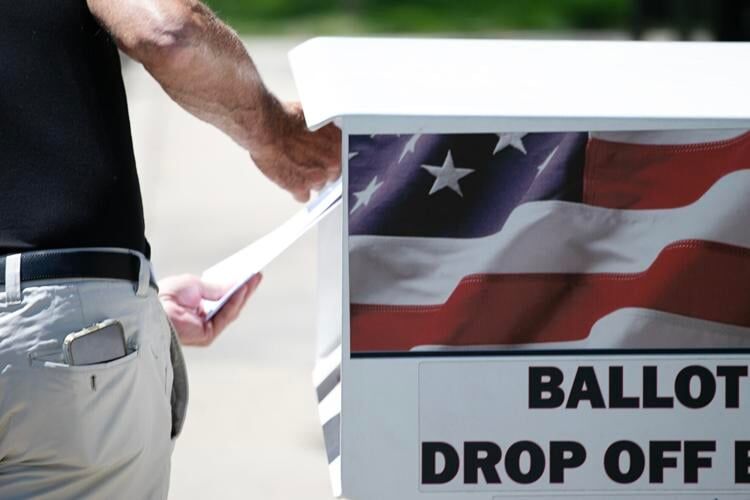
Groups that raise unlimited amounts of money have spent about $20 million in May and June to try and influence Colorado voters’ choices in the upcoming June 30 primaries. By law, these groups cannot coordinate with the candidates they support....
U.S. government declines to oppose multiple challenges to immigration detention in Colorado
Michael Karlik
michael.karlik@coloradopolitics.com
Updated 19 hours ago
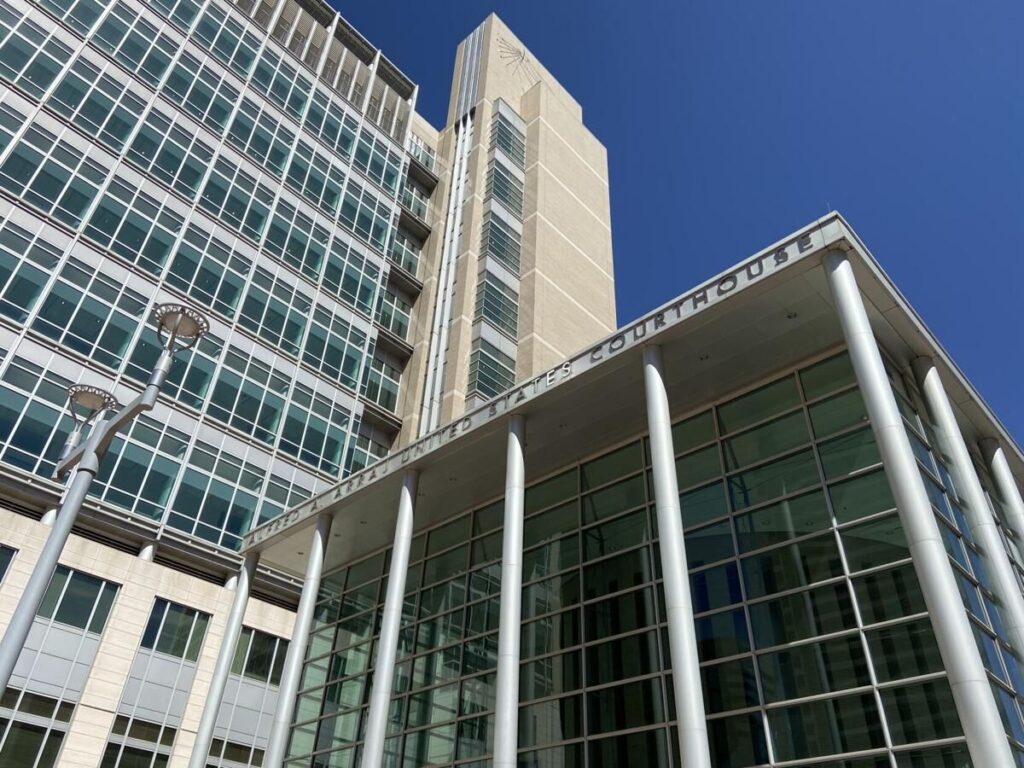
Multiple federal judges in Colorado granted petitions from people challenging the lawfulness of their immigration detention this week after the government took the unusual step of declining to submit arguments in opposition. Colorado’s federal trial court is facing a flood of...
Tina Peters tells supporters to ‘stand up and fight back’ at Castle Rock event
Marissa Ventrelli
marissa.ventrelli@coloradopolitics.com
Updated 18 hours ago
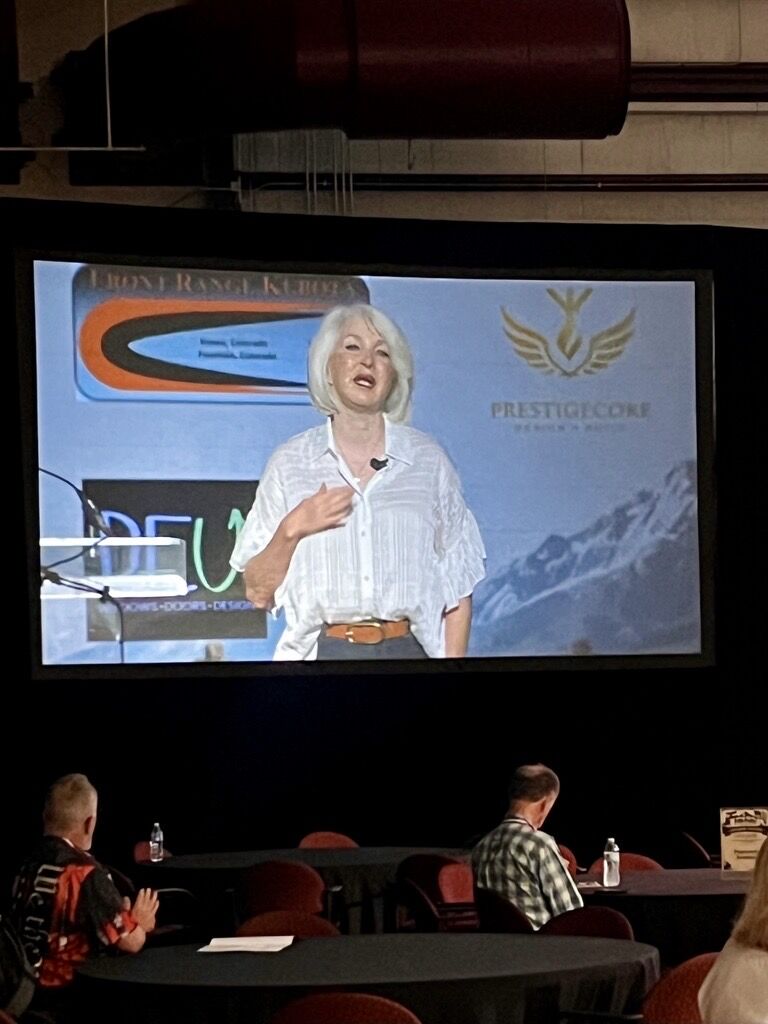
Tina Peters, the former Mesa County clerk recently released from prison, warned supporters that what happened to her could happen to them, too, if they did not “stand up and fight back” at an event at the Douglas County Fairgrounds....

Iran strikes cargo ship in Strait of Hormuz, endangering Trump’s peace
Christian Datoc
christian-datoc@coloradopolitics.com
Updated 1 day ago
Iran attacked a cargo ship traveling through the Strait of Hormuz on Thursday, possibly upending President Donald Trump‘s diplomatic end to the war with Iran. A U.S. official confirmed to the Washington Examiner that the Islamic Revolutionary Guard Corps “struck...

Senate GOP tries to mend fences with Trump after heated lunch
David Sivak
david-sivak@coloradopolitics.com
Updated 23 hours ago
Senate Republicans are trying to turn the page on a heated lunch with President Donald Trump that brought weeks of tensions to a new high-water mark. In a symbolic gesture, Senate Republicans took another vote on the Iran war Wednesday...
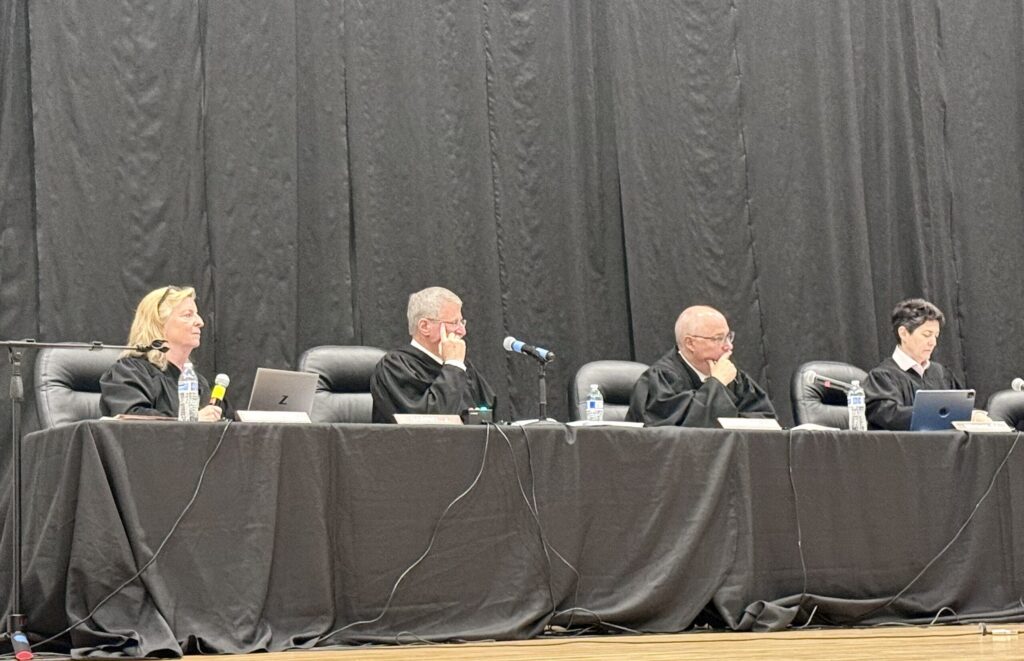
Colorado justices discuss solution to confusion from prior criminal ruling
Michael Karlik
michael.karlik@coloradopolitics.com
Updated 17 hours ago
The Colorado Supreme Court pondered the fallout on Tuesday from its nearly six-year-old decision interpreting the state’s impaired driving laws, with the justices now addressing how defendants affected by the legal change must seek postconviction relief. In contrast to other...
PREV
PREVIOUS

Biennial panel discusses how to help women thrive in business
Thrive was the word of the day at the Women’s Leadership Luncheon at the Biennial of the Americas Festival last Wednesday. The luncheon featured a panel moderated by Alicia Menendez, anchor of FUSION’s “Come Here and Say That,” and included Patricia Milligan, senior partner and global leader for Mercer, and Danielle Saint-Lot, ambassador-at-large for the […]
Biden praises state’s workforce plan, plugs free community college progam
Vice President Joe Biden came to Denver Tuesday afternoon to make a case for the Obama administration’s post-recession economic policies and affordable education as a key component of the nation’s economic recovery. He also touted the White House’s push for free community college education. “Six out of 10 jobs in the next decade require something […]