

Hemisphere’s future talk of Biennial of the Americas Festival

It was fitting that Denver’s third Biennial of the Americas festival launched the same day as the Legislative Audit Committee’s report of shrinking crowds attending the Colorado State Fair in Pueblo. A staff of several dozen has spent the past six months finalizing the schedule of events that make up this cross-cultural festival of arts, culture and business in the New World. Nearly 300 musicians, artists, authors, entrepreneurs and academics from 25 countries have assembled in downtown Denver to tug on the threads that bind the Western Hemisphere together.

Lilly Fiorino and Jack Carstens, both of Jefferson County Open School, check on the small audio player they attached to a painting at the Biennial Pavilion, a multimedia artwork created by 55 participants from six different Denver-area organizations, at the opening of the festival on July 13 at the Museum of Contemporary Art Denver.Jennifer Goodland/The Colorado Statesman

A brainchild of former Denver Mayor John Hickenlooper, now the state’s governor, the Biennial celebrates the interests that unite Americans from the Arctic Circle to Tierra del Fuego. “Denver is punching well above its weight today,” said Liberty Global’s CEO Mike Fries, the event’s informal master of ceremonies, during opening remarks on Tuesday. The governor echoed the notion that Denver, in the middle of the country and the continent, has emerged as something of a regional capital.
While most of the Biennial exhibitions and events are free to the public, attendance has proven sparse. The emphasis on smart people, thinking hard about tough issues might not have appeal much beyond local public policy cognoscenti. A discussion about the role of the millennial generation throughout the hemisphere drew a crowd of 500, half of whom appeared to be Millennials employed by the event sponsors. When a panelist noted her generation would choose the next American President, it didn’t sound like good news for Donald Trump.
Separate art exhibits at the Museum of Contemporary Art on lower 15th Street and the McNichols Building at the Civic Center are showcasing artists from throughout the American continents, featuring arresting works aplenty to contemplate. In Commons Park, organizers are drilling a 100-foot core sample of soils, intending to exchange it for an identical core sample shipped from Mexico City — archaeology as performance art.
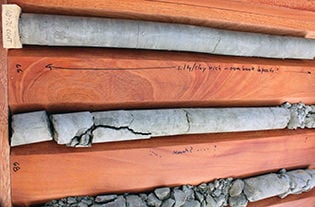
A core sample removed from 70 feet beneath Commons Park shows that time has transformed a subterranean ocean from water to rock. In the words of “Impact” artist Marcela Armas of Mexico City, “Core samples are a way that humans establish a relationship with the earth… and each other.” The sample taken from the park will travel to Mexico City, while a sample from Mexico City will arrive in Denver later this month.Jennifer Goodland/The Colorado Statesman

Closing the festival on Friday night, a free concert in Civic Center Park features international sensation Bomba Estero on stage with Brazilian dance company Companhia Urbana de Danca. The festival also includes more intimate forums scheduled throughout the week addressing everything from education to global warming. Univision news anchor Leon Krauze, who has the largest daily TV audience in the United States, noted that only 3 percent of Mexican students study English, one of frequent laments about the poor quality of education in Latin America.
Expanding trade and growing existing hemispheric markets is the meat and potatoes that attracted so many high-powered corporate executives to Denver for the week. There was nearly unanimous consensus that the business opportunities are huge, but the existing relationships often weak and underdeveloped. It was the topic discussed Wednesday night at a symposium at the Ellie Caulkins Opera House, called “The Case for a New North-South Market Vision,” with Fox Business Channel host Maria Baritromo emceeing.
Jose Manuel Carrera of PEMEX was optimistic, pointing to the recent explosion of energy development in North America, creating an alliance through NAFTA that may soon counter-balance OPEC. “Americans have the natural gas needed in Mexico and Canada, while we and the Canadians have the oil reserves required in the United States. Within a few years our entire hemisphere could be energy independent,” he noted.

An installation by Zach Blas was part of the 2015 Biennial of the Americas Festival at the Museum of Contemporary Art Denver.
Colorado Statesman file

The panel agreed that NAFTA has been a huge success for its partners, but after 25 years needs updating. Carrera pointed out that a quarter century ago Mexico largely exported commodities, including petroleum products, but today, oil has shrunk to 8 percent of the country’s economy, while Mexico has emerged as the largest auto manufacturer and producer of flat screen TVs in the hemisphere. The Mexican economy has expanded tenfold since NAFTA was approved.
The panel said that, while the Pacific Rim countries, including those in Central America, appeared to be making the economic changes required, the leviathans of Argentina, Brazil and Venezuela could be slipping into economic decline.
Mark Tercek CEO of the Nature Conservancy, said South America could become the globe’s last major breadbasket. “This wouldn’t require a further exploitation of tropical lands or destruction of natural habitats, but the conversion of vast, existing ranch and grazing properties into agriculture,” he noted. Alicia Lebrija Hirschfeld of the Televisa Foundation linked economic success to creating “learning societies that invest in our talented youth.” While opportunity surely exists, it sounded like many governments in Latin America face major heavy lifting ahead to improve schools, infrastructure and this generation’s biggest challenge — the income inequality that faces all economies.

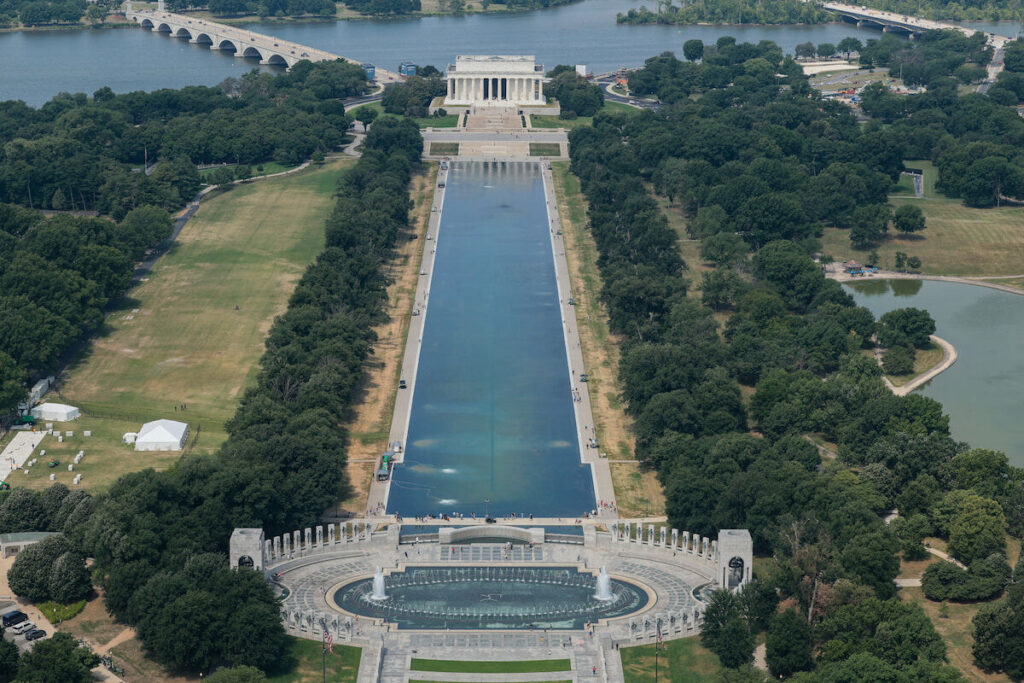
Colorado to participate in Great American State Fair in Washington
Marissa Ventrelli
marissa.ventrelli@coloradopolitics.com
Updated 13 hours ago
Visitors to Washington, D.C., for the country’s 250th anniversary will have the opportunity to learn about Colorado’s natural beauty and culture during the Great American State Fair, a World’s Fair-style event that opened Thursday at the National Mall. While all...
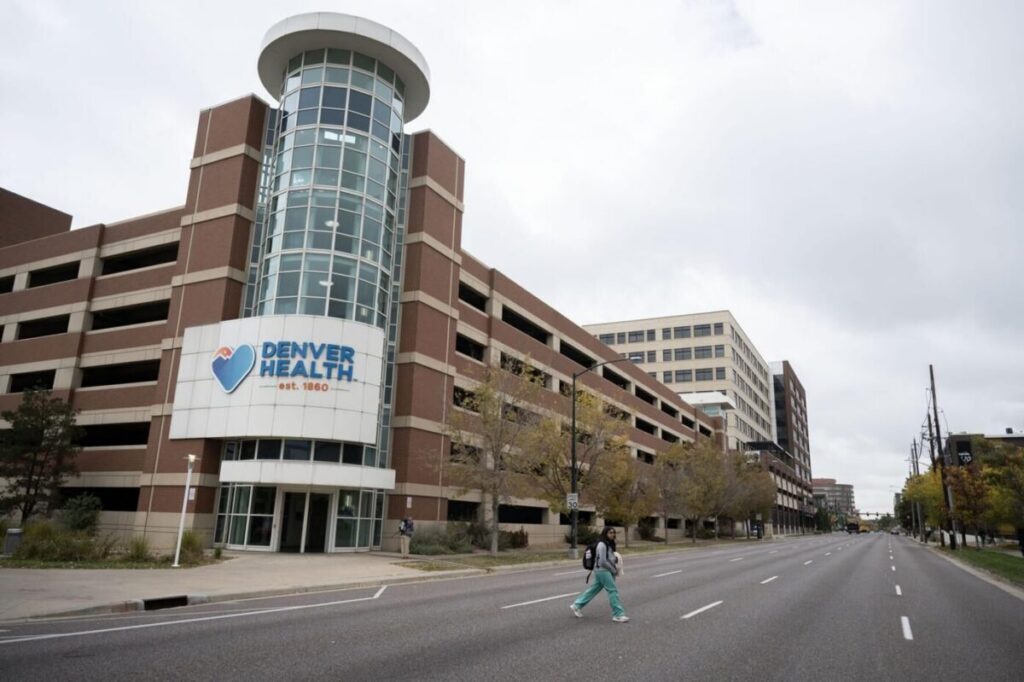
Colorado health officials say federal budget adds pressure to already stressed system
Marissa Ventrelli
marissa.ventrelli@coloradopolitics.com
Updated 14 hours ago
As the first anniversary of H.R. 1 approaches, Colorado Democrats and hospital executives say the law’s Medicaid reductions and eligibility rules are accelerating financial stress in a system where many facilities were already operating on the brink. Signed by President...
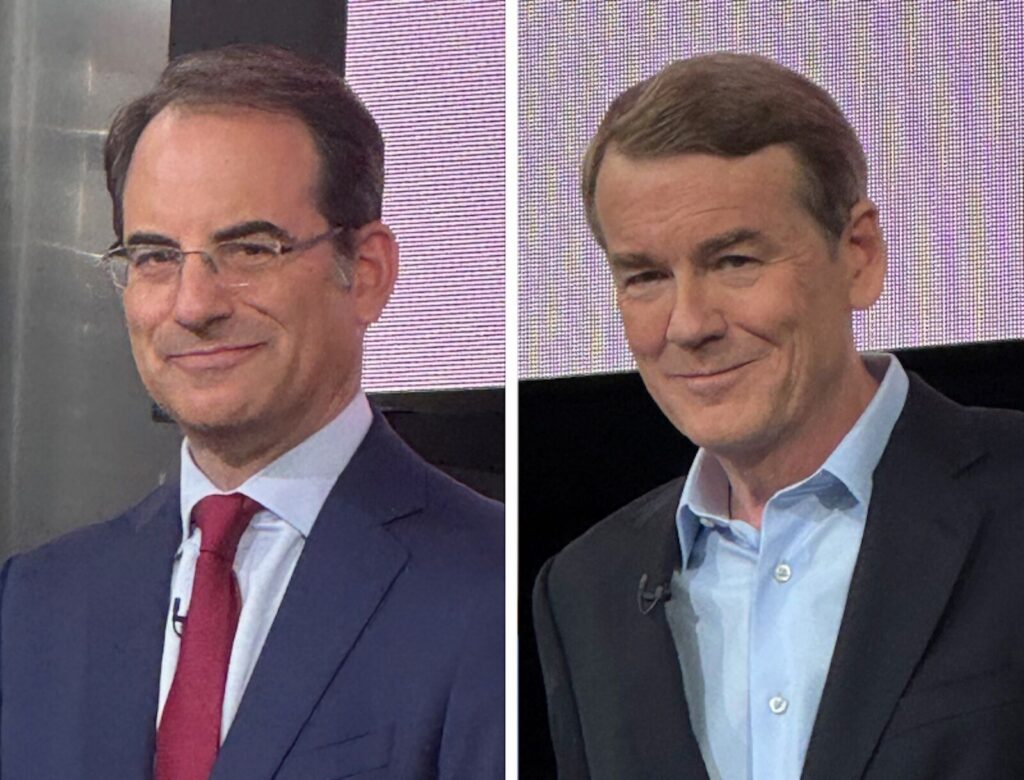
Phil Weiser leading Michael Bennet in Colorado’s Democratic gubernatorial primary, internal poll finds
Ernest Luning
ernest.luning@coloradopolitics.com
Updated 9 hours ago
Attorney General Phil Weiser holds a lead over U.S. Sen. Michael Bennet among likely voters less than a week before ballots are due in Colorado’s Democratic gubernatorial primary, according to a new poll released Thursday by a group backing Weiser....
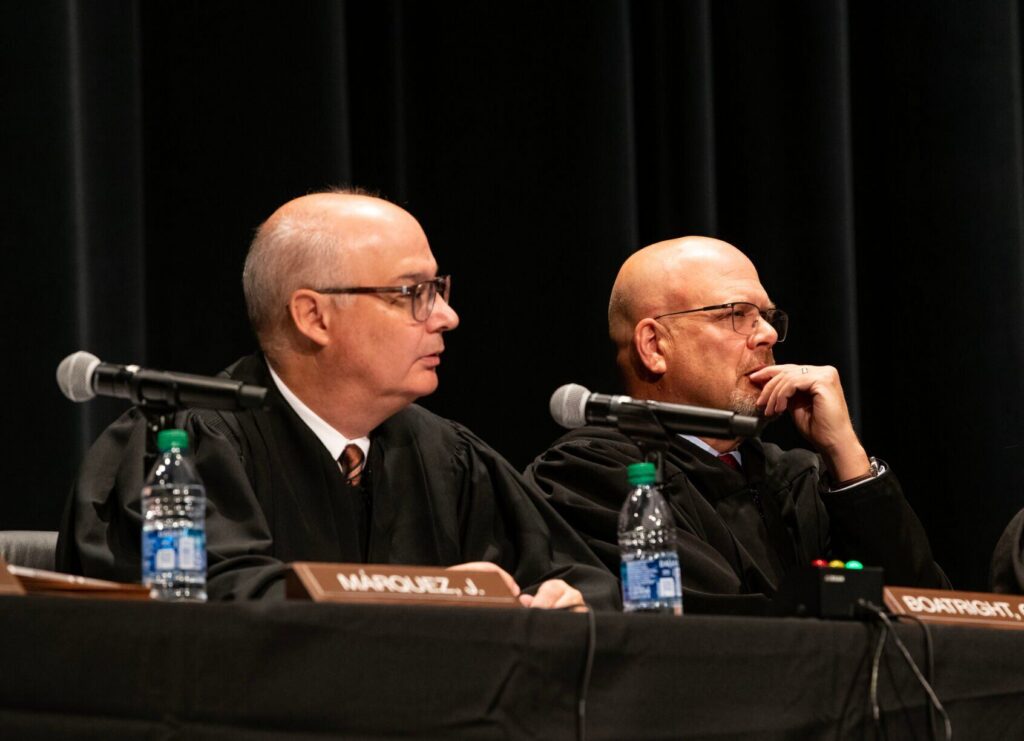
Colorado justices suggest father entitled to appeal of custody decision
Michael Karlik
michael.karlik@coloradopolitics.com
Updated 16 hours ago
Members of the Colorado Supreme Court signaled strongly on Tuesday that a father deserved some avenue for challenging a temporary child custody order that no lower court believed it could review due to the unusual circumstances of the case. Because...
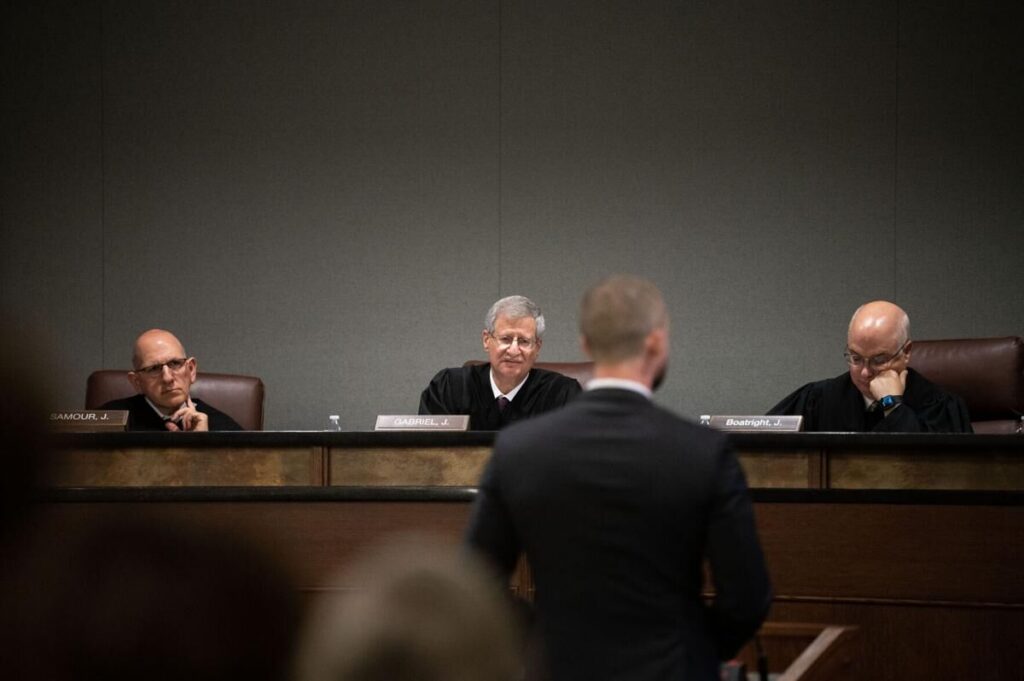
Colorado justices agree fraud claims belong in corporate dispute
Michael Karlik
michael.karlik@coloradopolitics.com
Updated 18 hours ago
The Colorado Supreme Court decided on Tuesday that a corporate plaintiff validly pursued fraud claims over conduct that was not covered by a contract or by a set of interrelated business agreements leading up to the contract. Previously, the Court...
Colorado Supreme Court says intimate messages irrelevant to assault case
Michael Karlik
michael.karlik@coloradopolitics.com
Updated 20 hours ago
The Colorado Supreme Court decided on Tuesday that a Douglas County judge acted reasonably by blocking evidence of a defendant’s BDSM-related conversations with the victim in his trial for assault and false imprisonment. While the Court of Appeals believed that...
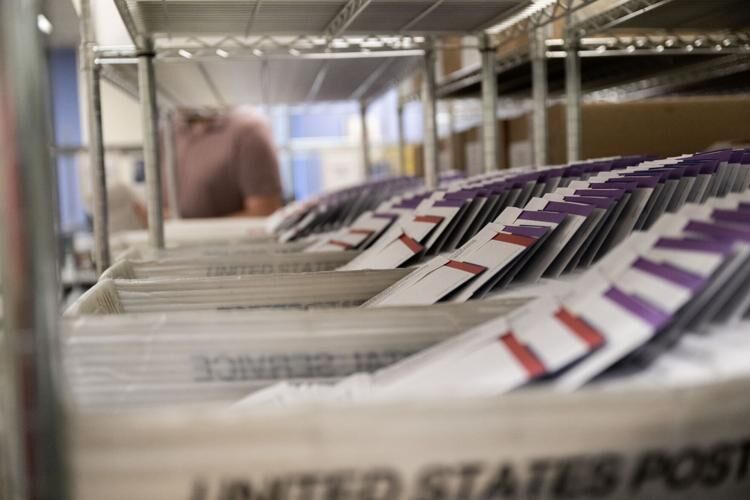
Postmaster general spars with Senate Democrats over mail-in ballot restrictions
Molly Parks
molly.parks@washingtonexaminer.com
Updated 20 hours ago
Senate Democrats sparred with Postmaster General David Steiner on Wednesday over the U.S. Postal Service’s move to stop delivering mail-in ballots in states that don’t hand over their voter rolls to the federal government. Steiner, who has stayed out of...

Douglas County water plan entering public review phase
Nicholas Fogleman
nicholas.fogleman@denvergazette.com
Updated 18 hours ago
After more than two years of formal work, Douglas County officials are moving into the public review phase of a countywide water plan they say will help guide future development and water resources through 2050. The Douglas County Water Commission...
Douglas County cracks down on illegal scooter, off-road vehicle use
Nicholas Fogleman
nicholas.fogleman@denvergazette.com
Updated 18 hours ago
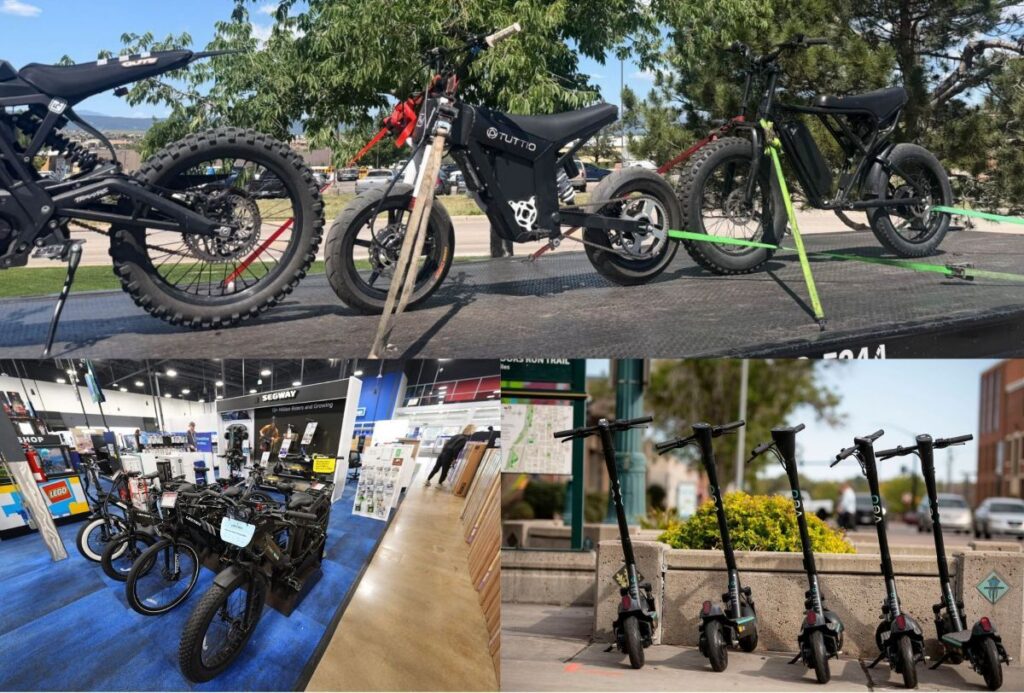
Douglas County joined a growing list of local governments regulating electric scooters and motorcycles, setting standards and penalties for misuse. County commissioners approved an ordinance Tuesday regulating off-highway vehicles and low-powered scooters following broad community support and a presentation from...
Homeless recruits of ‘The Program’ say they were told to sign NDAs amid investigations in Colorado
David Migoya
david.migoya@gazette.com
Updated 2 days ago
Several formerly homeless people — each drawn into an Aurora-based enterprise known as “The Program” that promised free housing and cash in return for letting a home-health business administer prescriptions they were given — said they were pressed into signing...
PREV
PREVIOUS

Time to consider data-driven justice system?
Big data is a big deal to more and more industries and professions. Financial firms have crunched reams of numbers for decades. Barak Obama dedicated a whole floor of his campaign to data-driven decision-making. And of course, baseball — and every other major sport — has followed the sabermetric path blazed by Billy Beane. So, […]

Patterson: Jeffco School Board recall drives are about abuse of power, malfeasance
It’s not a difficult concept to understand. Serving on a school board means you are an adult in a position of trust and, as such, must uphold school district policies and laws that protect the children you serve. Yet, on May 7, 2015, the Jeffco School Board majority chose to single out, perhaps with the […]