

Rug merchants fight Glendale over eminent domain

A family-owned rug shop is squaring off against Glendale officials in a long-simmering controversy over development in the tiny city.
The owners of Authentic Persian & Oriental Rugs on South Colorado Boulevard are protesting what they call a brewing land grab by the city, which covers just over a half square mile in the middle of Denver. Glendale officials recently announced the Glendale 180 project, a dining and entertainment development the city says is intended to reestablish Glendale’s position “as the essential social hub of the Denver area.”The project is expected to cover 32 acres, bordered by Colorado Boulevard on the west, Cherry Street on the east, East Virginia Avenue on the north and Cherry Creek on the south. The city and developers, Wulfe & Co., intend to fill the area with a high concentration of bars, restaurants, taverns, clubs and entertainment venues, according to city spokesman Mike Gross. About 30 percent of the project is expected to be dedicated to retail.
The rug shop sits on the west side of that 32-acre project and is owned by the Kholghy family, who also own six acres of land in the project area.
The four Kholghy siblings, who immigrated to the United States from Iran prior to that country’s 1979 revolution, have had the store at its current location for more than 25 years. They’ve owned the building and land since 2006.
After purchasing the property, the family wanted to develop the land, but kept running into roadblocks, said Nasrin Kholghy. Finally, the city approached the family with plans to develop the area in concert, but the developers picked by the city say they don’t envision “our kind of business” in their plans.
“We’ve always said, no, we have to be here, this is our land. So that was the snag always,” Kholghy said.
But, she says, the city changed its plans to work with the family developing the area about a year and a half ago, when they first saw plans for the 180 project. (Before that, the project was known as Riverview.) Under the new plans, the rug shop wound up at the eastern edge of the project, separated from the rest of the development by a parking structure.
“Why would I leave Colorado Boulevard and go all the way to the back of the project behind the parking garage?” Kholghy asked.
Gross disputes the Kholghy family’s contentions.
“We have worked very, very closely with the family for many, many years,” he said. “Nobody’s more surprised than we are that, at this point in the process, there’s a cry of foul.”
The family hasn’t contacted any of the brokers organizing tenants for the 180 project, Gross said.
“The most successful projects have the right tenant mix,” he said. “So I think it would depend on the other tenants. We wouldn’t say no.”
At the May 12 city council meeting, lawmakers voted to reauthorize the city’s urban development authority with eminent domain authority, which they said would apply to the entire project area, not just the Kholghys’ property.
The Kholghys recruited 150 people to the meeting to support their argument against eminent domain. The Glendale Cherry Creek Chronicle reported, however, that none of the supporters were actually from Glendale.
During the meeting, the city council added a compromise amendment, requiring the city to enter into mediation with landowners before enforcing eminent domain, the ability of a government to take control of private property for public use. Under the amendment, a landowner would choose a mediator, but the city would bear the cost of mediation.
“They went over and above what was required,” Gross said. “It’s not a taking, it’s just a negotiation. It protects the taxpayer from paying way too much for the land, and it protects the landowners.”
Gross said the next step is to get appraisals for all the properties in the project area and then begin the process of negotiating purchase prices.
“We have to pay whatever the market value is,” he said. “They’re encouraged to get their own appraisal, which the city would pay for.”
Professor Fred Cheever, director of the Environmental and Natural Resources Law Program at the University of Denver’s Sturm College of Law, told The Colorado Statesman the eminent domain process has two requirements under state and federal law — that property owners receive just compensation and that the property be intend for a public purpose.
“It’s a very common practice,” Cheever said, adding, “It’s never very popular.”
A government must act in a reasonable and open way and show a public purpose, Cheever noted. In this case, he said, the purpose would be for developing the city, increasing tax revenue and boosting the city’s reputation.
“They have a lot of leeway, truth be told.”
Cheever added that it would be very difficult to get a “court, people who aren’t elected, to say that the Glendale City Council, people who are elected, got it wrong.”
“If Glendale has done what it’s supposed to do, in order, it would be very hard for a court to overturn,” Cheever said.
The project, Gross said, is intended to “cure blight conditions that exist in this area.”
The “blight” designation doesn’t sit well with the Kholghy family.
Nasrin Kholghy said some of the so-called blight cited by the city includes a pothole in the parking lot, a leaning fence post and a plastic bag that had blown under a bush.
Cheever countered that these issues, from a government’s point of view, could demonstrate current landowners aren’t adequately maintaining a property.
“They’ve got this fancy land-use plan, they assert that they’ve got a comprehensive plan to develop Glendale. Part of that plan is to improve the city of Glendale,” Cheever said. “There’s an argument that owners could make that the property is not actually blighted. But, again, the city gets to make the rules. Unless they’ve violated their own rules, they probably will win.”
Cheever called Glendale a unique place, pointing out that most of the property in the enclave is commercial, with residential property dedicated mostly to apartments.
“It’s a small municipality,” he said. “The dynamics there are interesting.”
Authentic Persian & Oriental Rugs has been in operation for 32 years, originally on land occupied by the Cherry Creek Shopping Center. Kholghy said the business began as a way for the siblings to earn college tuition money in the wake of the Iranian Revolution because their father couldn’t send money but could send them rugs.
Eventually, the embargo on importing goods from Iran forced the family to find other sources including India and China. These days, the shop buy rugs from India, Pakistan and Nepal — China no longer produces good rugs, she noted — and when the embargo on Iranian goods lifts, they bring in rugs from there.
Kholghy said nothing has happened with the property since the May 12 meeting.
“We are very hopeful that they’ll let this go and let us develop,” she said. “Our plan right now is to stay here, sell our rugs and if there was a way of changing things, change them.”
Gross said no additional action will be taken until the city receives appraisals on all the properties in the project area.
“I think it’s important to realize that the city council really went above and beyond … to move forward amicably,” he said.
Kholghy argues there are loopholes in the blight and eminent domain laws that need to be closed.
“When you’re not born here, you choose to become an American, you don’t take it for granted,” she said. “You work for it, you go through a process and you become American. You’ve already seen things like this happen, you know, in the old country and you don’t want it to happen here. If you don’t stop things like this, I think we’re not on a very good path.”
—rachel@coloradostatesman.com

It’s time to let unaffiliated voters caucus | Vince Bzdek
Vince Bzdek
vince.bzdek@gazette.com
Updated 6 hours ago
There’s no getting around it: Colorado’s 3,000 county caucuses, which just wrapped up recently, left half the electorate out in the cold. Since unaffiliated voters now make up 51% of all Colorado voters, a majority of Colorado electors are barred...
Governor warns energy development both a boon and a risk to Colorado | A LOOK BACK
Rachael Wright, Special to Colorado Politics
rachael.wright@coloradopolitics.com
Updated 3 days ago
Forty-Five Years Ago This Week: “The real opportunity and the dangers before us are both real,” said Gov. Dick Lamm in his January state of the state address before the Colorado General Assembly. Lamm argued that energy development would continue...
A Mile High, again: Capitol M | Week of March 21, 2026
Marianne Goodland
marianne.goodland@coloradopolitics.com
Updated 3 days ago
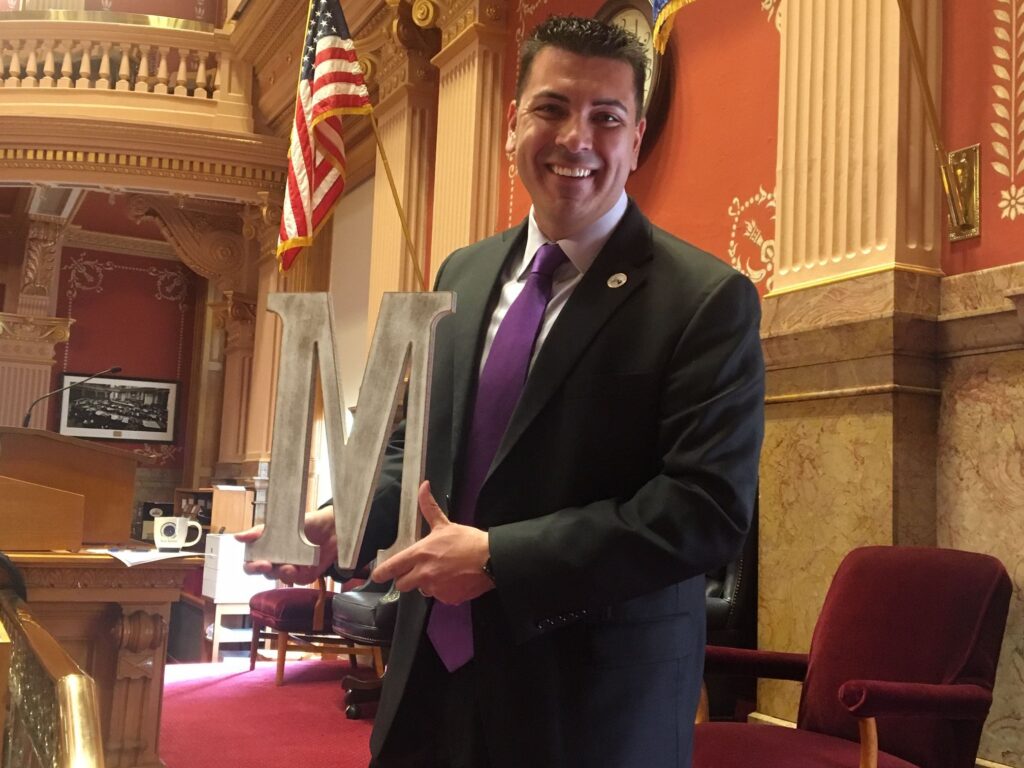
The lighter side of the Capitol, usually…. Local Journalism Day, except they forgot their very own local journalists. The state Senate on Thursday, March 19, passed a resolution recognizing Local Journalism Day. Everyone voted for it, which is good, because...
Colorado Politics Calendar Mar. 23-29
Rachael Wright, Special to Colorado Politics
rachael.wright@coloradopolitics.com
Updated 2 days ago
CoPo’s weekly political calendar will help you find political and public-policy events throughout Colorado. It includes candidate and issue campaign events, public policy meetings, court hearings, state and local party conventions, assemblies, debates, rallies, parades, speaking engagements, traveling dignitary appearances,...

The insular bubble of caucuses and assemblies | SONDERMANN
Eric Sondermann
eric-sondermann@coloradopolitics.com
Updated 2 days ago
Nearly 30 years ago, then-Federal Reserve Chairman Alan Greenspan coined the term “irrational exuberance” to describe the overheated stock market. That descriptive phrase could also apply to much of the political realm. The hype in politics often grossly exceeds the...

Lauren Boebert’s hard ‘no’ on Pentagon Iran funding request puts Mike Johnson in tough spot
Emily Hallas, Washington Examiner
emily.hallas.washington.examiner@gazetteedit.wpenginepowered.com
Updated 1 day ago
Colorado U.S. Rep. Lauren Boebert announced on Thursday that she will not support further funding for the United States’s war in Iran, marking an uphill battle for the Trump administration’s effort to secure additional financing from Congress. “I’ve already told...
Rubio gains ground in 2028 jockeying as Iran war elevates his profile
Samantha-Jo Roth, Washington Examiner
samantha-jo.roth.washington.examiner@gazetteedit.wpenginepowered.com
Updated 1 day ago
Secretary of State Marco Rubio’s high-profile role in the Trump administration’s response to the Iran war is boosting his standing in the early jockeying for the 2028 Republican presidential nomination — and positioning him as a possible rival to Vice...
Federal judge dismisses claims against medical contractor for Eagle County jail suicide
Michael Karlik
michael.karlik@coloradopolitics.com
Updated 1 day ago
A federal judge dismissed the claims against a medical contractor for the Eagle County jail and its employees earlier this month, concluding there were insufficient allegations that they violated the constitutional rights of a man who died by suicide in...

Colorado Senate committee advances bill increasing overtime threshold for farmworkers
Marianne Goodland
marianne.goodland@coloradopolitics.com
Updated 1 day ago
The struggle to balance farmworker protections with the survival of Colorado’s family farms took center stage Thursday as senators debated two competing overtime bills. The Senate Business, Labor and Technology Committee held a rare double-bill hearing that led to a...

Colorado bill to fund mental health by raising alcohol taxes defeated in House committee
Marissa Ventrelli
marissa.ventrelli@coloradopolitics.com
Updated 2 hours ago
Colorado legislators on Wednesday narrowly rejected a second measure that would raised taxes on alcohol products in order to fund mental health care treatment in the state. Proponents said the new revenue is necessary to help pay for mental health...
PREV
PREVIOUS
State Board of Ed. members talk 'dysfunction,' passion in wake of exodus
For the Colorado Board of Education, one member’s zeal is another’s dysfunction. One week after board Chairwoman Marcia Neal blasted the board’s “destructive behavior” in a strongly-worded resignation letter, board members say they are trying to move forward to do good work for the state’s children. But can they really?“I’m not a doomsday type,” said […]

Buchanan denounces 'smear campaign' in assembly loss, weighs petition drive to take on Hart; State reels from 1965 flood
U.S. Sen. Gary Hart was pictured in this front-page photograph accompanying a lengthy interview with the Democrat.Colorado Statesman Archive The state would continue to be the recreational center for the region, he predicted, but will also grow as a key center for the defense industry, and energy production would only expand. The most important issues […]