

Hickenlooper vetoes high-cost lending bill
A bill that would have altered the interest rate structure on high risk personal loans died on Gov. John Hickenlooper’s desk on Thursday.The governor vetoed House Bill 1390 after consumer groups blasted the bill as being unfair to the poor and one that would have resulted in higher-cost loans.
Supervised loans provide borrowing options for those who may not qualify for other loans. Because they are considered high risk, the loans tend to come with higher interest rates than other lending options.
Supporters of the measure, particularly banking groups, argued that interest rates on supervised loans need to be adjusted so that these kinds of loans can continue to be offered.
Ultimately, the governor was not persuaded by that argument.
“While we certainly see the benefits of offering the loan and credit products that are considered in this legislation, it has not been clearly demonstrated that access to such loans is under threat,” Hickenlooper said in his veto letter.
The governor “was particularly struck” by testimony provided by the Attorney General’s office during a legislative committee hearing. That testimony included an analysis that indicated that changes to interest rate structures would not make these loans more available.
The bill sought to raise the maximum amount of interest charged for supervised loans from 21 to 36 percent for loans up to $3,000. Interest charges would spike from 15 to 21 percent on loans that carry balances of $3,000 to $5,000.
“These changes would result in a 200 percent increase in the loan amount allowed in the 36 percent interest rate tier and a two-thirds increase in the 21 percent interest rate tier,” Hickenlooper said.
Consumer groups praised Hickenlooper’s decision.
“This would have affected moderate to lower income borrowers,” said Rich Jones, the policy and research director of the Bell Policy Center, a left-leaning think tank.
“Some who have these loans have credit problems. This would have significantly increased the cost of the average loan.”
The bill received bipartisan support and sponsorship and the measure cleared the House with just two no votes.
Sen. Cheri Jahn, D-Wheat Ridge, a bill sponsor said she had not had a chance to read Hickenlooper’s letter and therefore could not comment on his reasons for vetoing the bill.
But Jahn, who expects the issue to be taken up again next year, said she hopes the veto does not result in these types of loans becoming scarcer.
“They do not have good credit,” Jahn said of the borrowers. “I would not want to see the industry do away with them because I think it is a good way for people to rebuild credit and get back on track.”
The late introduction of the bill contributed to its demise.
Jones points out that after easily clearing the House, the bill later received 14 no votes in the 35-member Senate. He thinks that’s because lawmakers were starting to realize the issues involved in a bill that was introduced just days before the legislative session ended.
“There wasn’t enough time to have all the views heard,” Jones said.
The governor also acknowledged the quick pace of the bill’s movement.
“We realize the bill moved very quickly before many interested parties could fully consider the full implications of this bill,” Hickenlooper said.
– Twitter: @VicVela1


Greeley voters halt landmark development project
Hap Fry, Special to The Gazette
hap-fry@gazette.com
Updated 42 minutes ago
GREELEY – The landscape-altering Cascadia development project has been put on ice, according to unofficial results of a city referendum on the project Tuesday. The proposed development would have included an 8,600-seat multiuse arena and ice center that would be home to the Colorado Eagles,...

State audit: Rape kit backlog reduced but more work needed to hit goal
Jenny Deam
jenny-deam@coloradopolitics.com
Updated 2 hours ago
In the past year, the Colorado Bureau of Investigation has slashed the time it takes to process DNA collected in sexual assault cases, but the agency still is far short of its turnaround goal, the state auditor reported on Wednesday....

Daniel Domenico to take over as Colorado’s chief federal judge
Michael Karlik
michael.karlik@coloradopolitics.com
Updated 6 hours ago
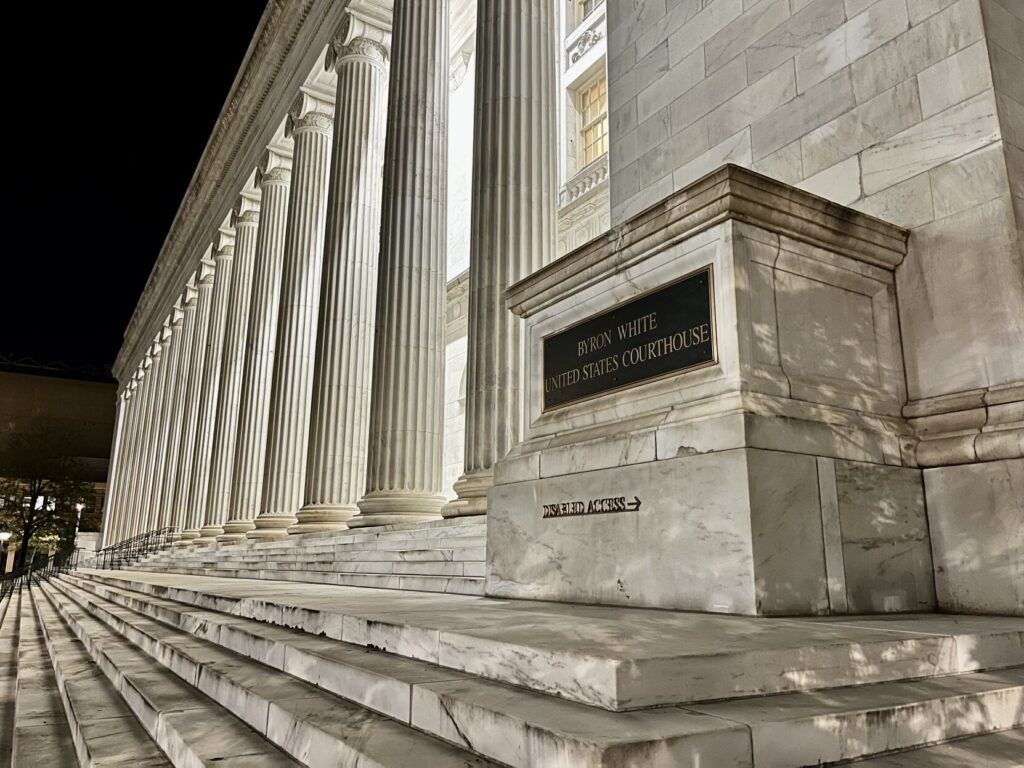
Daniel D. Domenico will become the new chief judge of Colorado’s federal trial court next week, a role that encompasses the administration of the court as well as a judicial caseload. Under federal law, the chief judge of a U.S....
10th Circuit upholds violations, sanctions against Colorado Springs mental health hospital
Michael Karlik
michael.karlik@coloradopolitics.com
Updated 7 hours ago
The Denver-based federal appeals court agreed earlier this month that the government properly cited and penalized a Colorado Springs psychiatric hospital for failing to protect its staff from known risks posed by patients. The Occupational Safety and Health Administration inspected...

Vance working with DOJ and Treasury after Trump announces ‘war on fraud’
David Zimmermann Washington Examiner
davidzimmermannwashingtonexaminer@wpstage.coloradopolitics.com
Updated 7 hours ago
Vice President JD Vance confirmed on Wednesday that he is working with the Justice and Treasury Departments to root out fraud nationwide. During the State of the Union address Tuesday night, President Donald Trump announced Vance would lead the administration’s “war on...
House Ethics Committee dismisses some claims, advances others against Rep. Ron Weinberg
Marianne Goodland
marianne.goodland@coloradopolitics.com
Updated 5 hours ago
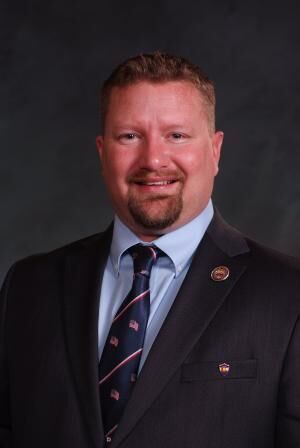
The House Ethics Committee voted on Wednesday to accept three allegations filed against Rep. Ron Weinberg, R-Loveland, but combined two into one subject area. The two issues involve inappropriate comments made to female lawmakers in two separate incidents and the...

Bipartisan opposition sinks eviction bill in Colorado
Marissa Ventrelli
marissa.ventrelli@coloradopolitics.com
Updated 3 hours ago
Two Democrats sided with Republicans on a legislative panel to reject a proposal that would have made several changes to eviction filings and proceedings, including requiring judges to suppress court records. Sponsored by Rep. Junie Joseph, D-Boulder, House Bill 1047...

Appeals judges tell Boulder students about workload, ‘attack mode’ during school visit
Michael Karlik
michael.karlik@coloradopolitics.com
Updated 8 hours ago
Three judges on Colorado’s second-highest court traveled to Boulder on Tuesday to hear oral arguments in real cases and field questions from students about their professional paths, their workload on the Court of Appeals, and their approach to interacting with...

State of the Union: Here’s what Trump didn’t say
W. James Antle III Washington Examiner
wjamesantleiiiwashingtonexaminer@wpstage.coloradopolitics.com
Updated 9 hours ago
President Donald Trump made the case that happy days are here again in the first State of the Union of his second term, but there was little talk of transition or pain. “The state of our union is strong,” he...
Ex-Cherry Creek superintendent must repay one month’s salary after abrupt resignation
Nico Brambila
nico.brambila@denvergazette.com
Updated 4 hours ago
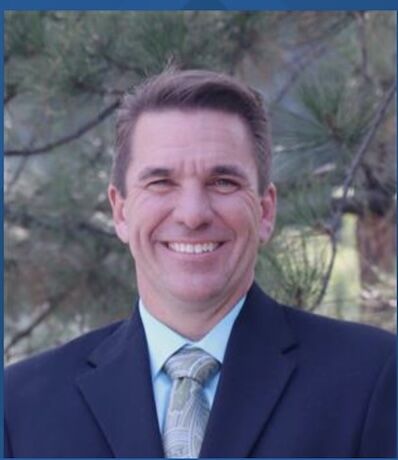
Former Cherry Creek School District Superintendent Chris Smith must repay one month’s salary for failing to provide the board of education with three-month’s notice of his resignation, The Denver Gazette has learned. The board of education has not waived the...
PREV
PREVIOUS
Pot tax issue heads to the ballot — again
There’s a line in the Grateful Dead’s “Born Cross-Eyed” that Colorado voters can relate to when it comes to votes on marijuana taxes:“Seems like I’ve been here before.” Voters have already given the state the OK to keep taxes collected from the sale of recreational marijuana. But a glitch in state law requires the issue […]

Will Bennet sponsor antibiotics legislation?
Antibiotics have transformed the practice of medicine over the past century, allowing doctors to cure bacterial infections that once meant amputations, disabilities and often death. Now doctors are increasingly seeing patients with infections like MRSA (Methicillin-resistant Staphylococcus aureus) that are not responding to usually effective antibiotics. Widespread misuse of these curative medicines undermines their effectiveness. […]