

Law enforcement package on the move
The General Assembly this week took action on six bills that are part of the law enforcement “Rebuilding Trust” package. All but one passed, but it became clear Tuesday that law enforcement agencies are not on board with the whole package.
The Senate on Tuesday passed Senate Bill 15-218. Under the bill, an agency that previously employed a police officer must disclose whether that officer made any “knowing misrepresentations” during his or her employment. This could take place in court or in incidents of excessive force. The intent, according to sponsors Sen. John Cooke, R-Greeley, and Senate President Pro Tem Ellen Roberts, D-Durango, is to weed out “gypsy” cops.
Cooke told the Senate during second reading Monday that a law enforcement agency may seal the record of a bad cop in order to encourage that officer to resign. Then that officer may go to another law enforcement agency, but the record won’t show up on a background check. “This takes care of the problem of bad cops going from one agency to another,” Cooke said. In addition, the bill limits the liability of the law enforcement agency, city, county or state that releases the officer’s record to a hiring agency. The Senate gave SB 218 unanimous approval and it next heads to the House.
The second bill on its way out of the Senate is SB 219, which would improve transparency in peace officer shootings. The Senate briefly discussed the bill on second reading Tuesday. Its final vote will take place next week, after the Senate finishes work on the state budget.
Cooke said the bill requires a multi-agency taskforce be established to investigate shootings by police officers to ensure that a law enforcement agency is not investigating its own officer’s shooting. In rural counties, the Colorado Bureau of Investigation could handle the task. Cooke explained the bill also requires district attorneys who decline to file charges in the shooting to disclose the reason.
Those bills got through the Senate without opposition. That wasn’t always the case in a House committee.
The House Judiciary Committee Tuesday took up four bills in the package in a hearing lasting more than eight hours. House Bill 15-1285 sets up a grant program within the Department of Public Safety that allows law enforcement agencies to buy body cameras. HB 1287 increases the membership of the Peace Officers Standards and Training board. It also requires the board to develop a recruitment program and a community outreach program.
Both bills passed the committee unanimously.
HB 1285 does not mandate that law enforcement agencies use body cameras, but sponsor Rep. Dan Kagan, D-Cherry Hills Village, said the grant program would make it easier for agencies to purchase them.
Body cameras will help exonerate police officers against erroneous claims of misbehavior, Kagan said. They will also improve transparency and “increase citizen view of police legitimacy.”
The bill doesn’t put any state dollars into the grant program. Kagan said the money can come from gifts, grants and donations, primarily relying on funding from the federal government.
Jeff Streeter, chief of police for Lone Tree, noted that the Obama administration pledged $73 million nationwide for body cameras. That figure pales in comparison to the costs for equipment and storage in Colorado alone. For large agencies, such as Denver, Aurora or Colorado Springs, just the cost of storing the video data could be in the hundreds of thousands or even millions of dollars, Streeter estimated.
HB 1285 also requires the Department of Public Safety to convene a study group to develop policy recommendations on the use of body cameras, video storage and public access to the footage. Agencies that adopt the group’s recommendations would have preference for grants.
While law enforcement representatives said they strongly support the use of body cameras, they were concerned mostly about cost. Yuma County Sheriff Chad Day told the committee his agency had tried out body cameras, but “these tools are cost prohibitive” for rural sheriffs, he said. Day later told The Colorado Statesman that one service would store his camera data for $60 per camera per month. In his department of 10 officers and two jailers, that’s money they simply don’t have. Day testified on behalf of the County Sheriffs of Colorado.
Garfield County Sheriff Lou Vallario told the committee that it’s important that the legal policy and procedure issues are carefully crafted. “There should be a good understanding on when to turn [body cameras] on and off, what’s covered under the Colorado Open Records Act or Criminal Justice Act and how long to store” the footage, he said.
The Colorado District Attorneys’ Council and the Colorado Municipal League also testified in support of HB 1285.
The second bill debated Tuesday, HB 1290, would prohibit police officers from seizing recording equipment from bystanders who film police activity without permission. That’s when law enforcement representatives began showing their displeasure.
Virtually all of the law enforcement groups that testified in support of the body cameras bill expressed strong opposition to HB 1290.
“We’re not against sheriffs being recorded,” said Day, but “this bill expresses a perceived problem” that already has a remedy in policy, law and the state constitution.
Under HB 1290, a person whose cell phone or tablet is seized or destroyed by a police officer could sue the agency in civil court. The person could receive actual damages, a civil penalty of $15,000, and attorney’s fees and costs.
The current remedy for an unlawful seizure is to file a claim in federal court, but witnesses testified that traveling to Denver to do so is burdensome and in most cases too expensive.
Day pointed out that police officers can seize recording equipment if they believe it shows criminal activity and can be used as evidence. He said the issue is more of a problem in the Front Range and especially Denver, and not a concern in rural counties. “Rural areas are concerned about the effect this will have on small agencies,” he said.
“I have been threatened with arrest for asking for a business card, and intimidated [by police] for recording from my front porch,” said Lisa Calderon of the Colorado Latino Forum. “When officers intentionally interfere with lawful activity and retaliate, there should be a penalty for unlawful taking or destroying of public property. Requiring parties to bring federal action is unrealistic.”
Law enforcement representatives asked the committee to give them time to train officers on citizens’ rights. But Rep. Lois Court, D-Denver, asked them what the consequence would be if the police officer doesn’t follow the training. “That’s what the bill is about,” she exclaimed. She asked the question several times of several witnesses. Representatives pointed to the existing remedy in statute or said that the departments would take care of those problems.
Sponsor Rep. Joe Salazar, D-Thornton, offered to remove the bill’s safety clause and delay its enactment for a year to give agencies time to train their officers. But “if someone messes up, there has to be a consequence,” he said.
The committee delayed a vote on HB 1290 to give Salazar and other lawmakers time to come up with amendments to address some of the concerns.
The final bill of the evening, HB 1289, would require a court to dismiss charges against a defendant based on a violation of an “unlawful order.” A defendant would then be reimbursed for court costs and attorney’s fees. One of the bill’s biggest problems appeared to be the definition of a lawful order. Witnesses testified that some police officers claim it is whatever they say it is.
The bill passed on a mixed vote shortly before 10 p.m., with four Democrats and three Republicans in favor, and three Republicans and three Democrats against, including the committee’s chair and vice chair, Kagan and Rep. Pete Lee, D-Colorado Springs.

Primary rival sues to prevent Democrat Eileen Laubacher from going through assembly in Colorado’s 4th CD
Ernest Luning
ernest.luning@coloradopolitics.com
Updated 2 hours ago
Democratic congressional candidate Trish Calvarese on Monday asked a judge to prevent one of her primary rivals, Eileen Laubacher, from participating in the caucus and assembly process to seek the nomination to challenge Republican U.S. Rep. Lauren Boebert in Colorado’s...
Colorado lawmakers tackle legislation on sexual assault
Jenny Deam
jenny-deam@coloradopolitics.com
Updated 4 hours ago
A panel of Colorado lawmakers on Monday unanimously approved a bill that supporters say will offer protections and support to victims of domestic violence, stalking, sex trafficking and sexual assault, including mandatory training for law enforcement on trauma. The measure,...
Denver adopts face mask ban for law enforcement
Deborah Grigsby
deborah.smith@denvergazette.com
Updated 1 hour ago
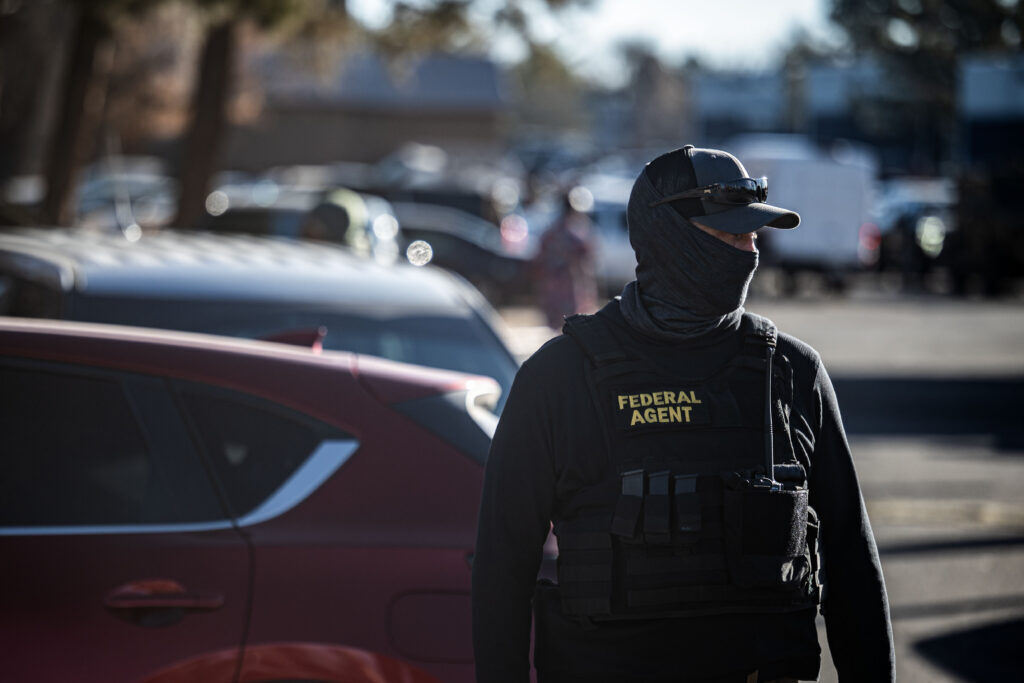
Members of the Denver City Council unanimously approved an ordinance Monday that prohibits law enforcement officers, including federal immigration agents, from wearing a mask or face covering while interrogating, detaining, or arresting an individual within Denver, including in city-owned buildings....

More than 20 Colorado counties receive grants to improve land record-keeping systems
Maren Prince
maren.prince@denvergazette.com
Updated 51 minutes ago
More than 20 Colorado counties received $2.5 million to improve their land record-keeping systems, according to a Monday news release. The State’s Electronic Recording Technology Board awarded 22 counties with grants ranging from $5,000 to $350,000, according to the release....

Denver among top 5 finalist cities for 2028 DNC
Deborah Grigsby
deborah.smith@denvergazette.com
Updated 1 hour ago
Denver is among the five cities that could host the 2028 Democratic National Convention, the Democratic National Committee announced Monday. Along with Denver, Philadelphia, Atlanta, Boston and Chicago have advanced in the application process to host the next DNC, which...

Colorado bill would require employers to grant legislative leave to state lawmakers
Marissa Ventrelli
marissa.ventrelli@coloradopolitics.com
Updated 28 minutes ago
When she was elected to the legislature in 2022, Sen. Janice Marchman was hopeful she could bring real-world experience to the state’s education policy. Marchman, a Loveland Democrat, was the only actively-working teacher in the General Assembly for the past...
Colorado Supreme Court clarifies restraining order violations can always support burglary charge
Michael Karlik
michael.karlik@coloradopolitics.com
Updated 18 hours ago
The Colorado Supreme Court’s majority ruled on Monday that a violation of a restraining order can also serve as a basis for finding a defendant guilty of burglary. Under state law, a person commits second-degree burglary by unlawfully entering or...

Big week ahead for major legislation to address housing affordability woes
Zach Halaschak, Washington Examiner
zach.halaschak.washington.examiner@gazetteedit.wpenginepowered.com
Updated 20 hours ago
The Senate is pushing ahead with a bipartisan bill to improve housing affordability, teeing up a critical week for housing on Capitol Hill and raising major questions about what provisions will be included. Senate Majority Leader John Thune (R-SD) filed cloture on legislation from the...

Macron goes nuclear with increases to French warhead arsenal
Timothy Nerozzi, Washington Examiner
timothy.nerozzi.washington.examiner@gazetteedit.wpenginepowered.com
Updated 20 hours ago
French President Emmanuel Macron is channeling the atomic spirit of his predecessor Charles de Gaulle with orders for the French military to “increase the number of nuclear warheads” in the nation’s arsenal. Macron announced the seismic shift in France’s defensive...

Who has been killed so far during US-Israel mission in Iran?
David Zimmermann and Keely Bastow, Washington Examiner
david.zimmermann.and.keely.bastow.washington.examiner@gazetteedit.wpenginepowered.com
Updated 21 hours ago
There have been numerous casualties on all sides since the joint U.S.-Israel strikes against Iran commenced over the weekend, with more lives expected to be lost as the campaign continues. The Islamic regime’s leadership is currently bearing the brunt of...
PREV
PREVIOUS
Trans-Pacific trade agreement supporters, opponents spar
Deeply divided supporters and opponents of a deal that would allow the United States to enter into a trade agreement with 12 mostly Asian/Pacific countries are not giving up any ground. The stark disagreement was on display Monday night when U.S. Rep. Jared Polis, D-Boulder, hosted a lively discussion on the University of Colorado Boulder […]

Club 20: AG defends Colorado's legal pot regulations
GRAND JUNCTION — Colorado Attorney General Cynthia Coffman is vigorously, if reluctantly, defending Colorado’s legislation regulating marijuana against a lawsuit filed by Nebraska and Oklahoma, stating to Club 20 that a recent indictment of 32 people pretending to be medical marijuana growers shows that Colorado is striving to prevent illegally grown pot from entering other […]