

End of Cuban embargo is good policy for U.S.

Congratulations to President Obama for being the first president to stand up and reject the counterproductive and long outdated Cuban embargo. And to heck with U.S. Senator Marco Rubio and others for their attacks on him. How can they justify an embargo that was first imposed on October 19, 1960, extended on February 7, 1962 and has, in effect, kept the Castro brothers in power longer than the terms of our last seven presidents? How would the Castros ever have maintained power if they hadn’t had the United States to blame for their decades of economic mismanagement and brutality?

We visited Cuba 14 years ago and were stunned at:
• The friendliness of Cubans towards Americans, despite the damage this embargo had caused them;
• The high educational level of many of the people we met, most of whom had only the most menial of jobs;
• The lack of the most basic supplies. I remember going into a pharmacy, for example, and seeing a well-dressed and professional looking pharmacist standing in front of a row of shelves which contained nothing more than three little containers of aspirin;
• Hordes of people standing along the highways as we crossed the country because there was no public transportation. Now and then a dump truck would stop and dozens would hop in the back.
Not only was there no public transportation, but there was also very little private means of getting from one place to another. On those wide highways, we’d see maybe one or two cars every minute. The old cars in Havana are picturesque but have little impact on the movement of people;
• The continuing decay of the striking looking colonial buildings in Havana. The December before our visit, one hundred buildings in Havana collapsed;
Thinking of the skills of Coloradans, I wrote an article back then listing hypothetical ways they might help modernize this unique country. For example:
• Those who built DIA could apply their skills to expanding airports in Cuba for the influx of new tourists;
• Agronomists at CSU could help diversify Cuban agriculture away from sugar. For all its productive farm land, Cuba actually has to import food;
• RTD experts could advise Cuba about building an effective public transportation system;
• Colorado tourism experts could help Cuba develop this valuable industry in ways that would benefit the Cuban people and not just foreign investors;
• Colorado lawyers could devise a form of Homestead Act so that Cuba could devolve land to farmers which would give them a real incentive to produce more.
At the time, these ideas were met with derision. One writer wrote, “I would love to know what hallucinogens you (Morgan Smith) are taking because I want some!” Another said, “I just read your article in the Denver Business Journal and was saddened by your ideas. I expect that no one will follow your advice, but the idea still needs to be put down quick.”
Well, here we are again almost 14 years later and, until the President’s announcement, nothing had changed; our embargo has been a flop. President Obama has said, in effect, let’s take a new approach — capitalism.
The question now is who will take advantage of this “opening” and how.
This is not going to be an immediate boon to U.S. companies, especially small ones, because unlike other Latin American countries such as Mexico which is our second largest market or Chile and Colombia, both very sophisticated in international business, Cuba has no trade infrastructure. In addition, with the drop in oil prices and its impact on Venezuela, a country that has long supported Cuba, the funds to buy imported products are very limited. The companies that could prosper would be those with substantial international experience like CH2MHill. In fact, if Ralph Peterson, CH2MHill’s former president who died in 2009 were alive today, he would have a plan for Cuba because he was the most farsighted Colorado businessman I ever knew. If there are new leaders like him and if our trade development agencies get involved, this can be a viable long term market or a place for joint ventures in areas like tourism development.
President Obama’s action isn’t just about business, however. Our embargo was a huge sore point for us around the world. Every year since 1992, the UN passed a resolution condemning it and last October’s resolution passed by a vote of 188 to 4! Within Latin America itself, it served to push countries like Nicaragua, Bolivia, Ecuador and Venezuela away from the U.S. and our beliefs and towards the Castro brothers. Simply changing that dynamic is good for the U.S.
The next steps are up to the Republicans. It will be fascinating to see whether they follow Marco Rubio’s lead or just quietly let Obama’s leadership become a reality.
Morgan Smith is a former Colorado legislator and Commissioner of Agriculture. He is a frequent traveler to different parts of the world. He can be reached at Morgan-smith@comcast.net.
Colorado Politics Must-Reads:


Former Colorado wildlife director heads to Wyoming
Marianne Goodland
marianne.goodland@coloradopolitics.com
Updated 3 minutes ago
Jeff Davis, the former director of Colorado Parks and Wildlife who oversaw the introduction of wolves in Colorado, is headed to Wyoming, where he will take on a new job as deputy director for that state’s game and fish agency....
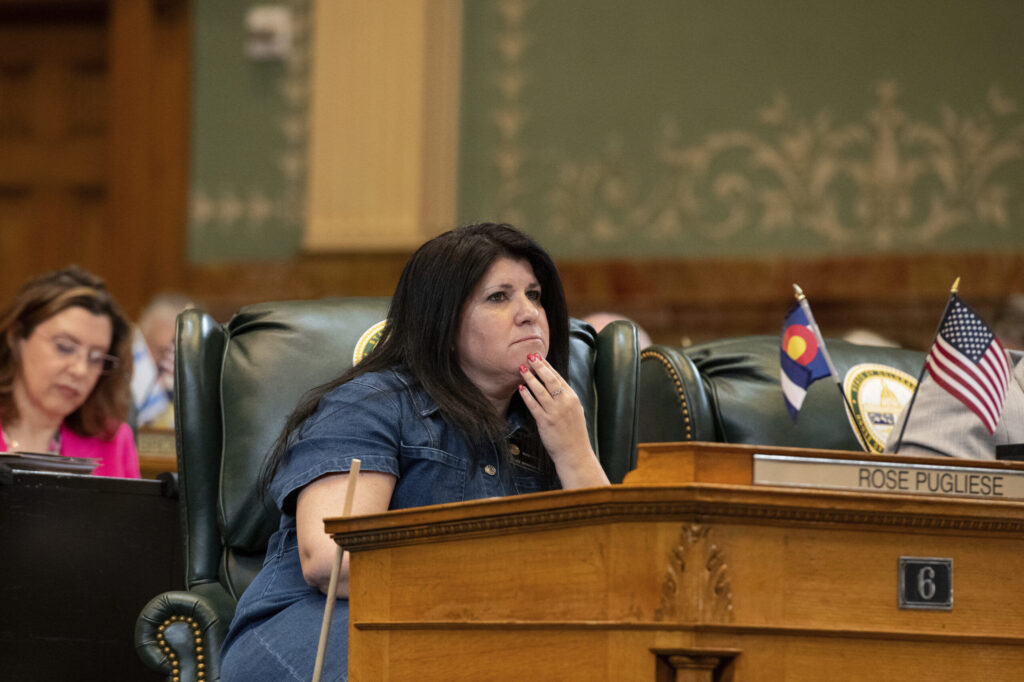
Former Rep. Rose Pugliese vies for Mesa County Treasurer
Marianne Goodland
marianne.goodland@coloradopolitics.com
Updated 1 hour ago
Former Republican Leader Rose Pugliese has jumped into the 2026 primary for Mesa County Treasurer. Pugliese moved to Grand Junction after resigning from the Colorado House in September, citing a “collapse of integrity” within the Colorado House. She previously served...
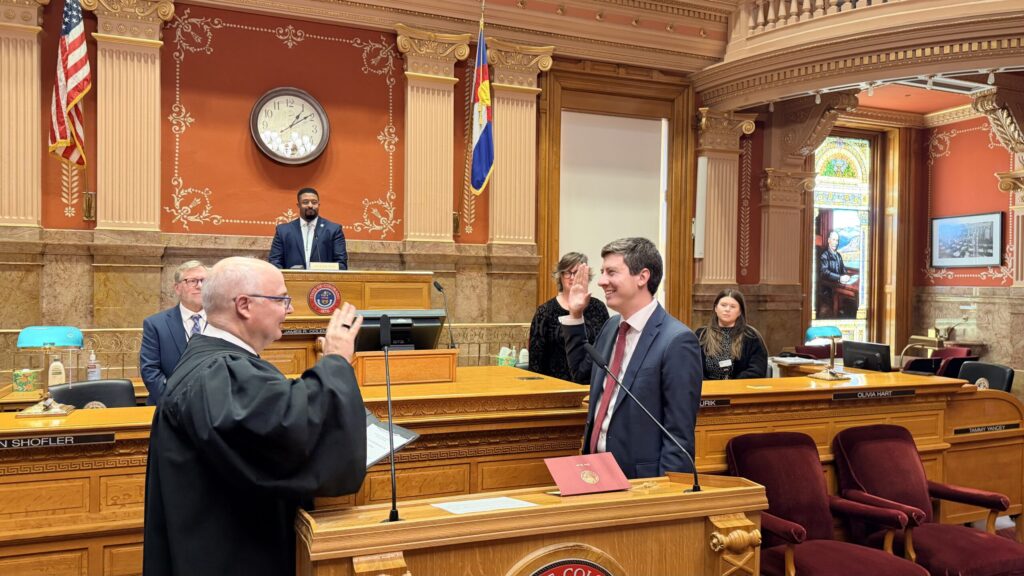
Primary challenges surge as Colorado lawmakers head into 2026 election cycle
Marianne Goodland
marianne.goodland@coloradopolitics.com
Updated 5 hours ago
As the 2026 election cycle begins, an unusually large number of Colorado lawmakers — many appointed through the vacancy process — are facing primary challenges that reflect deepening divisions within both major parties. But it isn’t only open seats that...
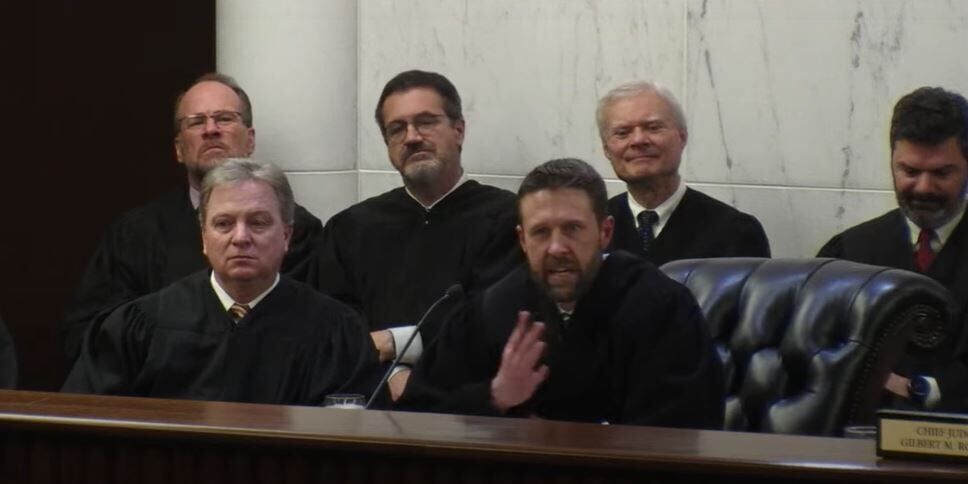
Appeals court orders new child abuse trial due to improper evidence of prior mistreatment
Michael Karlik
michael.karlik@coloradopolitics.com
Updated 6 hours ago
Colorado’s second-highest court overturned a Montezuma County defendant’s child abuse conviction last month, concluding evidence of prior mistreatment was too dissimilar to the alleged conduct that formed the basis of the criminal charges. Garland Kay Malcolm received a 32-year prison...

Trump freezes child care funding for Colorado, 3 other states
Thelma Grimes
thelma.grimes@coloradopolitics.com
Updated 5 hours ago
Colorado was swept up in a $10 billion federal child care funding freeze announced on Monday by the Trump administration, a move state officials said they learned about through media reports. The Trump administration said it would freeze child care...
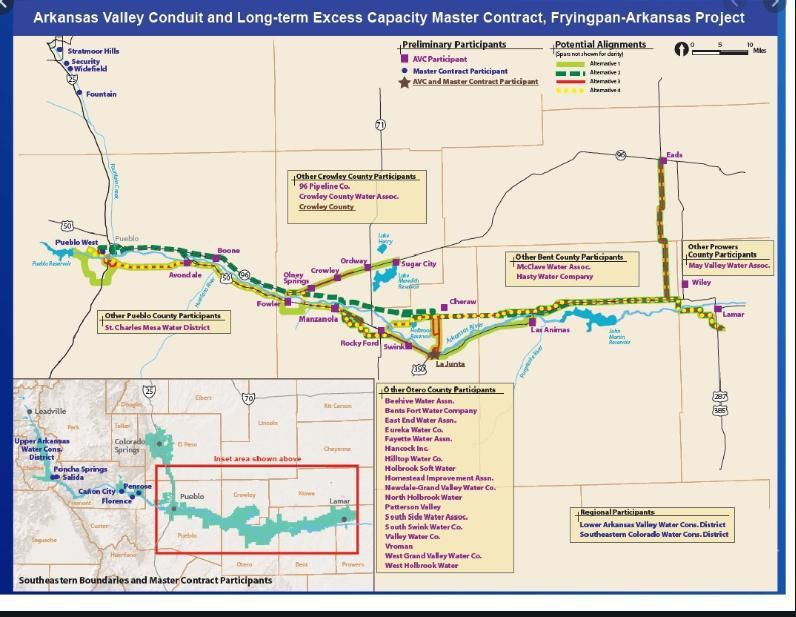
U.S. House weighs override of Trump veto on Colorado water project
Marianne Goodland
marianne.goodland@coloradopolitics.com
Updated 3 hours ago
The U.S. House is expected to consider on Thursday whether to override President Donald Trump’s veto of a bill aimed at helping finance a water pipeline in Colorado. Should it happen, it would be the first attempt at an override...
Trump’s Venezuela intervention could settle the 2028 debate for Rubio and Vance
Christian Datoc, Washington Examiner
christian.datoc.washington.examiner@gazetteedit.wpenginepowered.com
Updated 8 hours ago
President Donald Trump‘s Venezuelan intervention will likely have a significant effect on determining the GOP nominee for the 2028 presidential election. For months, Trump has hinted at his desire to see a ticket featuring both Vice President JD Vance and...
Federal judge recommends blocking Justice Department ‘dragnet’ on Children’s Hospital Colorado
Michael Karlik
michael.karlik@coloradopolitics.com
Updated 7 hours ago
A federal judge repeatedly criticized the government on Monday as he concluded a U.S. Department of Justice request for patient and employee information from Children’s Hospital Colorado was fueled by an “improper purpose” and should be denied. U.S. Magistrate Judge...
Former U.S. Rep. Greg Lopez leaves GOP, will run for governor in Colorado as an independent
Ernest Luning
ernest.luning@coloradopolitics.com
Updated 2 hours ago
Former U.S. Rep. Greg Lopez, a candidate for governor of Colorado, has left the Republican Party and plans to run as an unaffiliated candidate for the office held by term-limited Democratic Gov. Jared Polis. Lopez, who served six months in...
Denver builder recalls Venezuela’s collapse as Maduro’s party rose to power
Mark Samuelson Special to The Denver Gazette
mark.samuelson@denvergazette.com
Updated 11 hours ago
When Hugo Chávez — predecessor to deposed Venezuelan President Nicolás Maduro — came to power in 1998, Denver builder Noel West Lane was deep into a homebuilding venture in Caracas, supported by business leaders close to the preceding administration of...
PREV
PREVIOUS

Tancredo toasts to conservative principles at dinner with supporters
Supporters of former U.S. Rep. Tom Tancredo raised a glass to toast the Republican and conservative principles at a gathering of a couple dozen key backers of his gubernatorial bid on Sunday night at a Lakewood steakhouse. Noting that he had celebrated his 69th birthday the day before, a wistful-sounding Tancredo observed, “It’s been a […]

Forum on race, justice is just the beginning
At 3 p.m. on the Friday afternoon before the final weekend leading up to Christmas you couldn’t help but wonder how many Denver residents would be willing to show up for a discussion of race, justice and police brutality. The answer turned out to be that a lot of people found the time to fight […]