

Update, safeguard Colorado’s mail ballot with voter ID | PODIUM


By Chuck Broerman and Suzanne Taheri
Coloradans often refer to our state as a leader for accessible and secure elections. We have led on all-mail ballots, automatic voter registration, and same-day registration, turning Colorado into a model for modern elections while also increasing turnout and lowering costs.
But leadership also means staying ahead of the curve. For most Coloradans who vote by mail, the only thing tying their ballot back to them is a signature on the back of an envelope. There is no uniform, statewide requirement to back that up with a second, simple piece of information. As other states continue to debate how to balance convenience with security, Colorado can once again lead by showing the nation how to do both: It’s time for our state to adopt a simple, commonsense voter ID requirement.
It’s why we are proponents for recently filed ballot measures proposing that, in addition to a signature, a voter would be required to provide another basic form of identification, such as a driver’s license, state-issued ID or the last four digits of a Social Security number.
For most people, that will sound familiar. We already do some version of this every day. We verify who we are to log into online banking, to unlock our phones, to access software at work, and to reset over and over again the passwords that we soon forget. Many online accounts require some form of two-step verification. Even to read a digital newspaper, you often have to confirm that you are the person who paid for the subscription. If we accept that level of verification for routine activities, it seems reasonable to ask whether voting, considered our most basic civic responsibility, should continue to rely on a single signature.
To be clear, this proposal is not about adding unnecessary hurdles for eligible voters. Rather, the goal is to modernize election security in a straightforward manner by using verification methods Coloradans already employ on a daily basis. In fact, this second layer of identification is already in the voter registration system.
Some may argue there is no urgent crisis driving the need for change, and that is true. This is not about responding to one scandal or headline. Colorado’s current system works, and that is a strength. Still, signatures can change over time, and the process leans heavily on one piece of information. Adding a second check, such as a driver’s license or the last four digits of a Social Security number, would not change how Coloradans receive or return their ballots. We would still vote primarily by mail, use drop boxes, and benefit from same-day registration.
What would change is the confidence that each ballot is tied to a verified voter. It is a modest adjustment that provides another layer of confidence that ballots are coming from the people whose names are on them, and that no one can easily cast a ballot in someone else’s place. It is about maintaining and strengthening trust before problems arise. Regardless of party, people want to know that the process is fair and that the outcome reflects the will of eligible voters.
Recent polling suggests many Coloradans are ready for this discussion. While a solid majority of voters say the state does a good job ensuring elections are fair and secure, there is still a notable share of voters who would like to see increased election security. Roughly seven in 10 voters say they support verifying one’s identity when voting, and about two thirds indicate they would support a constitutional amendment requiring voter ID. After hearing more about the proposal, which would also recognize military and tribal IDs, and being informed that similar requirements in other states have not prevented eligible voters from participating, Colorado voters’ support increases.
Many states already request or require some form of identification. What sets Colorado apart is that we have the opportunity to design a voter ID requirement that fits our successful all-mail system rather than copying models built for different circumstances. We can keep what works — high turnout, easy access, and convenient mail voting — while adding a carefully tailored verification step that reflects how people already prove who they are in other parts of life.
Colorado’s reputation as a leader in election reform rests on practical, bipartisan solutions. A well-crafted voter ID requirement, grounded in everyday experience and respectful of our mail-ballot system, is a logical next step in that tradition. It offers a way to preserve voter accessibility while reinforcing the trust that elections ultimately depend on.
Chuck Broerman is the former clerk and recorder for El Paso County. Suzanne Taheri is an attorney and former Colorado deputy secretary of state.


Colorado Democrats eye new fee on home insurance companies
Marissa Ventrelli
marissa.ventrelli@coloradopolitics.com
Updated 32 minutes ago
Colorado Democrats are reviving a proposal to levy a new fee on home insurance companies, with the aim of distributing grants to fund “resilient” roofing. Introduced by Sen. Kyle Mullica, D-Thornton, Senate Bill 155 creates a government “enterprise,” which would...

Poll: Colorado Gov. Jared Polis loses support among Democrats
Marissa Ventrelli
marissa.ventrelli@coloradopolitics.com
Updated 21 minutes ago
Gov. Jared Polis is losing steam among members of his party, particularly progressive Democrats, according to a recent poll. Other statewide Democrats also saw their favorability ratings drop, though relatively stable compared to the governor’s numbers, the poll conducted by...

Colorado House opens debate on $46.8B budget already showing strain
Marianne Goodland
marianne.goodland@coloradopolitics.com
Updated 6 hours ago
With rising Medicaid costs, no set‑aside for new legislation, and dozens of bills still seeking funding, Colorado lawmakers began debating a $46.8 billion budget Wednesday that is already proving difficult to keep on track. By the time the main budget...
George Brauchler on Colorado’s ‘Jailbreak’ | The OpEdge Podcast
Tony Olivero
tony.olivero@gazette.com
Updated 7 hours ago
We are pleased to introduce the inaugural episode of The OpEdge — The Gazette’s new opinion podcast. District Attorney and law enforcement hawk George Brauchler tells host and investigative columnist Jimmy Sengenberger what lawbreakers can expect in the 23rd Judicial District. Brauchler recaps...

Preserving access for vulnerable communities should be a top priority in Congress | OPINION
Colorado Politics
colorado-politics@coloradopolitics.com
Updated 9 hours ago
By Tony Henderson As both a minister and as president of the NAACP Denver, I believe access to high-quality, accessible health care is a right that should be afforded to each and every one of us. To that end, Medicare...
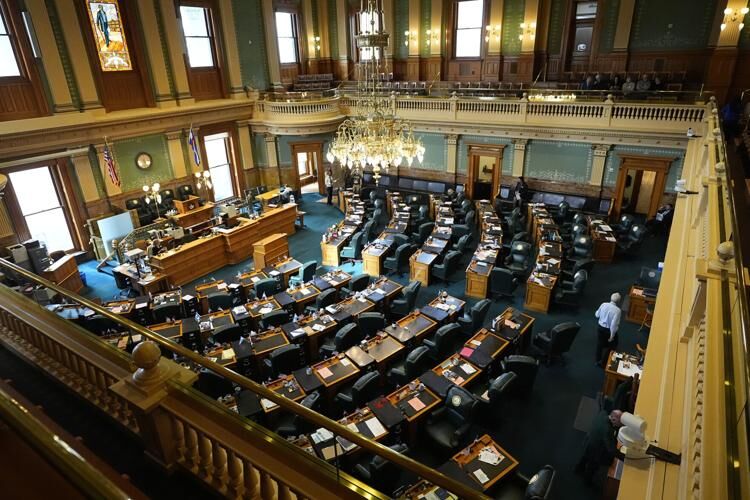
Colorado House Democrats focus on rising prison costs amid declining crime rates during budget discussion
Marissa Ventrelli
marissa.ventrelli@coloradopolitics.com
Updated 1 day ago
Colorado’s House Democrats pressed budget writers Tuesday over a nearly $70 million increase for the Department of Corrections, questioning why the state plans to add 941 prison beds and explore new prison capacity at a time when crime rates are...
Inside the GOP caucus: Colorado legislator explains why a bigger budget still means cuts
Marianne Goodland
marianne.goodland@coloradopolitics.com
Updated 23 hours ago
Tasked with explaining a budget driven by rising caseloads, shifting federal dollars and a $1.5 billion shortfall, Joint Budget Committee member Rep. Rick Taggart spent Tuesday’s Republican caucus meeting detailing why the 2026–27 spending plan appears larger on paper, even...
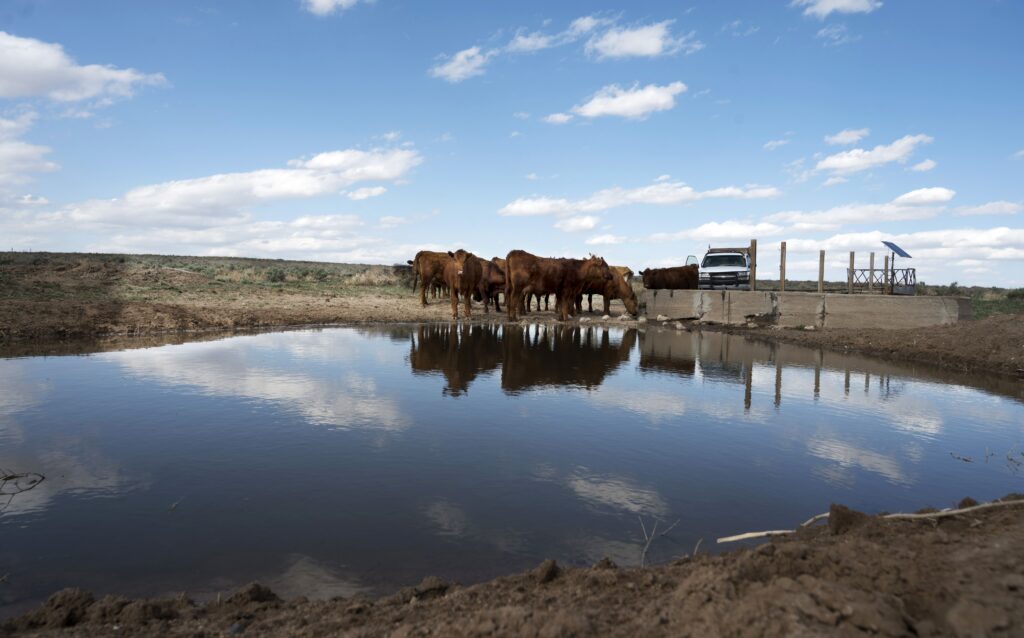
Senate-passed farmworkers overtime bill easily clears Colorado House committee
Marianne Goodland
marianne.goodland@coloradopolitics.com
Updated 24 hours ago
A proposal to ease Colorado’s overtime requirements for agricultural employers cleared a key House committee Monday, setting up a broader fight over whether the state should scale back a labor policy adopted just five years ago. The House Agriculture, Water...
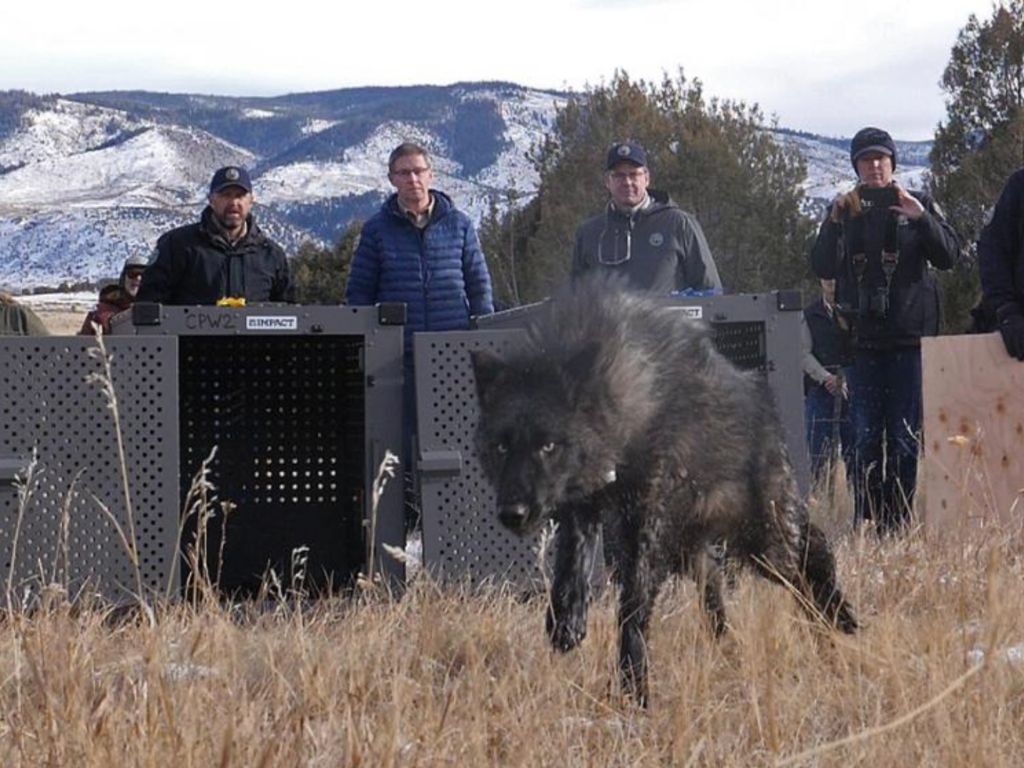
Public comment period opens as federal review targets Colorado’s wolf reintroduction program
Marianne Goodland
marianne.goodland@coloradopolitics.com
Updated 1 day ago
Federal wildlife officials have opened a formal review of Colorado’s wolf reintroduction program, launching a public comment period to assess how the state has handled rising conflicts between wolves and livestock. A notice from the U.S. Fish and Wildlife Service...

Yet again, when rights are in conflict | Hal Bidlack
Hal Bidlack
hal-bidlack@coloradopolitics.com
Updated 2 days ago
I admit, it is going to take quite a bit of self-control to not have this entire column end up being yet another screed about a certain president who continues to shock the world in his race to the bottom...
PREV
PREVIOUS

Preserving access for vulnerable communities should be a top priority in Congress | OPINION
By Tony Henderson As both a minister and as president of the NAACP Denver, I believe access to high-quality, accessible health care is a right that should be afforded to each and every one of us. To that end, Medicare Advantage has become a critical component of our health system, helping secure access to care […]

George Brauchler on Colorado's 'Jailbreak' | The OpEdge Podcast
We are pleased to introduce the inaugural episode of The OpEdge — The Gazette’s new opinion podcast. District Attorney and law enforcement hawk George Brauchler tells host and investigative columnist Jimmy Sengenberger what lawbreakers can expect in the 23rd Judicial District. Brauchler recaps his recent commentary for The Gazette — “Jailbreak” — detailing legislative Democrats’ efforts to empty Colorado […]