

Energy constraints loom larger than water for Colorado AI boom, experts say

As artificial intelligence reshapes almost every sector of the economy, experts at this year’s Colorado Climate Week gathering in Boulder said it is also reshaping local physical infrastructure.
From grid demand and water use to data center construction, scaling the necessary framework to support AI, they said, will be a challenge as experts and policymakers try to do so without simultaneously increasing environmental impact.
“It’s very hard to predict where AI is going,” Lon Huber, senior vice president and chief planning officer for Xcel Energy, said. “But if you look at other states, the demand is just booming.”
In states like Texas, abundant and competitively priced power capacity, along with a regulatory framework to deliver it quickly, are attracting major data center developers and tech giants like Google and OpenAI.
For example, the Dallas-Fort Worth region, alone, according to a 2025 report by Industrial Refrigeration Pros, is home to 141 of the state’s 279 operational data centers.
In contrast, there are somewhere between 40 and 50 data centers in Denver and along the Front Range, according to multiple industry sources.
Thirty-seven states currently offer incentives to attract data centers, but Colorado isn’t one of them. And that, industry leaders have said, is a big reason why the Centennial State serves as headquarters to eight data-center-development companies, yet none of them is investing in projects in this state and they seek to build elsewhere in the country.
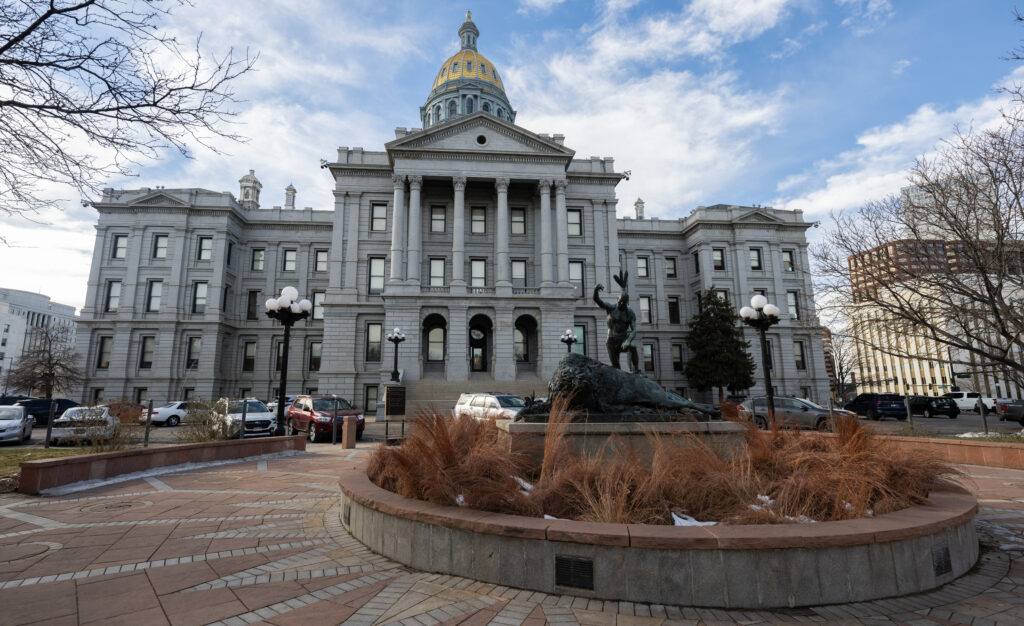
Data centers and other “large load” users are driving up energy expectations across the country, as well as the need for the massive infrastructure to support them. Supporters have argued this means jobs and revenues in one of the fastest growing tech centers in the world, while critics said they are worried about driving up water and energy costs for residents.
Experts say access to energy is the real problem – water matters, but much less at scale.
“I think it makes sense to look at the numbers in order of magnitude,” Colorado Energy Office Director Will Toor said. “The energy use from AI is a meaningful share, and it’s going to be a significant share of the overall electric demand in the state. The water use is not.”
Western Resource Advocates, a nonprofit environmental law and policy outfit, recently conducted modeling of data center energy and water use across the West, Toor noted.
“If you look at their numbers, they project that, by 10 years from now, there might be about 6,000 acre-feet of water used for data center cooling in Colorado,” Toor said. “Right now, we use about 6 million acre-feet a year for consumptive use.”
An acre-foot is approximately 326,000 gallons of water, enough to fill an eight-lane swimming pool.
Data centers could use up to 20% of the state’s total electricity if the market grows quickly.
On the other hand, data centers, he said, use about 0.1% (one-tenth of one percent) of the state’s consumptive water.
Toor added that it is important to focus on water and cooling efficiency in data centers, and that poor siting can impact local water supplies.
“But it (water) is not a really big issue or constraint on data center development in a way that I think getting the energy policy right is,” the energy official said.
Water consumption by data centers has often been criticized, but many companies, including Microsoft, are moving toward “zero-water” cooling techniques that use closed-loop systems and engineered fluids, reducing reliance on local resources.
The complication is that, while demand is huge, many data center projects are speculative, as developers submit multiple requests to lock in land and power deals to secure future site amenities.
“There’s just a huge amount of uncertainty, and this is a lot of what our Public Utilities Commission has been grappling with for the last couple of years in Colorado, trying to understand the scale of build that will actually come from data centers,” Toor said.
Toor added: “I think that there are good reasons to say that data center developers are out there shopping their projects in multiple locations for obvious reasons — you don’t know which ones are going to pan out, and you’re looking for where you’re going to be able to connect and get power quickly.”

A major supporter of AI, Denver Mayor Mike Johnston has pinned much of Denver’s future on AI-driven products to increase efficiency, expand services, and generate much-needed revenue, as the city seeks to dig itself out of a $200 million budget hole.
However, last week, the City of Denver advanced legislation that, if approved, would halt all new construction and data center development for up to a year, beginning May 21.
Because data centers are not specifically regulated within Denver and have no specific permitting requirements, city officials want to press the “pause” button to give the city time to develop “thoughtful regulations” that address community safety and equity.
At the state Capitol, legislators are mulling two competing proposals this year. One would, among several provisions, offer tax breaks to attract large facilities. The other would require data centers to use electricity from new — not existing — renewable sources, including solar, wind, geothermal, biomass, and limited small hydro.
A Colorado coalition of data center developers and operators is urging lawmakers to pass House Bill 26-1030, which offers tax breaks to attract large facilities, while calling Senate Bill 26-102 a major obstacle to new investment. Proponents of the latter bill insist they don’t want to ban data centers. Rather, they said, they want to ensure data centers won’t slow down Colorado’s carbon goals.
Job attractors said data centers can help fund needed energy grid updates and supply construction jobs for years as they are built, while environmental advocates worry they overconsume water and use a ton of energy.
Officials said they want to understand the complexities that data centers bring.
“These (data center) projects present new and complex issues that argue for better alignment between Colorado’s economic development, energy, and water strategies, particularly given the obvious impacts of water scarcity in our region driven by climate change,” Denver Water CEO and Manager Alan Salazar said in a statement to The Denver Gazette. “Denver Water, too, believes it is vitally important to fully understand the effects of data centers on water delivery and supply, and will continue to assess their potential impacts on our infrastructure and communities.”
Reporters Scott Weiser and Marianne Goodland, as well as Ed Sealover, Editor of Sum & Substance, an online news publication of the Colorado Chamber of Commerce, contributed to this article.


Environmentalists and Colorado Springs Utilities split on retirement date for Ray Nixon coal power plant
Brennen Kauffman
brennen-kauffman@coloradopolitics.com
Updated 5 days ago
On Tuesday night, around 25 people gathered at Old Colorado City Brewing to celebrate Ray Nixon’s retirement. Nixon is only 46 years old, but the retirement has been expected for several years. The crowd delivered toasts and signed a poster-sized...
Gov. Polis declares April ‘dig safely month’ to mark 40th anniversary of Colorado 811
Scott Weiser
scott.weiser@gazette.com
Updated 7 days ago
Gov. Jared Polis declared April 2026 as “Dig Safely Month” in Colorado, an annual observance that this year highlights the 40th anniversary of Colorado 811, the state’s One-Call Notification System. “Before everyone starts their warm weather projects around the house,...

A perfect storm: Pine beetles thriving following warm, dry winter in Colorado
O'Dell Isaac
odell.isaac@gazette.com
Updated 1 week ago
The warmest winter in Colorado history could lead to record-breaking proliferation of a tiny insect, about the size of a grain of rice, that has killed millions of acres of trees across the Centennial State and contributed to the rapid...
Power grid shutdowns in Colorado bring protection — and problems
Scott Weiser
scott.weiser@gazette.com
Updated 4 days ago
A downed power line in Sunshine Canyon in the mountains west of Boulder in December posed an electrocution risk to firefighters and bystanders after Xcel Energy re-energized it without repairing it, despite being notified of the break the day before....
CDOT pivots from snowplowing to wildfire mitigation along highways
Scott Weiser
scott.weiser@gazette.com
Updated 2 weeks ago
Colorado Department of Transportation maintenance crews have launched an early push to clear dry vegetation along highways to reduce the chance that sparks or cigarette butts from passing vehicles might ignite fast-moving fires this summer. With CDOT meteorologists forecasting above-normal...
Proposed data center regulation in Colorado draws critics, backers
Scott Weiser
scott.weiser@gazette.com
Updated 2 weeks ago
A packed marathon hearing at the state Capitol in Colorado highlighted the sharp divide between two competing approaches to the effects of data centers, one of America’s fastest-growing technology sectors. Data centers are the physical facilities that host the servers,...
Conservation Colorado proposes measures aimed at oil and gas companies
Marissa Ventrelli
marissa.ventrelli@coloradopolitics.com
Updated 3 weeks ago
A group has introduced four ballot measures it says are meant to counter an initiative that aims to enshrine Colorado businesses and consumers’ right to purchase and sell natural gas in the state’s constitution. Filed with the Secretary of State’s...
Universities sue to block dismantling of Boulder’s NCAR
Scott Weiser
scott.weiser@gazette.com
Updated 3 weeks ago
A consortium of universities filed a federal lawsuit Monday, alleging the Trump administration’s plan to dismantle the National Center for Atmospheric Research is unlawful retaliation against Colorado. The group also argued that the move violates federal law. The University Corporation...
After ‘winter of defeat,’ Colorado hopes for wetter summer
Marianne Goodland
marianne.goodland@coloradopolitics.com
Updated 3 weeks ago
With snowpack melt already peaking in some parts of the state and drought conditions worsening compared to last year, Colorado’s water watchers are hoping for a wetter summer, though they anticipate the situation deteriorating before getting better. Meanwhile, the governor...
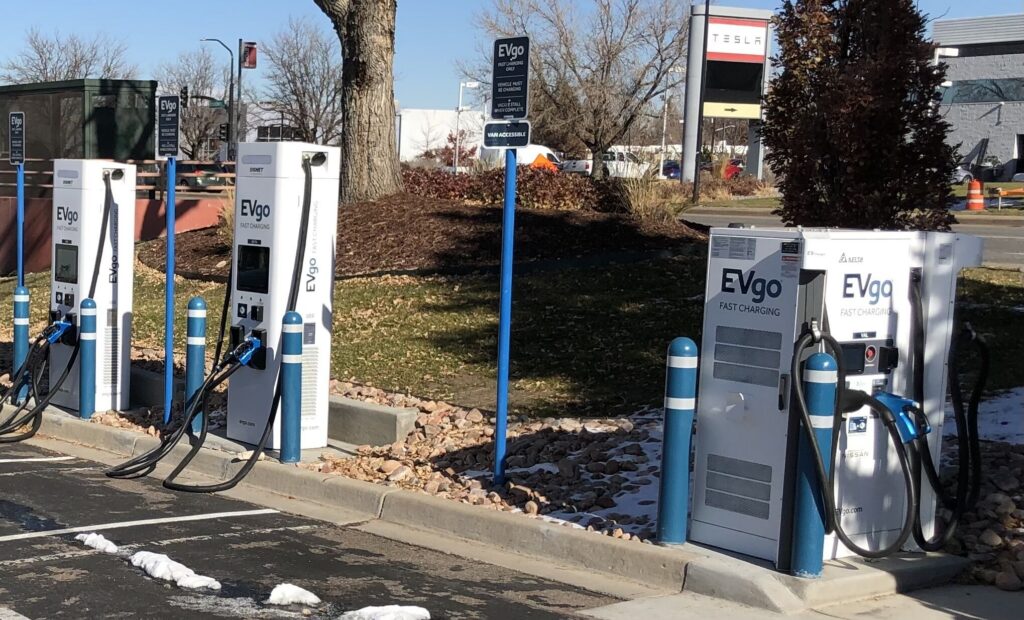
Colorado, other states oppose proposal to require EV chargers be made with 100% domestic components
Scott Weiser
scott.weiser@gazette.com
Updated 3 weeks ago
Colorado has joined a coalition of about 20 states in opposing a federal proposal that would require electric vehicle chargers funded with federal dollars to be made with 100% domestic components. The Federal Highway Administration is considering raising the domestic...
PREV
PREVIOUS

Colorado justices accept appeals on Netflix taxation, children pursuing neglect cases
The Colorado Supreme Court announced on Monday that it will decide whether Netflix subscriptions are subject to the state’s sales tax as “tangible personal property.” At least three of the court’s seven members must agree to hear an appeal. The justices also accepted cases that question whether a minor’s legal representative can pursue an appeal […]

Douglas County task force targets development regulations
Douglas County kicked off its first Red Tape Reduction Task Force Thursday aimed at speeding up commercial and industrial development timelines in the county, a move leaders said is necessary to keep the county competitive with other regions nationwide. The task force will review the county’s development and regulatory processes to identify permitting “hurdles” in […]