

Colorado appeals court orders new sentencing for Tina Peters, upholds convictions
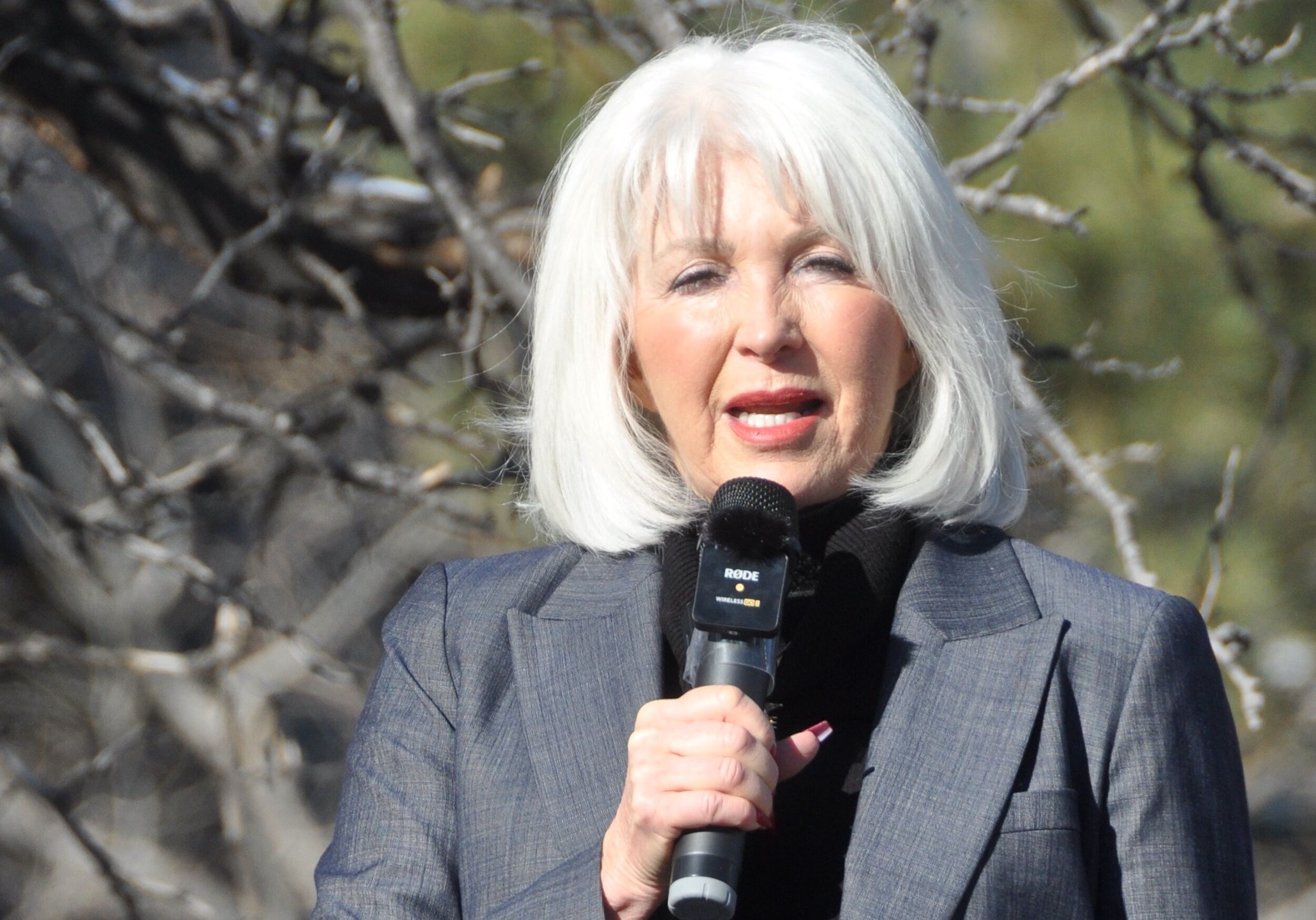
Colorado’s second-highest court determined on Thursday that a trial judge improperly sentenced former Mesa County clerk Tina Peters based upon her exercise of protected speech, while at the same time upholding her convictions.
The three-judge Court of Appeals panel also concluded that President Donald Trump’s attempted pardon of Peters for state-level convictions last year was not valid.
“Peters cites no case — and our research has found none — that has held otherwise,” wrote Judge Ted C. Tow III in the April 2 opinion.
Peters, a Republican who served one term following her 2018 election, is serving a roughly nine-year prison sentence for a mixture of felony and misdemeanor offenses related to a security breach of her office’s voting equipment. Broadly, jurors found that Peters had used deception to enable unauthorized access to a “trusted build” update of her county’s election software, and that videos and images from the update were later posted online.
Case: People v. Peters
Decided: April 2, 2026
Jurisdiction: Mesa County
Ruling: 3-0
Judges: Ted C. Tow III (author)
Craig R. Welling
Lino S. Lipinsky de Orlov
Since Trump returned to office in 2025, Peters’ criminal case has taken on outsize visibility. Last year, the U.S. Department of Justice asserted its interest in Peters’ attempt to be released on bond while her appeal proceeded, an unprecedented and ultimately unsuccessful move.
Then, in December, Trump attempted to issue a pardon for Peters’ state convictions. He also began to publicly pressure Gov. Jared Polis to release Peters. Last month, a federal judge in Colorado observed that the federal government’s attempts to withhold funding and disaster relief from the state followed closely on the heels of Trump’s demands for clemency.
Polis, meanwhile, has spoken publicly about the potentially unjust length of Peters’ sentence. Attorney General Phil Weiser, legislative Democrats, and a bipartisan group of county clerks have all urged Polis to refrain from granting clemency to Peters.
The Court of Appeals panel evaluated two of Peters’ arguments for why her convictions could not stand on federal grounds: Trump’s attempted pardon and the general legal immunity afforded to federal officials carrying out their duties.
Tow wrote that the panel was joining “what appears to be every other appellate court that has addressed the issue” in concluding a presidential pardon does not disturb state-level convictions.
“Thus, limiting offenses ‘against the United States’ to include only federal offenses recognizes the individual states’ sovereignty over their own criminal justice systems,” he wrote.
As for Peters’ assertion of immunity for carrying out federal election responsibilities in the course of her clerk duties, Tow noted that the typical immunity case involves a federal employee who is criminally charged under state law, and who then transfers the case to federal court. Under the constitutional supremacy clause, states cannot interfere with the actions of federal officials enforcing federal law.
“But Peters cites no case, nor are we aware of any, in which Supremacy Clause immunity has been extended to a state officer acting pursuant to a federal statute. There is simply no authority for extending immunity that far,” wrote Tow. “In other words, as a matter of law, Peters is not an individual who can claim Supremacy Clause immunity.”
The appellate panel rejected Peters’ evidentiary challenges to her convictions. Although there was concern during oral arguments that Peters was convicted of a felony for conduct that was actually a misdemeanor, Tow wrote that the parties did not actually arrive at a correct understanding of the law until afterward.
“It is now clear that, notwithstanding the extensive inquiry of the parties during oral argument, Peters was charged using the correct operative language,” he wrote.
The panel, however, ordered a new sentencing for Peters. At her original sentencing, District Court Judge Matthew D. Barrett called Peters a “charlatan” whose election conspiracy allegations were “a snake oil that’s been proven to be junk time and time again.”
“It’s particularly damaging when those words come from someone who holds a position of influence like you,” he said. “Every effort to undermine the integrity of our elections and public’s trust in our institutions has been made by you. You’ve done it from that lectern.”
While it is proper for judges to consider a defendant’s lack of remorse, the panel agreed that Barrett’s comments went “well beyond relevant considerations” for her sentencing.
“Her offense was not her belief, however misguided the trial court deemed it to be, in the existence of such election fraud; it was her deceitful actions in her attempt to gather evidence of such fraud,” wrote Tow. “Thus, notwithstanding the fact that some of the trial court’s considerations were tied to proper sentencing considerations, when the court’s comments are viewed in their totality, it is apparent that the court imposed the lengthy sentence it did because Peters continued to espouse the views that led her to commit these crimes.”
Although Peters asked that a different trial judge handle her case during resentencing, the Court of Appeals rejected that request.
“The original sentence that the court imposed on Tina Peters for illegally tampering with election equipment was fair and appropriate,” said Weiser in a statement. “Whatever happens with her sentence, Tina Peters will always be a convicted felon who violated her duty as Mesa County clerk, put other lives at risk, and threatened our democracy. Nothing will remove that stain.”
Secretary of State Jena Griswold added that Peters “should not receive any special treatment as the District Court considers re-sentencing.”
An attorney for Peters did not immediately respond to an email seeking comment.
The case is People v. Peters.
Editor’s note: This breaking story will be updated.


Denver promised every school funding from $1B bond — but campuses later closed received far less | Analysis
Nico Brambila
nico.brambila@denvergazette.com
Updated 24 minutes ago
Denver voters overwhelmingly approved the largest bond measure in Denver Public Schools history on the promise that every school — including charter campuses — would receive something. And they did. But the nearly $1 billion bond was not distributed evenly....

National conservation area growing by 4,000-plus acres in western Colorado
Seth Boster
seth-boster@coloradopolitics.com
Updated 5 hours ago
A formerly private, sweeping swath of western Colorado is growing a public, red rock wonderland. Spanning 4,000-plus acres, Escalante Ranch has been transferred to the Bureau of Land Management and incorporated into Dominguez-Escalante National Conservation Area, The Conservation Fund recently...

Judge rules that Colorado law makes it too hard for parties to bar unaffiliated voters from primaries
Ernest Luning
ernest.luning@coloradopolitics.com
Updated 3 hours ago
A federal judge ruled in favor of the Colorado Republican Party late Tuesday, saying that a portion of the state law that allows unaffiliated voters to cast ballots in party primaries is unconstitutional because it imposes an unrealistic burden on...

Front Range cities oppose Democratic proposal to permit lot‑splitting
Marianne Goodland
marianne.goodland@coloradopolitics.com
Updated 2 hours ago
Colorado lawmakers are pressing ahead with a plan to let homeowners split their lots to make room for smaller, less expensive houses — a proposal that has drawn sharp opposition from Aurora, Colorado Springs, Denver and other Front Range cities...

Hegseth features Fort Carson soldiers after returning from Middle East, gives warning on Iran war
Reuters
reuters@gazette.com
Updated 1 day ago
Defense Secretary Pete Hegseth said on Tuesday the next few days in the war against Iran would be decisive and warned Tehran that the conflict would intensify if it did not make a deal. Hegseth also highlighted his trip to the Middle...

Denver Council narrowly approves deal with Axon
Deborah Grigsby
deborah.smith@denvergazette.com
Updated 1 day ago
After weeks of delay, the Denver City Council narrowly approved a one-year $150,000 contract with Axon for 50 automated license plate-reading cameras and the necessary system hardware, replacing the city’s former vendor, Flock. The 7-6 vote came during Tuesday’s regular...

Aurora homeless shelter opened too early, CEO says, as mold and plumbing issues emerge
Kyla Pearce
kyla.pearce@gazette.com
Updated 1 day ago
Aurora’s largest homeless services project launched “way too early,” its CEO told city leaders Tuesday, saying the rushed opening left residents living amid mold, plumbing failures, and other issues inside the former hotel. During Tuesday’s Housing, Neighborhood Services and Redevelopment...

Gov. Polis declares April ‘dig safely month’ to mark 40th anniversary of Colorado 811
Scott Weiser
scott.weiser@gazette.com
Updated 1 day ago
Gov. Jared Polis declared April 2026 as “Dig Safely Month” in Colorado, an annual observance that this year highlights the 40th anniversary of Colorado 811, the state’s One-Call Notification System. “Before everyone starts their warm weather projects around the house,...

Federal judge dismisses U.S. government lawsuit against Colorado, Denver’s ‘sanctuary’ laws
Michael Karlik
michael.karlik@coloradopolitics.com
Updated 2 days ago
A federal judge dismissed the U.S. government’s lawsuit against Colorado and Denver on Tuesday, which alleged that various local policies impermissibly infringed on federal immigration enforcement. U.S. District Court Judge Gordon P. Gallagher followed the lead of judges in Illinois...
Lakewood zoning canvasser accused of stealing opposition material
Sage Kelley
sage.kelley@denvergazette.com
Updated 1 day ago
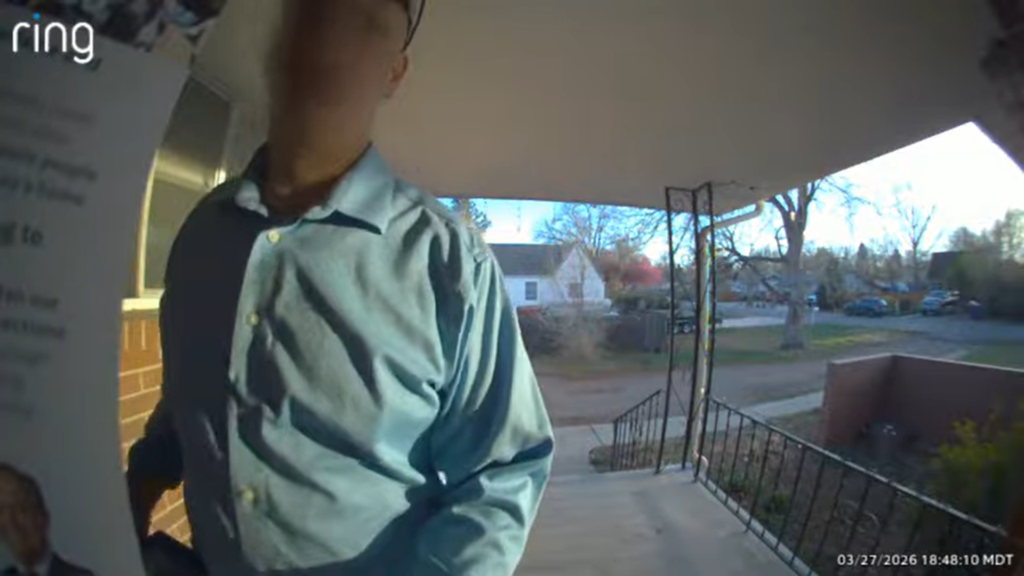
Controversies surrounding the Lakewood special election continue, with the latest including allegations of sign-stealing. The city’s special election regarding already approved zoning changes is occurring on April 7 and — along with more than a year of contention between opponents...
PREV
PREVIOUS

Denver promised every school funding from $1B bond — but campuses later closed received far less | Analysis
Denver voters overwhelmingly approved the largest bond measure in Denver Public Schools history on the promise that every school — including charter campuses — would receive something. And they did. But the nearly $1 billion bond was not distributed evenly. Schools that remained open were allocated about 57% more bond funding on average than campuses […]

10th Circuit grants rare all-judges' review of Colorado banking regulation
The Denver-based federal appeals court announced on Thursday that it will hold a rare all-judges review of a recent decision that permits Colorado to require out-of-state banks to abide by the state’s maximum interest rates when they lend to in-state residents. Even more unusually, it is the second full-court hearing the U.S. Court of Appeals […]