

Bill in state legislature would put large apartment projects in single-family neighborhoods | Cronin & Loevy

There is an old joke that goes something like this: “When the state legislature is in session, no person and their property are safe.”
That is not a joke in the older, more traditional neighborhoods that surround the downtown regions of Colorado’s major cities.
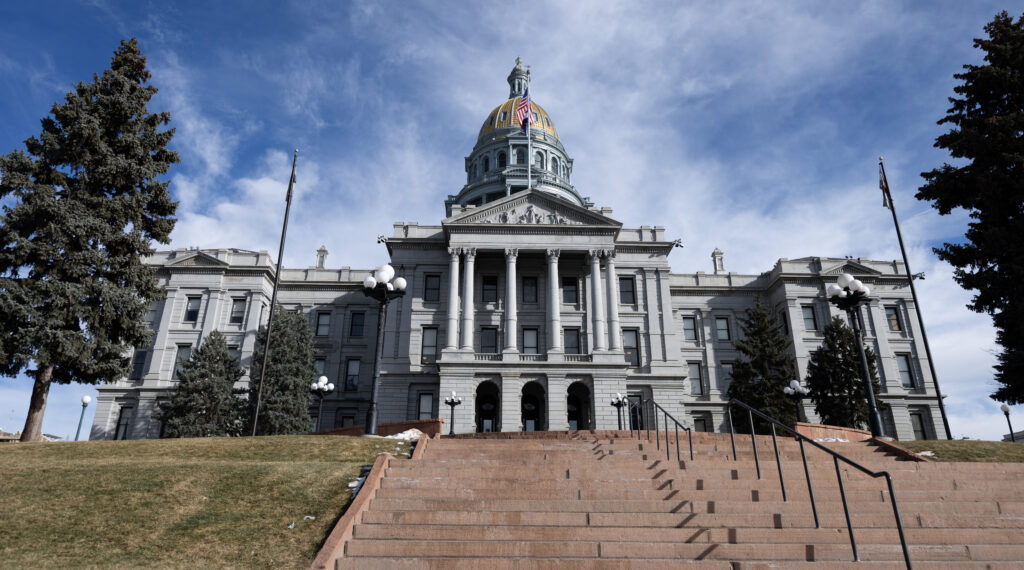
For the last two years, the annual sessions of the Colorado state legislature in the state Capitol in Denver have produced a steady stream of bills that attempt to take control of city planning and zoning functions away from city governments and put them under state control.
The general thrust of these bills has been to create programs to provide more affordable housing for younger and lower-income people in and around Colorado’s major cities. The net result, however, is increased population density, which is a more debatable priority.
Here are some of the bills under consideration in the current session of the state legislature in Denver that would change the character and desirability of Colorado’s near-downtown city neighborhoods, including in Colorado Springs.
HB 26-1001 — This bill would allow the construction of a three-stories-high affordable housing apartment project in any residential zoning district, including single-family and two-family zones.
There will be no limits on the number of persons or the number of apartments that can be in the project.
This large low-income apartment project could be undertaken by any government, school district, or non-profit (including churches).
The project would be approved by city housing officials only, thus there would be no public process by which nearby property owners could oppose the project, even in single-family zoning.
Colorado Springs city government officially opposed this bill, as did the Colorado Municipal League, but it has been passed by both houses of the Colorado legislature and is on the governor’s desk waiting for signature.
This bill appears to have been inspired by the recent efforts of Silver Key, an elderly services firm in Colorado Springs. Silver Key is working to erect a three-stories-high affordable housing project for older singles and couples on North Weber Street.
That project has been approved by the city but is currently arranging for financial support.
The purpose of HB 26-1001 is to smooth the way in other cities in Colorado for projects similar to the Silver Key project in Colorado Springs.
If the bill is signed by the governor, any existing owners of a single-family or two-family zoned home could have a three-stories-high affordable housing project with a large number of tenants being built next door to them.
HB 26-1308 — This bill eases the process of “lot splitting” in residential areas. Almost any residential lot can be split into two, subject only to an administrative approval process with no public input.
Previously, the new lot and a house on it had to be kept as a rental unit. This bill provides for the new house and lot to be sold to a new owner as a separate property.
This process may take place in any residential zoning district so long as the smaller of the two new lots is equal to at least 1,200 square-feet.
This is to encourage the construction and sale of Additional Dwelling Units (ADUs). These are separate new homes built in what were originally back yards or large side yards.
This bill effectively comprises a 100% increase in the allowed density of residential neighborhoods. It has been passed by the state House of Representatives and has gone to the state Senate.
The city of Colorado Springs and the Colorado Springs Chamber of Commerce both oppose this bill.
SB 26-1114 — This bill prohibits any dimensional standards, such as lot frontage requirements, setback requirements, or maximum lot coverage requirements, if they have the practical effect of preventing the construction of a home on a 2,000 square foot lot.
This bill passed the state House of Representatives and has been sent to the state Senate for consideration. Colorado Springs city government and the Colorado Springs Chamber of Commerce both oppose this bill.
It should be kept in mind these three bills are working their way through the state legislature. They are considered by subcommittees, committees, on the State House floor, and on the state Senate floor.
They can be changed at any step of the legislative process. Legal provisions can be added and legal provisions dropped as they make their way toward enactment.
We will have to wait until they are passed by both houses of the state legislature and signed by the governor to know what the actual new laws will be.
But these three bills give us a good idea of where the state legislature is generally going on local planning and zoning issues in the current session of the state legislature in Denver.
There is a good chance these bills or some reasonable version of them will be passed by the state legislature, become state law, and take effect in the older and more mature Denver and Colorado Springs neighborhoods.
Stay tuned. We will work to keep you informed on what the state legislature is doing on these subjects.
Tom Cronin and Bob Loevy are news commentators who write about Colorado and United States politics.


‘Steel for fuel’ — but bill consumers for both | PODIUM
Colorado Politics
colorado-politics@coloradopolitics.com
Updated 10 hours ago
By Sarah Montalbano In 2018, Xcel Energy, an investor-owned utility serving millions of customers across eight states, was the first U.S. utility to pledge to deliver 100% carbon-free electricity by 2050. Eight years later, Xcel is pleading with Colorado...

Mental health education for coaches can help young athletes on and off the field | OPINION
Colorado Politics
colorado-politics@coloradopolitics.com
Updated 10 hours ago
By Erin Harrop Youth athletics have become significantly more intense and competitive. The physical effects of training or injury can be grueling — but so are the mental health effects, particularly as performance pressure increases. As leaders and mentors, coaches...

Colorado leaders weigh next steps after Supreme Court rejects state ban on ‘conversion therapy’
Marissa Ventrelli
marissa.ventrelli@coloradopolitics.com
Updated 11 hours ago
Colorado leaders said they are weighing next steps after the U.S. Supreme Court on Tuesday rejected the state’s ban on “conversion therapy” for children, as critics and supporters cheered or lambasted the ruling. The court’s near-unanimous decision called the Colorado...

Colorado lawmakers push legislation to shrink RTD board, increase pay as ridership struggles continue
Marissa Ventrelli
marissa.ventrelli@coloradopolitics.com
Updated 15 hours ago
Colorado lawmakers are advancing a new push to overhaul the Regional Transportation District, proposing to shrink the board, raise member pay, and boost ridership back to pre-pandemic levels. While some stakeholders see the effort as a step forward, others warn...

Colorado legislators drove up cost of Medicaid program
Marissa Ventrelli
marissa.ventrelli@coloradopolitics.com
Updated 17 hours ago
Some of Colorado’s spending woes in Medicaid can be traced to lawmakers who had approved new or expanded programs in the last few years, driving up state costs to the tune of tens of millions of dollars. Just three measures...

Legislature busy sending lots of minor bills for governor’s signature | Hal Bidlack
Hal Bidlack
hal-bidlack@coloradopolitics.com
Updated 1 day ago
One of the benefits of being, well, I guess technically, some type of journalist writing here on Colorado Politics, isI get on interesting mailing lists. A while back, some kind soul in the governor’s office added me to the daily...
SB26-140 will protect access to rare disease treatments | OPINION
Colorado Politics
colorado-politics@coloradopolitics.com
Updated 1 day ago
By Amanda Boone There are moments in life that leave an indelible mark on your soul. For me, one came in the middle of the night when I took a full breath for the first time in over a decade....
Lawmakers hold the key to solving Colorado’s mental health crisis | OPINION
Colorado Politics
colorado-politics@coloradopolitics.com
Updated 1 day ago
By Ryan M. Burkhart The U.S. is currently in the midst of a mental health crisis, and here in Colorado, more than 28% of residents live with a mental health condition. Unfortunately, a majority of Colorado residents are currently locked...
‘Change the terrain’ for deliberative democracy | FEEDBACK
Colorado Politics
colorado-politics@coloradopolitics.com
Updated 1 day ago
Vince Bzdek’s Gazette piece on James Fishkin’s experiments in deliberative democracy is an interesting read, though the very factors that produced its results — balanced information, expert moderation, and structured discussion — are what everyday politics lacks, and precisely what...

Colorado Gov. Polis signs social media warrant bill after last year’s veto
Marissa Ventrelli
marissa.ventrelli@coloradopolitics.com
Updated 1 day ago
Colorado law enforcement will soon have faster access to digital evidence after Gov. Jared Polis signed a pared‑down bill requiring social media companies to acknowledge and respond to search warrants on a tight timeline, a shift from a broader proposal...
PREV
PREVIOUS

Colorado hates its disabled citizens | Jon Caldara
This is a selfish column. The legislature is about to hurt my disabled son. My son, Chance, has Down syndrome and a few years ago would have been labeled “retarded.” Then “developmentally delayed.” Now the hypersensitive prefer “intellectually disabled.” Whatever the term is this week, the reality hasn’t changed. This 21-year-old man cannot consistently count […]

Green energy shouldn’t come at expense of Colorado farmers, ranchers feeding us | Rachel Gabel
In 2023, the Department of Energy released the National Interest Electric Transmission Corridors (NIETC) study identifying areas they speculate would experience transmission capacity constraints of congestion. The map identified more than 2 million acres or 24% of the state of New Mexico and a corridor area in southeastern Colorado ranging from five to 15-miles wide […]