

What to know before Lakewood’s zoning special election
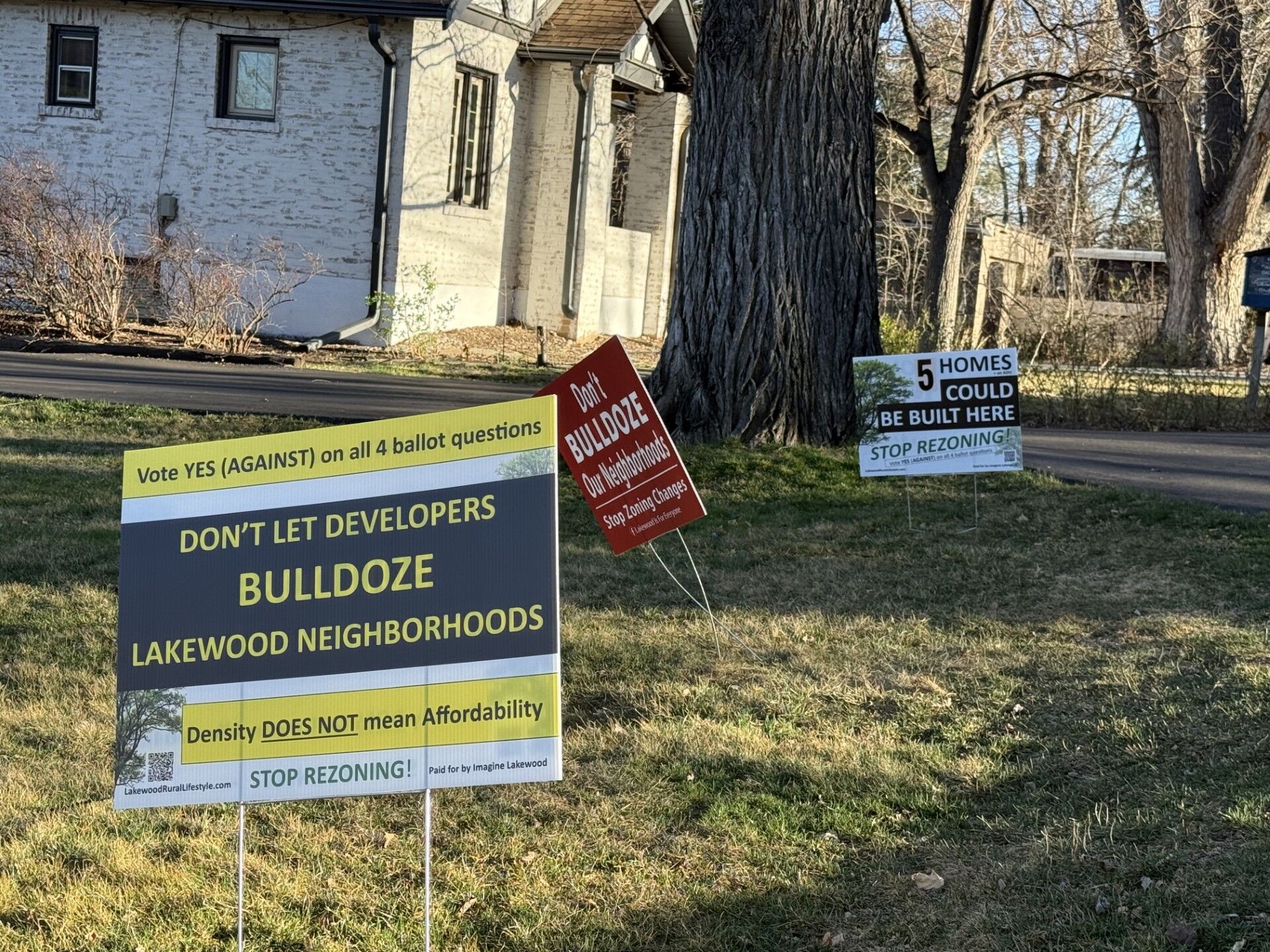
Contentious Lakewood zoning changes will be decided by voters at the beginning of next month.
Ballots have been sent to all active registered Lakewood voters ahead of the April 7 special election that will cost the city $155,000 to conduct, according to a Feb. 22 City Council meeting document.
Discussions have become rampant on social media, with both sides sharing arguments for and against the city’s zoning changes.
The special election comes after a battle regarding the zoning changes that started last summer when the council decided to spread the approval of a nearly 400-page zoning code update across separate meetings. The proposal, in its entirety, was approved on Oct. 13 and took effect at the beginning of the year.
Four petitions were then turned in to the city at the end of last year by groups like Lakewood Citizens Alliance and Lakewood Stronger Together to repeal four specific ordinances.
Once deemed sufficient, the City Council had two options on how to deal with the petitions: hold an election or repeal the ordinances. The board chose an election.
The ballot has four questions regarding ordinances 2025-27, 28, 29 and 30.
The confusion, according to some residents, is exactly what people should vote for if they are in support of the changes.
Basically, due to the election being caused by a petition to repeal the already approved ordinances, a “yes” vote would be saying that the zoning should go back to the way it was before the 2025 changes.
A “no” vote, on the other hand, would keep the new zoning outlined in the specific ordinances.
So, “yes” means voters don’t approve of the zoning changes made last year and are in favor of repealing the ordinances. “No’ means voters do approve of the new ordinances.
What are the ordinances?
Ordinance 2025-29, which has drawn the most ire from opposition, removed the term “single-family zoning” from city documents. In its place, the city adopted the term “residential dwellings” — an umbrella category encompassing single-family homes, duplexes, tri-plexes, and townhomes, aimed at expanding affordable housing options.
While Lakewood has never enforced strictly single-family-only zoning — historically permitting uses such as group homes and duplexes throughout the city — the new language formally opens all areas to multi-family residences.
Opposing groups that garnered petition signatures, like Lakewood Citizens Alliance and Lakewood Stronger Together, argue that the changes would affect the city’s “unique character” and damage single-family neighborhoods with overdevelopment, according to door knockers placed on homes last week.
Proponents, like Make Lakewood Livable, say the zoning changes would help create homes for the missing middle — or people who cannot afford current single-family homes but make too much money to benefit from low-income housing.
Ordinance 2025-27 involves the elimination of parking minimums for residences located in transit corridors and designated affordable housing developments. Outside of those exemptions, parking requirements in residential areas remain tied to square footage — for instance, standard neighborhoods require three spaces per 1,000 square feet of living space.
The remaining two ordinances address updated zoning definitions and planning procedures (Ordinance 2025-28) and revisions to the city’s zoning map (Ordinance 2025-30). The full scope of these changes, along with the council’s rationale, is outlined in a resolution passed by the City Council in February, urging voters to keep the zoning changes.
What are people saying?
Discussions about the election have spread across social media over the last few days, but opinions have been shared for almost a year.
Sophia Mayott-Guerrero, Make Lakewood Livable campaign manager and a former City Council member, told The Denver Gazette that opposition has been sharing “misinformation” and “fear-mongering.”
“Housing costs and availability are a top concern in Colorado right now,” she said. “Young people need more affordable housing in order to thrive, and seniors need options for downsizing without being forced out of their community. Helping solve those problems is at the core of the zoning updates.”
Karen Gordey, head of Lakewood Citizens Alliance, told The Denver Gazette that major land-use decisions should be made by the people, not the City Council.
“A special election provides the transparency and voter participation necessary for the community to decide the future of its neighborhoods and the city as a whole,” she said.
Residents online mostly seem to side with keeping the zoning changes, but some disagree.
“We have an absolute glut of already dense condo housing for sale in the metro area, Lakewood included. Condos are the cheapest they’ve been in many years, they’ve reverted back to pre-COVID prices and then some,” one user said in opposition on a Lakewood Reddit post.
“I think that a little increased density will support improved walkability, more local businesses and more affordable housing. A larger tax base to support other services also isn’t bad,” another user said.
U.S. Sen. Michael Bennet recently endorsed Make Lakewood Livable’s campaign to keep the zoning changes the same, saying: “We need a housing market that works for working Coloradans. That means more starter homes, options for seniors to downsize and housing that people can actually afford.”
More information can be found at LakewoodCO.gov/SpecialElection.


10th Circuit rules cognitively impaired man’s risk of lobotomy, mistreatment in Mexico not ‘torture’
Michael Karlik
michael.karlik@coloradopolitics.com
Updated 57 minutes ago
The Denver-based federal appeals court concluded last month that a man’s risk of mistreatment or forced lobotomy in his native Mexico did not amount to “torture” that should shield him from deportation. A three-judge panel of the U.S. Court of...

Colorado justices side with news organizations for disclosure of high-level child abuse data
Michael Karlik
michael.karlik@coloradopolitics.com
Updated 4 hours ago
The Colorado Supreme Court ruled on Monday that the state must disclose the number of child abuse reports at individual group living facilities in response to an open records request, as the addresses are already in the public domain. The...
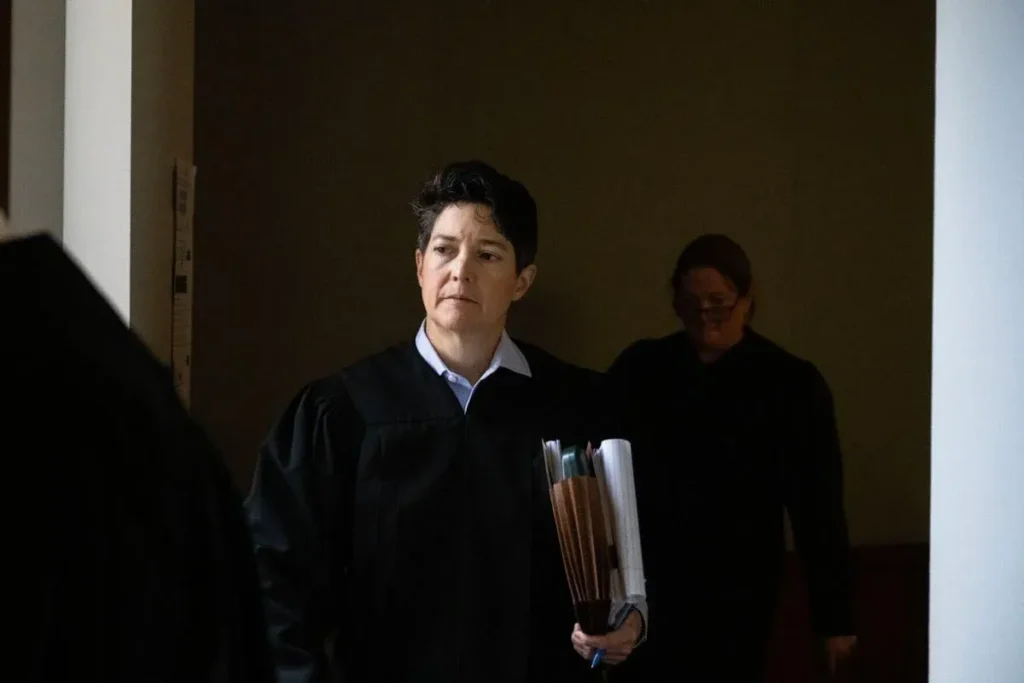
Divided Colorado Supreme Court finds Denver detective did not violate defendant’s Miranda rights
Michael Karlik
michael.karlik@coloradopolitics.com
Updated 4 hours ago
The Colorado Supreme Court determined on Monday that a Denver detective did not improperly resume questioning of a defendant in custody after he invoked his right to counsel. By 4-3, the justices reversed a trial judge’s order that found a...

Colorado Gov. Polis signs social media warrant bill after last year’s veto
Marissa Ventrelli
marissa.ventrelli@coloradopolitics.com
Updated 1 hour ago
Colorado law enforcement will soon have faster access to digital evidence after Gov. Jared Polis signed a pared‑down bill requiring social media companies to acknowledge and respond to search warrants on a tight timeline, a shift from a broader proposal...
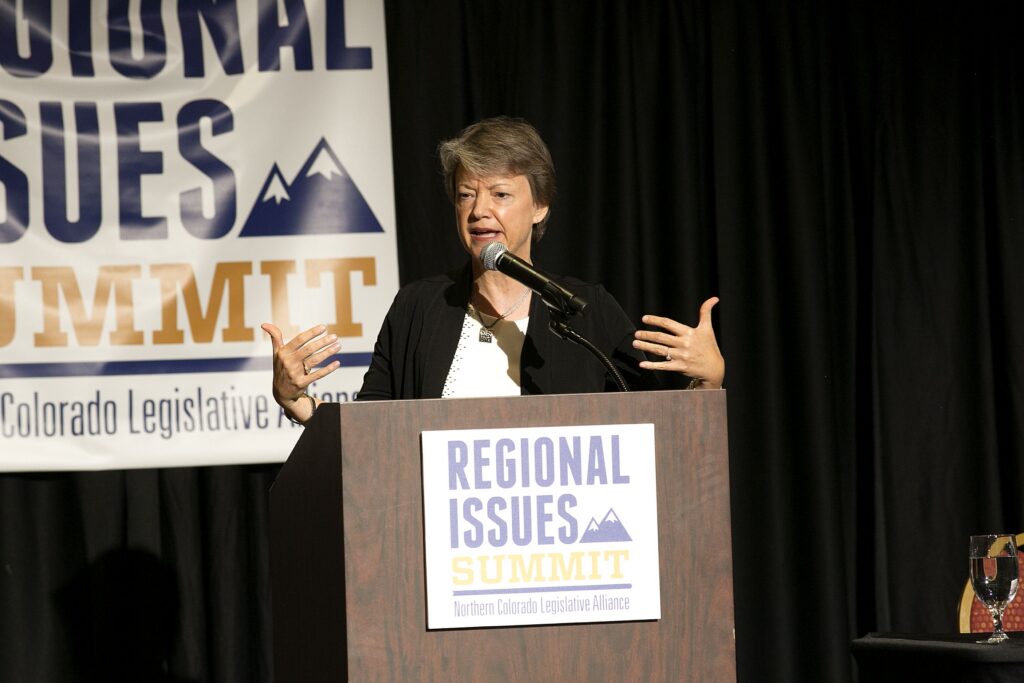
Under fire from legislators and critics, Colorado’s top Medicaid official resigns
Marianne Goodland
marianne.goodland@coloradopolitics.com
Updated 4 hours ago
Colorado’s top Medicaid official stepped down on Monday, just as a bipartisan bloc of state senators prepared to formally urge Gov. Jared Polis to remove her over what they called years of mismanagement, waste and costly errors inside the state’s...

Usha Vance launches story time podcast in latest second lady venture
Asher Notheis, Washington Examiner
asher.notheis.washington.examiner@gazetteedit.wpenginepowered.com
Updated 10 hours ago
Second lady Usha Vance unveiled her new story time podcast of reading children’s stories on Monday. The podcast, Storytime with the Second Lady, features either her reading books or inviting a special guest to read, and is part of her...

Survey from Ford Amphitheater owner touts support for noise bill moving through legislature
Brennen Kauffman
brennen-kauffman@coloradopolitics.com
Updated 8 hours ago
A bill that would help Ford Amphitheater and other for-profit concert venues receive noise exemption permits for future concerts is being considered by a state House subcommittee after passing the Senate on a 30-4 vote this month. State lawmakers introduced...

Out-of-state judges address ex-discipline director’s lawsuit, Colorado justices accept federal invitation | COURT CRAWL
Michael Karlik
michael.karlik@coloradopolitics.com
Updated 12 hours ago
Welcome to Court Crawl, Colorado Politics’ roundup of news from the third branch of government. A pair of out-of-state judges got down to business in a lawsuit brought by Colorado’s former judicial discipline director, plus the state Supreme Court has...

Trump threatens to destroy Iran’s civilian infrastructure if a deal is not reached ‘shortly’
Jon Gambrell
jon.gambrell@associatedpress.com
Updated 12 hours ago
DUBAI, United Arab Emirates (AP) — U.S. President Donald Trump on Monday threatened widespread destruction of Iran’s energy resources and other vital infrastructure, including desalination plants, if a deal to end the war is not reached “shortly.” Tehran meanwhile struck...

Killing off the Regional Transportation District | Miller Hudson
Miller Hudson
miller-hudson@coloradopolitics.com
Updated 20 hours ago
This column is appearing the same day state Sen. Matt Ball (D) of Denver and his legislative co-sponsors unveil legislation implementing many of the recommendations advanced by last summer’s Regional Transportation District Accountability Committee. Although it isn’t readily apparent, they...