

Denver delays Axon ALPR camera contract
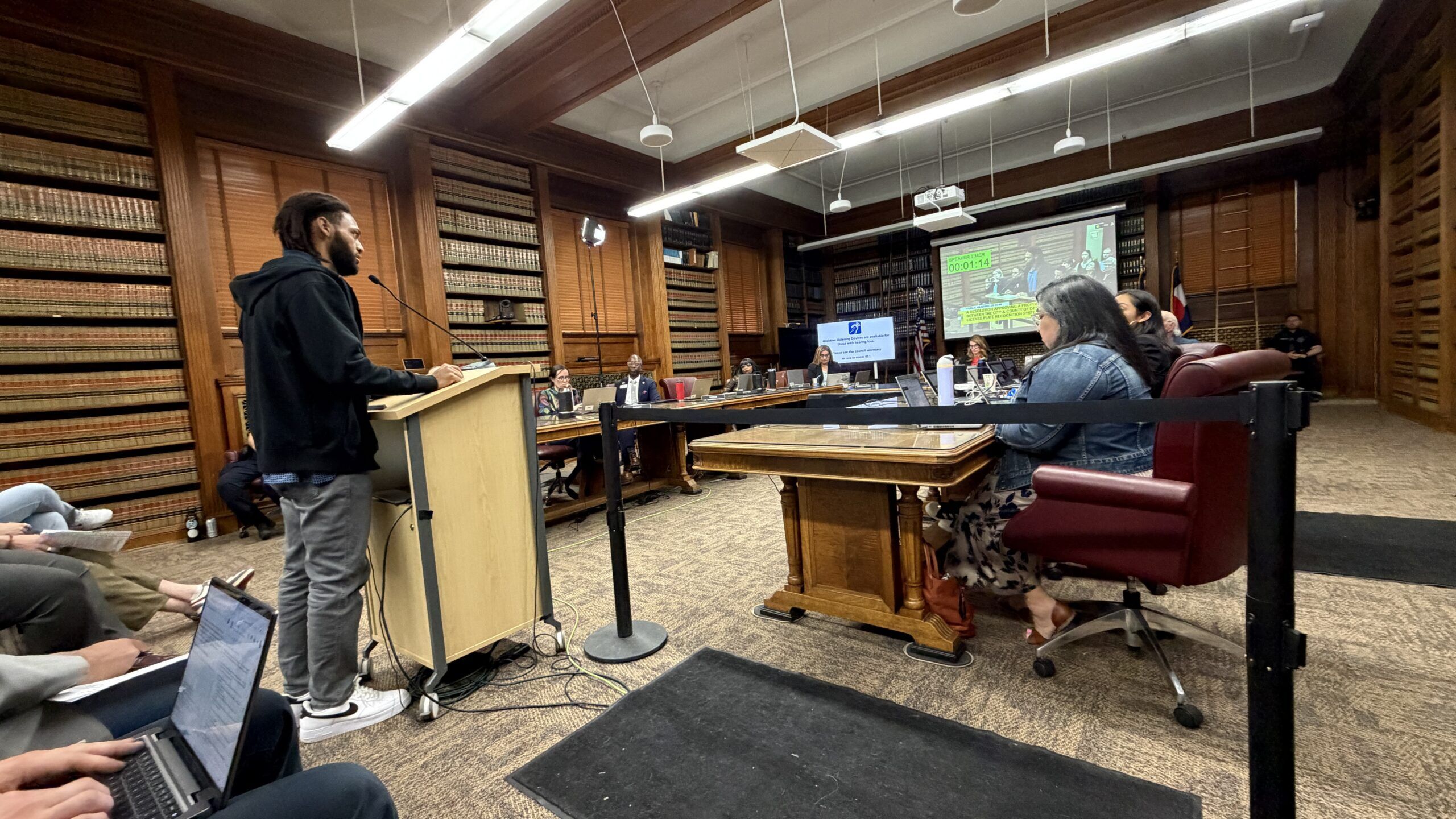
The City and County of Denver still hasn’t officially broken up with automated license plate reading camera vendor Flock Group, as members of the City Council agreed Monday to delay approving a new contract with Arizona-based ALPR maker Axon.
Denver Councilman Kevin Flynn asked the council to postpone the contact for one week.
Several on the council called into question risks of approving the contract before the city has an overarching ordinance on surveillance.
Residents and privacy advocates filled the Parr-Widener Community Room for a special one-hour courtesy public hearing on the matter, with 55 individuals signed up for comment.
While Axon’s proposed $150,000 contract for a 50-camera system is about half of Denver’s current 111-camera system with Flock, opponents argue the technology poses the same risks because there are “no proper guardrails” in place to protect their privacy and personally identifiable information, the statement added.
Privacy and civil rights advocates have stated that the matter has come down to the wire as Flock’s contract with the city ends March 31.
The new Axon contract was not shared with Task Force members until March 19, and shared with the City Council on March 13, just five days before the committee vote, according to a statement from the American Civil Liberties Union.
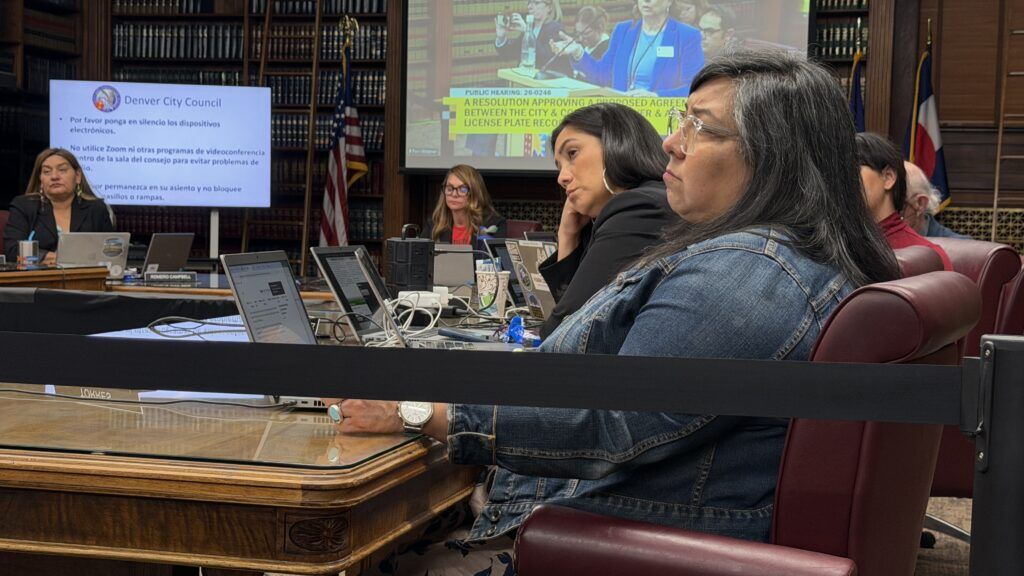
In a letter sent to the Denver City Council prior to the vote, several community, advocacy, and civil rights organizations, as well as the Denver Surveillance Task Force, asked the councilors to vote “no” to “prevent the city from rushing into a new contract.”
The opponents argued that Mayor Mike Johnston’s plan to switch vendors “does little to protect the civil rights of people living and visiting Denver.”
“This process is being rushed. Take a breath, turn off the Flock cameras on March 31, put a hood on them until they are removed,” Marilym Ackerman said during the one-hour public hearing. “Then City Council can wait for the Surveillance Task Force members to create a surveillance policy that answers questions and provides guardrails.”
Supporters of the technology, which include Johnston and the Denver police, say it saves lives and helps solve crimes.
“What we have done with this contract is try to balance the very real benefit to public safety that it provides with the very legitimate privacy and civil liberty considerations that the mayor shares, and that you all members of council chair and that these community members have shared, Johnston spokesperson Tim Hoffman said.
Added: “Yes, get to take advantage of this tool, which has helped us reduce crime in Denver, and making sure that we have robust safe.”
“Let’s give DPD access to the technology that can help them quickly find, track and remove the threat of violant criminals from our streets,” Denver Business owner Derek Friedman told City Coucnil members.
“The city cannot simply move from one dragnet surveillance company to another and trust that these for-profit companies will put people’s civil liberties first,” ACLU of Colorado’s public policy director, Anaya Robinson, said.

Robinson added: “The city must implement critical protections around data retention, information sharing, access limitations, and meaningful community input and legislative approval policies to prevent abuses from government agencies and law enforcement. Continuing to operate this risky, unregulated surveillance technology in the city carries far greater risks than pausing the ALPR program.”
However, Robin Engel, a professor of criminal justice at the University of Cincinnati, finds the Axon contract with the city agreeable.
“From my perspective, after reviewing the current contract under discussion, I found it to be especially strong carefully threading the needle between the ambitious goals of improving public safety while also protecting the collection, storage, sharing and use of surveillance technology,” Engel said.
But just because the city of Denver will no longer have an agreement with Flock, privately owned Flock cameras, owned by HOAs and local businesses, will still remain, and Denver police could still have access to them if the owning entity cooperates.
The resolution will be back before the full City Council body on March 31, as City Council offices will be closed on Monday, March 30.

Axon is no stranger to the Mile High City.
In December 2025, the City Council approved a new five-year, $27 million contract with Axon for 2,563 new body cameras and 2,175 Tasers.


Colorado justices agree to review insurance question that has divided federal judges
Michael Karlik
michael.karlik@coloradopolitics.com
Updated 6 hours ago
The Colorado Supreme Court granted a federal judge’s request on Friday to address an issue that has produced conflicting answers in policyholders’ lawsuits against insurance companies over unpaid benefits. “Parties (and judges) regularly spend undue time and money fighting in...

Farmworker overtime bill advances after lengthy debate in Colorado Senate
Marianne Goodland
marianne.goodland@coloradopolitics.com
Updated 7 hours ago
The Colorado Senate on Tuesday narrowly advanced a bill to raise the overtime threshold for agricultural workers, defeating more than a dozen amendments from its leading opponent aimed at rewriting the measure. As introduced, Senate Bill 121 would raise the threshold for...

Colorado Agriculture Day: A feast for the ears, eyes and stomachs
Marianne Goodland
marianne.goodland@coloradopolitics.com
Updated 6 hours ago
Gov. Jared Polis, legislators and friends of agriculture gathered at the state Capitol on Tuesday to celebrate Colorado Agriculture Day. The annual recognition of the contributions of Colorado farmers, ranchers and agribusiness drew hundreds to the Capitol’s west foyer, where...

Pueblo man held in Afghanistan for more than a year released, Taliban says
The Associated Press
the-associated-press@coloradopolitics.com
Updated 5 hours ago
KABUL, Afghanistan — Afghanistan’s Taliban authorities on Tuesday released American academic Dennis Coyle after holding him for over a year, with the foreign ministry saying the release came on the occasion of Eid al-Fitr, the Muslim holiday that marks the end of the...

Mortgage rates rise in defiance of Trump’s $200 billion push, hurting GOP on affordability
Zach Halaschak, Washington Examiner
zach.halaschak.washington.examiner@gazetteedit.wpenginepowered.com
Updated 9 hours ago
After months of a gradual decline, mortgage rates are trending back up because of the war with Iran, defying President Donald Trump’s efforts to lower them and undercutting Republicans on the key issue of affordability. As of Monday, the average rate on a 30-year...

PlatteForum’s new director has 20-plus years of nonprofit experience | NONPROFIT REGISTER
Joanne Davidson Special to Colorado Politics
joanne-davidson-special-to-colorado-politics@coloradopolitics.com
Updated 10 hours ago
PLATTEFORUM Denver News: Mellissa Monforti is the new executive director of PlatteForum, succeeding interim director Kendall Kultgen, who will continue with the organization as operations director. Monforti stepped into her new role on March 16. “Melissa’s appointment comes at an exciting time for the organization,...

Federal judge dismisses background screeners’ challenge to Colorado law
Michael Karlik
michael.karlik@coloradopolitics.com
Updated 10 hours ago
A federal judge dismissed a challenge on Friday to a portion of Colorado law that prohibits certain information from being included in consumer reports, in what seemed to be a conflict with federal law. Congress originally enacted the Fair Credit...

Wildlife agency asks for $450,000 to bring more wolves to Colorado
Marianne Goodland
marianne.goodland@coloradopolitics.com
Updated 4 hours ago
The panel of legislators charged with crafting the budget on Monday rejected a proposal that proponents said would increase transparency around how much Colorado Parks and Wildlife spends to bring additional wolves into the state. At the same time, the...

Senators consider deal to fund Homeland Security but not ICE enforcement
Lisa Mascaro
lisa.mascaro@associatedpress.com
Updated 12 hours ago
WASHINGTON (AP) — Senators raced Tuesday to clinch an emerging proposal to end the Homeland Security shutdown by funding much of the department, including the Transportation Security Administration airport workers going without pay, but excluding the ICE enforcement operations that...

Hickenlooper primary challenger Julie Gonzales endorsed by national progressive group Indivisible
Ernest Luning
ernest.luning@coloradopolitics.com
Updated 4 hours ago
State Sen. Julie Gonzales’ bid to challenge U.S. Sen. John Hickenlooper in Colorado’s Democratic primary got a boost Tuesday from Indivisible when the national arm of the progressive grassroots group endorsed the Denver lawmaker. The national group’s endorsement comes less...