

The insular bubble of caucuses and assemblies | SONDERMANN
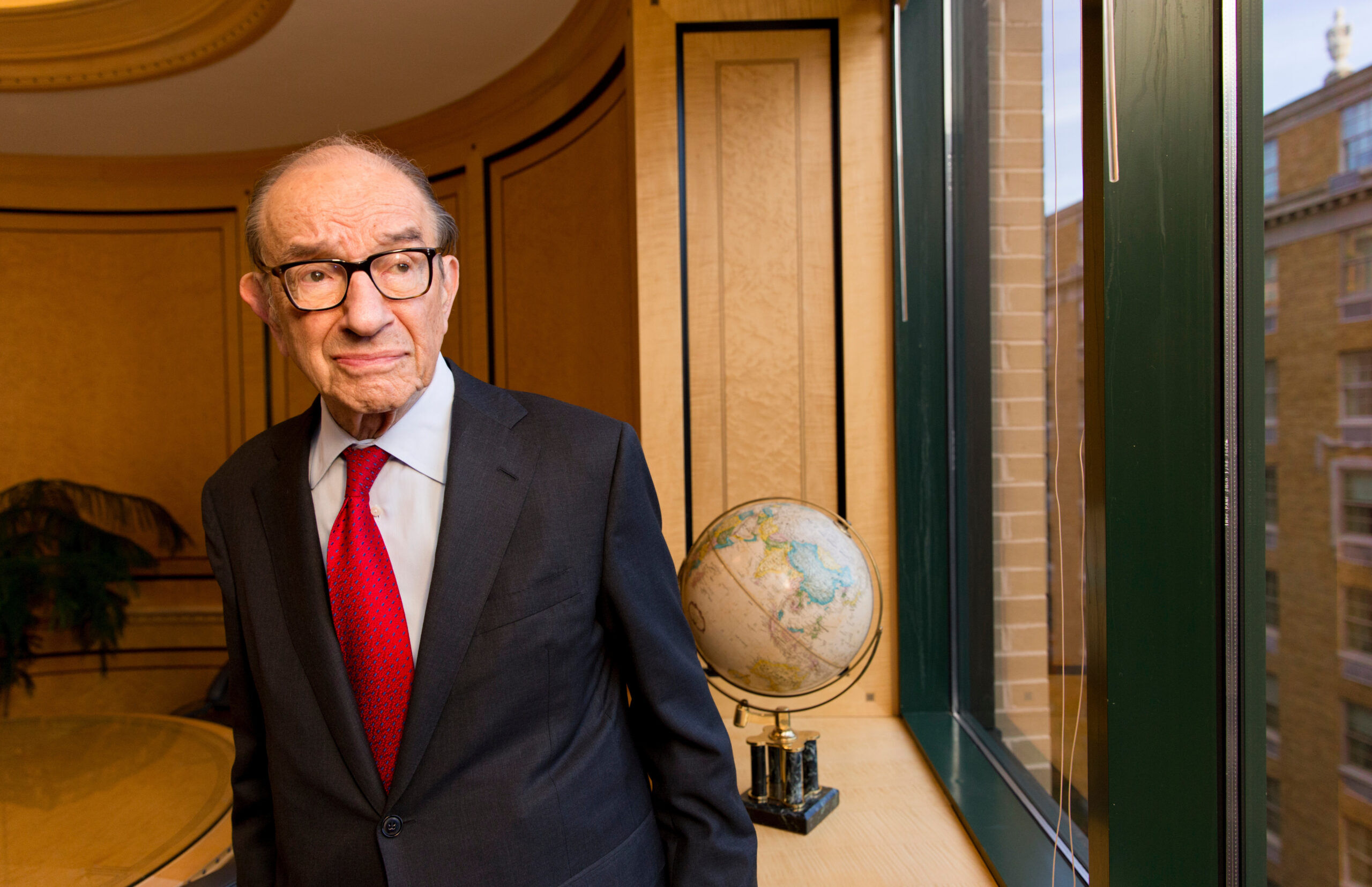
Nearly 30 years ago, then-Federal Reserve Chairman Alan Greenspan coined the term “irrational exuberance” to describe the overheated stock market.
That descriptive phrase could also apply to much of the political realm. The hype in politics often grossly exceeds the reality on the ground.
In that vein, let’s focus on Colorado’s precinct caucuses held earlier this month, the first step in the process leading to the Democratic and Republican state assemblies. Democrats will gather this coming Saturday, with Republicans following two weeks later, both conventions interestingly to be held in Pueblo.
Caucuses attract the most active, dedicated, engaged, and opinionated members of each party. Democratic participants tilt to the left of their party’s median; Republican attendees are to the right of their party’s median.
Those who join this series of meetings should be honored for their commitment. They constitute their party’s backbone. But that hardly makes them representative of broader sentiment.
In 2018, the last time both parties featured intense contests for multiple statewide offices, 503,000 Coloradans voted in the GOP primary, while 637,000 took part in the Democratic primary. The state experienced significant growth in intervening years, and I would anticipate a still higher number of voters in this June’s primary elections.
Those activists who attend precinct caucuses, much less the far fewer who stay with the process all the way through the state assembly, are but a minuscule fraction of those who will cast a primary election ballot.
Colorado Democrats report that roughly 13,000 party stalwarts attended caucuses at the beginning of March. It will be a surprise if the primary electorate is not 50 times larger. Colorado Republicans have yet to report such numbers.
For the balance of this column, we will concentrate on the Democratic side. Sad to say, Republicans in these parts have time and again shot themselves into irrelevance. Beyond that, Democrats have exhibited a corrective mechanism to reel in excesses of their most zealous loyalists.
In the Denver congressional district, word is that insurgent Melat Kiros, with positions to the extreme left of the party spectrum, is outperforming longtime Rep. Diana DeGette.
Regular readers know that I find DeGette past her sell-by date and have urged her to step aside. Still, the odds of Kiros besting her for the nomination are remote. Kiros is the flavor of March and the heartthrob of those who populate caucuses. She is likely to be an afterthought when the votes are counted at the end of June.
Ditto for the U.S. Senate race. Challenger Julie Gonzales, whose platform is virtually identical to Kiros’s, is cleaning up at caucuses and county assemblies. So much so that Sen. John Hickenlooper decided to withdraw from the assembly process and rely solely on petitions to secure his ballot spot.
No matter Hickenlooper’s expired shelf life, the odds of Gonzales pulling off this upset remain as distant as when she entered the race last December.
There has long been a disconnect between what makes the hearts of caucus attendees and delegates go pitter-patter and what resonates with that exponentially larger mass of primary voters.
Think back to 2018, when Cary Kennedy prevailed at the state assembly only to lose the primary to Jared Polis. Or to 2010, when Andrew Romanoff was the darling of the activist base but decisively lost the Senate nomination to Michael Bennet. Countless examples from years prior underscore the point.
On a related note, too many press stories around the state assembly will reference “the coveted top-line designation.” “Coveted” by whom? It simply does not matter.
For sure, there is a core discontent among much of the Democratic Party about outsized donor influence, politicians overstaying their welcome and prominent office-holders falling short of the moment.
But that undercurrent does not translate into little-known, under-financed candidates with views removed from the Democratic mainstream turning caucus success into much more than that.
We also hear much demeaning chatter about candidates who eschew caucuses and assemblies in favor of collecting petition signatures to win a place on the ballot. Somehow, it is seen as “going around the party.” Forget such nattering as well. Voters do not care. Colorado law provides two equally legitimate paths for access to the primary ballot.
Hickenlooper, Bennet and aspiring Attorney General Hetal Doshi made calculated decisions to abstain from the assembly and collect petition signatures instead. Just as Gonzales, Kiros and gubernatorial contender Phil Weiser have invested everything in recruiting delegates. All are acting in their self-interest and maximizing their prospects. In other words, they are practicing politics.
Also working against the upstart challengers is growing evidence that Democrats across the country are intent on victory this year. That has not always been the case. Despite a comfortable lead in late polls, Texas Democrats dismissed Jasmine Crockett, an ultra-progressive performative sort, in favor of the toned-down James Talarico.
While the coming state assemblies will be entertaining, their impact and ultimate consequence are less clear. They bring to mind the idea of a bubble – both in the sense of a rather insular collection of true believers and akin to an inflated stock market driven by its own fanfare and ripe for a crash.
Eric Sondermann is a Colorado-based independent political commentator. He writes regularly for Colorado Politics and The Gazette. Reach him at EWS@EricSondermann.com; follow him at @EricSondermann

Legislature busy sending lots of minor bills for governor’s signature | Hal Bidlack
Hal Bidlack
hal-bidlack@coloradopolitics.com
Updated 4 hours ago
One of the benefits of being, well, I guess technically, some type of journalist writing here on Colorado Politics, isI get on interesting mailing lists. A while back, some kind soul in the governor’s office added me to the daily...

Killing off the Regional Transportation District | Miller Hudson
Miller Hudson
miller-hudson@coloradopolitics.com
Updated 1 day ago
This column is appearing the same day state Sen. Matt Ball (D) of Denver and his legislative co-sponsors unveil legislation implementing many of the recommendations advanced by last summer’s Regional Transportation District Accountability Committee. Although it isn’t readily apparent, they...

Green energy shouldn’t come at expense of Colorado farmers, ranchers feeding us | Rachel Gabel
Rachel Gabel
rachel-gabel@coloradopolitics.com
Updated 1 day ago
In 2023, the Department of Energy released the National Interest Electric Transmission Corridors (NIETC) study identifying areas they speculate would experience transmission capacity constraints of congestion. The map identified more than 2 million acres or 24% of the state of...
Bill in state legislature would put large apartment projects in single-family neighborhoods | Cronin & Loevy
Tom Cronin Bob Loevy
tom-cronin-bob-loevy@coloradopolitics.com
Updated 1 day ago
There is an old joke that goes something like this: “When the state legislature is in session, no person and their property are safe.” That is not a joke in the older, more traditional neighborhoods that surround the downtown regions...

Colorado hates its disabled citizens | Jon Caldara
Jon Caldara
jon-caldara@coloradopolitics.com
Updated 4 days ago
This is a selfish column. The legislature is about to hurt my disabled son. My son, Chance, has Down syndrome and a few years ago would have been labeled “retarded.” Then “developmentally delayed.” Now the hypersensitive prefer “intellectually disabled.” Whatever...
Kwame Spearman warrants plenty of criticism, not cancellation | SONDERMANN
By Eric Sondermann
by-eric-sondermann@coloradopolitics.com
Updated 5 days ago
All of us are flawed humans, some more so than others. This is the tale of Kwame Spearman who burst onto Denver’s business and political scene a handful of years back. His ride has taken a downhill trajectory. Within the...
Colorado’s place in President Trump’s oil-and-gas approach | Paula Noonan
Paula Noonan
paula-noonan@coloradopolitics.com
Updated 5 days ago
Head spinning is the unwanted reality of today’s world. Let’s start at the international level. The wars in the Middle East since the 1950s have never ended. Though religion and ethnicity are factors, oil and gas access is always predominant...
What exactly makes you a public figure? | Hal Bidlack
Hal Bidlack
hal-bidlack@coloradopolitics.com
Updated 1 week ago
Well, once again, this non-lawyer columnist is going to jump in the deep end of legal scholarship and will explore a recent Colorado Court of Appeals decision. Buckle up. In yet another terrific Colorado Politics Court Crawl article, we learned...
Mum on his own replacement, Bennet disrespects voters | Dick Wadhams
Dick Wadhams
dick-wadhams@coloradopolitics.com
Updated 5 days ago
U.S. Sen. Michael Bennet is playing an arrogant game of hide-and-seek with Colorado voters as he seeks to abandon his Senate seat to become governor. Bennet insists that if he is elected governor in November, he will wait until he...
What kind of energy independence did we pay for? | Miller Hudson
Miller Hudson
miller-hudson@coloradopolitics.com
Updated 1 week ago
It was during the summer of 1972 AT&T published an internal solicitation for installation and repair supervisors with “inner-city” experience to transfer to Mountain Bell. The catch was an applicant’s readiness to work 10 hours a day, six days a...
PREV
PREVIOUS
Colorado Politics Calendar Mar. 23-29
CoPo’s weekly political calendar will help you find political and public-policy events throughout Colorado. It includes candidate and issue campaign events, public policy meetings, court hearings, state and local party conventions, assemblies, debates, rallies, parades, speaking engagements, traveling dignitary appearances, water meetings, book signings, county commission hearings, city council meetings and more. As a subscriber, […]
It's time to let unaffiliated voters caucus | Vince Bzdek
There’s no getting around it: Colorado’s 3,000 county caucuses, which just wrapped up recently, left half the electorate out in the cold. Since unaffiliated voters now make up 51% of all Colorado voters, a majority of Colorado electors are barred from participating in our first round of democracy, which is reserved exclusively for card-carrying Democrats […]