

Legislation shifts too big a burden onto family court | OPINION

By Judi Atwood
I know what a family-court snafu looks like because I lived one.
In military slang, a snafu is a breakdown so confused and badly managed the people trapped inside it pay the price. In my own case, the court adopted and preserved findings about my conduct even though I was never served, never joined as a party, and never consented to the court’s jurisdiction. My pending Rule 60(b)(4) motion argues those findings are void because a court cannot adjudicate a nonparty without personal jurisdiction.
That experience is why HB26-1309 alarms me.
This bill is being presented as a safety measure for children and survivors in family court. But the real question is not whether domestic violence should matter in custody cases. It already does. The real question is whether Colorado should expand the consequences of family-court domestic-violence findings faster than the state has built the safeguards, provider capacity and implementation structure needed to support those consequences fairly. As introduced, HB26-1309 requires courts to decide whether domestic violence occurred before the ordinary best-interests analysis. If the court finds domestic violence by a preponderance of the evidence, the bill creates a rebuttable presumption against allocating parental responsibilities to that parent. It also requires specific written findings and protective conditions if parental responsibilities are still awarded, and it changes the treatment framework in these cases.
The first problem is procedural. HB26-1309 asks family-court judges to make high-stakes domestic-violence findings at the front end of custody litigation in a forum where, by the bill’s own legislative declaration, many parties appear without counsel. The bill also says the absence of a conviction, dismissal of a charge, dismissal of a previous protection order, or an inconclusive or unfounded agency finding is insufficient for a court to determine domestic violence did not occur. At the same time, it directs courts to consider any relevant and admissible evidence of domestic violence and specifically lists police reports, medical records, records from licensed mental-health professionals or victim advocates, prior court or administrative findings, and records tied to VAWA status, U visa status and victim-benefit or assistance programs. That is not a small evidentiary tweak. It materially expands the practical importance of collateral records and protected-status material in family-court adjudication. Family court is not a criminal court, and when the system gets the facts wrong, the consequences do not stay on paper.
The second problem is implementation spillover. On paper, HB26-1309 is directed at judges and family-court orders. In practice, those consequences will not stay in the courtroom. Once family court makes an early abuse finding and gives it legal force, that finding can affect treatment expectations, service referrals, provider communications, records disputes and decisions involving children and families long after the hearing ends. This is not just a judicial question. It is a systems question. The bill assumes the rest of the system can absorb those downstream effects. That assumption has not been proved.
The third problem is capacity. HB26-1309 ties continued parenting-time access in certain cases to individual therapeutic treatment with a licensed mental-health professional who has specified credentials, specialized domestic-violence expertise, and completion of a 52-week domestic violence abuser intervention program. That may sound rigorous, but policy is not judged by aspiration alone. It must also be judged by whether those resources actually exist in enough places, at a cost families can bear, and with enough consistency for judges to rely on them statewide. If providers are scarce, unevenly distributed, backlogged, or unaffordable, then the bill risks creating court orders families cannot realistically satisfy. The fourth problem is judicial workload and decision quality. HB26-1309 requires threshold findings, specific written findings stating the evidence relied on, explanations of how the order protects the child and abused party and detailed conditions when parental responsibilities are still awarded. Those requirements may sound careful, but they also make already difficult family cases more document-intensive, more adversarial and more time-consuming. More complexity does not automatically produce better justice. In an overloaded system, it can just as easily produce delay, inconsistency and error.
The technical bottom line is simple: HB26-1309 is not just a custody-safety bill. It is a systems-allocation bill. It reallocates decision-making weight, evidentiary significance and remedial obligations inside family court, but the burdens will not remain there. They will be carried by courts, providers, agencies and families. Colorado should not expand the consequences of family-court domestic-violence findings faster than it has built the procedural safeguards, provider capacity and implementation infrastructure needed to carry those consequences fairly and consistently.
Judi Atwood is a Longmont resident, CDHS Family Voice Council alumna and participant in the CDHS mentorship program. She has also authored appellate briefs and policy analyses on Colorado family-court and child-safety issues. Currently she is the Policy Director for SAFE – Stop the Abuse for Everyone National Nonprofit and Advocacy Organization. The views expressed her are her own.


Colorado’s place in President Trump’s oil-and-gas approach | Paula Noonan
Paula Noonan
paula-noonan@coloradopolitics.com
Updated 3 hours ago
Head spinning is the unwanted reality of today’s world. Let’s start at the international level. The wars in the Middle East since the 1950s have never ended. Though religion and ethnicity are factors, oil and gas access is always predominant...

Reject onerous ad limits in sports-betting bill | OPINION
Colorado Politics
colorado-politics@coloradopolitics.com
Updated 3 hours ago
By Justin Sasso A dangerous precedent is potentially afoot in the Colorado state Senate right now, where a bill was recently introduced to restrict advertising for local broadcast media across Colorado. Senate Bill 26-131, seemingly designed to discourage Coloradans from participating...

Reform to Colorado’s grantmaking drives efficiency, strengthens state’s partnership with nonprofits | OPINION
Colorado Politics
colorado-politics@coloradopolitics.com
Updated 3 hours ago
By Marco Dorado and Jack Murphy Colorado’s nonprofit sector is one of the most significant contributors to our state’s economic and civic life, with more than 14,000 registered nonprofit organizations supporting more than 262,000 jobs — approximately 10% of all...

Costly auto mandate amounts to needless overkill | FEEDBACK
Colorado Politics
colorado-politics@coloradopolitics.com
Updated 4 hours ago
HB26-1199 is currently in the legislature, and let me explain how this affects you. Currently in the state of Colorado, your vehicle’s emissions have to meet California standards even though you do not live in California. Though we all can agree...
Colorado legislators consider $500 million in general fund cuts amid $1.5 billion deficit
Marianne Goodland
marianne.goodland@coloradopolitics.com
Updated 11 hours ago
The legislature’s Joint Budget Committee is working through a list Wednesday of about 150 suggestions to cut as much as $1.5 billion in general fund dollars out of next year’s budget. The largest on the list prepared by JBC staff...
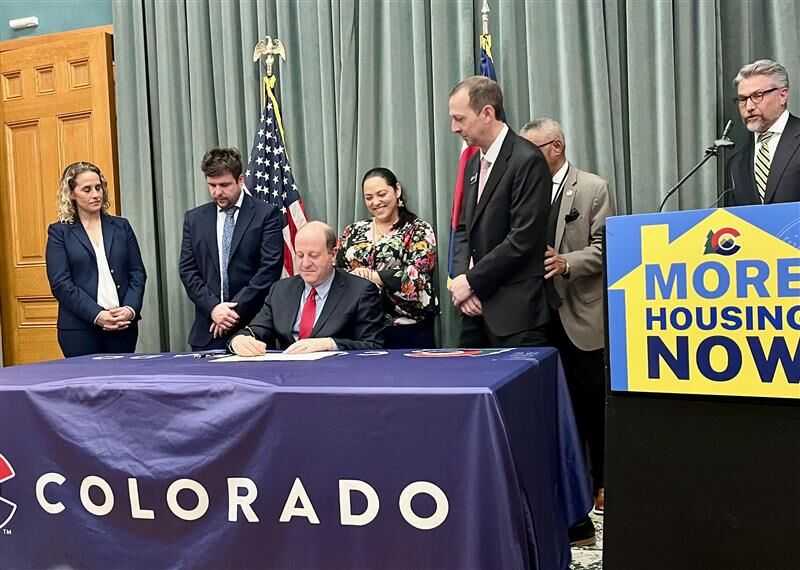
Colorado’s push for affordable housing continues as Gov. Polis signs HOME Act, workforce housing bill
Marissa Ventrelli
marissa.ventrelli@coloradopolitics.com
Updated 10 hours ago
Gov. Jared Polis held the first public bill signing of the 2026 legislative session on Wednesday, signing a pair of housing measures into law. The bills — House Bill 1001 and Senate Bill 001 — are part of Democrats’ affordable...
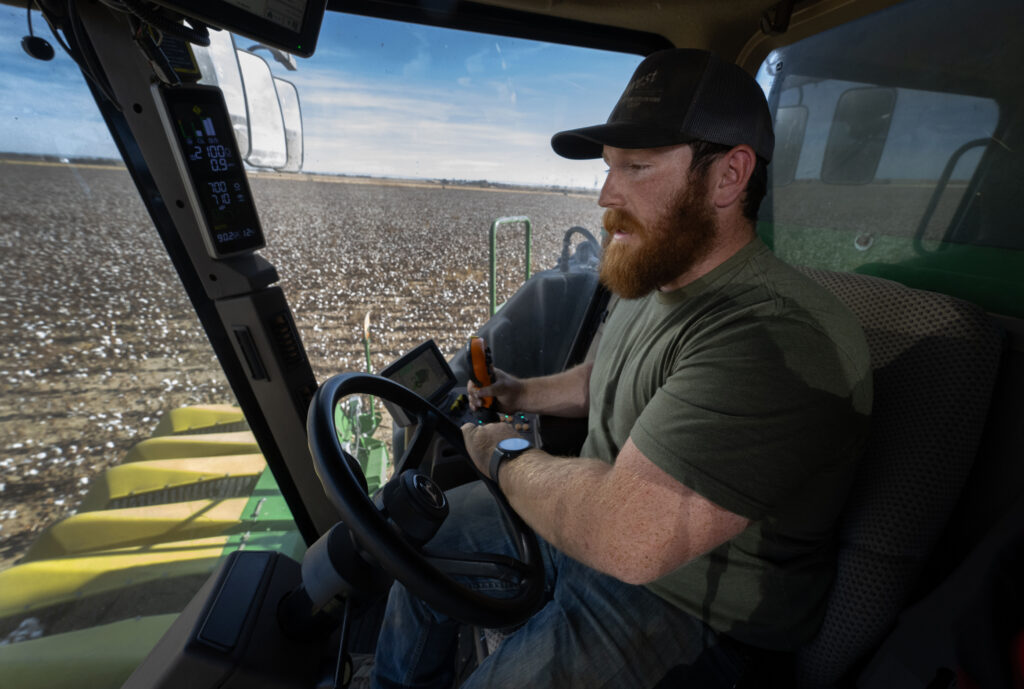
Colorado farmers begin spring planting season with soaring fertilizer costs and price-gouging fears
Marianne Goodland
marianne.goodland@coloradopolitics.com
Updated 12 hours ago
As Colorado farmers prepare their fields for spring planting, many are sounding the alarm over fertilizer prices that have surged far beyond what they say global supply disruptions can explain. With nitrogen costs up 30% in a matter of days,...

Colorado lawmakers approve $150,000 ibogaine study bill targeting PTSD and addiction
Marissa Ventrelli
marissa.ventrelli@coloradopolitics.com
Updated 11 hours ago
The Colorado House Health and Human Services Committee advanced a bill that would create a $150,000 research pilot program to study the safety and effectiveness of ibogaine, a psychoactive compound that claims to treat post-traumatic stress disorder, opioid addiction, and...

Colorado Democrats want large corporations to pay fee if employees are on Medicaid
Marianne Goodland
marianne.goodland@coloradopolitics.com
Updated 11 hours ago
Democrats are seeking to require Colorado’s largest corporations to pay thousands of dollars for each employee that relies on the Medicaid program for health insurance. They don’t have to pay the fee if they can demonstrate offering an “affordable health...

Congress needs to protect 340B for rural Colorado | PODIUM
Colorado Politics
colorado-politics@coloradopolitics.com
Updated 20 hours ago
By Rod Pelton A lot of politicians talk about understanding what life is like for our rural communities, but not many really do. I’m a third-generation Cheyenne County farmer and rancher; I grew up on the eastern plains of Colorado, raised...
PREV
PREVIOUS

Colorado voters will decide whether transgender students can join girls' sports
A ballot initiative that would require student athletes to only join sports teams that correspond to their biological sex has qualified for the November ballot, the latest development in the culture war being waged in school districts, in the courts and at the state Capitol in Colorado. The Colorado Secretary of State’s Office said proponents […]

Colorado’s workers can’t afford a privatized Pinnacol | OPINION
By Stephanie Tucker and Dennis Dougherty Pinnacol Assurance plays an important role in Colorado by providing workers’ compensation insurance as a quasi-governmental agency. In Colorado, employers are required to carry this insurance to ensure their workers are covered after a workplace injury. Pinnacol was created in 1915 to make sure all employers — especially those […]