

Colorado lawmakers tackle legislation on sexual assault
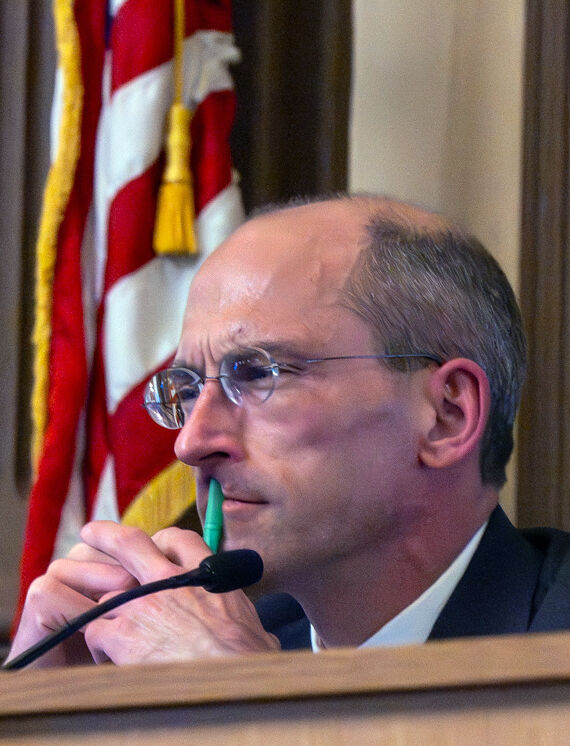
A panel of Colorado lawmakers on Monday unanimously approved a bill that supporters say will offer protections and support to victims of domestic violence, stalking, sex trafficking and sexual assault, including mandatory training for law enforcement on trauma.
The measure, Senate Bill 26-095, would also allow accusers in those crimes to potentially testify by close-circuit television in a room other than the courtroom to avoid being in close proximity to the suspect.
A spokesperson for the state public defender countered that this particular provision might face legal challenges, as the U.S constitution guarantees the right of an accused to face the accuser.
The legislation now advances to the full Senate for debate.
“In a word, SB-95 is a bill about survivorship,” said state Sen. Mike Weissman, D-Aurora, co-sponsor of the bill and chairman of the Senate Judiciary Committee.
Colorado Attorney General Phil Weiser offered his support of the bill at the hearing, telling lawmakers that “our criminal justice system needs to do better.”
A dozen advocates for victims and victims testified of their experiences after reporting a crime, recounting their trauma in having to testify in the same room as their alleged attackers.
They also spoke of the lingering emotional toll when they felt disbelieved or dismissed by police and prosecutors.
One of the provisions of the bill would require annual, two-hour training for law enforcement to better understand how trauma can affect a victim and the best way to respond to them.
Angela Cesena told lawmakers that after she reported an incident of domestic violence, she suffered a panic attack that prompted the police to ask her if she was on drugs.
“The system was never set up for survivors or their needs,” testified Elizabeth Newman, director of public policy for Colorado Coalition Against Sexual Assault. “Testimony cannot be another point of harm.”
Newman cited The Denver Gazette’s recent investigation into the response by police and prosecutors after a rape report, saying it highlighted systemic problems.
The Denver Gazette’s months-long investigation, published online Feb. 27, found that over the past decade, for every 10 reports of rapes in Colorado, there was only one arrest.
By comparison, over the same time period, The Denver Gazette found that the ratio of arrests to reports for other serious crimes against persons in Colorado is roughly three times higher than for rapes.
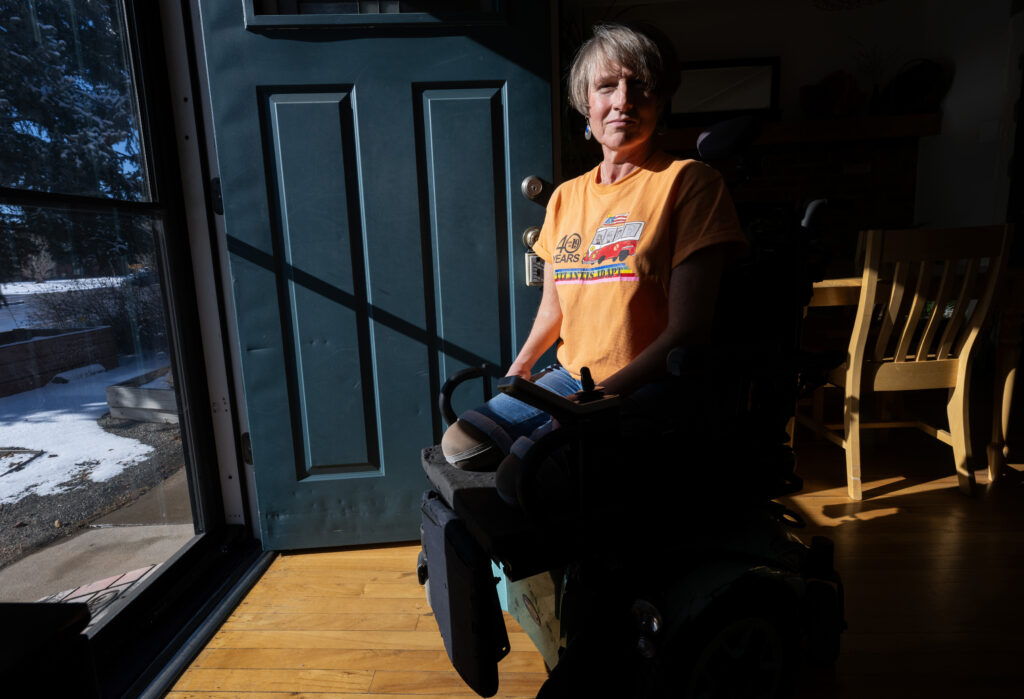
Kelly Tobin, an at-risk adult who lives with no lower legs and a total of three fingers, also testified at the hearing about reporting to Denver Police that her medical driver had forcibly removed her from her wheelchair in February 2024, carried her into a guest bedroom and raped her.
She said the investigating detective predicted it would be hard to prove she did not consent, even though she was left stranded and sustained injuries. Her case was ultimately declined by the Denver District Attorney’s office because she was told it was too nuanced for a jury to understand, she said.
Tobin’s case was among those highlighted in The Denver Gazette investigation. The Denver police and the Denver County District Attorney declined to comment to The Denver Gazette on the case.
Much of the testimony Monday centered on a provision in the proposed law that would allow victims in some cases to offer testimony in a location outside open court. One after another talked about how having to face their alleged attacker in court triggered anxiety and trauma, sometimes causing their thoughts to become disjointed, which made their account seem less credible.
James Karbach, director of legislative policy and spokesperson for the Colorado State Public Defender, cautioned lawmakers on Monday there could be constitutional legal challenges to that particular provision in the law.
Under the 6th Amendment, a suspect is guaranteed the right to face an accuser, which might not be seen as possible if they are in a separate location.
While sympathetic to the victims, he said that he knew of no other state where there is a carve-out for specific crimes, such as sexual assault or domestic abuse.
Historically, the face-to-face requirement was put in place to prevent false accusations, he said after the hearing.
Other provisions in the proposed law include a requirement that the medical worker who performs a forensic exam, such as a rape kit, must inform an alleged victim when testing of evidence is complete and how to obtain results.
It will also allow a forensic expert to testify remotely if both sides agree.

Primary rival sues to prevent Democrat Eileen Laubacher from going through assembly in Colorado’s 4th CD
Ernest Luning
ernest.luning@coloradopolitics.com
Updated 7 minutes ago
Democratic congressional candidate Trish Calvarese on Monday asked a judge to prevent one of her primary rivals, Eileen Laubacher, from participating in the caucus and assembly process to seek the nomination to challenge Republican U.S. Rep. Lauren Boebert in Colorado’s...
Colorado Senate swears in Adrienne Benavidez after district vacancy win
Marianne Goodland
marianne.goodland@coloradopolitics.com
Updated 6 hours ago
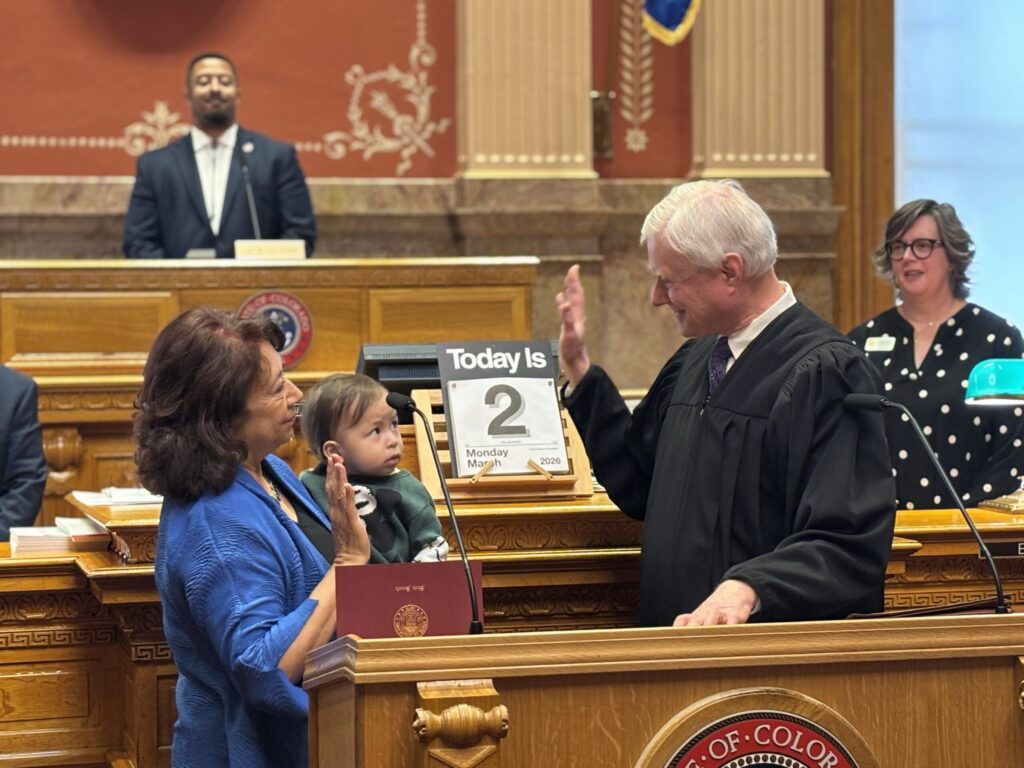
Sen. Adrienne Benavidez, a Democrat from Adams County, was sworn in Monday to the Colorado Senate, just four days after winning a vacancy election in District 21. She was sworn in by Colorado Court of Appeals Justice Lino S. Lipinsky...

Denver mayor says his commute time tripled following ‘road diet’ change
Mark Samuelson Special to The Denver Gazette
mark.samuelson@denvergazette.com
Updated 5 hours ago
Mayor Mike Johnston is pushing back sharply against the claim by Denver councilmembers and bike activists that the city succumbed to lobbying pressure in revising a “road diet” plan for East Alameda Avenue, while noting that his own commute time...

Rural legislators, Colorado farmers defeat pollinator bill backed by Gov. Polis
Marianne Goodland
marianne.goodland@coloradopolitics.com
Updated 6 hours ago
A proposal to limit the use of neonicotinoid-coated crop seeds collapsed in the Senate Agriculture and Natural Resources Committee last week, as rural lawmakers, including two Democrats, joined Republicans to reject what they called an expensive, impractical mandate on farmers....

Competing overtime bills for agriculture workers split Colorado Democrats
Marianne Goodland
marianne.goodland@coloradopolitics.com
Updated 10 hours ago
Competing bills setting the overtime threshold for farmworkers have split legislators at the Colorado state Capitol, with one group saying a law passed in 2021 has harmed, rather than helped, farming operations and workers alike, while the other side insists...

Iranians in Colorado weigh in on Khamenei’s death
Mark Samuelson Special to The Denver Gazette
mark.samuelson@denvergazette.com
Updated 1 day ago
As the joint U.S.-Israeli attack on Iranian targets continued into a second day following the death of leader Ayatollah Khomeini, Iranians living in Denver weighed in, saying they welcome the opportunity for a regime change in the Islamic Republic. “The...
Male wolf dies after capture attempt in Colorado
Marianne Goodland
marianne.goodland@coloradopolitics.com
Updated 1 day ago
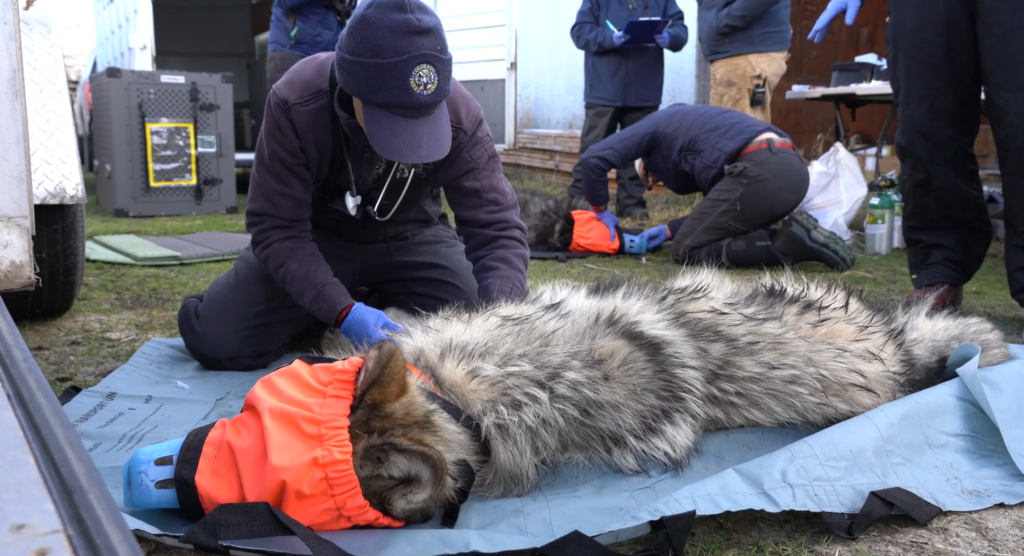
One of the original wolves brought to Colorado from Colorado has died after an attempt to capture it, the’s state wildlife agency said. The Colorado Parks and Wildlife identified the wolf as No. 2305 — meaning it was one of...

Democrat Michael Bennet turns in petitions for Colorado’s gubernatorial primary, plans to skip caucuses
Ernest Luning
ernest.luning@coloradopolitics.com
Updated 1 day ago
U.S. Sen. Michael Bennet, a Democratic candidate for governor, submitted nominating petitions for Colorado’s June primary ballot on Friday, his campaign and the Colorado Secretary of State’s Office said. Bennet plans to rely on his petitions to get on the...

Colorado Republicans, Democrats clash over Iran military operation
Thelma Grimes
thelma.grimes@coloradopolitics.com
Updated 2 days ago
Colorado’s congressional delegation split sharply along party lines Saturday after the U.S. and Israel attacked Iran, triggering a fresh debate in America over presidential war powers. Trump announced early Saturday morning that U.S and Israeli forces had begun “Operation Epic...

Front Range Passenger Rail pitches to Colorado Springs ahead of possible ballot measure
Savannah Eller
savannah-eller@coloradopolitics.com
Updated 6 hours ago
If all goes to plan, a measure for a sales tax to fund passenger rail service could be coming to Front Range ballots in 2026. “We have a plan that we think is viable, and we’ll actually be able to...
PREV
PREVIOUS
Colorado Supreme Court clarifies restraining order violations can always support burglary charge
The Colorado Supreme Court’s majority ruled on Monday that a violation of a restraining order can also serve as a basis for finding a defendant guilty of burglary. Under state law, a person commits second-degree burglary by unlawfully entering or remaining in an occupied structure with the intent to commit “a crime against another person […]

Primary rival sues to prevent Democrat Eileen Laubacher from going through assembly in Colorado’s 4th CD
Democratic congressional candidate Trish Calvarese on Monday asked a judge to prevent one of her primary rivals, Eileen Laubacher, from participating in the caucus and assembly process to seek the nomination to challenge Republican U.S. Rep. Lauren Boebert in Colorado’s 4th Congressional District. Calvarese and the party’s congressional district chair argue in the lawsuit filed […]