Competing overtime bills for agriculture workers split Colorado Democrats
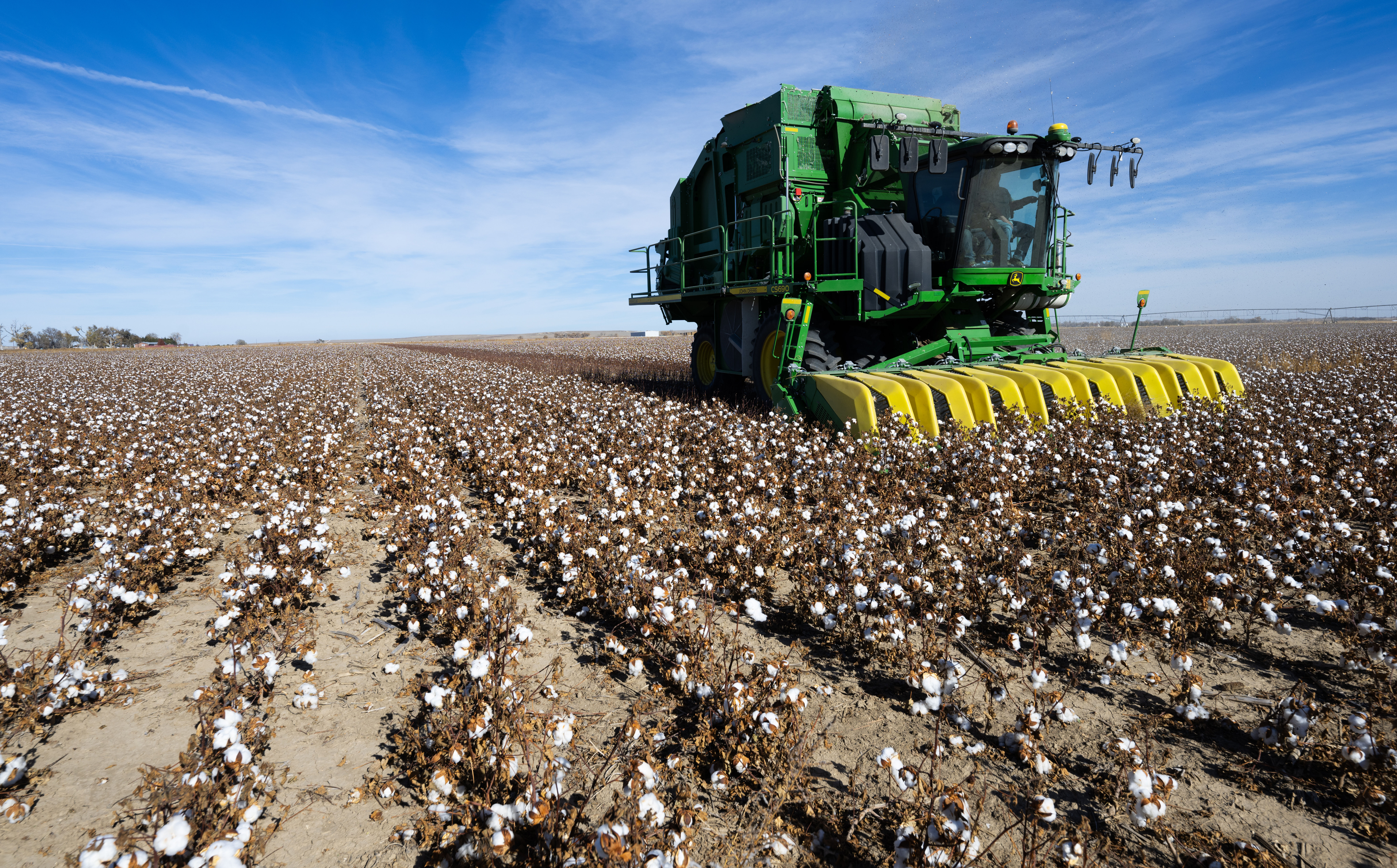
Competing bills setting the overtime threshold for farmworkers have split legislators at the Colorado state Capitol, with one group saying a law passed in 2021 has harmed, rather than helped, farming operations and workers alike, while the other side insists that farmworkers should be treated like any other employee.
The first group, which is bipartisan, pointed to studies and anecdotal evidence that farmworkers have been earning less. Farmers also warned that, if the proposal they are critical of is enacted into law, they will have to figure out how to eliminate jobs and mechanize.
The second group, which also counts Democrats as proponents, raised a racial charge — arguing that laws exempting farmworkers from overtime standards have targeted a group that is overwhelmingly Latino.
At the core of the debate is whether to set the overtime threshold for farmworkers at 40 or 60 hours.
Senate Bill 81, sponsored by Democrats Sen. Jessie Danielson of Wheat Ridge and Rep. Elizabeth Velasco of Glenwood Springs, would lower the current threshold on overtime pay for most agricultural workers from 48 hours per week to 40 hours or more than 12 hours per day.
The opposing legislation is Senate Bill 121, which sets a threshold of 60 hours before overtime can be earned, with a number of exceptions, most of which match the rules set by the state labor department.
The overtime threshold
Under a law sponsored by Danielson in 2021, farmworkers became eligible for overtime pay — at 1.5 times the minimum wage — after 48 hours for “highly seasonal” workers. There’s an exemption for peak season, when workers would earn overtime after 56 hours per week .

Highly seasonal laborers work for an employer with at least twice as many employees in an up to 22-week peak season than during the rest of the year.
Those who are considered “non-highly seasonal” and those who work for small farms would be eligible for overtime after 48 hours.
The small farm is defined as having fewer than four employees on average in the prior three calendar years and with an average adjusted gross annual income under $1 million for the three prior tax years.
The 2022 US Department of Agriculture census — the most recent — showed more than 36,000 farms in Colorado. The census said about 1,800 farms out of that 36,000 have sales valued at more than $500,000. More than 28,000 farms in Colorado are classified by tax purposes as family farms.
In addition, the worker could earn an extra break for working more than 12 hours a day under rules set up by the Colorado Department of Labor and Employment, which was tasked in the 2021 law with coming up with the number of hours and other rules.
That 40-hour limit contained in this year’s SB 81 is what Democrats had wanted back in 2021.
In a letter to the Colorado Department of Labor and Employment that year, 33 Democratic lawmakers in the House and Senate said agriculture workers deserve safe and healthy work environments, arguing that overtime is a fundamental right that protects those workers’ health and safety.
“We also know from other states that implementing meaningful overtime protections for agricultural workers is economically feasible,” the lawmakers wrote.
Of the 33 lawmakers who signed the letter, 21 are still in the Colorado General Assembly.
60 hours
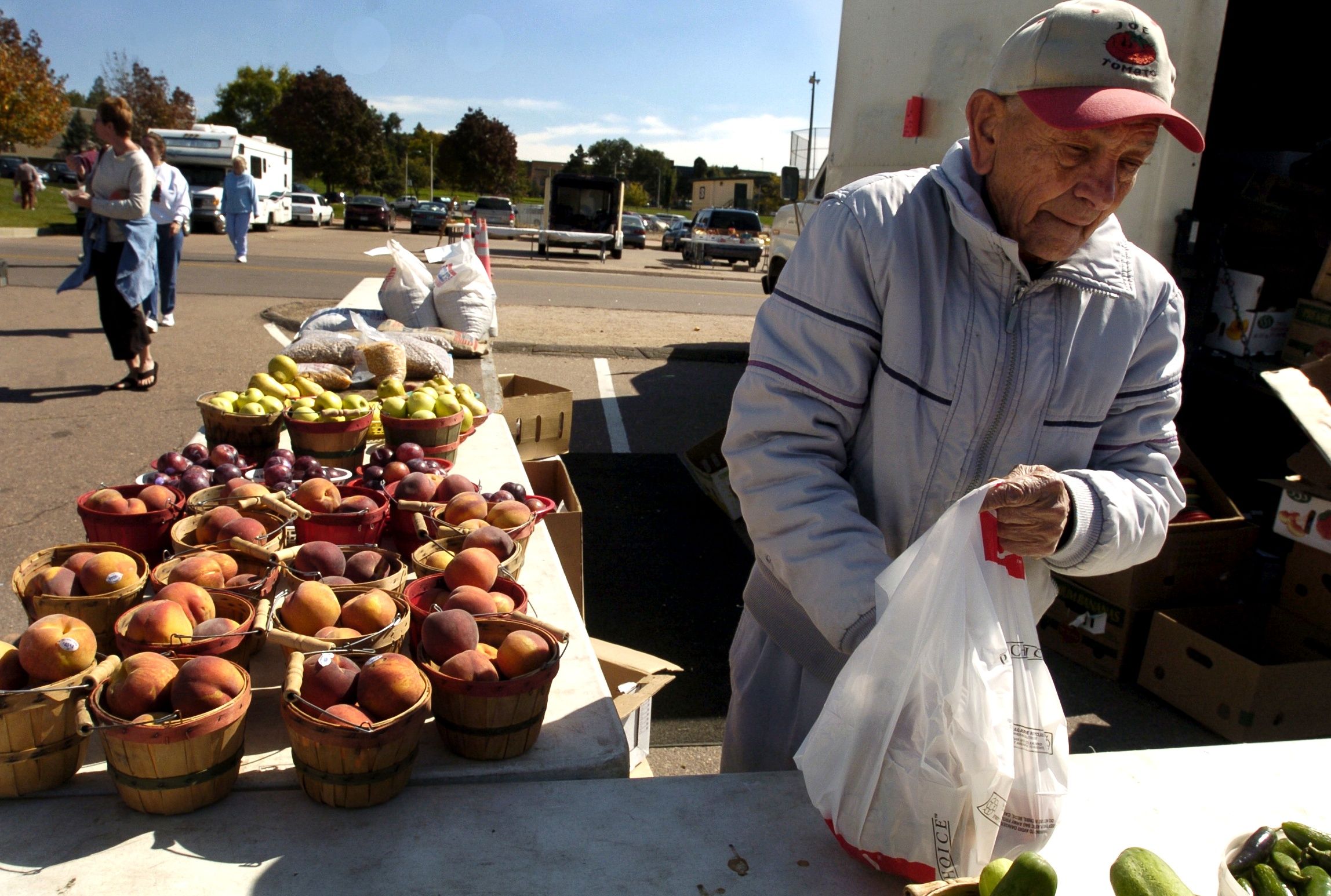
In addition to setting the trigger at 60 hours, SB 121 carves out range workers, such as shepherds or livestock range workers, who are often on those sites 24/7. It also exempts salaried managers and individuals who have decision-making authority.
Pushing the measure are Senate Majority Leader Robert Rodriguez, D-Denver, and Senate Minority Leader Cleave Simpson, R-Alamosa. In the House, Rep. Matthew Martinez, D-Monte Vista, will carry the bill, along with Assistant Minority Leader Ty Winter, R-Trinidad.
Rodriguez told Colorado Politics he advocated for the 2021 bill. But based on conversations he has had in the last year with the agriculture community, it has become clear that the law isn’t working — either for the employers or the employees.
“There needs to be some adjustments,” he said.
He said he is hearing that the farms and ranches are losing workers to other states that don’t have the overtime laws — and that’s almost every Colorado neighbor: Wyoming, Nebraska, Kansas, Oklahoma and Utah.
Workers don’t want to work two jobs to earn the same money they used to make with just one, he said.
Additionally, he said, Colorado doesn’t have the money to do what some states do, such as offering tax credits to agriculture employers hit hard by higher labor costs due to overtime pay. That aid, for example, is being offered in New York and Oregon.
“I’m trying to find a happy balance. I’m trying to find a compromise,” Rodriguez said of his 60-hour threshold.
He said he expects to take some heat from organized labor over the bill, but he added that farms are shutting down operations in Colorado. He said he has asked to talk to some of the workers tied to the organizations opposed to the bill, but that he has heard nothing.
Meanwhile, Rep. Matthew Martinez, D-Monte Vista, told Colorado Politics that he has heard from workers who have been capped on hours and they told him they want to be able to work and earn what they did before the 2021 law.
“This is an appropriate guardrail, a compromise between what happened before and what’s happened since,” he said.
48 hours
Once a worker hits 48 hours, that’s when farmers and ranchers tell them to stop. This often means finding another job in order to keep earning the same money they used to make, according to supporters of the 60-hour threshold.
“The approach we’re looking at is whether the legislation has the (desired) outcome. The consequence is that farmworkers are now making less than they were before 2021,” Martinez said.
Two recent studies from Oregon and California waded into this question.
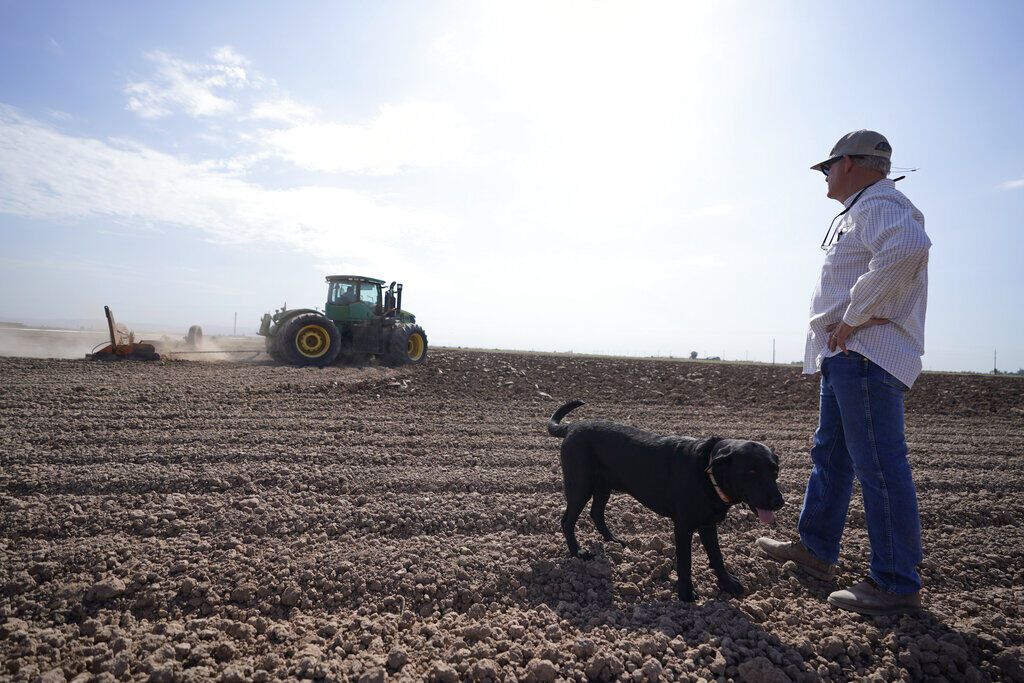
A 2023 study from the University of California showed that, after that state implemented a 40-hour overtime rule in 2019, farmworkers “worked a total of 15,000 to 45,000 fewer hours and earned a total of $6 million to $9 million less on their weekly paychecks than they would have without the overtime law in place.”
Per person, that translates to $120 less per week and just under $3,000 less per year.
A mostly anecdotal study done in Oregon last year, paid for by agricultural groups Oregon Farm Bureau and Oregon State University’s Agricultural Experiment Station, found the same results.
The researchers, who talked to farmers in the dairy, cherry and nursery industries, found that agricultural overtime not only negatively affected farm profitability — it also decreased the weekly earnings of farm workers.
Some farm managers reduced the number of overtime hours their staff worked, others reduced year-end bonuses or didn’t increase the base wages of their farm workers, the study said.
That same story is being repeated in Colorado, according to farmers.
Farmers and ranchers who spoke with Colorado Politics discussed how the 2021 law has affected their operations.
It has increased the cost of operations, said Don Brown, a former commissioner of agriculture under Gov. John Hickenlooper and a multi-generational farmer and rancher.
“We’ve shortened people’s hours when we can,” he said recently.
Here’s why the overtime rules cause problems for both the workers and the employer, farmers said. In one week, there could be a lot of overtime and farmers would send the workers home when they hit the 48-hour limit. In the next week, it’ll be snowy or rainy and the workers wind up getting sent home, with shorter work hours.
Additionally, farmers said, labor costs are higher than they were five years ago, in part because of increasing wages, as operations need to pay more in order to keep the workers, plus the cost of overtime.
For some workers, specifically those who are highly skilled and who operate high-dollar equipment, overtime can’t be avoided, Brown said.
The farmer pushed back against claims by labor organizations that farmworkers are being abused. The labor groups don’t differentiate between someone being overworked or underworked, he said.
“This idea that we abuse our employees is unfounded. There’s a labor shortage, and if they’re not happy they go someplace else. They don’t have to work for us. They’ve got choices. We don’t ask our people to do anything we haven’t done,” he said.
Under SB 61, when they hit that 40 hour limit, “we will have to figure out how to eliminate jobs and mechanize more,” reduce the size of their livestock herds, or buy bigger machinery, Brown said..
“Agriculture is a price taker, not a price maker,” he said, noting that President John F. Kennedy once said “the farmer is the only man in our economy who buys everything at retail, sells everything at wholesale, and pays the freight both ways.”
“We deal in a global market and can’t raise prices,” Brown said. “It’s death by a thousand cuts.”
‘The farmworker gets hurt’
Bruce Talbott of Talbott Farms in Palisade, the state’s largest fruit grower, said he can’t avoid overtime during harvest.
For the rest of the year, however, he has learned how to avoid it, he said.
The farm recently built a new bunkhouse, and it will bring in enough workers to minimize overtime, he said. But the workers, some of which have been coming back year after year, just want to work, he said.
“All businesses have to live within their means. In the end, it’s the farmworker who gets hurt,” Talbott said.
Agriculture is different than any other industry, added Taylor Szilagyi, the executive vice president of Colorado Farm Bureau.
“Our crops and animals are dependent on weather, water, and in Colorado a shorter growing season. That lends itself to a different type of work than a 9 to 5 job,” she said.
Forty hours will limit the ability of farmers and ranchers to be flexible and adjust, she said of SB 61. It will cause more work shifts on farms and ranches, where they already operate at incredibly thin margins, she said.
During the peak seasons — when harvesting, planting or calving for livestock — employers don’t have the flexibility to limit working hours to 40, so the solution is to create more shifts with more workers, she explained.
That means finding more people to fill those shifts, and having to tell the workers they can’t work more than 40 hours.
“It doesn’t work for the industry or for the workers either,” she said. “Ag workers who come to work harvest or seasonal jobs want to work more hours. We just can’t afford it. The take-home pay is less for these folks in jobs with overtime thresholds.”
Some have called to get rid of the overtime section of the 2021 law altogether, but Szilagyi said that industry and others have tried to figure out what would work for both sides.
Putting the threshold at 60 hours is what they came up with, he said.
‘Overtime protections are about dignity and fairness’
Labor groups and Rep. Elizabeth Velasco, D-Glenwood Springs, the House sponsor of the 40-hour bill, pointed to what they described as inherent racism that existed in the 1930s, which they said led to exempting farmworkers from the national Fair Labor Standards Act.

That law requires time-and-a-half for more than eight hours per day or 40 hours per week for every industry — except agriculture.
Lowering the threshold to 40 hours will allow farmworkers to be treated the same as any other worker, Velasco said. The 1930s rule was targeted against workers, particularly immigrants, she said.
As for the studies that say workers are getting paid less under overtime rules, Velasco said, “We are creating unfair conditions for farmworkers. When they don’t get paid overtime, that’s wage theft.”
That workers are getting sent home at 40 hours doesn’t make sense to her, she said.
“I do believe there’s a need for workers to work long hours during the grow season and they should be compensated for that,” she said.
If workers are getting cut off at 40 hours, as farmers and ranchers claim, the workers “need to look for different jobs or in different industries,” Velasco said.
She added that she is not unsympathetic to the plight of farmers and ranchers, and that she’s open to other options, such as tax credits — but not cutting people’s overtime or lowering people’s pay.
In a statement, Towards Justice, which was among the advocates for the 2021 law and now is fighting against the 60-hour bill, said agricultural workers — overwhelmingly Latino, the group contended — “have historically been excluded from basic workplace protections, including overtime pay, due to discriminatory policy choices made during the New Deal era.”
The 2021 law was intended to correct those injustices, the group said.
“Overtime protections are about dignity and fairness,” said Vicky Lopez, chair of Jefferson County Democratic Latino Initiative, in the statement. “Farmworkers deserve the same respect and protections as any other worker, and our laws should reflect that.”
Former state Rep. Polly Baca of Denver, whose parents were farmworkers, added, “We moved toward getting farmworkers the protections they deserve with the 2021 bill. Now lawmakers face a clear choice: support this progress and stand with farmworker families and Latino communities, or send the message that their health, time, and families are less important than profit.”
She urged lawmakers to reject the 60-hour bill.
“Farmworkers are the backbone of our food system, yet this potential bill treats their labor as disposable,” said Stacy Suniga, chair of the Latino Coalition of Weld County. “Rolling back overtime protections is a step backward that harms Latino families and deepens long-standing inequities in our workforce.”
Both measures have been assigned to the Senate Business, Labor and Technology Committee.

Cute puppy overload and an audition of a different kind: Capitol M | Week of Feb. 28, 2026
Marianne Goodland
marianne.goodland@coloradopolitics.com
Updated 2 days ago
The lighter side of the Capitol, and most days, you ought to be really grateful for it. There’s a rumor (jk) floating around that an amendment is coming for the bill to legalize prostitution. The amendment would ban condoms made...

Garfield County sheriff illegally collaborated with ICE, cease and desist letter claims
Michael Braithwaite
michael.braithwaite@gazette.com
Updated 12 hours ago
A cease and desist letter filed Wednesday alleged that the Garfield County sheriff intentionally violated state law by collaborating with the U.S. Immigration and Customs Enforcement (ICE). The letter, filed by the law firm Towards Justice, claimed that Garfield County...
Male wolf dies after capture attempt, Colorado Parks and Wildlife officials confirm
Marianne Goodland
marianne.goodland@coloradopolitics.com
Updated 16 hours ago
The Colorado Parks and Wildlife said the wolf, identified as #2305 — meaning it was one of the original 10 animals that came from Oregon — died on Jan. 28 in Routt County. The wolf was the male of the...
Gov. Jared Polis moves to end ICE subpoena fight over Colorado workers’ personal data
Marianne Goodland
marianne.goodland@coloradopolitics.com
Updated 12 hours ago
The effort by Gov. Jared Polis to comply with an administrative subpoena from U.S. Immigration and Customs Enforcement for information held by several state agencies is over. Polis, in a motion filed Feb. 20, asked for a permanent injunction and...

Ex-Colorado Sen. Sonya Jaquez Lewis avoids prison, gets probation for forged ethics letters
Marianne Goodland
marianne.goodland@coloradopolitics.com
Updated 12 hours ago
Former state Sen. Sonya Jaquez Lewis, D-Longmont, was sentenced Friday to two years of supervised probation and 150 hours of community service, and a $3,000 fine, to be waived if she completes an additional 100 hours of community service. The...
Benavidez chosen to fill Senate District 21 vacancy after Michaelson Jenet resigns
Marianne Goodland
marianne.goodland@coloradopolitics.com
Updated 20 hours ago
A Democratic Senate District 21 vacancy committee Thursday night chose former Rep. Adrienne Benavidez, D-Adams County, to replace former Sen. Dafna Michaelson Jenet. Michaelson Jenet resigned on Feb. 13 to become the director of the David and Laura Merage Foundation...

Colorado delegation’s plus-one picks convey messages at Donald Trump’s State of the Union | TRAIL MIX
Ernest Luning
ernest.luning@coloradopolitics.com
Updated 22 hours ago
It’s become a tradition for members of Congress to deliver messages of their own at the State of the Union address, though this year none of the Colorado lawmakers shouted at the president during the speech, nor did the delegation...

Colorado Democrat John Hickenlooper becomes first statewide candidate to submit nominating petitions
Ernest Luning
ernest.luning@coloradopolitics.com
Updated 22 hours ago
U.S. Sen. John Hickenlooper on Thursday became the first statewide candidate to submit petition signatures for Colorado’s June Democratic primary, according to his campaign and the Colorado Secretary of State’s Office. Seeking reelection to a second term, Hickenlooper is facing...

Toll to sexual assault survivors rises if they feel blamed and disbelieved
Jenny Deam
jenny-deam@coloradopolitics.com
Updated 20 hours ago
Natalie, a single mother, dropped off her son at daycare, went to therapy and then returned home. She swallowed a fistful of pills, washing them down with a six-pack of beer. She was ready to end her life. “I just...

Colorado rape cases rarely result in an arrest and prosecution
Jenny Deam
jenny-deam@coloradopolitics.com
Updated 16 hours ago
Authorities say they are especially difficult cases. In Colorado, most go nowhere. Over the past decade, for every 10 reports of rape, there is only one arrest. Warning: This story contains descriptions of sexual violence. Kiersten May remembered a fuzziness...