

Colorado’s municipal jails should follow same standards as county jails | OPINION
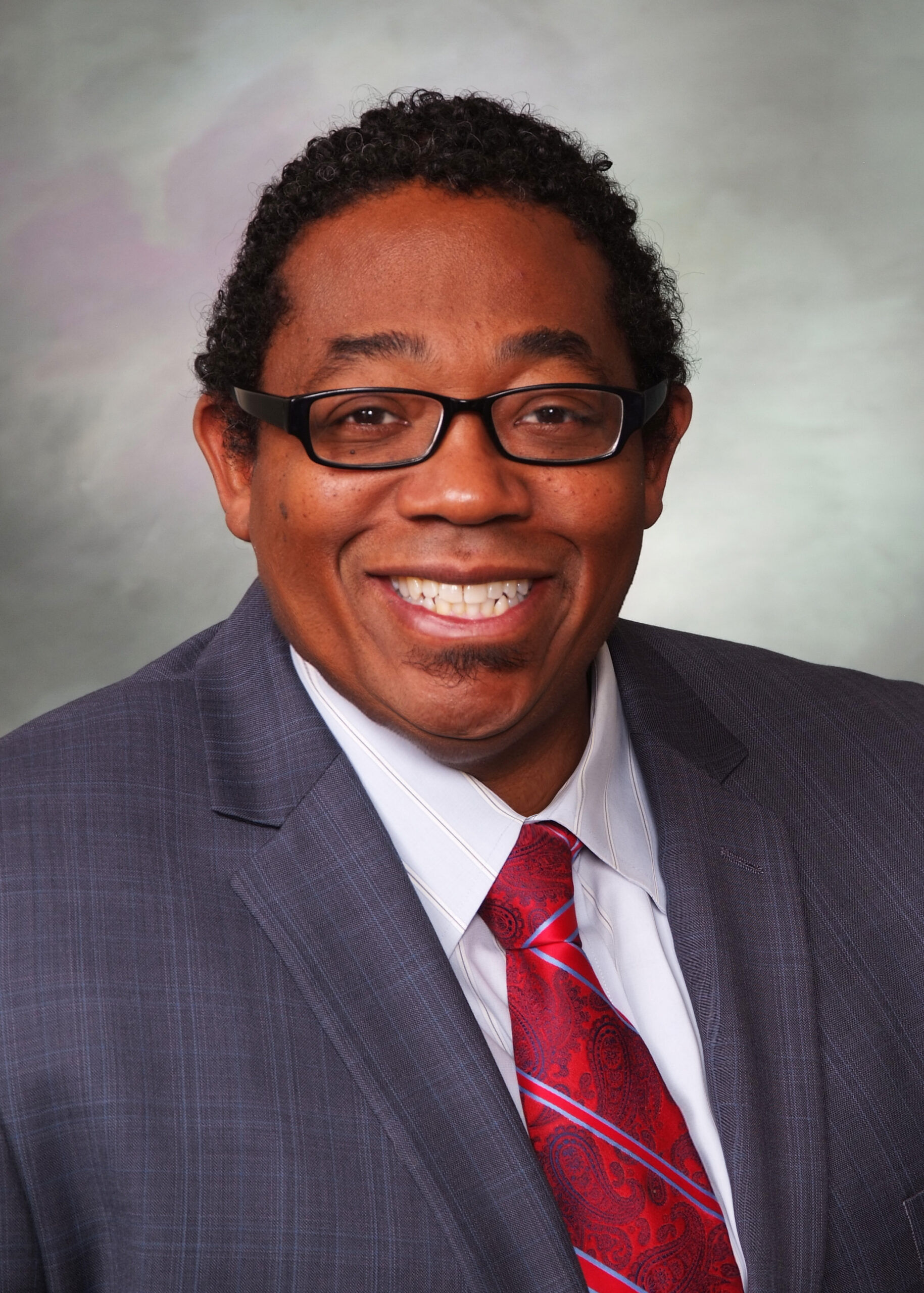
By Michael Carter
Coloradans have the right to safe, humane and lawful jail facilities, regardless of where they’re held. However, the state law requiring jails in Colorado to meet those basic standards doesn’t apply to all the jail facilities in our state including the jail located in my home city of Aurora. That’s why I’m sponsoring HB26-1039, which requires municipal jails to follow the same standards as their county jail counterparts.
I’ve spent my legal career in Colorado’s jails, defending the accused and fighting for their constitutional rights. For years, when I visited loved ones back home, those visits were to a local jail. I have witnessed the unlawful conditions our fellow Coloradans are often subjected to when they are held inside those jail walls, and I’ve seen the effects of the state’s decision certain people shouldn’t have the protection of common decency. Many people who are detained are faced with roadblocks when trying to reach their counsel, and many are cut off from accessing health care.
Prior to 2022, Colorado’s county jails operated under a largely independent patchwork of standards. To increase equitable treatment throughout the county system, Gov. Jared Polis signed HB22-1063 into law, which established a statewide Jail Standards Commission to issue uniform guidelines for the safe and just operation of county jails. The bill, however, did not include municipal-level jails.
The standards are guided by the belief, “Persons experiencing incarceration shall be treated humanely with dignity and respect.” They ensure people in jail have access to privileged communications with their attorneys, access to medication, health care, pre- and post-natal care, nutritionally appropriate meals, safety and reasonable access to media and recreation. These are basic conditions that help jails maintain the constitutional rights of those held behind bars. These guidelines must apply to any facility that operates as a jail, correctional facility, or detention facility — regardless of which governmental entity operates it.
Currently, Aurora is the only municipality in Colorado that operates its own jail. With county jail populations expanding and the creep of mass incarceration entering the city level, it’s only a matter of time before other municipalities follow suit. That’s why HB26-1039 is a crucial step to ensure people accused of crimes maintain their constitutional rights regardless of where they are being held.
The Aurora Detention Facility is not a mere stopover for people navigating the criminal justice system: it is a facility that meaningfully restricts the liberty of those it detains and has the authority to hold as many as 125 people for nearly a year. Individuals facing municipal charges deserve the same treatment as those held in county jails.
Aurora faces unique challenges and, like many cities in Colorado, severe budget restrictions. City officials have said its budget will not allow for it to comply with the standards, as doing so would require extensive remodeling or rebuilding, but this is simply untrue. The standards are extremely flexible and give facilities a wide berth to meet the standards in ways financially and logistically possible for them. For example, the standards require “access to a library or library materials including materials that are accessible and are also offered in commonly spoken languages.” Even read narrowly, Aurora’s interpretation to require the construction of a separate library facility defies the explicit guidance. Aurora, and future municipalities, could meet this standard through a simple cart of library books, or it could receive assistance through one of the American Library Association’s prison book donation drives or similar community projects.
The standards don’t require overnight compliance but encourage a staggered approach to ease the burden on each facility. HB26-1039 allows existing municipal jails until the summer of 2027 to come into compliance. Additionally, to ease the adoption of these standards, the commission designed a variance process to help each unique facility adapt. Aurora officials expressed concern cities lacked a voice on the commission to fairly hear requests for variances, and we agree cities deserve a voice, so my co-sponsor and I have agreed to add a non-voting seat to the commission dedicated to a municipal representative.
Coloradans deserve humane and equitable treatment in all of our jail systems, not just facilities operated by the counties. I am sponsoring HB26-1039 to ensure city and county detention facilities are all held accountable to the same standards required by state law.
Colorado Rep. Michael Carter is a co-sponsor of HB26-1039 and serves as vice chair of the House Judiciary Committee. He represents District 36 in Colorado which covers Adams and Arapahoe Counties, both of which the city of Aurora is located in. Rep. Carter has lived and practiced law in Aurora for 10 years and has been a long-time community leader serving the city.


This bill’s bogus title is the real deception | OPINION
Mark Hillman
mark-hillman@coloradopolitics.com
Updated 8 hours ago
Among the most absurd bills currently under consideration by the Colorado legislature is House Bill 1012, deceptively titled “Concerning Consumer Protections to Promote Fair Market Pricing.” The first absurdity is the claim this legislation and promoting free-market pricing have anything...

City Council should narrow retail licensing ordinance | OPINION
Colorado Politics
colorado-politics@coloradopolitics.com
Updated 8 hours ago
By Samuel G. Michael Many of my members have voiced concern about the Aurora City Council’s tobacco retail licensing proposal. As the head of the Ethiopian Community of Colorado, EthioCO.org, I share, understand and support the city’s responsibility to protect young people...
Colorado senators initially push for — then drop ‘identity’ factor in parenting time decisions
Marissa Ventrelli
marissa.ventrelli@coloradopolitics.com
Updated 7 hours ago
The sponsors of a proposal that would require suppression of records in name-change petitions for minors removed a provision that would have mandated the courts to factor in the issue of “identity” when allocating parenting time. In its original form,...

U.S. Sen. Michael Bennet: ‘It’s right to suspend’ wolf program in Colorado
Marianne Goodland
marianne.goodland@coloradopolitics.com
Updated 8 hours ago
U.S. Sen. Michael Bennet, who is running for governor, told a newspaper this month that he favors suspending Colorado’s wolf reintroduction program, though he sounded less certain in another interview a few days later. “I think it’s right to suspend...

Colorado legislators challenge lottery rules allowing credit card purchases
Marianne Goodland
marianne.goodland@coloradopolitics.com
Updated 9 hours ago
Back in November, legislators told the Colorado Lottery Commission to hold off on rules that would allow, for the first time, purchases of lottery products with credit cards. The commission went ahead anyway and approved those changes. And now lawmakers...

Hickenlooper endorsed by Planned Parenthood Action, environmental group in Colorado’s U.S. Senate race
Ernest Luning
ernest.luning@coloradopolitics.com
Updated 8 hours ago
A pair of progressive national groups that advocate for abortion rights and fighting climate change have endorsed U.S. Sen. John Hickenlooper’s bid for reelection, with both calling the Colorado Democrat a proven fighter for their causes. Planned Parenthood Action Fund...
Rep. Ron Weinberg denies allegations in response to House ethics complaint
Marianne Goodland
marianne.goodland@coloradopolitics.com
Updated 7 hours ago
A legislator from Loveland has denied allegations made against him by a fellow Republican in his response to an ethics committee looking into the claims. In his Feb. 6 response, Rep. Ron Weinberg said the complaint “appears (to be) politically...

One Chance to Grow Up director reflects on marijuana legalization 14 years later
Marissa Ventrelli
marissa.ventrelli@coloradopolitics.com
Updated 12 hours ago
Fourteen years after Colorado became one of the first states to legalize recreational marijuana, the executive director of an organization focused on educating parents about the drug’s effects on developing brains is reflecting on how much has changed in nearly...

Will President Trump’s emissions ‘progress’ turn into pollution regression? | Paula Noonan
Paula Noonan
paula-noonan@coloradopolitics.com
Updated 14 hours ago
Will President Donald Trump allow gasoline producers to put lead back in petrol? Will he declare by executive order fuel engines no longer need catalytic converters? Just wondering how far he will take his environmental policies before his four years...

Colorado’s Medicaid crisis was years in the making | OPINION
Colorado Politics
colorado-politics@coloradopolitics.com
Updated 1 day ago
By Greg D’Argonne As the Joint Budget Committee meets to finalize spending decisions for the coming fiscal year, one truth should guide the conversation: Colorado’s health care budget strain did not appear overnight — and it is not the fault...
PREV
PREVIOUS

City Council should narrow retail licensing ordinance | OPINION
By Samuel G. Michael Many of my members have voiced concern about the Aurora City Council’s tobacco retail licensing proposal. As the head of the Ethiopian Community of Colorado, EthioCO.org, I share, understand and support the city’s responsibility to protect young people and address legitimate community concerns. Retailers have long partnered with enforcement agencies to prevent underage […]

This bill’s bogus title is the real deception | OPINION
Among the most absurd bills currently under consideration by the Colorado legislature is House Bill 1012, deceptively titled “Concerning Consumer Protections to Promote Fair Market Pricing.” The first absurdity is the claim this legislation and promoting free-market pricing have anything in common whatsoever. Rather than promote competition, the bill sponsored by Reps. Kyle Brown (D-Louisville) and […]