

Provide Colorado workers with a ladder to climb to boost Colorado’s economic potential | OPINION

By Jason Janz
Colorado has the most educated population in the country, but it cannot fill the critical jobs that keep our communities and economy running.
A significant shortage of essential workers in every category — trades and blue-collar jobs like welders and electricians, core professions such as nurses and medical assistants, and emerging cutting-edge technology positions — has already reduced Colorado’s economic potential. Projections indicate this situation will only worsen during the next decade as the cost of living continues to skyrocket, the population ages and more than 400,000 people leave the workforce.
It’s not that Coloradans lack talent and drive; they lack opportunity and credentials.
Though most jobs paying a livable wage require some type of education or training beyond high school, our outdated, debt-heavy education model has shut out thousands of Coloradans who are ready to work, increasing poverty and leaving employers scrambling to fill essential jobs around the state.
That is why I support Initiative 218, which, if passed in November, would give thousands of Coloradans access to debt-free skills training for critical jobs and high-demand trades — all without raising taxes. Eligible middle‑ and lower‑income families could apply for up to $3,000 per year in scholarships for skills training in these fields and other essential jobs.
This is a focused, Colorado‑style investment in workforce development: it closes skill gaps in critical jobs, helps small businesses find trained workers, raises employment and earnings in trades, care and tech sectors, and does all of that without increasing taxes. A better‑trained workforce also means safer workplaces and fewer injuries, which can reduce workers’ compensation costs for Colorado employers.
Colorado has a long history of using state assets to solve problems like this without raising taxes: lottery dollars to protect parks and open spaces, state‑land royalties to build schools in areas without a strong property‑tax base, gaming revenue for community colleges, and tobacco settlement money for health care. Proposed Initiative 218 follows that same tested approach.
For decades, the education system has worked for those with time, savings and a safety net. But for many, traditional education can feel less like a pathway and more like an obstacle. The cost of living and the price of education have made it harder for Coloradans to access all types of education. Tuition, tools, examinations, licensing fees and loan limits all stand between motivated workers and the credentials they need.
Initiative 218 would give many Coloradans a career path without crushing debt. In health care, for example, Coloradans can earn credentials as certified nursing assistants or medical assistants in fewer than six months and move quickly into jobs our communities desperately need. For those who aren’t sure whether they want to go to college, they can try out a career in IT, the trades, or health care without stepping away from work for years or taking on tens of thousands of dollars in student debt. If the path they are on is working, they can build on it. If not, they can change course, and they will still be better off than when they started.
To fund these scholarships, Initiative 218 provides for Pinnacol Assurance, a quasi-state insurer of last resort, to operate independently from the state. Pinnacol would make a one‑time payment of more than $150 million dedicated to scholarships and training programs for high‑need occupations, and Pinnacol would lose its tax subsidy, generating about $10 million per year in ongoing funding for workforce training. Pinnacol would remain member‑owned but transition into a tax‑paying company that could compete in other states. At the same time, the ballot measure ensures every Colorado business will continue to have access to workers’ compensation coverage.
Proposed Initiative 218 creates a modern ladder for Colorado, one that fits the real lives of working people, matches what employers are asking for, and uses the state’s assets wisely. It offers hard-working Coloradans the ability to climb higher than the bottom rung, build a career, increase wages more quickly without accruing debt, and cement long-term stability for their families.
It’s time Colorado gave people a ladder they could realistically climb. Support Initiative 218.
Jason Janz is chief executive and co-founder of the Denver-based nonprofit CrossPurpose, which helps raise people from poverty to prosperity through pathways to economic, relational and spiritual development.


Will President Trump’s emissions ‘progress’ turn into pollution regression? | NOONAN
Paula Noonan
paula-noonan@coloradopolitics.com
Updated 3 hours ago
Will President Donald Trump allow gasoline producers to put lead back in petrol? Will he declare by executive order fuel engines no longer need catalytic converters? Just wondering how far he will take his environmental policies before his four years...

Colorado’s Medicaid crisis was years in the making | OPINION
Colorado Politics
colorado-politics@coloradopolitics.com
Updated 4 hours ago
By Greg D’Argonne As the Joint Budget Committee meets to finalize spending decisions for the coming fiscal year, one truth should guide the conversation: Colorado’s health care budget strain did not appear overnight — and it is not the fault...

Metro district legislation provides pragmatic, meaningful solution | OPINION
Colorado Politics
colorado-politics@coloradopolitics.com
Updated 4 hours ago
By Sam Nizam Colorado needs more transparency and accountability in government… at all levels. And during the 2025 legislative session, one such bill made it through the process, improving transparency at the closest local level: metro districts. House Bill 25-1219,...

Colorado bill seeks to limit surveillance tech to ‘lawful’ public safety purposes
Marissa Ventrelli
marissa.ventrelli@coloradopolitics.com
Updated 7 hours ago
A Republican legislator is pushing legislation on surveillance technology that, she said, is designed to achieve a balance between aiding law enforcement and protecting people’s private rights. Her proposal is drawing support from both sides of the ideological aisle, though...

Democrats want to decouple Colorado from federal tax breaks
Marissa Ventrelli
marissa.ventrelli@coloradopolitics.com
Updated 9 hours ago
Democratic members of Colorado’s House and Senate on Tuesday announced the introduction of a slew of bills that would reduce corporate tax deductions and sever Colorado’s tax regime from recent federal changes to the tax code. The federal tax changes...

Colorado title board OKs language of ballot measure to privatize Pinnacol Assurance
Marianne Goodland
marianne.goodland@coloradopolitics.com
Updated 12 hours ago
The state’s title board on Wednesday unanimously voted to approve the wording of a ballot measure that would allow Pinnacol Assurance, the state’s workers’ compensation insurance provider of last resort, to privatize. Behind ballot measure No. 218 is Colorado Succeeds,...
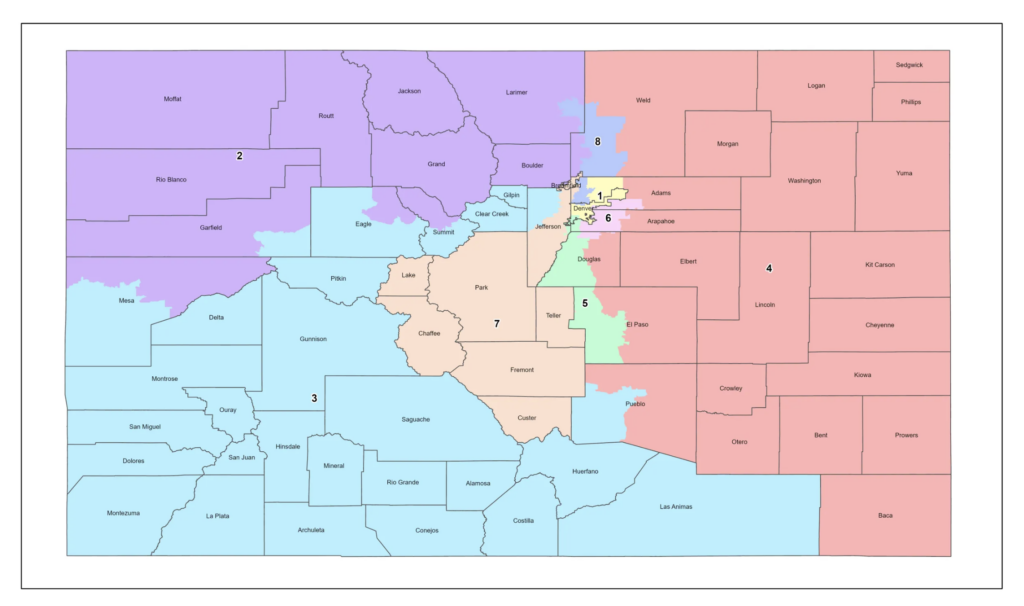
National redistricting fight reaches Colorado with ballot measures targeting GOP-held congressional districts
Marianne Goodland
marianne.goodland@coloradopolitics.com
Updated 8 hours ago
A Democratic-aligned group backed by the House Majority PAC filed four versions of a 2026 ballot measure Tuesday that would temporarily suspend Colorado’s independent congressional redistricting commission and redraw the state’s map in an effort to flip three Republican-held U.S....

Colorado Senate reviews 2025–26 state budget as Medicaid costs drive $776M increase
Marianne Goodland
marianne.goodland@coloradopolitics.com
Updated 10 hours ago
This week, the state Senate is reviewing revisions to the 2025–26 state budget, which has been reduced by hundreds of millions of dollars in each round of cuts. But the bottom line is that, because of Medicaid costs, the state...

Colorado lawmakers must stem our health care cost crisis | PODIUM
Colorado Politics
colorado-politics@coloradopolitics.com
Updated 1 day ago
By Ali Rakestraw I’m a family physician and lifelong Coloradan, and I’m watching a health care crisis unfold in real time. Every day, I see patients struggling to afford the care they desperately need — and it’s about to get...

Colorado Senate presses transportation director to increase funding for Morgan County roads
Marissa Ventrelli
marissa.ventrelli@coloradopolitics.com
Updated 1 day ago
A coalition of state Senators approved a resolution drafted by the Morgan County Board of Commissioners urging the Colorado Department of Transportation to invest more money into fixing roads. Some 70% of Morgan County’s roads have been labeled by the...
PREV
PREVIOUS

Colorado bill seeks to limit surveillance tech to 'lawful' public safety purposes
A Republican legislator is pushing legislation on surveillance technology that, she said, is designed to achieve a balance between aiding law enforcement and protecting people’s private rights. Her proposal is drawing support from both sides of the ideological aisle, though for different reasons. Senate Bill 071, sponsored by Sen. Lynda Zamora Wilson, R-Colorado Springs, would […]

Metro district legislation provides pragmatic, meaningful solution | OPINION
By Sam Nizam Colorado needs more transparency and accountability in government… at all levels. And during the 2025 legislative session, one such bill made it through the process, improving transparency at the closest local level: metro districts. House Bill 25-1219, sponsored by Reps. Jacque Phillips and Carlos Barron and Sens. Kyle Mullica and Lisa Frizell, […]