

As federal vaccine guidance shifts, Colorado legislator favor recommendations from pediatric groups
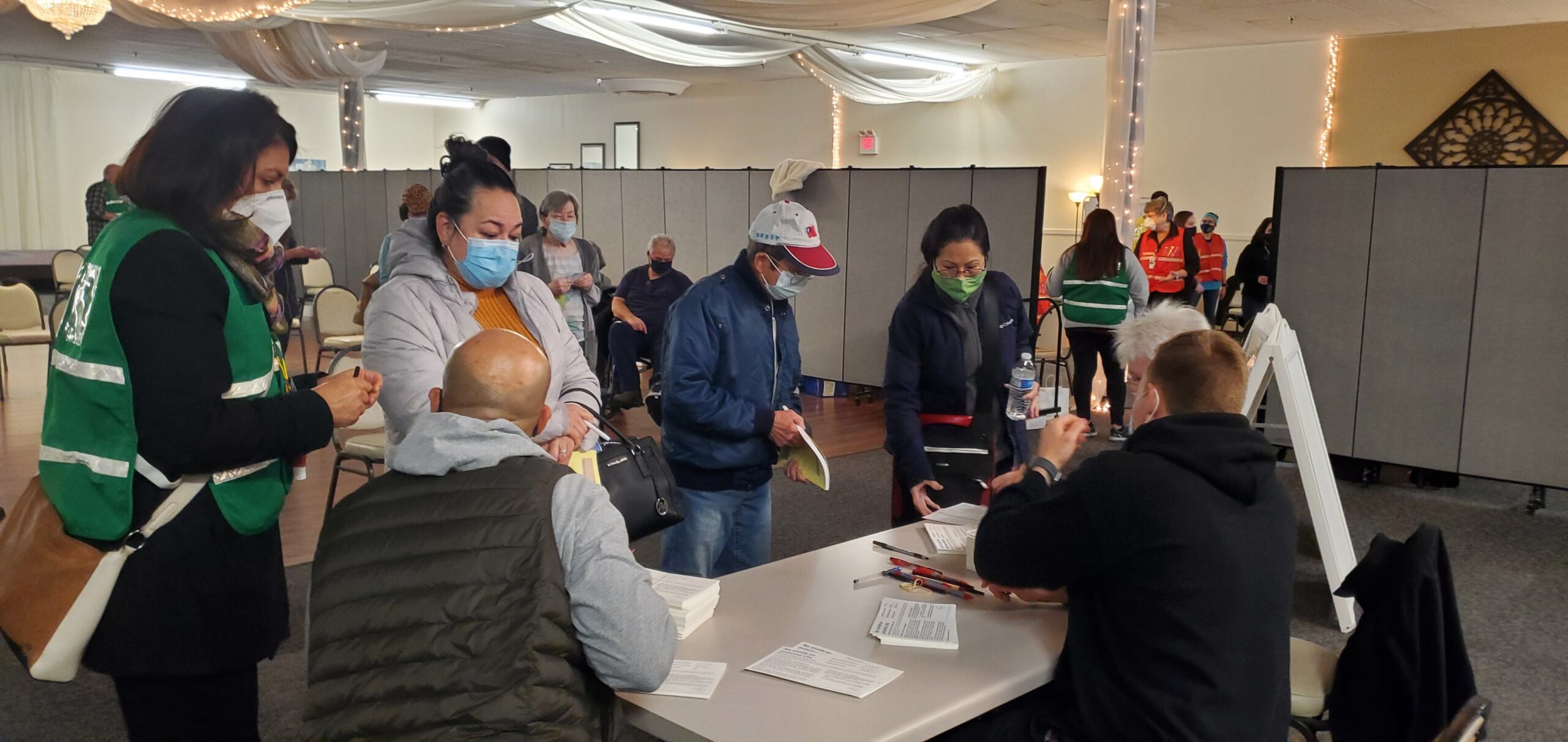
Colorado legislators are pushing to codify a practice adopted by some 20 states to use guidance from the American Academy of Pediatrics and other medical associations when setting vaccine policies and immunization schedules.
In some cases, the move supplements or diverges from recommendations issued by the Trump administration and the Centers for Disease Control and Prevention under Health and Human Services Secretary Robert F. Kennedy Jr.
Colorado is already among those 20 states. This month, Democratic lawmakers want to put that into the statutes with a proposal that will require the state Board of Health to consider recommendations from the American Academy of Pediatrics and other groups, as well as from a federal advisory committee.
Senate Bill 32 passed the Senate Health & Human Services Committee on a party-line vote on Jan. 29. The chamber approved it last week, also on a party-line vote. It now heads to the House.
The bill doesn’t add any vaccine mandates or change any of the exceptions in current law, but it makes changes in several areas.
Under SB 32, pharmacists would have independent authority to offer immunizations.
It updates liability provisions for vaccines required for school entry, allowing compliance with either the Centers for Disease Control and Prevention immunization schedule or the schedule established by the State Board of Health.
The CDC last month announced “an overhaul of the immunization schedule,” paring the number of recommended immunizations from 17 to 11, according to the University of Minnesota‘s Center for Infectious Disease Research and Policy.
The CDC’s move follows Kennedy’s June decision to fire all 17 members of the CDC’s Advisory Committee on Immunization Practices and replace them. Some of the new members have questioned the efficacy or safety of vaccinations. That newly configured advisory committee includes, among its contractors, one of the witnesses at the Jan. 29 hearing on Senate Bill 32.
The CDC’s updated schedule no longer recommends vaccines for children who are not at high risk of respiratory syncytial virus, hepatitis A, hepatitis B, dengue, or bacterial meningitis.
Trump administration officials said the overhaul won’t result in families who want the vaccines losing access to them, and said insurance will continue to pay. The U.S. Department of Health and Human Services also said the overhaul was in response to a request from the president, who asked the agency to review how peer nations approach vaccine recommendations and consider revising U.S. guidance accordingly.
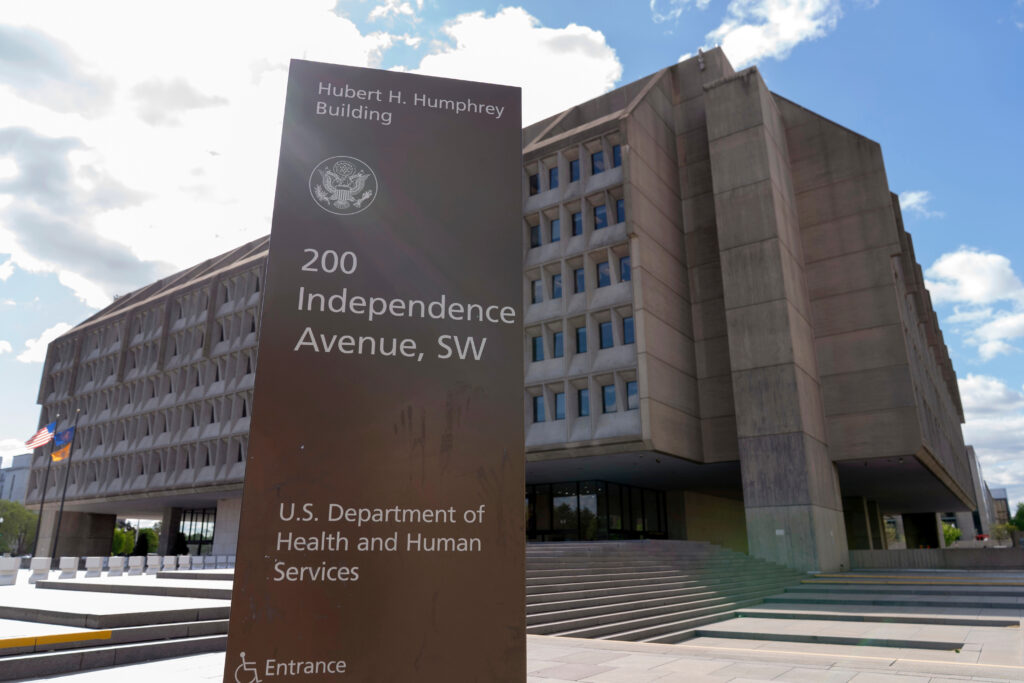
The federal agency said its comparison to 20 peer nations found that the U.S. was an “outlier” in both the number of vaccinations and the number of doses it recommended to all children. Officials with the agency framed the change as a way to increase public trust by recommending only the most important vaccinations for children to receive.
Meanwhile, medical experts said the decision creates confusion for parents and could increase preventable diseases.
Actually, states — not the federal government — wield the authority to require vaccinations for schoolchildren.
The Colorado Department of Public Health and Environment already lists the American Academy of Pediatrics’ recommended vaccine schedule on its website, rather than the CDC’s updated list.
In a letter to providers, the state’s department of health recommended that families and providers follow the American Academy of Pediatrics’ Recommended Child and Adolescent Immunization Schedule, “which is developed by infectious disease experts and reflects decades of peer-reviewed evidence and safety monitoring.”
The state Board of Health in December updated its rules to incorporate the 2025 AAP schedule on school and child care immunization requirements, which it called “the gold standard for pediatric care in the U.S.”
Supporters of the legislation framed it as providing stability based on established guidance as federal policy shifts. Critics, meanwhile, lauded the move by the federal government, echoing some of the arguments against vaccination schedules.
Bill sponsor Sen. Lindsey Daugherty, D-Arvada, who is days away from delivering her second child, told the health committee that for decades, the state’s immunization system has relied on stable federal guidance, but recent changes now threaten vaccine access, creates the risk of inconsistency across providers “and weakens public confidence in a system design to protect us all.”
SB 32 will allow the state’s department of health to continue buying, “recommending and conducting outreach for vaccines based on established science, even if federal guidance is in flux,” she said.
Co-sponsor Sen. Kyle Mullica, D-Thornton, an emergency room nurse, added that vaccines have put diseases like polio in the history books, but that America today risks losing decades of progress in the current uncertain climate. He noted that the U.S. declared measles eliminated in 2000, but a recent outbreak has led to hundreds of cases and deaths of children and adults nationwide. Colorado has seen 36 cases, 24 of which affected people who were not vaccinated.
In advocating for SB 32, Dr. Edwin Asturias, who is a pediatrician and infectious disease expert at Children’s Hospital Colorado, noted the days when a child is paralyzed by polio or hospitalized for measles — or COVID — are distant because of vaccines.
The shift in federal policy means vaccine recommendations are unstable, and that’s led to falling vaccination rates, he said. He noted the flu season is the worst in 25 years, with 32 deaths of children, including three in Colorado.
Vaccine rates for flu and measles are both dropping, he said.
“As a pediatrician, I have cared for infants dehydrated from coronavirus to totally struggling to breathe with RSV and previously healthy school-age children, fighting for their lives against meningitis. These are not abstract statistics,” he said.
The fight over vaccines came to a head during the COVID-19 pandemic, when the Biden presidency mandated that companies employing more than 100 people require vaccination or weekly testing, arguing the move would help fight the pandemic. During the time, many private sector workers who refused the COVID-19 vaccines were also fired.
Among those who opposed SB 32 was Cynthia Nevison, a climate researcher with the University of Colorado Boulder’s Institute of Arctic and Alpine Research and, according to Politico, a contractor with the Advisory Committee on Immunization Practices on Hepatitis B vaccines.
In December, the Center for Infectious Disease Research quoted Nevison as telling attendees at a two-day ACIP meeting that Hepatitis B is primarily a concern for babies of “foreign-born” mothers and that it can occur in some “high-risk immigrant families.” The publication said Nevison stressed the “average American child” faces little risk of contracting the virus from siblings or relatives.
In Colorado, she told the health committee that “unbiased science” increasingly recognizes that an “aggressive US childhood immunization schedule” is an important cause of many of the hyper-reactive immune system disorders and neuro-immune conditions that increasingly affect and disable children. She also praised Kennedy for dedicating himself “to reversing the tragic decline in children’s health.”
Many Colorado residents support Kennedy and applaud the reforms he is making, Nevison added, citing a 13% COVID booster shot rate in Colorado as evidence.
Colorado should embrace the CDC’s recommendations, rather than try to thwart them, she added.
Other witnesses claimed the bill is the work of Big Pharma, pointing to funding received by some of the medical groups from the pharmaceutical industry.
Julie Denton of the Colorado Health Choice Alliance pointed to corporate donors, all in the vaccine business, to the American Academy of Pediatrics, and other medical groups whose vaccine recommendations would be covered under SB 32.
“These aren’t neutral entities,” she said of the medical groups. “Granting them state-sanctioned authority over vaccine recommendations is deeply troubling.”
Witnesses opposed to SB 32 also suggested that expanding the liability protections might not be legal.
The bill seeks to add, under specific parameters, a new limitation on liability for civil damages for an injury or death caused by a vaccine.
At the hearing’s conclusion, Mullica said he is no friend of Big Pharma.
“This is about protecting kids,” he said.
The Associated Press contributed to this article.

Judge rules that Colorado law makes it too hard for parties to bar unaffiliated voters from primaries
Ernest Luning
ernest.luning@coloradopolitics.com
Updated 1 hour ago
A federal judge ruled in favor of the Colorado Republican Party late Tuesday, saying that a portion of the state law that allows unaffiliated voters to cast ballots in party primaries is unconstitutional because it imposes an unrealistic burden on...

Front Range cities oppose Democratic proposal to permit lot‑splitting as a path to affordable housing
Marianne Goodland
marianne.goodland@coloradopolitics.com
Updated 3 hours ago
Colorado lawmakers are pressing ahead with a plan to let homeowners split their lots to make room for smaller, more affordable houses. The proposal has drawn sharp opposition from Aurora, Colorado Springs, Denver and other Front Range cities that argue...

Hegseth features Fort Carson soldiers after returning from Middle East, gives warning on Iran war
Reuters
reuters@gazette.com
Updated 7 hours ago
Defense Secretary Pete Hegseth said on Tuesday the next few days in the war against Iran would be decisive and warned Tehran that the conflict would intensify if it did not make a deal. Hegseth also highlighted his trip to the Middle...

Denver Council narrowly approves deal with Axon
Deborah Grigsby
deborah.smith@denvergazette.com
Updated 11 hours ago
After weeks of delay, the Denver City Council narrowly approved a one-year $150,000 contract with Axon for 50 automated license plate-reading cameras and the necessary system hardware, replacing the city’s former vendor, Flock. The 7-6 vote came during Tuesday’s regular...

Aurora homeless shelter opened too early, CEO says, as mold and plumbing issues emerge
Kyla Pearce
kyla.pearce@gazette.com
Updated 11 hours ago
Aurora’s largest homeless services project launched “way too early,” its CEO told city leaders Tuesday, saying the rushed opening left residents living amid mold, plumbing failures, and other issues inside the former hotel. During Tuesday’s Housing, Neighborhood Services and Redevelopment...

Gov. Polis declares April ‘dig safely month’ to mark 40th anniversary of Colorado 811
Scott Weiser
scott.weiser@gazette.com
Updated 10 hours ago
Gov. Jared Polis declared April 2026 as “Dig Safely Month” in Colorado, an annual observance that this year highlights the 40th anniversary of Colorado 811, the state’s One-Call Notification System. “Before everyone starts their warm weather projects around the house,...
Federal judge dismisses U.S. government lawsuit against Colorado, Denver’s ‘sanctuary’ laws
Michael Karlik
michael.karlik@coloradopolitics.com
Updated 23 hours ago
A federal judge dismissed the U.S. government’s lawsuit against Colorado and Denver on Tuesday, which alleged that various local policies impermissibly infringed on federal immigration enforcement. U.S. District Court Judge Gordon P. Gallagher followed the lead of judges in Illinois...

Lakewood zoning canvasser accused of stealing opposition material
Sage Kelley
sage.kelley@denvergazette.com
Updated 10 hours ago
Controversies surrounding the Lakewood special election continue, with the latest including allegations of sign-stealing. The city’s special election regarding already approved zoning changes is occurring on April 7 and — along with more than a year of contention between opponents...

Colorado legislators drove up cost of Medicaid program
Marissa Ventrelli
marissa.ventrelli@coloradopolitics.com
Updated 1 day ago
Some of Colorado’s spending woes in Medicaid can be traced to lawmakers who had approved new or expanded programs in the last few years, driving up state costs to the tune of tens of millions of dollars. Just three measures...

A perfect storm: Pine beetles thriving following warm, dry winter in Colorado
O'Dell Isaac
odell.isaac@gazette.com
Updated 1 day ago
The warmest winter in Colorado history could lead to record-breaking proliferation of a tiny insect, about the size of a grain of rice, that has killed millions of acres of trees across the Centennial State and contributed to the rapid...
PREV
PREVIOUS

From red flag orders to rollbacks, gun policy takes center stage at the Colorado Capitol | Bills in brief
Colorado lawmakers introduce hundreds of bills each year. Bills in Brief cuts through the noise by explaining which proposals matter, what’s at stake, and how decisions at the Capitol could affect everyday life across the state. Numerous gun-related bills are already moving through the Colorado legislature just weeks into the 2026 session, with proposals ranging from expanding […]

DA's withdrawal from veterans treatment court not judge's problem, ethics panel says
There are no ethical concerns from a judge continuing to participate in a specialty veterans treatment court if the district attorney’s office has withdrawn from the program, the Colorado Supreme Court’s ethics committee advised on Wednesday. Colorado law permits chief judges of judicial districts to establish an “appropriate program for the treatment of veterans and […]