

With funding run short, Fountain Creek Watershed District looks to new source
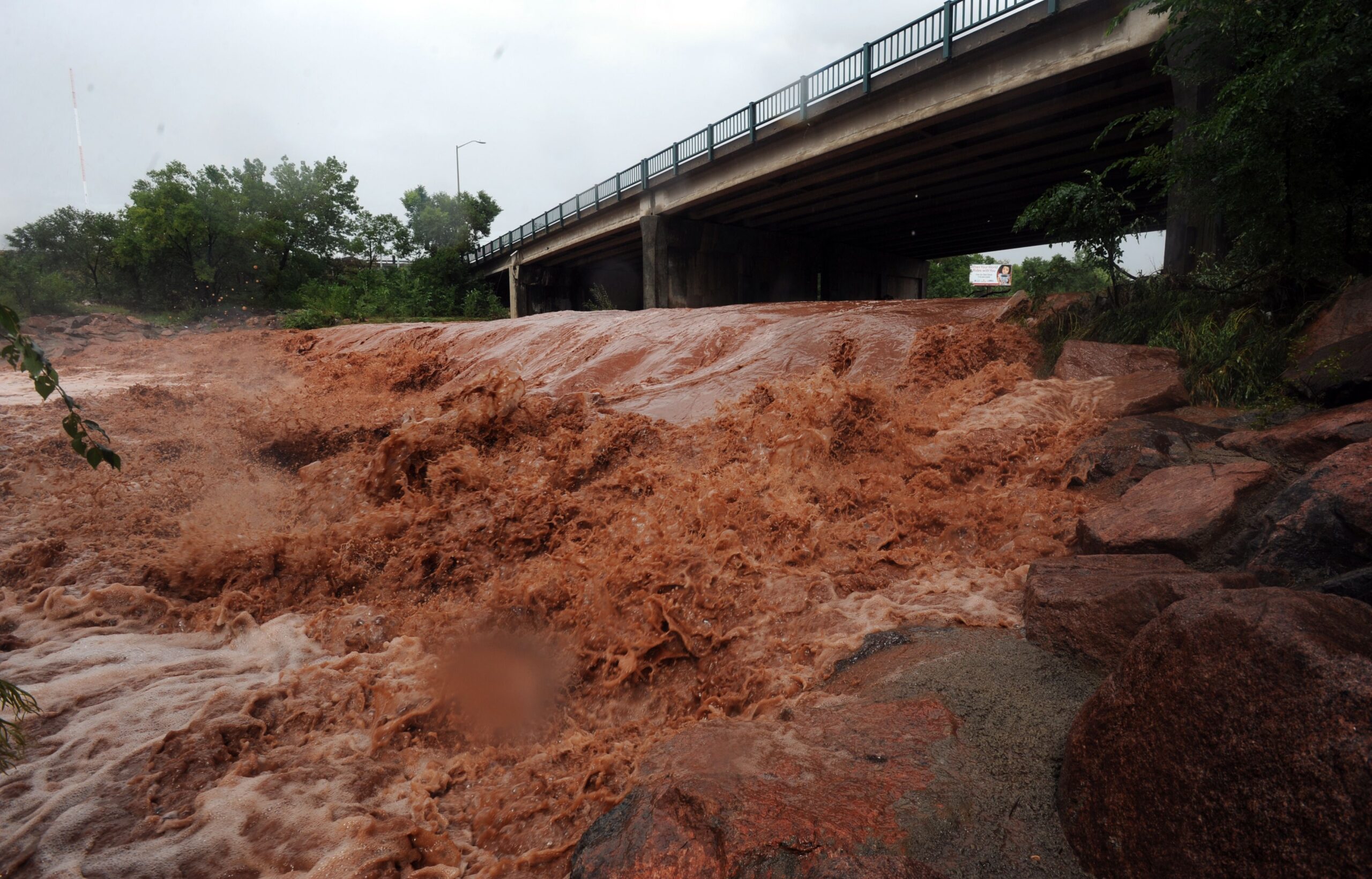
Editor’s note: The $50 million allotment that started the Fountain Creek Watershed District in 2009 offset impacts to the creek from the Southern Delivery System, a regional water project that moves water north from the Pueblo Reservoir.
A special district that has been managing conservation projects on Fountain Creek for nearly two decades is pushing for a new revenue stream to continue its work.
The Fountain Creek Watershed District presented the plan at its first-ever summit last week, telling over a hundred local stakeholders how it plans to continue functioning after a $50 million funding pool to offset effects from a water pipeline has dwindled to less than $10 million.
“We’ve been doing a lot of good project work, but without new funding, our hands are tied,” said District Director Alli Schuch.
The district is pursuing government approval to start selling environmental “credits” to developers whose projects would impact protected aspects of the creek’s watershed, which covers more than 900 square miles between El Paso and Pueblo counties.
Called an in lieu fee, the credits are a way for developers to meet federal and state regulations that require developers to mitigate and offset harm recognized under laws like the Clean Water Act, the Endangered Species Act and Regulation 87, a state statute that limits “dredge and fill” excavation activity.
If the intended project cannot prevent harm to the watershed or recreate what’s been lost, then developers can pay for an equivalent or greater amount of conservation projects in “credits” to an entity that conducts them.
“They can simply write a check and walk away,” said Lucy Harrington, a senior regulatory specialist and project manager with GEI Consultants who presented at the summit.
While the option has been available to builders in the Pikes Peak region for about five years, there is not currently an organization within the Fountain Creek watershed that can take credits, said Harrington.
Schuch said credits exist in places like Trinidad and around Lake Meredith in Crowley County, but not in the Pikes Peak region where the local watershed effects are felt.
“It’s not how it should be,” she said.
Schuch said that the Fountain Creek Watershed District would aim to start selling credits by this fall, pending approval. They would then have three years to amass private funding before government deadlines to start construction on mitigation projects.
She said the idea would be to pool funding into big projects that impact the watershed, rather than smaller mitigation efforts for each development’s credits.
The $50 million allotment that started the district in 2009 offset impacts to the creek from the Southern Delivery System, water infrastructure installed by Colorado Springs Utilities that puts strain on the watershed. That money had several requirements on its use, including that all projects needed to have a substantial benefit on the southern half of the waterway in Pueblo County.
The money was also confined to new projects, not ongoing maintenance that Schuch said is essential.
With the in lieu fee system, the district could consider projects along the breadth of the watershed, including in northern communities nearer to headwaters like Monument, Green Mountain Falls and Manitou Springs.
Funding decisions within the district are decided by a board made up of primarily local government officials in El Paso and Pueblo counties. Schuch said a subcommittee was currently in charge of setting up the in lieu fee program, including the decision on how much to charge and how to prioritize projects.
She said the breadth of the waterway had about $1 billion in possible projects to undertake. The district’s previous efforts have been focused on stopping major erosion and sediment loss from the city of Fountain south.
“We’re very nimble and efficient,” she said.


Federal judge blocks USDA ‘pilot project’ affecting Colorado food assistance
Michael Karlik
michael.karlik@coloradopolitics.com
Updated 41 minutes ago
A federal judge blocked the U.S. Department of Agriculture on Wednesday from proceeding further with a “pilot project” that would require five Colorado counties to rapidly recertify more than 100,000 households for food assistance. In a brief ruling from the...

Colorado’s Democratic delegation calls for Noem’s removal, ICE overhaul
Ernest Luning
ernest.luning@coloradopolitics.com
Updated 10 minutes ago
The Democratic members of Colorado’s congressional delegation on Tuesday called for Department of Homeland Security Secretary Kristi Noem to resign or be impeached in the wake of the second fatal shooting by federal immigration agents in Minnesota this month amid...

Lawsuit filed against Christian-focused charitable fund in Colorado Springs with Tebow connection
DEBBIE KELLEY
debbie-kelley@coloradopolitics.com
Updated 2 hours ago
Editor’s note: This story has been updated with additional information about damages sought in the lawsuit. It’s likely that Gordon Peterson would not only be turning over in his grave, if that were possible, but also tsking angrily and oozing...

Colorado’s lack of snow pack hurting outdoor industry; could spell drought conditions this summer
Kyla Pearce
kyla.pearce@gazette.com
Updated 3 hours ago
A snowy weekend forecast in January was a relief to skiers, hydrologists, fire officials and ski resort staff in Colorado as the state continues to see record high temperatures and record low snowfall. A USDA map showed the average statewide...

Colorado lawmakers hear about increased judicial discipline complaints, fallout from Missy Woods misconduct
Michael Karlik
michael.karlik@coloradopolitics.com
Updated 4 hours ago
Members of the Colorado legislature’s judiciary committees heard about a large increase in complaints against judges and additional forensic misconduct that has come to light, during three days of oversight hearings last week. Leaders of several judicial-related agencies appeared between...

Federal judge warns DOJ against raising repeatedly rejected arguments in immigration detention cases
Michael Karlik
michael.karlik@coloradopolitics.com
Updated 4 hours ago
A federal judge in Colorado warned the U.S. Department of Justice on Monday against raising arguments that she and other judges have repeatedly rejected in cases challenging the lawfulness of immigration detentions. In a Jan. 26 order finding the government...

Rebuilding Colorado’s talent pipeline system | PODIUM
Colorado Politics
colorado-politics@coloradopolitics.com
Updated 15 hours ago
By Randy Johnson The rule of thumb in designing and building anything is form follows function — you always build for a clear and specific purpose. This principle holds true for structures, vehicles, applications, seemingly anything, other than many educational...

Will Denver see stepped-up immigration enforcement next? | ANALYSIS
Nico Brambila
nico.brambila@denvergazette.com
Updated 16 hours ago
Two years ago — as Denver grappled with a sharp influx of immigrants, many who arrived in the city after illegally crossing America’s borders — Mayor Mike Johnston joined the mayors of Chicago and New York City in criticizing Texas...
$200M in federal funds to be deployed in Denver area for heat pumps aimed at reducing emissions
Sage Kelley
sage.kelley@denvergazette.com
Updated 3 hours ago
The Denver Regional Council of Governments (DRCOG) has officially launched a $200 million program to help reduce carbon emissions with heat pumps. The regional organization announced its new initiative, “Power Ahead Colorado,” which also includes partnerships with the Colorado Energy...

Holocaust survivors, DU officials announce endowed antisemitism professorship
Michael Braithwaite
michael.braithwaite@gazette.com
Updated 20 hours ago
Eighty-one years after Auschwitz’s liberation, the University of Denver announced a new endowed role to help keep the Holocaust’s memory alive. In the space west of the Capitol’s rotunda, and under the gaze of portraits of former state leaders on...