

Marijuana reclassification order sparks mixed reaction in Colorado
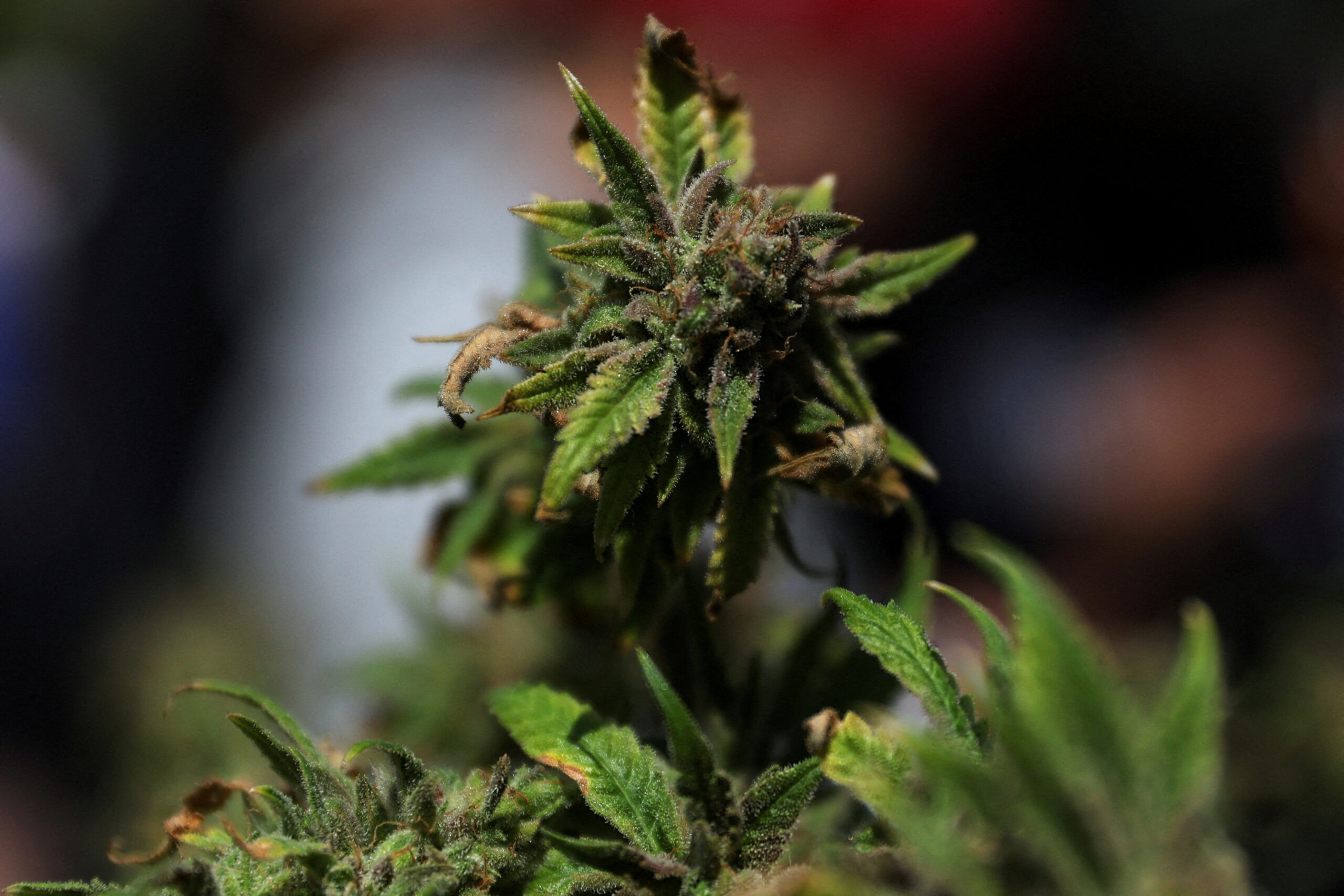
President Donald Trump on Thursday signed an order directing the loosening of federal regulations on marijuana, sparking a mixed reaction in Colorado, where policymakers and advocacy groups praised and criticized the decision.
Trump’s order instructs the attorney general to quickly move ahead with reclassifying marijuana, which has long been legal in Colorado, though it remains a banned substance at the federal level.
Once the reclassification is completed, the psychoactive plant would be listed alongside common painkillers, ketamine and testosterone as a less dangerous drug.
Such a decision would represent one of the most significant federal changes to marijuana policy in decades. It could reshape the cannabis industry, unlock billions in research funding and open doors long closed to banks and investors.
The Senate’s Democratic leader, Chuck Schumer, welcomed the move, while dozens of lawmakers in Trump’s own Republican Party blasted the decision.
In Colorado, the order invited celebration and lamentation.
Colorado Leads, an organization that represents the marijuana industry, celebrated the order and its implications for marijuana businesses.
“While rescheduling alone will not resolve all the challenges created by conflicting state and federal laws, it is an important development that is long overdue,” said CEO Chuck Smith. “Reclassifying cannabis under Schedule III will alleviate the unfair federal tax burden and lack of access to banking and financial services that cannabis businesses have shouldered for years.”
He added: “State-legal cannabis businesses that create jobs, pay taxes, and provide adults and medical patients with safe and legal access to cannabis deserve to be treated fairly, and this would be a big step in that direction. When it comes to addressing the wide range of criminal justice implications associated with prohibition, Schedule III does not go nearly far enough, but it will help pave the way for those important reforms.”
One Chance to Grow Up, an organization that raises awareness about marijuana’s harm to children, said it is “disappointed” by the executive order, calling it “dangerous.”
“Across the country, high-potency marijuana products are proliferating, even as research continues to demonstrate harm to the developing brain,” said policy director Diane Carlson. “Reclassifying marijuana at any potency or amount wrongly suggests that it carries a lower risk of misuse and has accepted medical value, claims the science debunks.”
Carlson said that, by lowering marijuana’s federal classification, the government “sends a dangerous signal to young people that today’s marijuana is safe.”
“In reality, today’s products are riskier than ever, and the long-term consequences of broader access remain highly problematic. These industry benefits are being granted without first establishing potency caps, serving-size limits, or youth protections,” she said, adding that the federal reclassification does not eliminate the need for stronger safeguards and safety measures to protect children.

Trump’s order would not fully legalize the drug at the federal level, which means it remains subject to a patchwork of local laws across the country, including in Colorado.
“We have people begging for me to do this, people that are in great pain for decades,” Trump told reporters at the White House. But the president also said that controlled substances are risky and that experimentation is of no interest to him.
“I don’t want it, OK,” he said. “I’m not gonna be taking it. But a lot of people do want it. A lot of people need it.”
Senior administration officials said the primary purpose of the order is to increase medical research of marijuana and related products to understand their risks and potential for treatment. The Centers for Medicare and Medicaid Services plans to allow some beneficiaries to use hemp-derived CBD products as soon as April.
Dozens of Republicans in the U.S. House and Senate wrote to Trump on Thursday, pleading with him not to sign the order.
“Reclassifying marijuana as a Schedule III drug will send the wrong message to America’s children, enable drug cartels, and make our roads more dangerous,” the legislators said.
Marijuana is the most widely used illicit drug in the world and the United States. Nearly one in five U.S. residents use it each year, according to the U.S. Centers for Disease Control and Prevention. Millions of Americans have been arrested for possession of the drug, even as growing businesses listed on stock exchanges sell cannabis-related products.
Prosecutors, police and judges could take a lighter touch toward criminal prosecutions in response to growing acceptance.
The Drug Enforcement Administration has to review the recommendation to list marijuana as a Schedule III drug under the U.S. Controlled Substances Act and will decide on the reclassification.
Under the act, marijuana is listed as a Schedule I substance like heroin, ecstasy and peyote. That classification indicates it has a high potential for abuse and no currently accepted medical use. Schedule III drugs are seen as less addictive and as carrying legitimate medical uses.
Even under a reclassification, marijuana would still be treated as a controlled substance on a federal level and its use subject to tight restrictions and criminal penalties.
A patchwork of laws exists at the local level, from states where use and possession are fully legal to states where they are fully illegal. Since California first allowed medicinal use of marijuana in 1996, a 30-year trend has moved toward loosening regulation. Colorado legalized recreational marijuana in 2012.
Stocks of cannabis-related companies gained on the news from Washington. U.S.-listed shares of Tilray, Aurora Cannabis, SNDL and Canopy Growth gained between 6% and 12% in afternoon trading.
Funding remains one of the biggest challenges for cannabis producers, as federal restrictions keep most banks and institutional investors out of the sector, forcing pot producers to turn to costly loans or alternative lenders. A black market also thrives because of the high costs of doing business.
“This shift marks an important step toward greater regulatory clarity and institutional acceptance of cannabis worldwide,” said a spokesperson for Organigram Global, a cannabis company.
Most Americans tell pollsters they favor full legalization. During his 2021-2025 term in office, Democratic former President Joe Biden issued a blanket pardon for most federal marijuana possession charges and kickstarted the review of marijuana’s status.
After that review, the Department of Health and Human Services recommended moving marijuana to Schedule III classification.
Reuters contributed to this article.


US House passes Colorado Rep. Lauren Boebert’s bill to remove gray wolves from endangered species list
Marianne Goodland
marianne.goodland@coloradopolitics.com
Updated 2 hours ago
A bill sponsored by U.S. Rep. Lauren Boebert of Colorado to delist the gray wolf from federal protections for endangered species cleared the U.S. House late on Thursday, setting up a fight in the U.S. Senate over a measure supporters...

Lawmakers from Colorado, 6 other states condemn federal immigration tactics
Marissa Ventrelli
marissa.ventrelli@coloradopolitics.com
Updated 3 hours ago
A pair of Colorado state lawmakers joined elected officials from six other states at a media briefing Thursday to discuss their responses to federal immigration crackdowns. The meeting, hosted by State Futures, featured a dozen Democratic lawmakers from states including...

Colorado campaign debt collection efforts aren’t much of an effort
David Migoya
david.migoya@gazette.com
Updated 4 hours ago
It was only weeks after the U.S. military in September 2011 repealed its “don’t ask, don’t tell” policy barring openly gay men and women from serving in the armed forces that Army veteran Brian Carroll announced his candidacy for a...

Colorado campaign finance penalties ‘a runaway train without an off-ramp’
David Migoya
david.migoya@gazette.com
Updated 3 hours ago
Each day, Mike Stapleton wakes up owing the state of Colorado another $1,550. By the end of each week, Stapleton’s debt for not filing nearly three dozen campaign finance reports dating to April 2018 will have grown by nearly $11,000....

Confining pro-charter conditions destroying Colorado public schools | NOONAN
Paula Noonan
paula-noonan@coloradopolitics.com
Updated 19 hours ago
Our public school system is injured by a thousand cuts. At year end, our most dear institutions are confronted with a lawsuit over book banning, a lawsuit over termination of a middle-school dean defending books, districts threatening educators with termination,...

Trump administration moves to shutter national climate lab in Colorado
Ernest Luning
ernest.luning@coloradopolitics.com
Updated 10 hours ago
Democrats slam decision as ‘deeply dangerous’ as White House calls facility a source of ‘climate alarmism’ The Trump administration is moving to dismantle one of the world’s leading climate and weather research institutions, citing what a White House official termed...

Pinnacol privatization plan gets cool reception from Colorado legislators
Marianne Goodland
marianne.goodland@coloradopolitics.com
Updated 1 day ago
Should Colorado allow Pinnacol Assurance, the quasi-governmental workers’ compensation company, to go private? The proposal, expected to be on the agenda for the 2026 state legislative session, got its first review on Wednesday from a mostly skeptical Joint Budget Committee....

Colorado board clarifies certification rules for autism behavior technicians
Marissa Ventrelli
marissa.ventrelli@coloradopolitics.com
Updated 1 day ago
A Colorado board has clarified new rules for professionals working with children on the autism spectrum, following worries by some that hundreds of families might lose access to services as a result of a regulatory change. Over the summer, the...

U.S. House votes along party lines to begin debate on delisting gray wolves
Marianne Goodland
marianne.goodland@coloradopolitics.com
Updated 24 hours ago
The U.S. House on Tuesday voted along party lines on a resolution that will start the process for approval of legislation to delist gray wolves from the Endangered Species Act. The resolution sets up the rules for debate for six...

Regular Coloradans went up against our state’s utility giant— and won | PODIUM
Colorado Politics
colorado-politics@coloradopolitics.com
Updated 2 days ago
By Tricia Canonico Last week, democracy won in Colorado — the kind of feel-good democracy where a bunch of regular people show up and make our voices heard. The Colorado Public Utilities Commission’s (PUC) listened to the will of the...
PREV
PREVIOUS

Trump signs executive order that could reclassify marijuana as a less dangerous drug
WASHINGTON (AP) — President Donald Trump signed an executive order Thursday that could reclassify marijuana as a less dangerous drug and open new avenues for medical research, a major shift in federal drug policy that inches closer to what many states have done. The switch would move marijuana away from its current classification as a […]

Lawmakers from Colorado, 6 other states condemn federal immigration tactics
A pair of Colorado state lawmakers joined elected officials from six other states at a media briefing Thursday to discuss their responses to federal immigration crackdowns. The meeting, hosted by State Futures, featured a dozen Democratic lawmakers from states including New York, Illinois, Colorado, and California, each of whom discussed current and future policies in […]