

Aurora council returns to full public comment allowance, hears demands for police reform
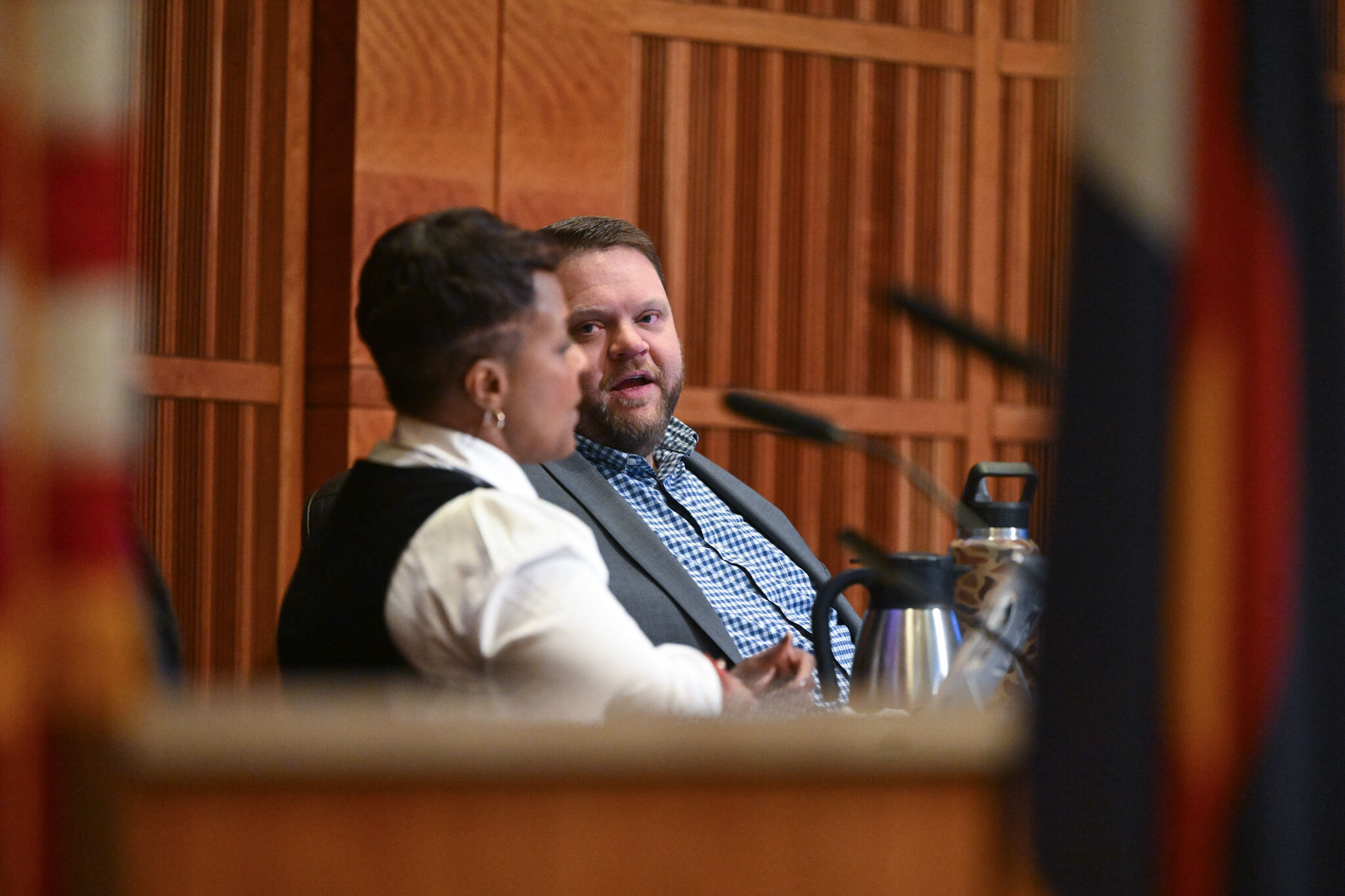
Residents of Aurora used a full hour of the reinstated public comment period during Monday night’s meeting, taking advantage of the restored time to talk about a need for police reform and for stronger oversight of tobacco products ending up in the hands of kids.
Residents also talked about hope for decorum restored to the council, zoning issues and other city business. Many expressed relief and gratitude to be able to speak to their councilmembers again after more than a year of stifled public comment.
The Aurora City Council held its first meeting under new rules for public comment Monday night, giving the public one hour at the beginning of the meeting and one hour at the end to speak to councilmembers.
Members of the public used the entire first hour to speak to the council, and two people spoke in the session at the end.
Under the old council, there was a separate public comment session before the meeting in which each speaker was limited to two minutes.
On Monday, public comment was again part of the regular meeting at both the beginning and the end and each speaker got three minutes.
The rule change was the first order of business under Aurora’s new council in the most recent meeting, returning public comment to how it was more than a year ago.
Aurora’s previous council went back and forth with how to deal with activists protesting the shooting of Kilyn Lewis, who was killed by an Aurora police officer last year during an operation to arrest him on a warrant for attempted first-degree murder. Lewis was not armed.
The protesters have attended every council meeting for more than a year, often speaking over time limits and interrupting meetings.
Monday night’s meeting was the first in which the new rules applied, and every speaker followed the rules, sticking to their designated time.
Many of the community members spoke about Lewis and what they said is a need for police reform in the city.
Cassandra Heil with the Denver Aurora Community Action Committee and other members of the committee demanded the resignation of Police Chief Todd Chamberlain.
They also demanded that the city form a public oversight committee.
“Many of you on this new council ran on explicit platforms of police reform and transparency,” Heil said. “Tonight, we demand you begin this work by correcting a grave injustice enacted by your predecessors — the appointment of Police Chief Todd Chamberlain.”
Also Monday night, the council heard updates on the next steps for the Colfax Downtown Development Authority and decided what the makeup of the oversight board will be.
Councilmembers in July unanimously approved taking the creation of a DDA to revitalize the Colfax corridor to voters.
Voters overwhelmingly approved the project through two questions on a special ballot that went out to people who live and work in the designated area. The first question asked voters if they approve of the creation of a DDA for the area, and 133 people, 79%, voted “yes.”
A second question asked voters if they authorize the DDA to use tax increment financing, and 141 voters, 83%, voted “yes.”
With the passage of both ballot measures comes the creation of a DDA, which is a governmental entity separate from the city and defined by state statute. It is led by a board appointed by the mayor and confirmed by a majority of the city council.
Monday night, a Progressive Urban Management Associates leader and city staff member recommended Aurora councilmembers align the board appointment process with that of the city’s boards and commissions.
Staff also recommended the council appoint seven members of the total 11 allowed members to the board to start.
This would leave space for members of the Community Development Corporation to be seated on the board, since the DDA and CDC will work in tandem.
A community development corporation is a nonprofit organization created to support and revitalize an area.
The combination of a downtown development authority and a CDC allows for philanthropic support, while using the DDA as a “primary driver,” PUMA leaders told councilmembers earlier this year.
A board will be appointed in the first quarter of 2026, followed by an organizational meeting to adopt bylaws and procedures, the finalization of a plan of development for council approval and a budget and operating plan by the end of next year.
According to officials, DDA projects are anticipated to start late next year.

Primary rival sues to prevent Democrat Eileen Laubacher from going through assembly in Colorado’s 4th CD
Ernest Luning
ernest.luning@coloradopolitics.com
Updated 4 hours ago
Democratic congressional candidate Trish Calvarese on Monday asked a judge to prevent one of her primary rivals, Eileen Laubacher, from participating in the caucus and assembly process to seek the nomination to challenge Republican U.S. Rep. Lauren Boebert in Colorado’s...
Colorado lawmakers tackle legislation on sexual assault
Jenny Deam
jenny-deam@coloradopolitics.com
Updated 4 hours ago
A panel of Colorado lawmakers on Monday unanimously approved a bill that supporters say will offer protections and support to victims of domestic violence, stalking, sex trafficking and sexual assault, including mandatory training for law enforcement on trauma. The measure,...
Colorado Supreme Court clarifies restraining order violations can always support burglary charge
Michael Karlik
michael.karlik@coloradopolitics.com
Updated 7 hours ago
The Colorado Supreme Court’s majority ruled on Monday that a violation of a restraining order can also serve as a basis for finding a defendant guilty of burglary. Under state law, a person commits second-degree burglary by unlawfully entering or...

Big week ahead for major legislation to address housing affordability woes
Zach Halaschak, Washington Examiner
zach.halaschak.washington.examiner@gazetteedit.wpenginepowered.com
Updated 9 hours ago
The Senate is pushing ahead with a bipartisan bill to improve housing affordability, teeing up a critical week for housing on Capitol Hill and raising major questions about what provisions will be included. Senate Majority Leader John Thune (R-SD) filed cloture on legislation from the...

Macron goes nuclear with increases to French warhead arsenal
Timothy Nerozzi, Washington Examiner
timothy.nerozzi.washington.examiner@gazetteedit.wpenginepowered.com
Updated 10 hours ago
French President Emmanuel Macron is channeling the atomic spirit of his predecessor Charles de Gaulle with orders for the French military to “increase the number of nuclear warheads” in the nation’s arsenal. Macron announced the seismic shift in France’s defensive...

Who has been killed so far during US-Israel mission in Iran?
David Zimmermann and Keely Bastow, Washington Examiner
david.zimmermann.and.keely.bastow.washington.examiner@gazetteedit.wpenginepowered.com
Updated 10 hours ago
There have been numerous casualties on all sides since the joint U.S.-Israel strikes against Iran commenced over the weekend, with more lives expected to be lost as the campaign continues. The Islamic regime’s leadership is currently bearing the brunt of...
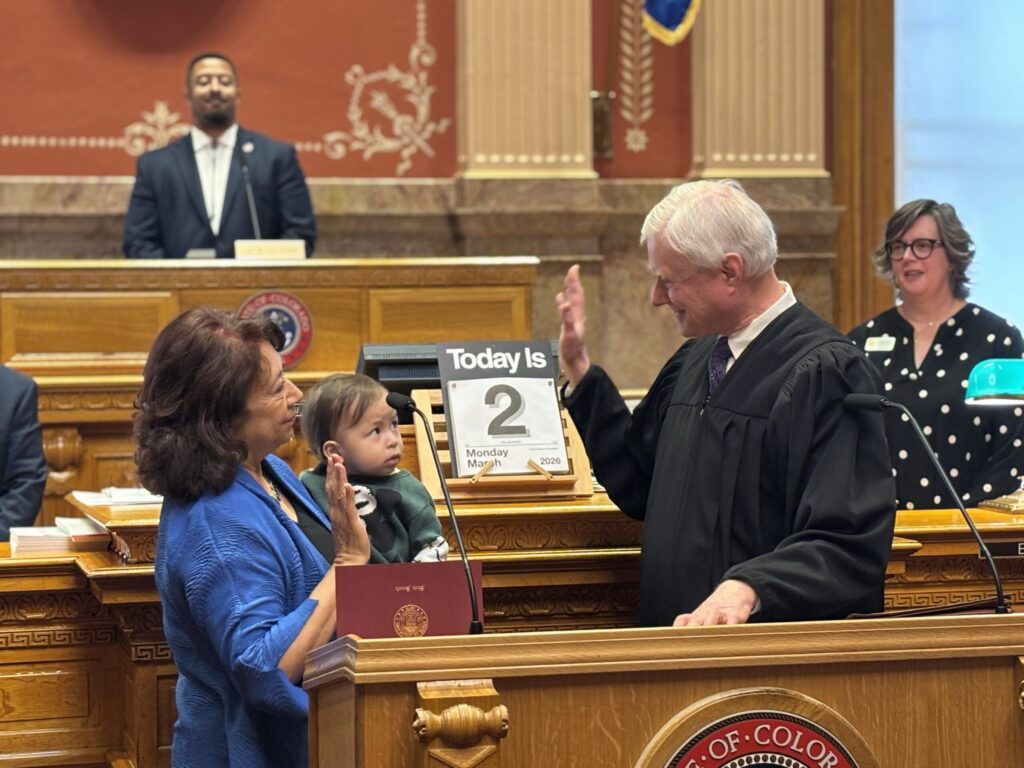
Colorado Senate swears in Adrienne Benavidez after district vacancy win
Marianne Goodland
marianne.goodland@coloradopolitics.com
Updated 10 hours ago
Sen. Adrienne Benavidez, a Democrat from Adams County, was sworn in Monday to the Colorado Senate, just four days after winning a vacancy election in District 21. She was sworn in by Colorado Court of Appeals Justice Lino S. Lipinsky...

10th Circuit judge creates vacancy, district court gets new chief judge | COURT CRAWL
Michael Karlik
michael.karlik@coloradopolitics.com
Updated 11 hours ago
Welcome to Court Crawl, Colorado Politics’ roundup of news from the third branch of government. A longtime member of the Denver-based federal appeals court will give the president a vacancy to fill, plus Colorado’s federal trial court will see a...
War in the Mideast widens as Trump says strikes on Iran could last several weeks
Jon Gambrell
jon.gambrell@associatedpress.com
Updated 12 hours ago
DUBAI, United Arab Emirates (AP) — The war in the Middle East spiraled further Monday as Israel and the United States pounded Iran in a campaign that U.S. President Donald Trump said would likely take several weeks. Tehran and its...

Denver mayor says his commute time tripled following ‘road diet’ change
Mark Samuelson Special to The Denver Gazette
mark.samuelson@denvergazette.com
Updated 9 hours ago
Mayor Mike Johnston is pushing back sharply against the claim by Denver councilmembers and bike activists that the city succumbed to lobbying pressure in revising a “road diet” plan for East Alameda Avenue, while noting that his own commute time...