

Colorado Supreme Court to hear case on ballot measure disclosure requirements

The Colorado Supreme Court has agreed to hear a case challenging whether the state can require ballot measure committees to disclose the names of their registered agents in election communications.
The case stems from a complaint filed during the 2020 election against the ballot issue committee No on EE. The committee, formed in opposition to a ballot measure seeking to increase taxes on nicotine products and impose a new tax on vaping products, registered with the Secretary of State and provided the name of its registered agent, as required by law.
However, it did not include the agent’s name in its advertisements. According to No on EE, it immediately made corrections following the complaint.
Deputy Secretary of State Andrew Kline imposed a $30,000 fine on the committee for violating state election law, which was upheld in district court.
Last August, the Court of Appeals ruled that the disclosure requirement violated the First Amendment. The state appealed that decision, and the case is now headed to the state Supreme Court.
Secretary of State Jena Griswold released a statement following the Court of Appeals ruling, saying Coloradans “deserve to know who is trying to sway their vote” and that she hopes to see the decision overturned.
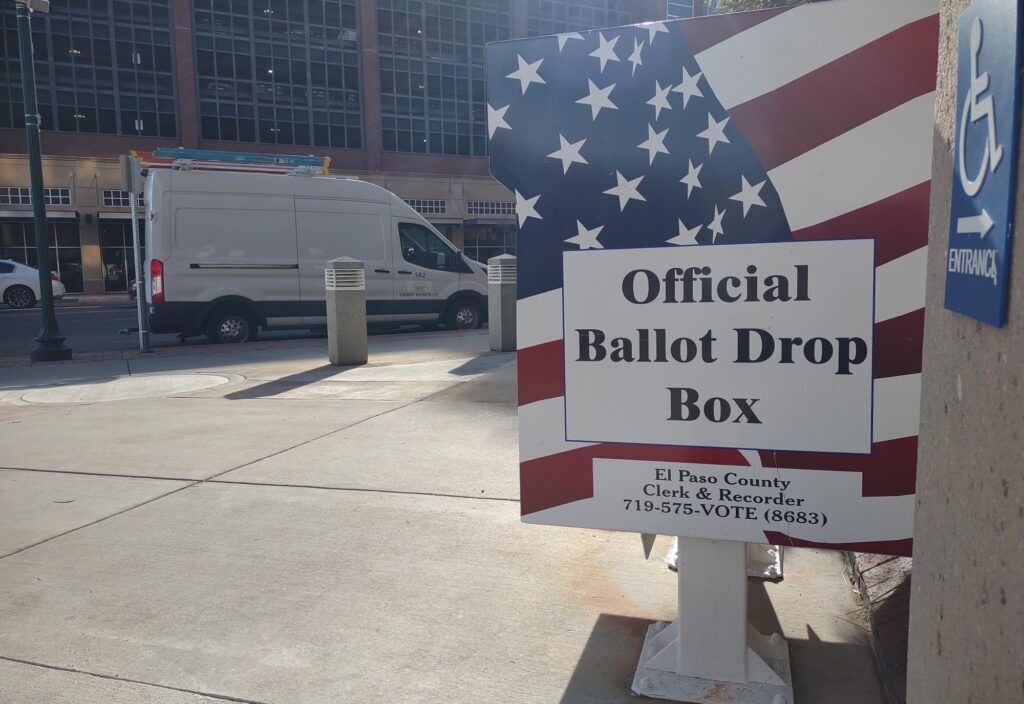
The Institute for Free Speech, the organization representing No on EE, argued that the requirement fails constitutional scrutiny because the “burden” of including the name of a registered agent on every piece of election-related communication “outweighs any benefit,” as registered agents are “merely designated recipients for legal paperwork” and do not tell voters anything about who supports or opposes a measure.
“The requirement exemplifies how government experimentation with disclosure and disclaimer mandates can become ever more disconnected from any legitimate governmental interest while imposing significant compliance costs and legal risks,” the group said. “As political communications increasingly occur through character-limited formats like social media, forcing inclusion of irrelevant information becomes particularly burdensome.”
Shad Murib, the chair of the Colorado Democratic Party, said also disagreed with the appeals court ruling, saying more information for the “public should be our North Star in our politics.”
“The public deserves transparency in elections, and this decision muddies the water to benefit big special interests on both sides of the aisle,” he said. “There is simply too much undisclosed money in politics, and I look forward to continuing to work with lawmakers and advocates on ways to improve transparency for Coloradans.”
Michael Karlik contributed to this story.


Colorado board delays vote on banning soda purchases with SNAP benefits
Marissa Ventrelli
marissa.ventrelli@coloradopolitics.com
Updated 37 minutes ago
The Colorado Board of Human Services voted to delay its decision on whether to allow Supplemental Nutrition Assistance Program, or SNAP, recipients to use benefits to buy soft drinks. Under the ‘Healthy Choice Waiver,’ SNAP recipients would be prohibited from...

Colorado’s GOP at its best — and worst | Dick Wadhams
Dick Wadhams
dick-wadhams@coloradopolitics.com
Updated 2 days ago
By Dick Wadhams Colorado Republicans are fighting to be relevant in the face of gross mismanagement by Democrats who totally control state government. While the Colorado Republican Party is mired in controversy, several Republican elected officials and candidates represent the...

Someone’s lying in latest activist embarrassment for Polis’ CPW Commission | Rachel Gabel
Rachel Gabel
rachel-gabel@coloradopolitics.com
Updated 2 days ago
Either Samantha Miller is lying, or Gov. Jared Polis is. If Miller is lying, she is so secure in the red carpet rolled out for animal activists by this administration she is willing to put words in the governor’s mouth....

Ask Secretary of State candidates if they’re in favor of independent election audits | Jon Caldara
Jon Caldara
jon-caldara@coloradopolitics.com
Updated 4 days ago
This part will disappoint angry people on Twitter: Relax. Put the pitchforks down. I am not relitigating the 2020 election or mail ballots or even Tina Peters. But I am saying people don’t trust elections like they used to. And...

Redistricting plan to give Colorado Dems 7 members of the U.S. House will split El Paso County | Bob Loevy
Bob Loevy
bob-loevy@coloradopolitics.com
Updated 2 days ago
A proposed redistricting plan, which would give Colorado seven Democratic members of the U.S. House of Representatives and only one Republican, will split El Paso County into two parts and thereby weaken the county’s influence in Congress. El Paso County,...

Can deliberation save democracy? | Vince Bzdek
Vince Bzdek
vince.bzdek@gazette.com
Updated 54 minutes ago
In September 2019, 523 Americans traveled to Dallas for an experiment called “America in One Room.” The gathering was designed to test a theory: Could representative citizens deliberate productively even in an era of intense polarization? The event focused on...
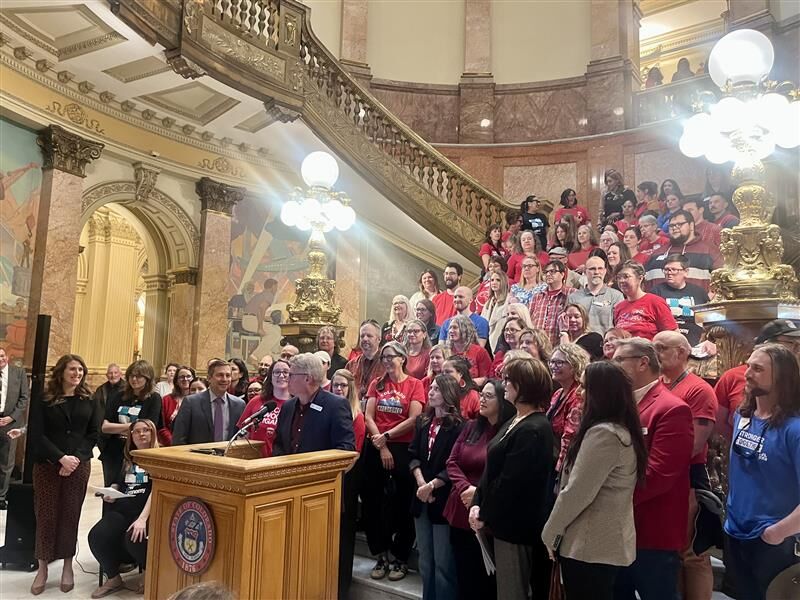
Another TABOR fight: Democrats plan to redirect residents’ refunds to K-12 spending
Marianne Goodland
marianne.goodland@coloradopolitics.com
Updated 2 days ago
Colorado voters could decide this fall whether billions of dollars that would otherwise be returned as refunds under the Taxpayer’s Bill of Rights should instead go to public schools under a ballot measure unveiled Thursday by Democrats. Supporters say the...

Colorado House committee advances bills regulating AI in therapy, insurance decisions
Marissa Ventrelli
marissa.ventrelli@coloradopolitics.com
Updated 3 days ago
Colorado lawmakers are moving to place guardrails on the growing use of artificial intelligence in mental health care and insurance decisions. The House Health and Human Services Committee on Thursday approved two bills that would limit how therapists and insurers...

Colorado Democrats, Republicans fight over ballot fiscal information
Marissa Ventrelli
marissa.ventrelli@coloradopolitics.com
Updated 3 days ago
Republicans and Democrats clashed anew over legislation that would require identifying which programs would see a funding reduction if a ballot measure passed, with the former saying it’s yet another way for the government to control the campaign narrative and...

Democrat Dwayne Romero jumps in primary to challenge Republican Jeff Hurd in Colorado’s 3rd CD
Ernest Luning
ernest.luning@coloradopolitics.com
Updated 3 days ago
The Democrat who has been running for nearly a year to unseat Republican U.S. Rep. Jeff Hurd in Colorado’s 3rd Congressional District got some company in the primary this week. Dwayne Romero, a Snowmass Village business owner and decorated Army...
PREV
PREVIOUS
Divided 10th Circuit orders pretrial release of defendant facing drug charges
The Denver-based federal appeals court overturned a judge’s order keeping a defendant in custody pending trial on Friday, ruling 2-1 that she was entitled to release under the law. Erika Esmeralda Garcia stands accused of two charges related to the possession and distribution of fentanyl, plus a charge for conspiracy to commit money laundering. Previously, […]

Flags lowered, colors raised: Colorado leaders and friends celebrate Sen. Faith Winter's life
It was the colors that stood out as hundreds braved the cold on Friday to celebrate the life of Sen. Faith Winter, who died in a two-car crash on Nov. 26. Flags at the state Capitol flew at half-staff at the order of Gov. Jared Polis. The colors — a tribute to Winter, 45, who […]