

Once a step ahead, Colorado’s economy cools, burdened by rising costs and regulations | FISCAL ROCKIES
Editor’s Note: Once among the nation’s fastest-growing economies, Colorado today confronts mounting challenges that threaten its momentum. This series reveals how a state once defined by prosperity is navigating economic cliffs and ridges. We explore the impact of increased regulations, tariffs, shifting tax policies, the high cost of living and widening urban–rural divides have on businesses, workers, and communities. The series also highlights the push to leverage Colorado’s outdoor economy — one of its most valuable assets — for renewed growth, while working to attract industries like quantum and aerospace while capitalizing on unique industries that call Colorado home.
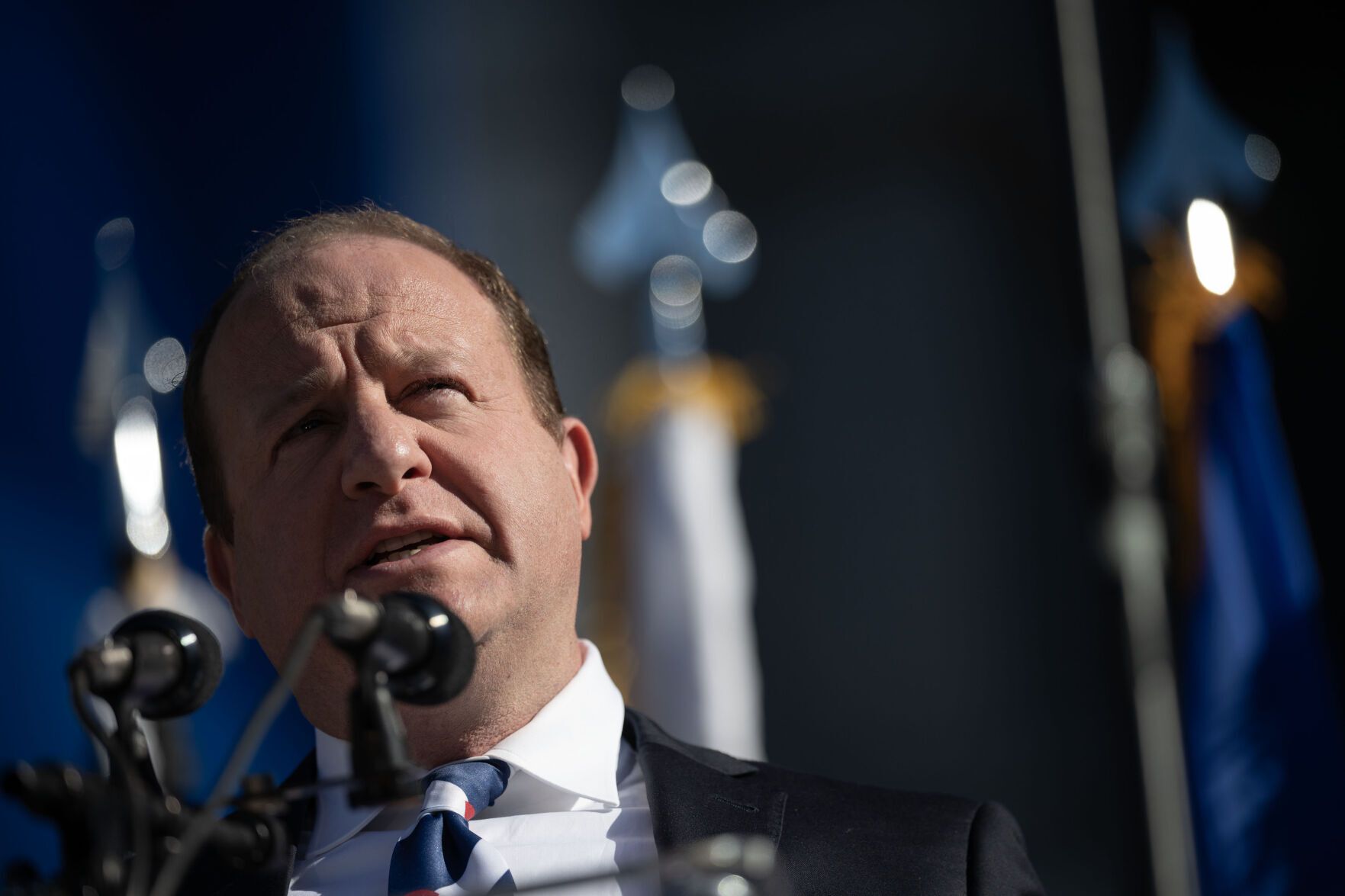
After taking office seven years ago, Gov. Jared Polis set an immediate goal for the Colorado economy: stay one step ahead. Achieving that goal, however, has been met with plenty of turbulence for the two-term governor.
An entrepreneur-turned-politician, Polis has steered the state through a divided political era — bookended by the presidencies of Donald Trump and Joe Biden — and by actions that governments took during the global pandemic that left lasting scars on businesses, workers, and the state budget.
Warning lights are flashing more at home in Colorado these days, as a sharp rise in the cost of living, combined with a legislature eager to regulate industries, is beginning to stall the state’s economic engine.
Staying a step ahead
In explaining what he means by a “step ahead,” Polis pointed to a standard measure of economic health: the Gross Domestic Product. A comprehensive indicator of a country’s financial health, GDP is calculated by summing consumption, investment, government spending, and net exports.
“What we seek to do is outperform,” Polis said. “So, that means if there’s a recession, and let’s say negative one GDP, while it’s devastating, we would hope to have negative 0.5% GDP. We’d want a less severe recession. Likewise, if there’s growth — if there’s 3 or 4% GDP growth, we’d love to have half a percent more. Nationally, there’s slow growth, and in Colorado, we’re doing a little better.”
At the start of Polis’ term in 2018, Colorado’s GDP stood at 3.5%, while the national average was 2.5%.
One of the best years during Polis’ tenure occurred in 2021, when Colorado’s GDP grew by nearly 5.7% – from a 1.5% decline in 2020 due to the pandemic.
Plenty of factors contributed to that high, including Colorado’s growing population and developments in the technology industries, notably quantum, and aerospace. The state also capitalized on the state’s vast outdoor amenities and overcame pandemic-related challenges.
That success has since sputtered, with 2024 showing signs of stress: GDP only increased by 1.9%, ranking 39th among the states. This slowdown is a remarkable downward trajectory for a state that had been one of the top in the country for GDP growth between 2008 and 2023.
As issues mount, the state’s reputation is on the line.
Raymond H. Gonzales, president of the Metro Denver Economic Development Corporation, said his job is to sell Colorado to out-of-state companies looking to relocate or expand.
Colorado has a lot going for it, Gonzales said, including its highly educated workforce and good quality of life. But adding more and more regulations on businesses and the high cost of living have given some “site selectors” reason to pause, he said.
Cost of living crashes the party
Colorado’s ever-increasing cost of living is having a direct impact on the state’s economic health – the governor knows it and so do business leaders, who have been sounding the alarm.
A rising cost of living affects who is moving to the state, workforce growth for businesses, especially in mountain towns, and the state’s reputation among prospective companies and potential residents.
The state’s cost of living is currently 12% above the national average, with California at 36%, and Massachusetts at 31% being higher, according to the Colorado Office of Economic Development & International Trade.
And, based on CNBC’s state business rankings, Colorado is ranked 46th in cost of living. In the Colorado Chamber of Commerce’s 2025 annual business surveys, 73% of companies said the high cost of living is a top concern in attracting and retaining talent.
The high cost of living is also affecting who is moving out of the state. At a time when mobility rates nationwide are low, Colorado’s rates are growing.
Last year, 11% of Americans changed homes, according to U.S. Census data. Colorado, however, is ranked second in the nation for people moving away at 13.5% last year, falling behind only Alaska and Oklahoma, which tied for first at 14%.
Colorado cities seeing the highest mobility rates included the following:
• Boulder at 28.8%
• Grand Junction at 20.8%
• Colorado Springs at 17.4%
• Denver at 16.7%
The Point2Homes study said relocation is driven by several factors, notably housing affordability, milder regional climates and job growth, making some states more of a magnet for movers, including Wyoming and New Hampshire.
According to a 2025 SmartAsset study, Colorado ranks ninth in terms of the salary needed to live comfortably. Currently, a single person in Colorado needs to make around $105,000 annually. For a family of four to live comfortably, the required annual income is $273,728.
For those making minimum wage, experts say a person would have to work at least 77 hours a week to afford a one-bedroom apartment.

Housing affordability is a stalling factor
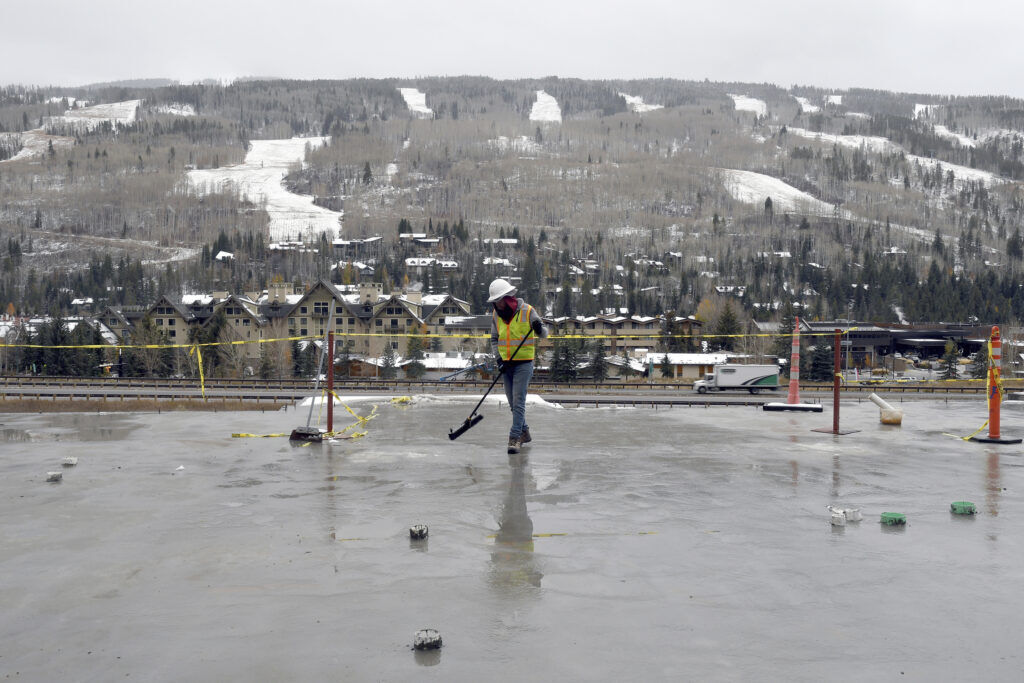
The high cost of living is also driven by the housing crisis, which business leaders and state lawmakers agree is contributing to the economic slowdown. Seeing the problem, Polis pushed the state legislature to act in 2023, 2024, and last year, when policymakers adopted several housing laws meant to spur development. Supporters cheered their passage, saying they would, among other things, cut red tape and open up lots to more housing options. Critics said those changes ignore home rule – the ability of local governments to decide what is best for their communities.
“Yeah, one of the areas where Colorado is less competitive is housing costs,” Polis said. “We’re still at lower housing costs than other markets like New York and California, but they’re much higher than they were, and that’s really one of the reasons we’ve really leaned into housing reforms over the last three years now. Reducing government-imposed barriers to housing and allowing more housing to be built.”
He added: “Housing prices are a function of supply and demand, like anything, and the fact that demand is high is good. People want to live in Colorado. It’s a great place to live, with a good job market and a great quality of life, but when you artificially constrain supply, prices go up – and that’s exactly what happens. So, we said, OK, how do we fix this?”
Polis said new laws to eliminate constraints on condo construction, allow more accessory dwelling units, and push communities to build more multi-family and single-family housing will increase construction and create more supply to offset high costs.
‘Density’ as cure-all?
The approach driving many of the policies out of the state Capitol is called “density.” The reasoning is often encompassed in the “15-minute city” idea — widely quoted in Denver and other cities — envisioning a community where employers, shops, schools, medical care, and recreation all lie within a 15-minute walk, bike or bus ride from where residents live.
Opponents are widely skeptical about “density” as a cure-all, and about rapid transit as a means to enable that. Several have cited a kind of circular logic embedded in the idea, along the lines of “we need more residents to serve buses,” and then “we need more buses to serve residents.” Critics also question the idea that a future expansion of public transportation would allow the concept to succeed.
Supporters, on the other hand, see “density” as sort of a panacea to many of the woes facing Colorado. They argue that it would lead to economic efficiency, as well as lower costs for roads, water systems and transit.
As Colorado imposes a number of regulatory strategies to spur housing development – and is now in court against suburban cities over some of them – builders who work with higher density projects said that the state’s medicine doesn’t treat what ails the market for affordable homes.
“For every $1,000 a house increases in price, 1,300 Coloradans are priced out of the market,” veteran housing executive Randy Carpenter said.
Carpenter, former president of the Home Builders Association of Metro Denver and a former senior executive for two affordable homebuilders, said the factors that drive up home prices often have little to do with the regulatory changes being bickered over by state and local governments.
They notably include the virtual total lack of a housing product that is a route to homeownership in other major cities: the condominium. What has stalled condominium development, many in the industry say, is construction defects litigation.
That’s not to mention bureaucratic red tape, developers add, pointing to administrative turnaround times they say are holding back new projects and fees imposed by governments that add up – and ultimately price out – people.
In any case, relief from all the policy changes is not yet registering results, with some wondering if the state has done enough, or, as some argue, whether it has prescribed even the right antidote to its housing woes.
According to a June report from the Common Sense Institute, Colorado’s Homebuyer Misery Index rose in all counties in the latter half of 2024 and into 2025. Home prices and mortgage rates remained near historic highs in 2024–2025, worsening affordability in most Colorado counties. Mesa County saw the sharpest decline. Only four counties showed slight improvements.
The CSI report said Colorado ranks 50th in competitiveness relative to 49 states and the District of Columbia.

Regulations run high
Another significant barrier in the business industry is the state’s push to regulate. From the City and County of Denver to the state legislature, Colorado has steadily climbed the ranks to be one of America’s most regulated states, ranking sixth in a 2024 study.
Polis has at times warned against legislation from the Democratic-controlled Colorado General Assembly and has followed through on threats to veto what he calls “unnecessary” or redundant regulations.
But the governor has also signed many of these regulations into law. And some have pushed for what critics call downright anti-business policies, such as the legislation, introduced by a Democrat, to ban new oil and gas drilling in Colorado by 2030.
The business community said a dramatic increase in new regulations occurred between 2020 and 2023, the results of bills passed by the legislature and signed by the governor.
Ultimately, Democrats, who have dominated state politics since 2018 – prior to that year, Republicans held a foothold at the Capitol, having been the House majority from 2011-2013 and Senate majority 2015-2019, and occupying most of the statewide offices except governor – are in charge of Colorado as its economic engine stalls.
JJ Ament, president and CEO of the Denver Metro Chamber of Commerce, said that while Polis has been good for business, the Democrat-run state Capitol has not.
“It’s been enormously valuable for us to have a governor who understands business and who has been an entrepreneur and a tech entrepreneur,” Ament told Colorado Politics.
But that knowledge and appreciation for the challenges of small business doesn’t always flow through the Democratic-led legislature, particularly in the last two to three years, he said.
Ament noted the sheer volume of new regulations in the past several years.
He pointed to the regulations on oil and gas and air quality, minimum wage, workers’ compensation, and family and medical leave. Then there are the changes people don’t see or hear about, he said, such as energy and building decarbonization, transportation, as well as regulations coming from the Public Utilities Commission.
A study conducted by the Colorado Chamber of Commerce said Colorado has climbed the national rankings by imposing nearly 200,000 individual regulations at the state level, with an estimated 45% being duplicative or excessive.
“Our regulatory climate is now one of the greatest risks to Colorado’s business climate and future growth, and we believe it is the primary reason we’ve been losing momentum in economic competitiveness,” the chamber told Colorado Politics.
Every 10% increase in regulations leads to an estimated loss of 36,000 jobs and 9,000 firms statewide, the Colorado Chamber said, adding regulations slow economic growth by at least 2% annually.
For the business community, the costs of doing business rise with each new regulation, and expansion becomes less likely. For prospective businesses considering Colorado, lesser-regulated states like Texas and Florida are winning the battle.

Polis: Washington DC is not helping
Polis said “headwinds nationally” from tariffs to historically high interest rates are also contributing to an economic slowdown.
“Interest rates are very important because that ties into financing for every project,” Polis said. “When you’re building a factory, buying a home with a mortgage, interest rates – they are incredibly important in the economy, and when there’s fiscal irresponsibility at the federal level, it’s an upward pressure on interest rates.”
Polis and President Donald Trump do not often agree, but they have found common ground on interest rates. Trump has continually pressed the Federal Reserve to cut interest rates to fuel the economy.
“Tariffs are a much more direct wound of our own making, where it’s a direct tax on a significant part of our economy,” Polis said. “Colorado, you know, has our two strongest trading partners, Mexico and Canada. The tariffs are already having detrimental effects, not only in raising consumer prices, which then discourages consumption, but also discouraging investment.”
In pushing for the tariffs, the president said they would reverse decades of what he called unfair treatment by the rest of the world and result in factories and jobs moving back to the United States.
Trump’s implementation of tariffs through executive action will ultimately be decided by a skeptical U.S. Supreme Court, which recently heard arguments.
According to a report commissioned by the governor’s office, tariff rates skyrocketed from 3% in 2024 to 21% in 2025, the highest level in more than a century. The core industries bearing the brunt of the tariff burdens in Colorado included agriculture, aerospace, energy, healthcare, construction, and advanced manufacturing.
Eve Lieberman, executive director of the Colorado Office of Economic Development & International Trade, said companies statewide are citing tariffs as a primary challenge.
“Tariffs for businesses across Colorado have increased sevenfold,” she said. “When the tariffs that these companies are facing across the board, but specifically in certain sectors, such as outdoor recreation, are increasing costs, and then they have to choose whether they pass it along to consumers, or they absorb some of those costs, or both. And that can stifle obvious innovation and productivity.”

The outdoors drive Colorado’s economy
Polis remains optimistic about Colorado’s ability to stay ahead, driven by promising industry growth in aerospace and quantum, and by a consistently reliable outdoor industry that brings travelers from around the world to enjoy the natural beauty of the Rockies.
Some industry experts are also eagerly anticipating the upcoming $5 billion-a-year ski season.
Polis has invested heavily in the state’s outdoor economy, which goes well beyond skiing.
“So, first of all, the outdoors are a big part of our identity as Coloradans, so I’ll talk about the economic impact, but it’s also part of our quality of life,” Polis said. “It’s our outdoor recreation and fun. It’s why people choose to live here, but it’s also a huge economic driver, and so again, like in anything in business, it wasn’t one thing we did. It’s kind of a suite of things.”
Since taking office, Polis has focused, through Colorado Parks and Wildlife, on adding new state park capacity limits and making significant improvements in state parks.
“We’ve opened up about a million acres of land that had been closed to public visitation,” Polis said. “State land, more land to public visitation for hunting, fishing, wildlife photography, and we’re continuing that work because we want to provide more opportunities across the state to recreate.”
According to data provided by Colorado Parks and Wildlife, the outdoor recreation sector is larger than construction, finance-insurance, education, healthcare and social assistance. Outdoor recreation alone contributes $36.5 billion to the state’s GDP, supporting over 404,000 jobs – representing more than 12% of the entire workforce.
Besides outdoor recreation, Lieberman said quantum and aerospace will continue to grow, despite recent tariff setbacks.
Working to achieve Polis’s goal of always being a step ahead, Lieberman said Colorado has been recognized nationally as a “quantum tech hub.”
“We’re the only state that’s designated in funding for having the type of amounts of jobs, investment, Nobel prize winners in this area,” she said. “That’s just one example of how a diversified economy really drives Colorado, but also how we really lean into the innovation economy as a source of our current and future strengths.”
Hap Fry, Deborah Grigsby and Marianne Goodland contributed to this report.
Read more from the Fiscal Rockies series:
Q&A: Colorado Chamber of Commerce CEO sees warning signs for state economy, despite strengths
Can you afford to live in Denver?
After years of leading the nation, Colorado’s economy shows signs of cooling
Q&A with Denver Metro Chamber of Commerce | ‘Getting harder, more expensive to do business’ in Colorado


Q&A: Colorado Chamber of Commerce CEO sees warning signs for state economy, despite strengths | FISCAL ROCKIES
Thelma Grimes
thelma.grimes@coloradopolitics.com
Updated 3 hours ago
Editor’s Note: Once among the nation’s fastest-growing economies, Colorado today confronts mounting challenges that threaten its momentum. This series reveals how a state once defined by prosperity is navigating economic cliffs and ridges. We explore the impact of increased regulations, tariffs,...

DIA seeks federal OK to pay for salaries of air traffic controllers
Luige DelPuerto
luige.delpuerto@gazette.com
Updated 4 weeks ago
The Denver International Airport is seeking permission from the federal government to pay for the salaries of air traffic controllers amid news that the Federal Aviation Administration plans to reduce air traffic by 10% across 40 “high-volume” markets beginning Friday morning...
PREV
PREVIOUS

Council will consider $27M contract for Denver police body cameras, tasers
It’s been close to 10 years since the Denver Police Department first donned body-worn cameras in January 2016, and technology has advanced since then. The Department of Public Safety is asking the City Council to approve a new five-year, $27 million contract with Arizona-based Axon for 2,563 body cameras and 2,175 Tasers. Members of the […]

Q&A: Colorado Chamber of Commerce CEO sees warning signs for state economy, despite strengths | FISCAL ROCKIES
Editor’s Note: Once among the nation’s fastest-growing economies, Colorado today confronts mounting challenges that threaten its momentum. This series reveals how a state once defined by prosperity is navigating economic cliffs and ridges. We explore the impact of increased regulations, tariffs, shifting tax policies, the high cost of living and widening urban–rural divides have on businesses, […]