

Survey reveals widespread dissatisfaction with Colorado’s public education system

Most Colorado voters are dissatisfied with the state’s public education system and many lament that it’s headed in the wrong direction, citing – among other worries – “woke” ideology permeating schools, according to a recent poll.
Meanwhile, the minority of respondents who view the state’s public educational system favorably praised teachers and noted improved outcomes.
The survey, conducted by Magellan Strategies, collected responses from more than 1,000 voters across the political, economic, and demographic spectrum. Participants were asked questions about their views on the state’s public education system – from universal preschool to publicly funded colleges and universities.
Nearly 60% of respondents said they believe the state’s public education system is headed in the wrong direction. Only 29% said otherwise. When specifically asked about schools in their area, 53% expressed the same sentiment, up 6 percentage points from the last time the survey was conducted in 2023.
Notably, rural residents view the public school system more negatively, with 74% saying it’s headed in the wrong direction, though a majority of respondents in small towns (55%), suburban (57%) and urban (52%) communities agree with that view.
Respondents who believe the state’s education system is in bad shape said schools focus too much on “political or social agendas,” including gender identity or diversity, equity and inclusion (DEI) initiatives, instead of core academics. They also worry about “indoctrination.”
“The most common theme across the state was frustration with perceived political or social agendas in classrooms,” Magellan Strategies said, adding many of the respondents described schools as “emphasizing” woke ideology, DEI and transgender issues.
They expressed worries that schools are teaching children “what to think, instead of how to think.” These respondents called for a return to “reading, writing, and arithmetic,” the survey said.
Additionally, the respondents unhappy with public education’s direction ‘ cited high teacher turnover due to low pay, and declining test scores. Others said they are worried about overreliance on technology and standardized testing.
Conversely, respondents who said they are happy with Colorado’s public school system noted a high number of passionate and deeply motivated teachers and staffers who “go out of their way for kids” and “prepare students for real life.” They cited rising graduation rates and open communication with parents.
“Parents also mentioned seeing their children thrive academically and socially, pointing to inclusivity, bilingual education, and overall access to diverse learning experiences,” the survey noted.
A third reason for optimism, the survey said, is the leadership, community support and responsible use of resources among schools.
RESIDENTS WORRY ABOUT SCHOOL FUNDING
Many in the survey expressed concerns about their local schools’ finances, with 53% saying their district don’t have enough resources to provide students with a good education.
Nearly half said they don’t believe their district is efficiently managing its finances and taxpayer money. About 60% said they believe additional funding would help students get a better education, while 36% said more money wouldn’t make a difference.
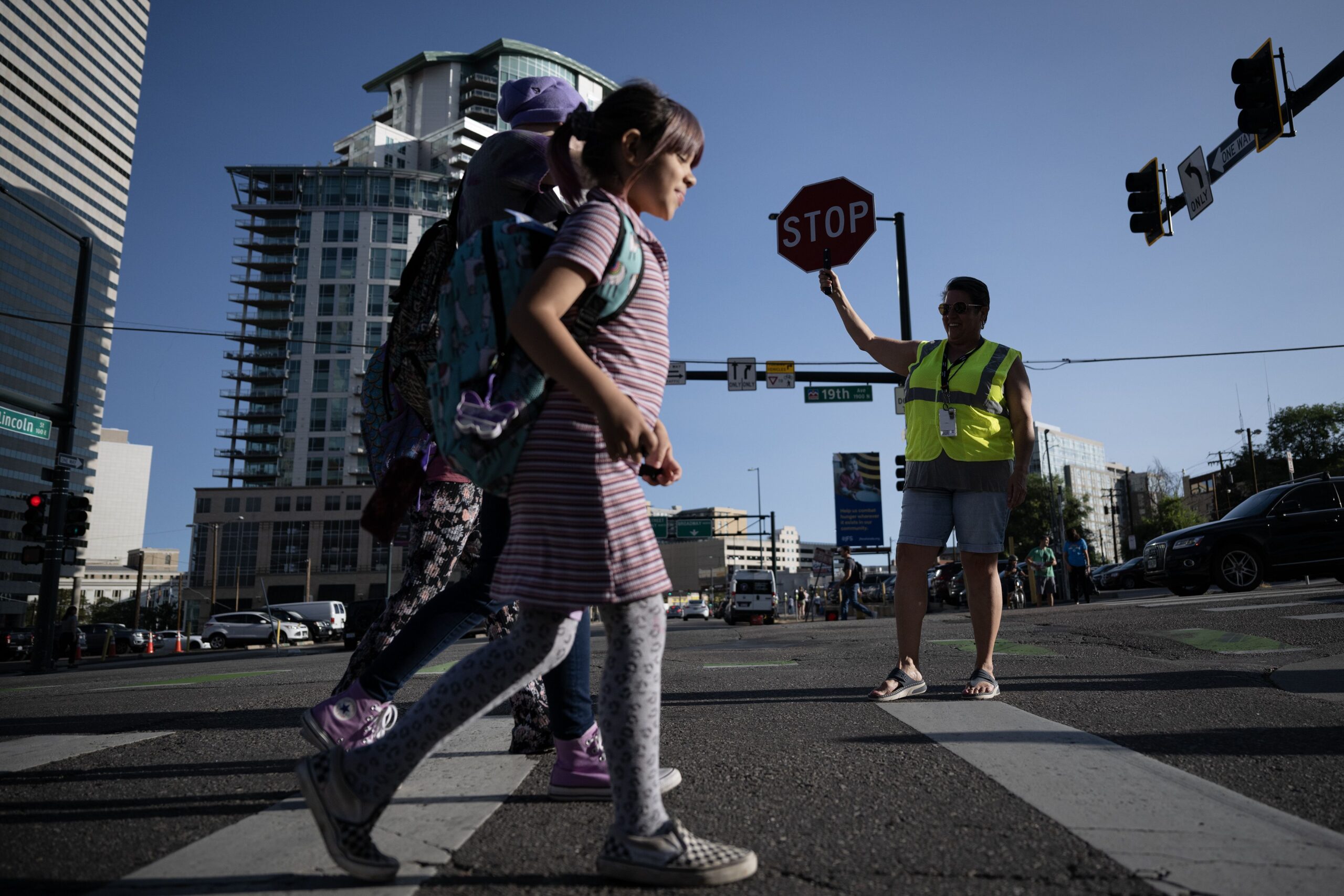
Colorado schools received a funding boost this past year from the legislature.
The Colorado General Assembly’s 2025 School Finance Act increased per-pupil funding by $400, adding up to a $256 million increase in state spending for nearly 900,000 public school students, bringing the total state spending to $10 billion.
Despite the additional spending, it’s still about $16 million short of what lawmakers had planned to spend when they implemented a new school finance formula in 2024.
When asked to name the biggest challenges facing public school districts in Colorado today, the respondents identified attracting and retaining high-quality educators, adequately preparing students for the workforce, and increasing teacher pay to keep up with the cost of living
STRONG SUPPORT CAREER AND TECHNICAL EDUCATION
The state has increased funding for career and technical education, or CTE, programs in recent years, as policymakers aim to provide better trade opportunities for students who choose not to go to a traditional four-year college or university.
In August, the Colorado Community College System awarded more than $2 million in grants to CTE and apprenticeship programs at community colleges and high schools across the state.
More than 80% of survey respondents said they would view their local school district more favorably if it offered career and technical education programs. In contrast, most respondents admitted they are unsure whether their district currently offers such programs.
While 62% of respondents said getting a college degree is essential, nearly 70% believed that getting a degree from a public university in Colorado is unaffordable — almost a third estimated that the average graduate of a public university in Colorado has more than $50,000 in student debt.
When asked whether career and technical education or college preparation is more critical for Colorado high schoolers, the vast majority of respondents said both are important, but 43% responded that they would lean toward CTE programs, if they had to choose.
Many respondents argued that college isn’t for everyone, with some calling it “a scam” and “a waste of time and money.”
Others expressed worries that artificial intelligence would take white-collar jobs, believing the trades will offer a more stable career path in the future.
On the other hand, respondents who advocated for a college education argued that having a degree leads to better opportunities and higher pay, and that the college experience allows students to build critical thinking, communication and life skills while gaining independence.
MOST FAVOR UNIVERSAL PRESCHOOL
Of those surveyed, 71% said they hold a favorable view of Colorado’s recently established universal preschool program, which provides up to 15 hours of free preschool for four-year-old children.
When asked why, many said it made preschool more affordable for working families, helped kids grow and prepare for long-term success, allowed parents to stay in the workforce, and gave all kids “an equal start,” regardless of income.
Many of the 19% of respondents who view the program unfavorably used terms like “government overreach” and “socialism” to describe it. At the same time, some argued kids should stay at home until kindergarten and that preschool is more like daycare than education. Others expressed skepticism that the program is truly free, noting concerns about additional burdens on taxpayers.

More people are now leaving Colorado than moving here from other states | Vince Bzdek
Vince Bzdek
vince.bzdek@gazette.com
Updated 11 hours ago
By Vince Bzdek It’s finally happened. Buried in all the self-congratulatory reports about Colorado reaching the 6 million mark in population last year was news that should be keeping our political leaders up at night. For the first time in...
Colorado House launches ethics review of Rep. Ron Weinberg filed by fellow GOP legislator
Marianne Goodland
marianne.goodland@coloradopolitics.com
Updated 1 day ago
The Colorado House will convene an ethics committee to review a complaint filed by Rep. Brandi Bradley, R-Roxborough Park, against fellow Republican Rep. Ron Weinberg, R-Loveland. It will be the first time since 2012 that the House has formed an...
Colorado lawmakers reverse course, OKs $2.4M funding for additional prison beds
Marissa Ventrelli
marissa.ventrelli@coloradopolitics.com
Updated 1 day ago
The Colorado legislature’s budget panel changed course on Wednesday, reversing its previous decision to deny the Department of Corrections $2.4 million request to pay for additional prison beds. Last week, JBC members voted, 4-2, to deny the department’s request, with...

Party-line vote sends ‘red flag’ law expansion to Colorado Senate
Marissa Ventrelli
marissa.ventrelli@coloradopolitics.com
Updated 1 day ago
A panel of Colorado state senators voted along party lines Tuesday to advance a bill that would further expand who can ask a judge to temporarily restrict a person’s access to firearms under Colorado’s extreme risk protection order law. The...

Colorado Republicans plan to return to Pueblo for 2026 state GOP assembly | TRAIL MIX
Ernest Luning
ernest.luning@coloradopolitics.com
Updated 2 days ago
The Colorado Republican Party plans to hold its 2026 state assembly in Pueblo in April, marking a return to the largest city in the only county in the state that’s flipped from Democrat to Republican to Democrat to Republican in...
Polis potentially commuting Peters’ sentence preposterous | Dennis Maes
Dennis Maes
dennis-maes@coloradopolitics.com
Updated 2 days ago
In the midst of all the economic and political turmoil in Colorado, including President Donald Trump’s revengeful acts against the state, Gov. Jared Polis has chosen to waste his time on the preposterous idea of commuting the sentence of convicted...

Colorado lawmakers roll out bipartisan plan aimed at lowering home insurance risk
Marianne Goodland
marianne.goodland@coloradopolitics.com
Updated 1 day ago
Rising homeowners’ insurance rates prompted a group of lawmakers to introduce a bill Wednesday aimed at reducing damage from hail and wildfire. The measure would encourage homeowners and homeowner associations to take additional mitigation steps and, in turn, could allow...

From child actors to ‘kidfluencers’: Colorado lawmakers consider digital-age Coogan Act
Marissa Ventrelli
marissa.ventrelli@coloradopolitics.com
Updated 1 day ago
Jackie Coogan had been an actor since birth, or just about. His first acting gig was as a toddler in the 1917 silent film, “Skinner’s Baby,” where he played the titular infant. At age 7, he starred alongside Charlie Chaplin...
Colorado Democratic Rep. Jason Crow’s reelection campaign hauls in over $750K in 4th quarter
Ernest Luning
ernest.luning@coloradopolitics.com
Updated 3 days ago
U.S. Rep. Jason Crow raised more than $750,000 in the final three months of 2025, marking the Aurora Democrat’s largest quarterly haul since his first run for Congress in Colorado’s 6th District, when he unseated a Republican incumbent, according to...

We tested vapes in Colorado for signs of hemp. This is what we found.
Christopher Osher
chris.osher@gazette.com
Updated 3 days ago
This article was produced for ProPublica’s Local Reporting Network in partnership with The Denver Gazette. Sign up for Dispatches to get our stories in your inbox every week. Leaders in the Colorado marijuana industry have complained in recent years that...
PREV
PREVIOUS

Trump administration says it will withhold SNAP from Democrat-led states if they don't provide data
WASHINGTON (AP) — President Donald Trump’s administration said Tuesday that it will move to withhold SNAP food aid from recipients in most Democratic-controlled states starting next week unless those states provide information about those receiving the assistance. Agriculture Secretary Brooke Rollins said at a Cabinet meeting Tuesday that the action is in the works because […]

Colorado Higher Education Director Angie Paccione to step down
Angie Paccione, who has led the Colorado Department of Higher Education since 2019, is returning to the private sector, Gov. Jared Polis said. Paccione’s last day is Jan. 9. The governor’s office said Gov. Jared Polis would decide on the next executive director before she leaves. In his announcement, Polis called Paccione an “incredible leader […]