

Colorado’s Polis and Florida’s DeSantis clash over marijuana tax revenue and black market THC

Colorado Gov. Jared Polis exchanged barbs with Florida Gov. Ron DeSantis on social media earlier this week over Colorado’s marijuana tax revenue and THC products in the black market.
The exchange between the Democrat and the Republican comes amid Congress’ surprise inclusion of a near-ban of hemp-derived consumer products in a funding bill passed on Wednesday. That bill ended the longest federal government shutdown in history.
In addition to allocating funding for government operations through the end of January, the bill also contains a provision outlawing nearly all hemp products that contain THC. All six Democrats in Colorado’s congressional delegation voted against the bill, while the four Republicans voted in favor of the deal to end the shutdown.
Polis released a statement the following day criticizing the move, saying he was disappointed to see Congress “leading with fear rather than a vision for the future.”
“Hemp is a symbol of the American spirit, George Washington grew hemp and Betsy Ross sewed some of the first American flags out of Hemp fiber,” he said. “For a party that claims to support business and job growth, they have a funny way of showing it with their continued attempts to stifle growth and innovation.”
The legislation adds various parameters to the definition of hemp, which would prevent “the unregulated sale of intoxicating hemp-based or hemp-derived products, including Delta-8, from being sold online, in gas stations, and corner stores, while preserving non-intoxicating CBD and industrial hemp products,” according to the bill’s summary.
Polis has advocated for hemp since his time in Congress. He co-sponsored the 2018 Farm Bill, which removed hemp from the Controlled Substances Act and legalized commercial production of hemp. As governor, he secured federal approval for Colorado’s Hemp Advancement & Management Plan, making the state one of the first in the nation to regulate the hemp industry by implementing licensing and testing standards and compliance procedures.
Polis has also been an outspoken advocate for the legalization of marijuana, which comes from the same plant species as hemp, but contains more THC and is used for recreational and medical purposes, as opposed to industrial, food and CBD products.
On Nov. 12, DeSantis responded to a tweet about a survey conducted in Florida, in which 90% of respondents said they want the right to vote on marijuana legalization themselves, rather than have lawmakers make the decision.
In response to a comment arguing that legalizing marijuana in the state could eliminate property tax by taxing marijuana, DeSantis wrote “that has not been the experience in Colorado,” adding the Rocky Mountain state’s marijuana tax revenue has “fallen dramatically” in recent years because imposing taxes “makes black market more economical.”
According to the Colorado Department of Revenue’s marijuana tax report, marijuana tax and fee revenue peaked in 2021 at over $400 million and declined after 2022. It stood at roughly $255 million in 2024, about the same as before the pandemic.
In response, Polis noted that Colorado has collected more than $3 billion in marijuana tax revenue since 2014, which has helped pay for roads, schools, recreational centers, “and so much more,” while “successfully cracking down on the underground market.”
“Oh, and we didn’t use $50M in taxpayer dollars to block access to freedom,” Polis added. “But you do you.”
In Colorado, medical marijuana is subject to a 2.9% sales tax rate, while recreational marijuana is levied a 15% sales tax from the consumer and a 15% excise tax from the retailer.
According to the Legislative Council, just under 72% of marijuana tax revenue is allocated to the state’s Marijuana Tax Cash Fund, which is required to be used for health care, health education, substance abuse prevention and treatment programs, and law enforcement. An additional 15.56% of marijuana tax revenue goes to the legislature’s General Fund, and about 12.5% is allocated to the State Public School Fund. According to a recent report by Colorado Public Radio, marijuana tax revenue made up just 0.6% of the state’s total budget.

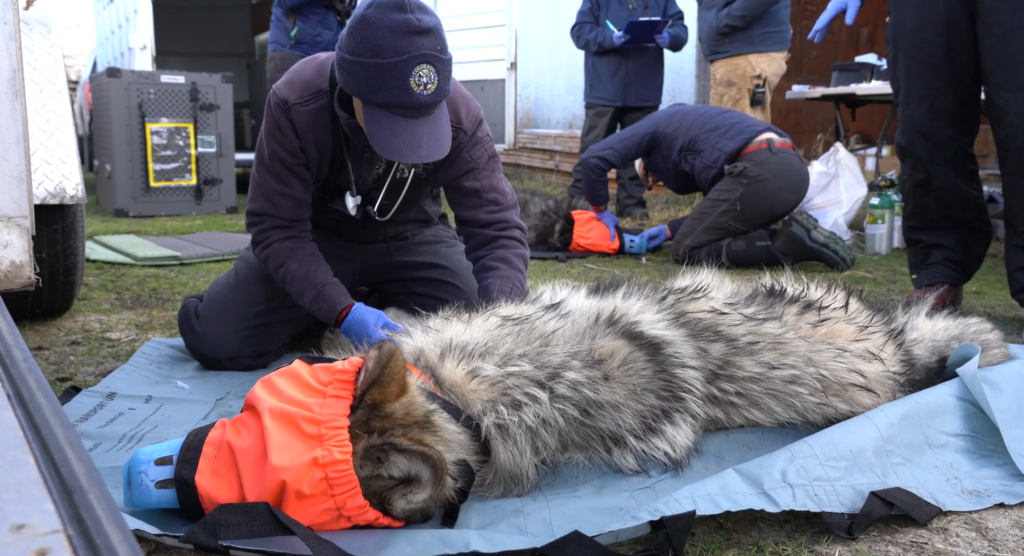
Male wolf dies after capture attempt, Colorado Parks and Wildlife officials confirm
Marianne Goodland
marianne.goodland@coloradopolitics.com
Updated 2 hours ago
The Colorado Parks and Wildlife said the wolf, identified as #2305 — meaning it was one of the original 10 animals that came from Oregon — died on Jan. 28 in Routt County. The wolf was the male of the...
Gov. Jared Polis moves to end ICE subpoena fight over Colorado workers’ personal data
Marianne Goodland
marianne.goodland@coloradopolitics.com
Updated 2 hours ago
The effort by Gov. Jared Polis to comply with an administrative subpoena from Immigration and Customs Enforcement for information held by several state agencies is now over. Polis, in a motion filed Feb. 20, asked for a permanent injunction and...

Ex-Colorado Sen. Sonya Jaquez Lewis avoids prison, gets probation for forged ethics letters
Marianne Goodland
marianne.goodland@coloradopolitics.com
Updated 3 hours ago
Former state Sen. Sonya Jaquez Lewis, D-Longmont, was sentenced Friday to two years of supervised probation and 150 hours of community service, and a $3,000 fine, to be waived if she completes an additional 100 hours of community service. The...

Bipartisan bill aims to launch Colorado ‘Cradle to Career’ anti-poverty grant program
Marissa Ventrelli
marissa.ventrelli@coloradopolitics.com
Updated 5 hours ago
The bill’s sponsors say it will help Colorado families living in poverty, and the organizations that support them have cleared their first hurdle, but they will need to raise just over $1 million before things get off the ground. Senate...

Benavidez chosen to fill Senate District 21 vacancy after Michaelson Jenet resigns
Marianne Goodland
marianne.goodland@coloradopolitics.com
Updated 6 hours ago
A Democratic Senate District 21 vacancy committee Thursday night chose former Rep. Adrienne Benavidez, D-Adams County, to replace former Sen. Dafna Michaelson Jenet. Michaelson Jenet resigned on Feb. 13 to become the director of the David and Laura Merage Foundation...

Colorado delegation’s plus-one picks convey messages at Donald Trump’s State of the Union | TRAIL MIX
Ernest Luning
ernest.luning@coloradopolitics.com
Updated 8 hours ago
It’s become a tradition for members of Congress to deliver messages of their own at the State of the Union address, though this year none of the Colorado lawmakers shouted at the president during the speech, nor did the delegation...

Colorado Democrat John Hickenlooper becomes first statewide candidate to submit nominating petitions
Ernest Luning
ernest.luning@coloradopolitics.com
Updated 8 hours ago
U.S. Sen. John Hickenlooper on Thursday became the first statewide candidate to submit petition signatures for Colorado’s June Democratic primary, according to his campaign and the Colorado Secretary of State’s Office. Seeking reelection to a second term, Hickenlooper is facing...

Colorado single-payer study lacks transparency | OPINION
Colorado Politics
colorado-politics@coloradopolitics.com
Updated 6 hours ago
By Lisa Frizell Coloradans have a right to expect transparency, accountability and fiscal responsibility from public institutions. Unfortunately, the ongoing single-payer health care study commissioned last year under SB25-45 is raising more questions than answers. Despite repeated warnings from voters...

Big-box retailers push credit-card legislation undermining local economies | OPINION
Colorado Politics
colorado-politics@coloradopolitics.com
Updated 19 hours ago
By Brett Wyss Having spent more than two decades in community banking, including guiding a local institution through the Great Recession, I’ve seen firsthand how fragile financial confidence can be and how essential community trust is to a healthy economy....

When fear replaces facts — what Gabel leaves out about rodenticide bill | IN RESPONSE
Colorado Politics
colorado-politics@coloradopolitics.com
Updated 19 hours ago
Rachel Gabel claims SB26-062 “prioritizes rodents over people” and “strips tools away” from professionals. That framing is rhetorically sharp — but misstates the bill and the toxicology. The column follows a familiar pattern: deploy a vivid public-health anecdote, inflate disease...
PREV
PREVIOUS

As market cools, Colorado home prices finally level out
Home prices in Colorado are finally behaving the way that market economics would predict they should, following two years of flat-to-declining real estate sales. They’ve leveled out. That’s according to the newest Market Trends report by the Colorado Association of Realtors. The report shows the median price of a single-family home in the state dropped […]

Appeals court reinstates felony charge, reverses Denver judge's sanction on prosecution
Colorado’s second-highest court ordered a Denver judge on Thursday to reinstate a defendant’s felony charge, finding she improperly reduced the severity as a sanction for an officer’s deletion of his body-worn camera footage. Prosecutors charged Russell K. Barnes with vehicular eluding, after police attempted to stop a Toyota 4Runner registered to Barnes but discontinued their […]