

10th Circuit upholds financial incentive for lawyers to take on challenges to immigration detention

The Denver-based federal appeals court ruled on Monday that the law allowing attorneys to recover their costs for prevailing against the government does apply to successful legal challenges to immigration detention.
A three-judge panel of the U.S. Court of Appeals for the 10th Circuit acknowledged a decision to the contrary would deter legal representation for detainees who face high hurdles to contest prolonged detentions on their own.
“Permitting fees would incentivize private counsel to accept representation of indigent, immigration detainees. It would also boost the availability of pro bono services in this area,” wrote Judge Richard E.N. Federico in the Nov. 3 opinion. “Although pro bono counsel are willing to represent clients free of charge, their services are not costless. Instead, pro bono counsel must secure their funding from sources other than their clients.”
Daley v. Ceja
Decided: November 3, 2025
Jurisdiction: U.S. District Court for Colorado
Ruling: 3-0
Judges: Richard E.N. Federico (author)
Jerome A. Holmes
Paul J. Kelly Jr.
The 10th Circuit’s decision comes at a time when a wave of judges has ruled against the government’s expanded detention of noncitizens. POLITICO reported last week that judges have ruled more than 200 times that the government is unlawfully applying its detention authority. Multiple federal judges in Colorado have also ordered relief for those contesting their detentions in recent months.
The specific issue for the 10th Circuit was whether judges may award attorney’s fees in successful “habeas corpus” cases, a longstanding legal tool used to challenge one’s confinement. While the Equal Access to Justice Act provides a general mechanism to compensate prevailing attorneys “in any civil action,” the 10th Circuit had yet to answer the question: Is a habeas challenge a civil action?
Eva Daley, a citizen of Guatemala, filed a habeas petition in 2022. U.S. Immigration and Customs Enforcement detained her in November 2021, and Daley repeatedly sought release while her immigration proceedings unfolded. The requests were denied as Daley’s asylum and torture-protection claims were evaluated.
After 430 days in detention, U.S. District Court Senior Judge Raymond P. Moore ordered that the government bring Daley before an immigration judge to evaluate her suitability for release. He relied on a string of other decisions out of Colorado finding that prolonged immigration detention can amount to a constitutional violation at some point.
Daley’s counsel then sought attorney fees for prevailing. In a March 2024 order, Moore agreed with a recent decision from U.S. District Court Judge Charlotte N. Sweeney, who analyzed immigration-related habeas proceedings and found they qualified as civil actions.
“An immigration habeas proceeding, such as Petitioner’s, does not bear the hallmarks of a criminal proceeding,” Moore wrote.
On appeal to the 10th Circuit, the government conceded habeas proceedings are not criminal, but nor are they civil because they are “unique.”
“Looking at the dictionaries, both contemporary and current, they almost universally, do they not, draw a distinction between ‘civil means not criminal’?” asked Chief Judge Jerome A. Holmes during oral arguments. “And habeas proceedings are not criminal, right?”
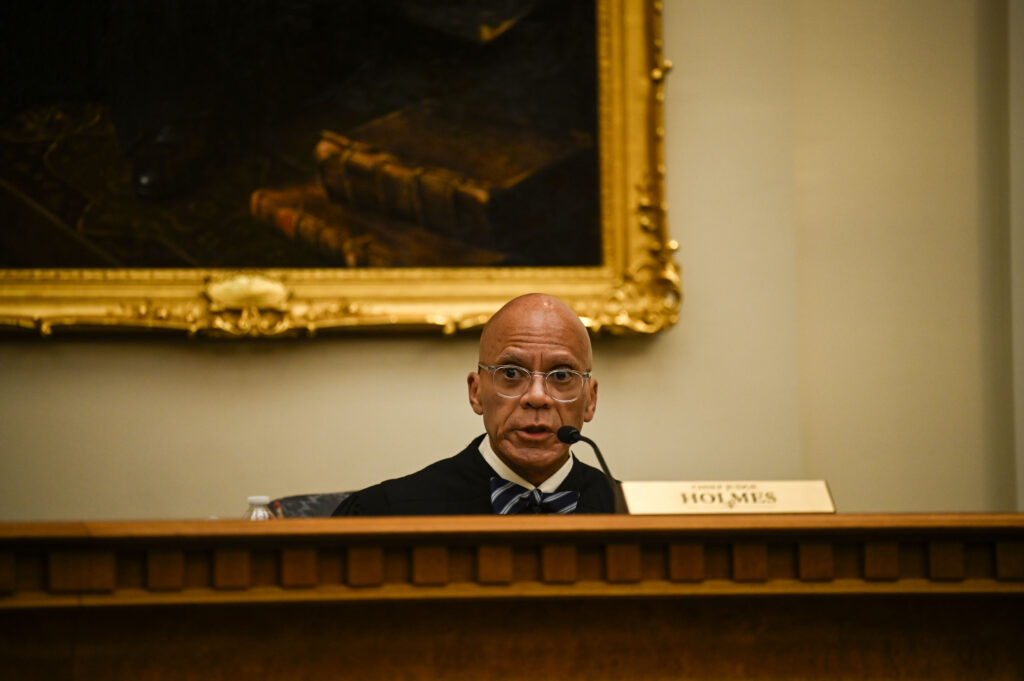
Federico observed it matters why someone is confined in the first place and is seeking habeas relief.
“If someone is in custody pursuant to a criminal proceeding, that means they have a sentence,” he said. “Compared to someone, as here, Ms. Daley in immigration, she’s in detention until her proceedings expire. … Why isn’t that important when we consider the context?”
Multiple outside groups weighed in on the case. The Washington, D.C.-based Amica Center for Immigrant Rights told the 10th Circuit that it regularly files habeas petitions that are a “critical lifeline” for those seeking to litigate their immigration cases out of custody.
“Immigration detention can thus place detained noncitizens in a paradoxical negative feedback loop: being detained makes it harder for them to find an attorney, but being unrepresented likewise makes it harder for them to get out of detention,” wrote the center. Beyond nonprofit immigration law firms, the availability of attorney fees “motivates private attorneys to bring immigration habeas cases and fill a substantial void in legal representation for detained noncitizens.”
The 10th Circuit panel concluded habeas actions challenging immigration detention are “purely civil.” Therefore, attorneys who successfully bring such cases are entitled to their costs.
Federico noted that outcome aligned with the goal of the Equal Access to Justice Act, which is to reduce the costs of challenging the legality of governmental action.
“That cost barrier is especially high in the immigration detention context. Immigration is a sprawling and complicated area of law that can be difficult to navigate without the aid of counsel,” he wrote. “It is also difficult for those in immigration detention to afford counsel because they are unable to work while detained.”
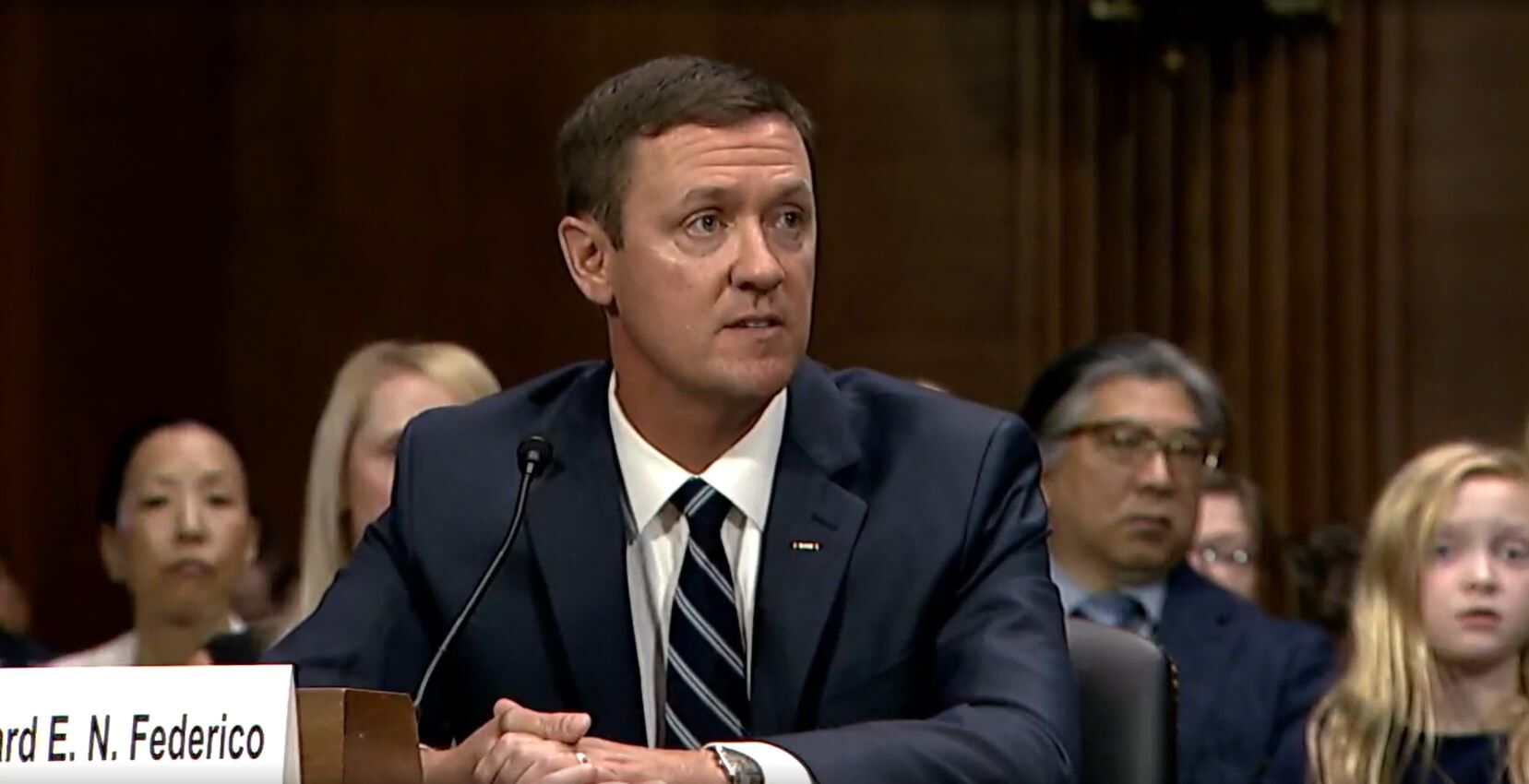
The attorney fee mechanism, Federico continued, could help fund organizations that already offer immigration-related representation and also incentivize other firms to take on cases. Otherwise, detainees without attorneys could potentially agree to deportation even if they had a strong case to remain in the country.
The financial incentive “is vital to preserving the individual’s ability to challenge her detention,” Federico concluded.
A spokesperson for the U.S. Attorney’s Office said the government had no comment on the decision.
Peter Alfredson, an attorney with the Amica Center for Immigrant Rights who submitted the center’s brief to the 10th Circuit, said the decision was important given the “ever-growing numbers of noncitizens (in) cruel, dangerous, and often unconstitutional immigration detention.”
The government’s data showed nearly 60,000 people in immigration detention as of Sept. 21, a roughly 58% increase over the prior year.
The case is Daley v. Ceja et al.

Misconduct complaints from ex-Colorado judicial discipline director dismissed against federal judges
Michael Karlik
michael.karlik@coloradopolitics.com
Updated 14 hours ago
The administrative body for the Denver-based federal appeals court upheld a finding last week that misconduct complaints against Colorado’s chief federal trial judge and the chief appeals judge warranted dismissal and appeared to be a “litigation tactic” by the complaining...

First-ever Red Rocks naturalization ceremony draws most diverse group of new citizens
Michael Karlik
michael.karlik@coloradopolitics.com
Updated 17 hours ago
Colorado’s federal trial court held its first-ever naturalization ceremony for nearly 300 new citizens on Thursday at Red Rocks Park and Amphitheater. “We’re doing it to commemorate the 250th anniversary of the Declaration of Independence and the United States. Red...
10th Circuit finds no fair housing violation by Littleton landlord for worker’s alleged rape of tenant
Michael Karlik
michael.karlik@coloradopolitics.com
Updated 2 days ago
The Denver-based federal appeals court concluded on Monday that Littleton’s housing authority could not be held liable for a maintenance worker’s alleged rape of a tenant, as the worker’s employment did not provide any special access to the victim. A...

Jeffco Public Schools sues Trump administration to protect funding after alleged transgender policies violation
Matt Kyle
matt.kyle@denvergazette.com
Updated 1 day ago
In the wake of several threats by the Trump administration to revoke federal funding, Jeffco Public Schools filed a lawsuit against the Department of Education seeking to protect that badly needed money. Jeffco has been under investigation by the DOE’s...
Denver detox center did not violate man’s rights with 10-hour hold, 10th Circuit says
Michael Karlik
michael.karlik@coloradopolitics.com
Updated 3 days ago
The Colorado-based federal appeals court concluded on Tuesday that Denver’s detoxification facility did not violate a man’s rights by holding him against his will for 10 hours until his blood alcohol content was projected to reach zero. Unusually, Brian Garrett’s...

Federal judge clarifies ex-GOP treasurer candidate’s burden to prove defamation claims
Michael Karlik
michael.karlik@coloradopolitics.com
Updated 3 days ago
A federal judge clarified last week that businessman and former Republican statewide candidate Brian Watson will need to surmount a higher hurdle in proving his claim that a party guest’s alleged description of him as a “criminal” amounted to defamation....
Colorado board permits state to appeal injunction against arthritis drug price cap
Marissa Ventrelli
marissa.ventrelli@coloradopolitics.com
Updated 3 days ago
A Colorado board voted Friday to allow the Attorney General’s Office to fight an injunction against a price cap on a drug that treats arthritis. A U.S. district court judge had granted the company Amgen a preliminary injunction, temporarily blocking...

Federal judge rejects constitutional claims, ‘expressions of hatred’ by Club Q defendant
Michael Karlik
michael.karlik@coloradopolitics.com
Updated 4 days ago
A federal judge rejected a defendant’s claims that he received constitutionally ineffective assistance of counsel while facing federal hate crime and firearms charges for murdering five people at a Colorado Springs LGBTQ nightclub in 2022. Anderson Lee Aldrich is serving...

Divided 10th Circuit upholds Colorado congestion fee on car rentals
Michael Karlik
michael.karlik@coloradopolitics.com
Updated 4 days ago
The Denver-based federal appeals court concluded on Monday that a 2024 “congestion impact fee” that lawmakers imposed on short-term vehicle rentals did not conflict with a federal prohibition on certain airport-related charges. Beginning in the 1970s, Congress began limiting the...
10th Circuit dismisses woman’s lawsuit following 10-year attempt to undo restraining order
Michael Karlik
michael.karlik@coloradopolitics.com
Updated 7 days ago
The Denver-based federal appeals court rejected a woman’s challenge on Friday to a restraining order imposed on her more than a decade ago, finding that she cannot credibly claim she will be prosecuted for violating the restraining order through her...
PREV
PREVIOUS

4 takeaways from Colorado's election results
Voters last night embraced major spending requests proposed by state and local officials, as well as picked their next set of municipal and school board leaders. All told, Democrats won big. Here are the key takeaways. DEMOCRATS ARE ENERGIZED Candidates and issues supported by Democrats won on Tuesday, when voters embraced statewide and local ballot […]

Conservative-strong Aurora City Council swings left
Aurora Councilmember Danielle Jurinsky lagged behind two progressive candidates vying for two at-large seats, as the council for Colorado’s third most populous city swung left following Tuesday’s elections. Progressive candidates have also maintained their lead over their conservative rivals — some incumbents — in other council races in an election that is poised to significantly […]