

Colorado justices disagree father was entitled to new jury trial after faulty first proceeding
The Colorado Supreme Court on Monday concluded a father was not automatically entitled to a child neglect jury trial after his first proceeding in El Paso County was overturned, and instead faulted the man for failing to reiterate his demand for a jury trial.
For parents involved in child welfare cases, Colorado lawmakers have given them the right to ask for a jury trial on the question of whether their children are neglected — a right they give up if they fail to appear at trial. In the case of a father who did not appear for trial, but who successfully challenged the outcome and obtained a second trial, the state’s Court of Appeals believed the father’s original non-appearance did not matter for the “separate and distinct” do-over. Because the father was present at that second proceeding, he maintained his right to a jury trial.

However, the Supreme Court saw things differently. The justices originally agreed to answer whether the father regained his right to a jury trial at the do-over proceeding. Instead, the court ultimately chose to focus on a different question.
Assuming the father was allowed to ask for a jury trial a second time, wrote Justice Carlos A. Samour Jr., the father had not actually asked for one.
The trial judge’s allowance for a do-over “only meant that Father was free to reassert his right to a jury trial, not that Father was automatically entitled to have a jury trial,” Samour explained in the June 30 opinion. “But it was incumbent on him to do so.”
The father, identified as K.L.W., requested a jury trial but failed to appear the day of the September 2021 trial date. A judge concluded K.L.W. had, consequently, surrendered his right to a jury trial and deemed the children neglected by default — a decision the county later acknowledged was improper.
El Paso County eventually moved to terminate the father’s parental rights. K.L.W.’s new attorney recognized the problem of the default judgment and asked District Court Judge Robin Chittum to overturn the prior neglect decision. During the 2023 termination hearing, Chittum agreed and scheduled a trial to determine the children’s neglect status anew.
Twenty days later, at the new trial, K.L.W.’s lawyer objected that the do-over proceeding was not a jury trial. Chittum proceeded to find the children neglected herself.
A three-judge Court of Appeals panel reversed her decision, reasoning the second trial was a separate legal proceeding and K.L.W. was in the “same legal position” as he was before the 2021 trial.
“And because father did appear at the 2023 adjudicatory trial, he didn’t waive his right to a jury,” wrote Judge Katharine E. Lum.

During oral arguments, the justices wondered whether Chittum’s decision to overturn the default judgment necessarily put K.L.W. where he was prior to the first trial, whether there was something more he needed to do, or whether his right to a jury trial was gone — period.
“I would submit in any type of case,” said Melanie Douglas, representing the county, “once you’ve waived that right, it’s gone. That’s it. You don’t get that right back.”
“I’m not sure why they would waive it forever,” responded Justice Richard L. Gabriel. “If we’re going to have a do-over, why couldn’t they ask for another jury trial?”
Ultimately, the Supreme Court embraced the view that a do-over proceeding requires a do-over demand for a jury trial.
Samour noted several courts outside of Colorado have taken the view that the surrender of the right to a jury trial does not automatically apply when a second trial is ordered. None of the cases, however, paralleled the circumstances in K.L.W.’s child welfare case.

“What is clear from the majority rule our research excavated,” Samour wrote, “is that, while a waiver of the right to a jury trial doesn’t bar a jury-trial demand in a subsequent proceeding in the same case, the waiving party doesn’t automatically receive a jury trial in the latter proceeding.”
Consequently, the Supreme Court did not believe K.L.W.’s initial selection of a jury trial applied to his do-over proceeding. If he wanted a jury trial the second time around, he needed to demand one — and the court concluded his lawyer’s objection did not count.
If the second child neglect trial really was a separate proceeding, as the Court of Appeals believed, “we’re not sure why that wouldn’t require Father to make a new demand for a jury trial,” added Samour.
The Supreme Court returned the case to the Court of Appeals so the judges could consider K.L.W.’s other arguments.
The case was one of three the justices heard in April to consider when a parent surrenders their right to a jury trial in child neglect proceedings. The other two appeals pertained to the effect a parent’s non-appearance at a pretrial conference has on their jury trial right, and whether a parent is still entitled to a jury trial if only their lawyer appears in person.
The Supreme Court dismissed those appeals soon after oral arguments, declining to issue a decision. Instead, the justices elected to address those questions through the rulemaking process.
The case is People in the Interest of Kay.W. et al.
Colorado Politics Must-Reads:

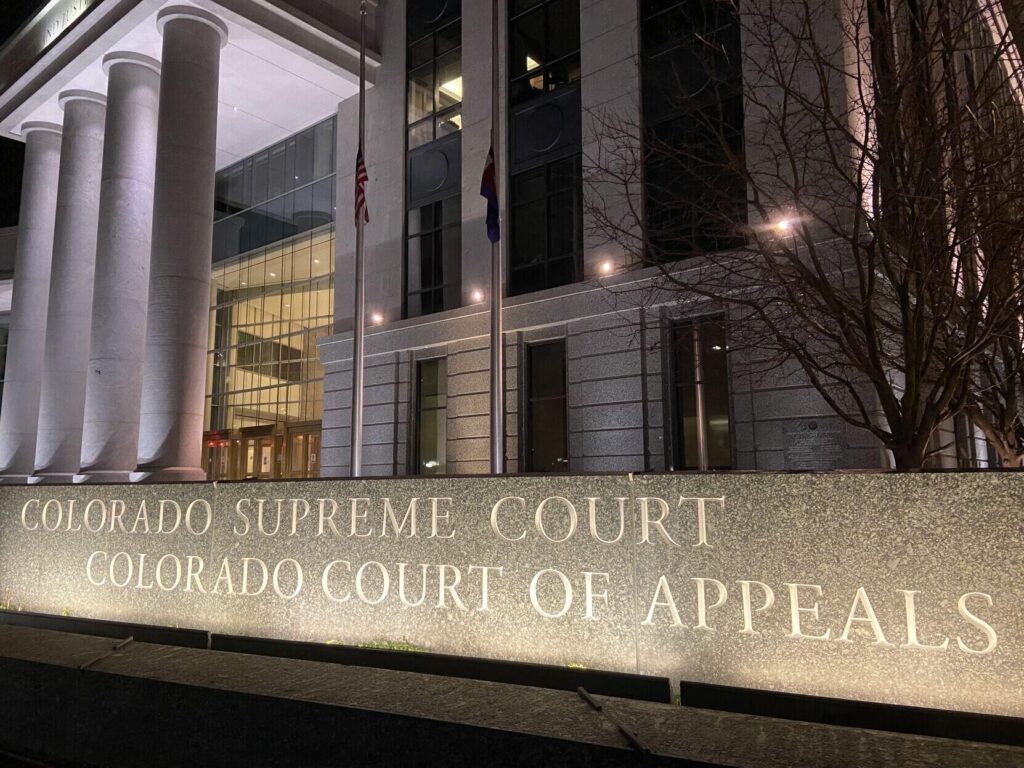
$3 million penalty upheld against for-profit college following half-decade of appeals
Michael Karlik
michael.karlik@coloradopolitics.com
Updated 7 hours ago
Colorado’s second-highest court upheld a $3 million penalty against a defunct for-profit college on Wednesday, agreeing the state had proven multiple violations of its consumer protection law. The Court of Appeals’ decision against CollegeAmerica followed a trial judge’s order in...
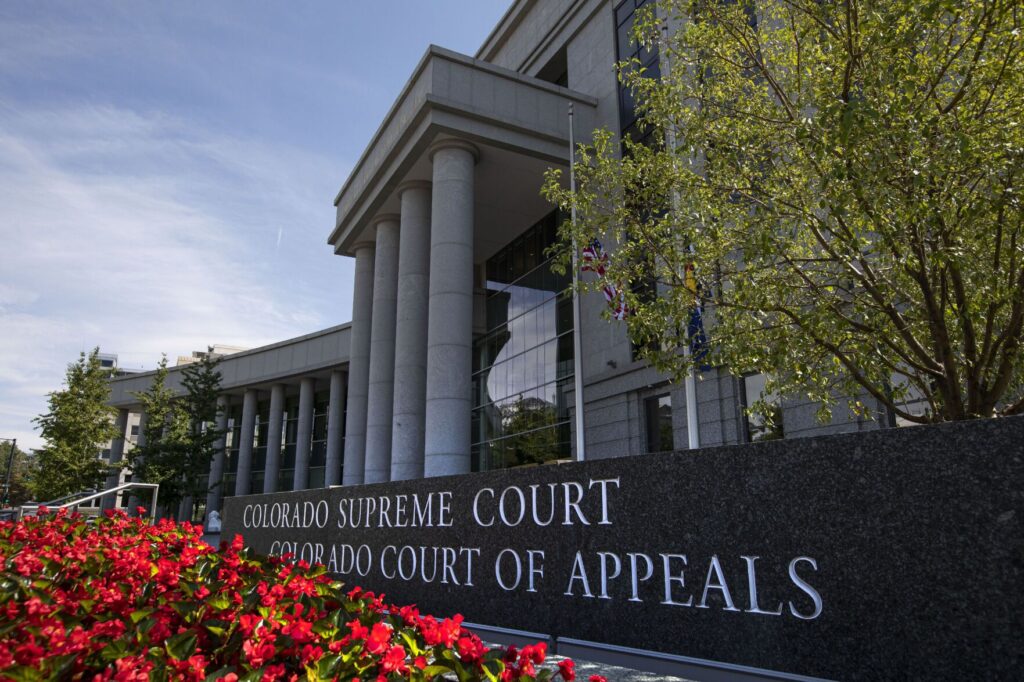
Appeals court decides violations of child custody orders may be prosecuted per child
Michael Karlik
michael.karlik@coloradopolitics.com
Updated 1 day ago
Colorado’s second-highest court concluded for the first time on Wednesday that a defendant may be charged with violating a child custody order based on the number of children affected, not the number of orders violated. Mesa County jurors convicted Tiffany...

Douglas County judge violated defendant’s right to counsel at sentencing, appeals court finds
Michael Karlik
michael.karlik@coloradopolitics.com
Updated 1 day ago
A Douglas County judge violated a defendant’s constitutional right to the counsel of her choice by refusing to postpone sentencing until her lawyer returned to the country, Colorado’s second-highest court concluded on Wednesday. In early 2023, Lyndie J. Felsher received...
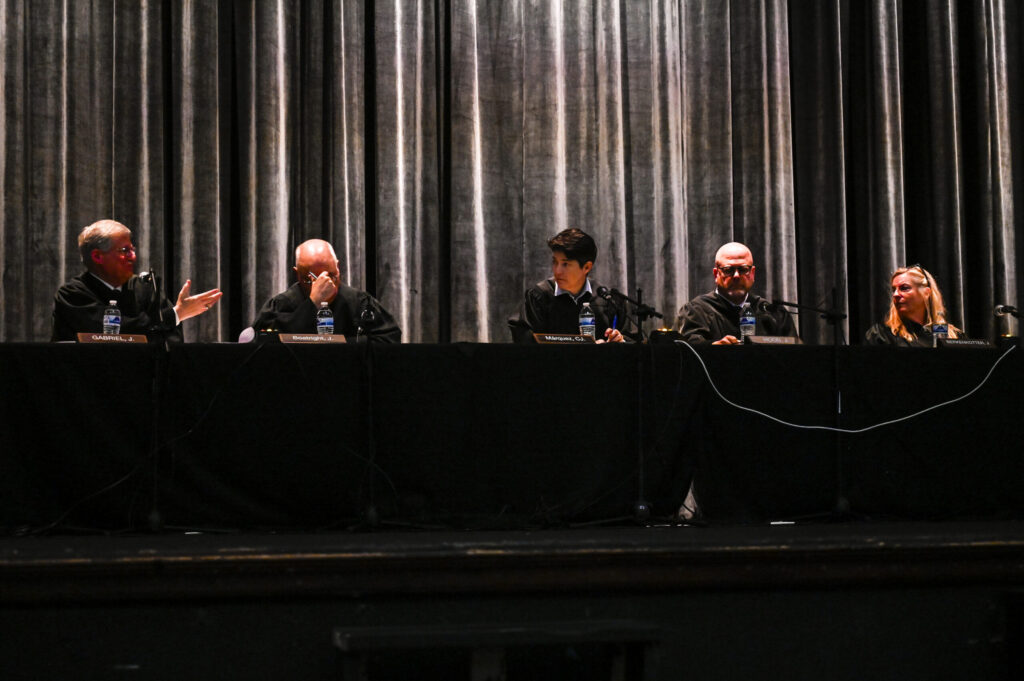
‘Lawyers haven’t gotten the message’: Colorado justices hear debate about proposed AI rule
Michael Karlik
michael.karlik@coloradopolitics.com
Updated 2 days ago
The Colorado Supreme Court heard comments from members of the legal profession last week about a proposed rule change intended to remind attorneys that misuse of new artificial intelligence tools can violate longstanding professional obligations. Court of Appeals Judge Lino...
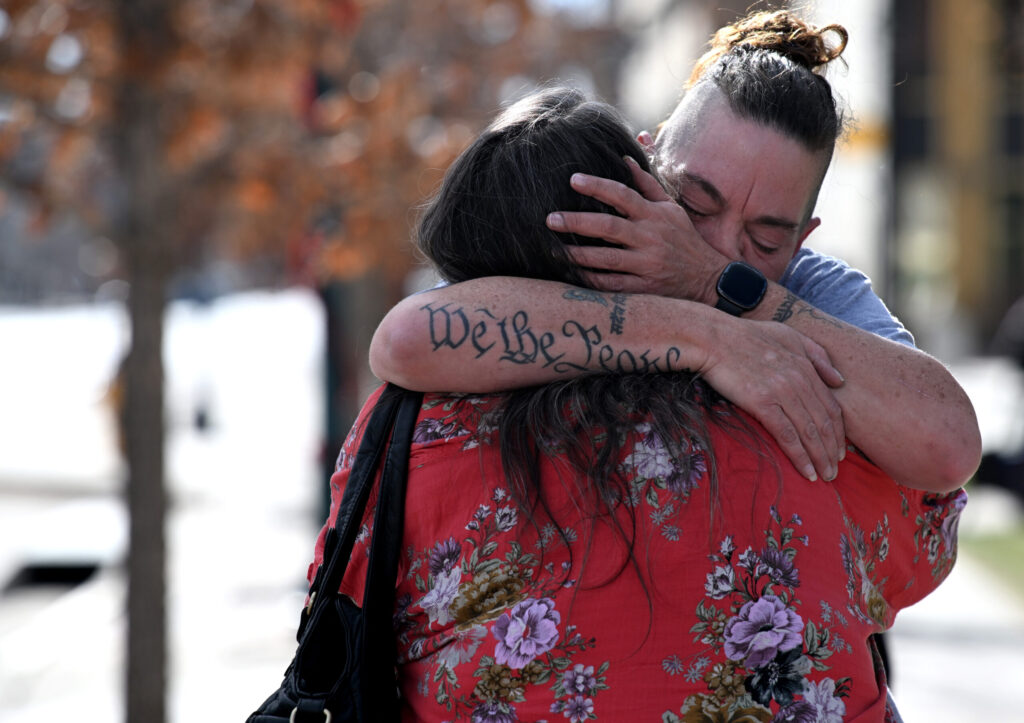
Judge accepts new plea agreements for Return to Nature owners
Mackenzie Bodell
mackenzie-bodell@coloradopolitics.com
Updated 3 days ago
Jon and Carie Hallford will not see 2026 trials after all, as an El Paso County judge ruled to accept the most recent plea agreements for the pair Monday, despite heavy opposition from families who used their funeral services. The Hallfords came...

As Aurora police worry about court ruling’s impact on crime, council sees opening to revisit penalties
Kyla Pearce
kyla.pearce@gazette.com
Updated 3 days ago
Aurora’s top police official is worried about the impact of a Colorado Supreme Court decision about penalties on the city’s crime rate, while progressive councilmembers see an opening to reverse decisions made by previous city councils. The court ruled on...
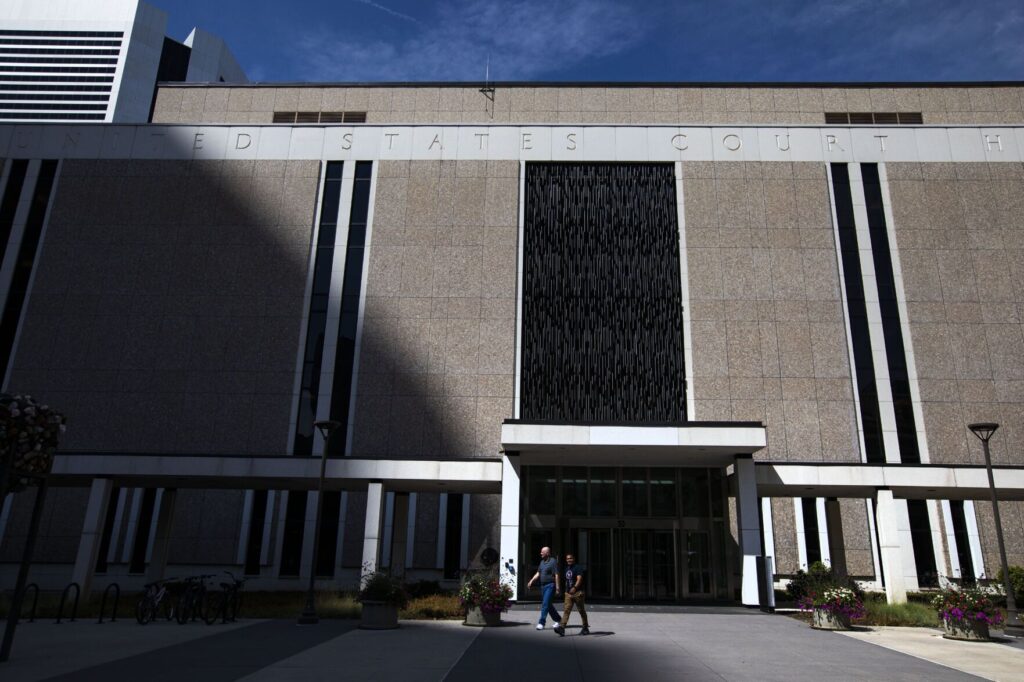
Federal judge finds immigration judge denied bond using faulty reasoning, dubious evidence
Michael Karlik
michael.karlik@coloradopolitics.com
Updated 2 days ago
A federal judge concluded last week that an immigration judge employed the incorrect procedure when denying bond to a detainee and relied on dubious evidence to find he was a flight risk. Under federal rules governing immigration cases, the filings and...

Colorado Supreme Court ponders insurers’ ability to defend against policyholders
Michael Karlik
michael.karlik@coloradopolitics.com
Updated 3 days ago
The Colorado Supreme Court considered last week what steps insurance companies must take to defend themselves against lawsuits from injured policyholders who, based on a technicality, were legally not at fault for their injuries. When an insured driver has an...

Justice Hart to leave Supreme Court, new recs from Access to Justice Commission | COURT CRAWL
Michael Karlik
michael.karlik@coloradopolitics.com
Updated 4 days ago
Welcome to Court Crawl, Colorado Politics’ roundup of news from the third branch of government. A member of the Colorado Supreme Court unexpectedly announced her retirement from the bench, plus the state’s Access to Justice Commission has made recommendations following...

Judge denies AstraZeneca’s bid to block Colorado drug discount law
Marissa Ventrelli
marissa.ventrelli@coloradopolitics.com
Updated 4 days ago
A Colorado district court judge denied drug manufacturer AstraZeneca’s request for an injunction to block enforcement of a recent law barring drug manufacturers from imposing restrictions on covered entities to obtain drugs under a federal discount program. The law states...