

Why Colorado’s health care reforms must center communities first | OPINION

As president of the Colorado Black Women for Political Action (CBWPA), I was relieved to see Colorado lawmakers take a thoughtful pause to reconsider HB 25-1174 — a bill that, though intended to address health care costs, could have unintentionally deepened disparities in care for the very communities we serve.
At CBWPA, we work alongside immigrant, refugee and low-income communities throughout Colorado — many of whom already face complex barriers to accessing quality health care. Whether it’s Black immigrant families navigating language and cultural gaps, women of color managing high-risk pregnancies, or newly uninsured individuals caught in the Medicaid disenrollment wave, the people we strive to build a better future for depend on a stable and responsive hospital system to meet their needs. Unfortunately, new research finds HB 25-1174 could have created more instability in our state’s health care system at a time when we are already grappling with the uncertainty of potential Medicaid cuts and the end of premium subsidies by creating $812 million in revenue losses for Colorado hospitals.
Stay up to speed: Sign up for daily opinion in your inbox Monday-Friday
I want to acknowledge and thank the lawmakers who stood up for patients and communities by opposing this bill — including state Reps. Shannon Bird and Robert Marshall, and Sens. Kyle Mullica and Tony Exum. Their leadership helped ensure HB 25-1174 did not move forward without a deeper understanding of its potential harm.
Unfortunately, HB 25-1174 was advanced without meaningful input from the communities it would most impact. A top-down price cap approach, using Medicare benchmarks known to underpay providers, risked pushing already-strained hospitals — both urban and rural — to cut services or close critical care programs. That would have disproportionately harmed patients in historically underserved communities, rural areas, and communities of color.
Colorado’s health care challenges are complex. Our hospitals are facing rising costs while serving a growing uninsured population. The expiration of pandemic-era Medicaid protections left hundreds of thousands of Coloradans in coverage limbo, with no robust state plan to help them re-enroll or find affordable alternatives. At the same time, many community-based organizations like CBWPA are working tirelessly to bridge these gaps — but we need hospitals to remain strong partners in this work.
Legislation like HB 25-1174, though well-intentioned, does not address these root causes. What Colorado needs instead is an equity-driven, community-informed approach:
- Invest in outreach to help families maintain or regain coverage.
- Strengthen hospital-community partnerships to expand culturally and linguistically appropriate care.
- Stabilize the health care safety net to ensure access for all, regardless of income or immigration status.
- Create transparent, inclusive processes for healthcare reform that center the voices of those most affected.
Health care reform cannot succeed if it is developed in silos or without the input of diverse communities. I applaud the lawmakers who recognized this and took a stand against HB 25-1174. Moving forward, CBWPA stands ready to work with partners across the state to build solutions that truly advance health equity for all Coloradans.
Bianka Emerson is president of Colorado Black Women for Political Action.


Are our overlords normalizing power outages? | Jon Caldara
Jon Caldara
jon-caldara@coloradopolitics.com
Updated 4 days ago
I’ve lived in Colorado since 1970. And you know what Colorado had back in 1970? High winds blowing down the Front Range. I moved to Boulder in 1984 and have been there ever since. And you know what Boulder has...

Who has the power to declare war? | Cronin and Loevy
Tom Cronin Bob Loevy
tom-cronin-bob-loevy@coloradopolitics.com
Updated 2 days ago
Our constitutional framers boldly and ambitiously granted Congress the power to declare war yet granted the executive the responsibility, after war is declared, to supervise war as the commander-in-chief. That worked well until the Cold War began. The U.S. has been...

The delicate, ever-changing dance between politics and religion | SONDERMANN
By Eric Sondermann
by-eric-sondermann@coloradopolitics.com
Updated 2 days ago
The dance, really a marathon that brings to mind the classic movie “They Shoot Horses, Don’t They?”, has been going on as long as there have been governments and organized religion. That is to say that this delicate tango has...
Roasts, get yer roasts, here: Capitol M | Week of March 14, 2026
Marianne Goodland
marianne.goodland@coloradopolitics.com
Updated 5 days ago
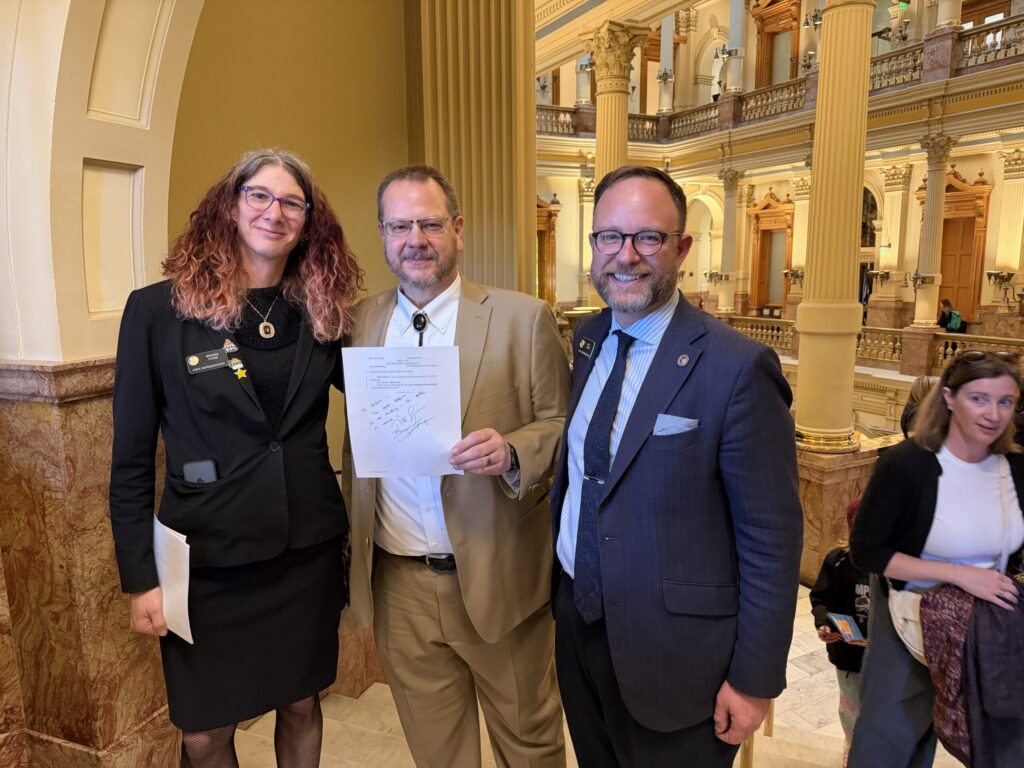
The lighter side of the Capitol, especially in the past week Apparently, the pending and eventual switch to daylight stupid time has put people in some pretty funny moods. And thank goodness! On March 4, the Senate approved the appointments...

Colorado’s election audits are built on math, not politics | IN RESPONSE
Colorado Politics
colorado-politics@coloradopolitics.com
Updated 4 days ago
By Amanda Gonzalez You don’t build a secure election system overnight. You build it over years — layer by layer — reinforcing it with stronger safeguards, better technology and more transparency. In Colorado, one of those safeguards is a little-known...
The backstory behind the school-funding TABOR ballot initiative | Paula Noonan
Paula Noonan
paula-noonan@coloradopolitics.com
Updated 4 days ago
Last session, the General Assembly took in a report on K-12 public school funding. The legislature ordered the report because an idea circulated Colorado was among the bottom five states in dollars allocated per student even though it is one...
Senate Bill 22 critical to keeping energy costs affordable, power reliable | PODIUM
Colorado Politics
colorado-politics@coloradopolitics.com
Updated 4 days ago
By Brian Wortinger I love Colorado’s outdoors. I’m an avid skier and hiker and my happiest days are spent deep in the mountains with no one around for miles. I want to protect that environment as much as anyone along...
Swipe-fee ban a giveaway to big boxes, mega-chains | IN RESPONSE
Colorado Politics
colorado-politics@coloradopolitics.com
Updated 5 days ago
By Jenifer Waller Four Colorado lawmakers recently published an op-ed in Colorado Politics calling for legislation to prohibit interchange fees on the sales tax portion of credit and debit card transactions (“Why Colorado should stop charging swipe fees on sales...

Leveling the playing field —why Colorado must fight fire with fire on redistricting | OPINION
Colorado Politics
colorado-politics@coloradopolitics.com
Updated 5 days ago
By Curtis Hubbard So Dick Wadhams suddenly cares about mid-decade redistricting — hyperventilating about efforts to “hijack Colorado’s congressional map” and calling those of us involved with the effort “amazingly naive.” Where was his outrage last year when President Donald...
You get what you pay for in your state reps | Hal Bidlack
Hal Bidlack
hal-bidlack@coloradopolitics.com
Updated 6 days ago
My regular readers will know of my affection for the Out West Roundup, a Colorado Politics feature that lets us keep up to date with the goings on out here in the western U.S., and draws attention to stories that...