

A book that nails this contentious, explosive moment | SONDERMANN
Excellent books abound. But it is a rarity to find one that almost perfectly captures the current moment.
Upon recent reading, which was my reaction to Evan Osnos’s “Wildland: The Making of America’s Fury.” The title derives from a catastrophic California wildfire several years ago. In trying to determine the blaze’s origin, experts were able to find the spark that ignited it but essentially concluded that the real cause lay in the wild, tinderbox, ready-to-explode condition of the land.
In short, the ground was so parched as to make this fire inevitable. The specific flashpoint of ignition was almost irrelevant. At some point, the forest was going to erupt. The analogy to America’s political condition is obvious.
I first came across Osnos half a dozen years ago in preparing for our first and only trip to China. Osnos had served as The New Yorker magazine’s China correspondent and his book, “Age of Ambition,” provided the best insight to be found into contemporary Chinese politics and society.
Upon the completion of Osnos’s tenure in Beijing, he returned to a new posting as a U.S. based political reporter. In his words, “Coming home always holds the promise of a new way of seeing.”
He embarked on something of a tour of America as part of his transition back here. In those travels and conversations, he glimpsed the degree to which our political landscape had turned red-hot during his decade away.
That is the core observation underlying” Wildland.” The book centers largely on three communities, each of which played a major role in the author’s life. Greenwich, Connecticut is where he was raised as a child; Clarksburg, West Virginia was the site of his first job as a young journalist; and Chicago was home base when he worked as a national correspondence for the Tribune prior to his assignment overseas.
Each of those locales tell a piece of the story. Greenwich, long a haven of the prototypical country-club Republican, became America’s hedge fund capital and slowly morphed from its establishment conservatism to a more activist, inflamed version.
Clarksburg offers an Appalachian story of economic decline, family decimation, lives ruined by drug addiction and newspapers struggling to hold on. While a few Rust Belt states away, Chicago tells the tale of the expanding divide between haves and have-nots, growing racial tension and the stuck hopelessness of too many against whom the odds are hugely stacked.
Osnos writes, “Those fissures in American life were part of a larger fracturing. The United States had the largest economy in the world, with median incomes higher than they had ever been, but the living standards for millions of people had stagnated or declined. Twenty-seven states were so short of cash to fix potholes that they were returning some of their paved roads to dirt.”
“At the same time, three men – Bill Gates, Warren Buffett and Jeff Bezos – had more wealth than the bottom half of the U.S. population combined. Every hour, Bezos earned $149,353 which was more than the typical American worker earned in three years.”
The evidence was everywhere and Osnos provides a compelling presentation of it. Trust in government had plummeted. Life expectancy, especially among males, was down many places with West Virginia being high on that list. Concealed carry permits were way up. Mass shootings were commonplace news.
Then, of course, there is the Trump factor. Osnos states it well. “From the moment Donald J. Trump announced his run for president, he was a symptom of American distress as much as any cause of it. He won by nationalizing politics as much as possible, torquing the most explosive issues into existential showdowns that could unite his supporters across vast distances.”
“Though they rejoiced in his contempt for the norms and culture of politics, many more Americans were appalled by him; they grieved for a nation that seem to have come unmoored from some of its deepest commitments.”
That has long been my assessment as well. While Trump has added immeasurable fuel to the fire, the powder keg predates him. Just as conditions made the Mendocino fire in California unavoidable, the same is true for the national inferno through which we are living.
The final section of the book did somewhat less for me as it turned more prescriptive than diagnostic. That said, “Wildland” is a first-rate chronicle of this troubled era and how we so precariously stripped our civic institutions and discourse of virtually all inoculation and fire retardant.
The challenge now is one of rebuilding civil society and healing the ground underneath before the next combustion and the scorching of our fragile system beyond repair.
Eric Sondermann is a Colorado-based independent political commentator. He writes regularly for ColoradoPolitics and the Gazette newspapers. Reach him at EWS@EricSondermann.com; follow him at @EricSondermann.
Colorado Politics Must-Reads:

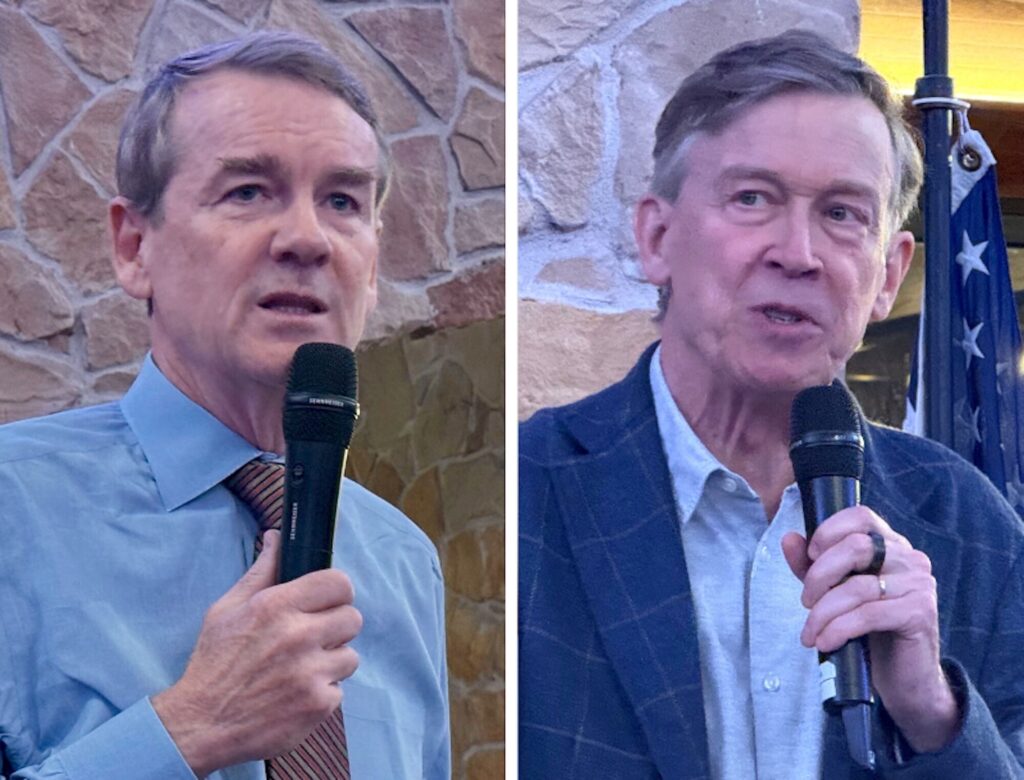
Bennet, Hickenlooper to vote against Trump’s 10th Circuit nominee from Colorado
Michael Karlik
michael.karlik@coloradopolitics.com
Updated 7 hours ago
Colorado’s two Democratic senators will not vote to confirm President Donald Trump’s nominee to a vacancy on the Denver-based federal appeals court. Trump has selected U.S. District Court Chief Judge Daniel D. Domenico, who he appointed as a federal trial...
Who’s spending in Colorado to get your vote?
Marianne Goodland
marianne.goodland@coloradopolitics.com
Updated 3 hours ago
Groups that raise unlimited amounts of money have spent about $20 million in May and June to try and influence Colorado voters’ choices in the upcoming June 30 primaries. By law, these groups cannot coordinate with the candidates they support....
U.S. government declines to oppose multiple challenges to immigration detention in Colorado
Michael Karlik
michael.karlik@coloradopolitics.com
Updated 6 hours ago
Multiple federal judges in Colorado granted petitions from people challenging the lawfulness of their immigration detention this week after the government took the unusual step of declining to submit arguments in opposition. Colorado’s federal trial court is facing a flood of...
Tina Peters tells supporters to ‘stand up and fight back’ at Castle Rock event
Marissa Ventrelli
marissa.ventrelli@coloradopolitics.com
Updated 6 hours ago
Tina Peters, the former Mesa County clerk recently released from prison, warned supporters that what happened to her could happen to them, too, if they did not “stand up and fight back” at an event at the Douglas County Fairgrounds....
Iran strikes cargo ship in Strait of Hormuz, endangering Trump’s peace
Christian Datoc
christian-datoc@coloradopolitics.com
Updated 12 hours ago
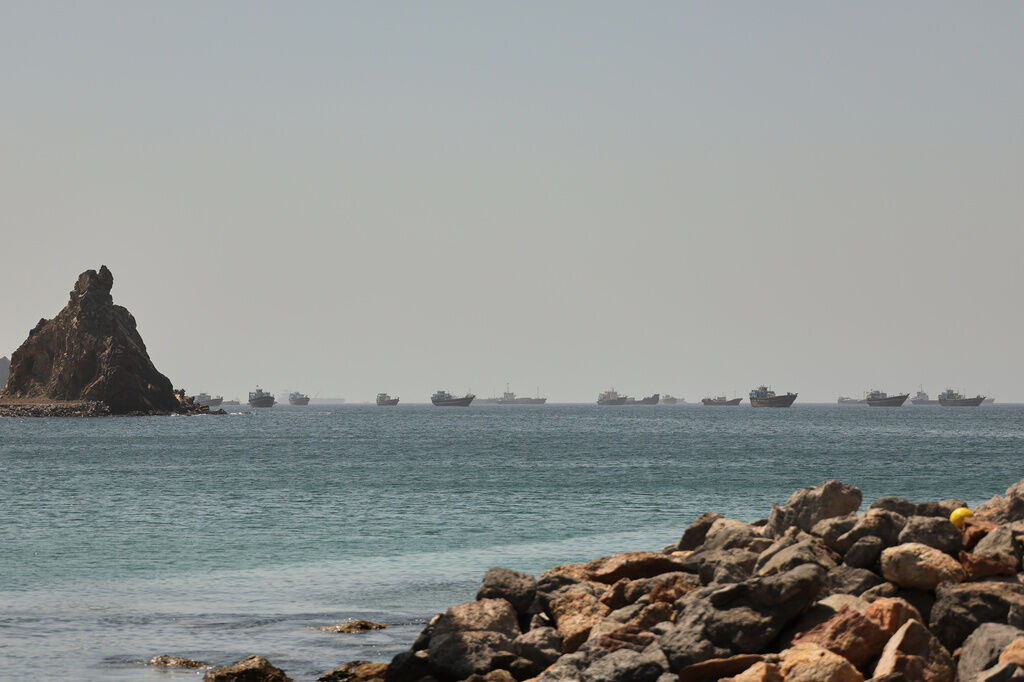
Iran attacked a cargo ship traveling through the Strait of Hormuz on Thursday, possibly upending President Donald Trump‘s diplomatic end to the war with Iran. A U.S. official confirmed to the Washington Examiner that the Islamic Revolutionary Guard Corps “struck...
Senate GOP tries to mend fences with Trump after heated lunch
David Sivak
david-sivak@coloradopolitics.com
Updated 10 hours ago
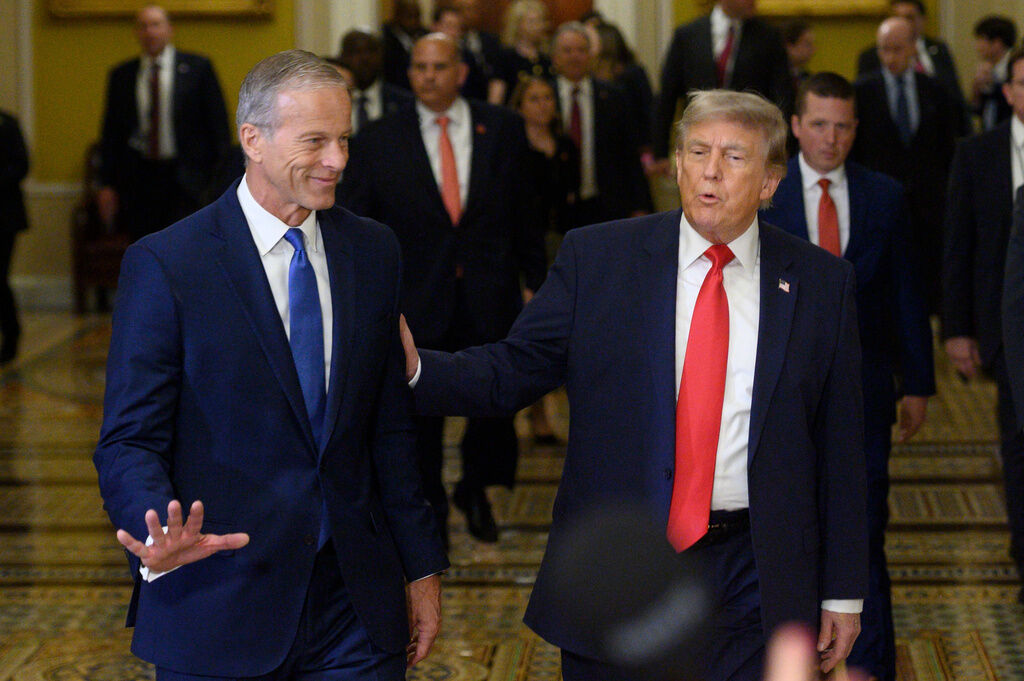
Senate Republicans are trying to turn the page on a heated lunch with President Donald Trump that brought weeks of tensions to a new high-water mark. In a symbolic gesture, Senate Republicans took another vote on the Iran war Wednesday...
Colorado justices discuss solution to confusion from prior criminal ruling
Michael Karlik
michael.karlik@coloradopolitics.com
Updated 4 hours ago
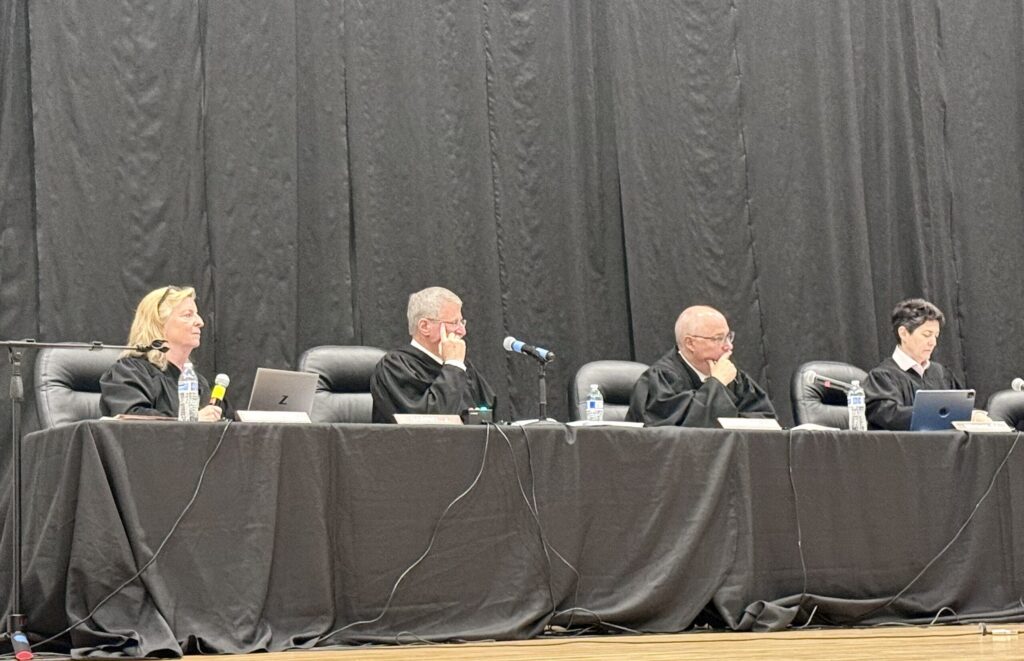
The Colorado Supreme Court pondered the fallout on Tuesday from its nearly six-year-old decision interpreting the state’s impaired driving laws, with the justices now addressing how defendants affected by the legal change must seek postconviction relief. In contrast to other...
Disagreements between Supreme Court justices bubble into public view as major rulings loom
The Associated Press
the-associated-press@coloradopolitics.com
Updated 14 hours ago
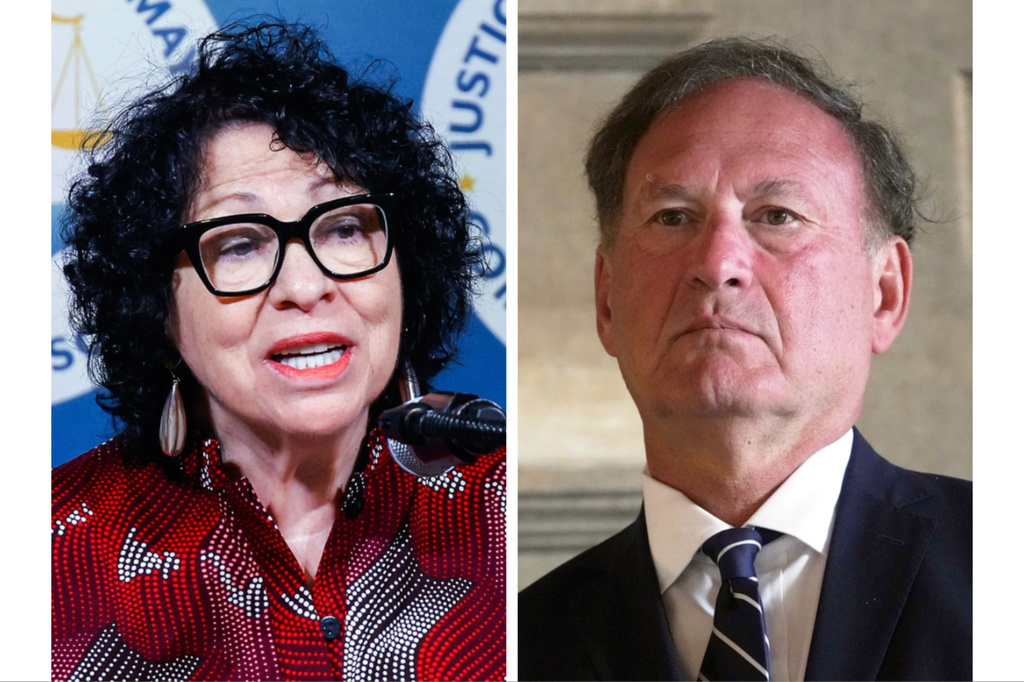
WASHINGTON (AP) — The Supreme Court is handing down major opinions at a rapid clip, but even with some of the biggest decisions yet to come there are signs of tension between the justices. One highly unusual exchange for the...
Will one unqualified AG replace another? | George Brauchler
George Brauchler
george-brauchler@gazette.com
Updated 1 day ago
Colorado Democrats are poised to nominate another attorney general candidate with de minimis relevant credentials or experience. Far from disqualifying, Colorado’s recent voting history mirrors that of America in favoring biography over experience, partisanship over policy, and emphasizing what divides...
Pueblo’s mayor keeps stirring the pot | Dennis Maes
Dennis Maes
dennis-maes@coloradopolitics.com
Updated 1 day ago
Pueblo Mayor, Heather Graham, has clearly proven to be a disciple of the Donald Trump school of governance. And, like her mentor, she is experiencing the same catastrophic results. The format is to ignore what the electorate approved and expects...