

Colorado governor signs law repealing parts of 2021 farmworkers’ union bill
An unconstitutional law involving agriculture that has been part of Colorado’s state statutes for almost four years is now a relic of the past.
On Thursday, Gov. Jared Polis signed into law Senate Bill 25-128, which repeals a portion of a 2021 law that allowed anyone, including union organizers, to enter the private property of farmers and ranchers without permission.
Backers said Senate Bill 21-087 would allow farmworkers to unionize and to engage in collective bargaining, although to date, only one union has been formed as a result of the law. Critics pointed to a U.S. Supreme Court decision signed days before Colorado’s law that nullified the right of union activists or other undefined “key service providers” to trespass on a farmer or rancher’s property legally.
The U.S. Supreme Court ruling in Cedar Point Nursery v. Hassid came out on June 22, 2021, declaring the right in California for “service providers” to enter a farm or ranch without permission a violation of the Fifth and Fourteenth amendments and a “taking.”
Polis signed SB 87, which contained similar provisions, three days later.
A year later, farmers, backed by ag organizations, filed the first of two lawsuits against the state, challenging the 2021 law’s provisions around “key service providers.” The bill begins by defining these providers as healthcare workers, medical personnel, educators, government officials, and clergy members, but also allows for “any other service provider” to whom an agricultural worker may need access.
That could be almost anyone, said Marc Arnusch, owner of Arnusch Farms in Weld County and a plaintiff in the first lawsuit. He suggested that it could allow activists to enter his property to talk to workers, and that’s not only a violation of his private property rights, but it’s also a danger to those visitors, he said. Farm work is inherently dangerous; walking around a farmer’s property without the landowner’s express permission would expose the visitor to potential injuries, Arnusch explained.
SB 87 had three main provisions: allowing service providers onto farm or ranch land for any purpose, requiring a minimum wage, and requiring overtime pay for more than 60 hours in a work week, a provision that the ag industry says is just as onerous as the service provider access issue. That’s also the subject of a lawsuit against the state, and there is a growing interest among lawmakers in repealing that section of SB 87.
One question is why it took four years for an unconstitutional law to be repealed.
Polis told Colorado Politics that the effort to fix SB 87 was supported by the Department of Agriculture and said he would have signed the fix in the past. However, the state’s position, as outlined in an October 2023 filing in the second lawsuit, was that landowners would only be eligible for compensation for a “taking” instead of equitable relief, which would halt the practice of allowing visitors onto a farmer’s land without permission, for example.
Polis said prior to the signing, the law remedies the conflict between the statute as outlined in SB 87 and the U.S. Supreme Court’s ruling in Cedar Point Nursery v. Hassid.
SB 128 will protect the constitutional rights of producers, Polis said.
Sen. Byron Pelton, R-Sterling, was part of the bipartisan group of lawmakers who marshalled SB 128 through the General Assembly, winning strong bipartisan votes in both chambers, with 53 “yes” votes in the House and 25 “yes” votes in the Senate.
The bill not only protects private property rights infringed upon by SB 87, Pelton said, but it will also prevent a second lawsuit against the state, which is currently pending before the state Court of Appeals.
Pelton noted the state is in a structural deficit and ending the lawsuit will save money. He also thanked his co-sponsors: Sens. Dylan Roberts, D-Frisco, House Minority Leader Ty Winter, R-Trinidad and House Agriculture Committee Chair Rep. Karen McCormick, D-Longmont, who was a sponsor of the 2021 bill.
Arnusch said the repeal is a big deal for agriculture, for private property rights and for rural Colorado. SB 87 was an overreach, he said, yet it still went into effect. That’s what started the litigation in which he was a part.
But SB 128 is “what good government does,” recognizing that something is wrong or something has happened that can be fixed…our government’s not as bad as we think because we got this one right.”
He applauded the sponsors, the ag organizations that worked on the bill, and the governor for agreeing to the repeal.
This “protects the farmer, it protects the landowner, but more importantly, it protects those who may want to come onto our farms…We do things to take care of our land, our water, and our property. But when those individuals choose to come on our farm unannounced, they’re at risk too.”
Arnusch told Colorado Politics those potential dangers could be from livestock, irrigation equipment or “crop protection products” used on the farm.
The cost to farmers from the 2021 law is hard to estimate, he added. What SB 87 created was “unsettledness of not knowing what we’re supposed to do and what we’re not supposed to do. Somebody can just come onto my farm and trespass under the definition of key service provider. What is that? Could that be an activist in sheep’s clothing? It certainly could be.” But with the signing of the new law, which creates certainty and protections for private property, he said.
“We’re too inherently tied to [the land], and we want to protect it at all costs,” he said. The law went into effect with Polis’s signature on Thursday.
Colorado Politics Must-Reads:

It’s time to let unaffiliated voters caucus | Vince Bzdek
Vince Bzdek
vince.bzdek@gazette.com
Updated 6 hours ago
There’s no getting around it: Colorado’s 3,000 county caucuses, which just wrapped up recently, left half the electorate out in the cold. Since unaffiliated voters now make up 51% of all Colorado voters, a majority of Colorado electors are barred...
Governor warns energy development both a boon and a risk to Colorado | A LOOK BACK
Rachael Wright, Special to Colorado Politics
rachael.wright@coloradopolitics.com
Updated 3 days ago
Forty-Five Years Ago This Week: “The real opportunity and the dangers before us are both real,” said Gov. Dick Lamm in his January state of the state address before the Colorado General Assembly. Lamm argued that energy development would continue...
A Mile High, again: Capitol M | Week of March 21, 2026
Marianne Goodland
marianne.goodland@coloradopolitics.com
Updated 3 days ago
The lighter side of the Capitol, usually…. Local Journalism Day, except they forgot their very own local journalists. The state Senate on Thursday, March 19, passed a resolution recognizing Local Journalism Day. Everyone voted for it, which is good, because...
Colorado Politics Calendar Mar. 23-29
Rachael Wright, Special to Colorado Politics
rachael.wright@coloradopolitics.com
Updated 2 days ago
CoPo’s weekly political calendar will help you find political and public-policy events throughout Colorado. It includes candidate and issue campaign events, public policy meetings, court hearings, state and local party conventions, assemblies, debates, rallies, parades, speaking engagements, traveling dignitary appearances,...

The insular bubble of caucuses and assemblies | SONDERMANN
Eric Sondermann
eric-sondermann@coloradopolitics.com
Updated 2 days ago
Nearly 30 years ago, then-Federal Reserve Chairman Alan Greenspan coined the term “irrational exuberance” to describe the overheated stock market. That descriptive phrase could also apply to much of the political realm. The hype in politics often grossly exceeds the...

Lauren Boebert’s hard ‘no’ on Pentagon Iran funding request puts Mike Johnson in tough spot
Emily Hallas, Washington Examiner
emily.hallas.washington.examiner@gazetteedit.wpenginepowered.com
Updated 1 day ago
Colorado U.S. Rep. Lauren Boebert announced on Thursday that she will not support further funding for the United States’s war in Iran, marking an uphill battle for the Trump administration’s effort to secure additional financing from Congress. “I’ve already told...
Rubio gains ground in 2028 jockeying as Iran war elevates his profile
Samantha-Jo Roth, Washington Examiner
samantha-jo.roth.washington.examiner@gazetteedit.wpenginepowered.com
Updated 1 day ago
Secretary of State Marco Rubio’s high-profile role in the Trump administration’s response to the Iran war is boosting his standing in the early jockeying for the 2028 Republican presidential nomination — and positioning him as a possible rival to Vice...
Federal judge dismisses claims against medical contractor for Eagle County jail suicide
Michael Karlik
michael.karlik@coloradopolitics.com
Updated 1 day ago
A federal judge dismissed the claims against a medical contractor for the Eagle County jail and its employees earlier this month, concluding there were insufficient allegations that they violated the constitutional rights of a man who died by suicide in...
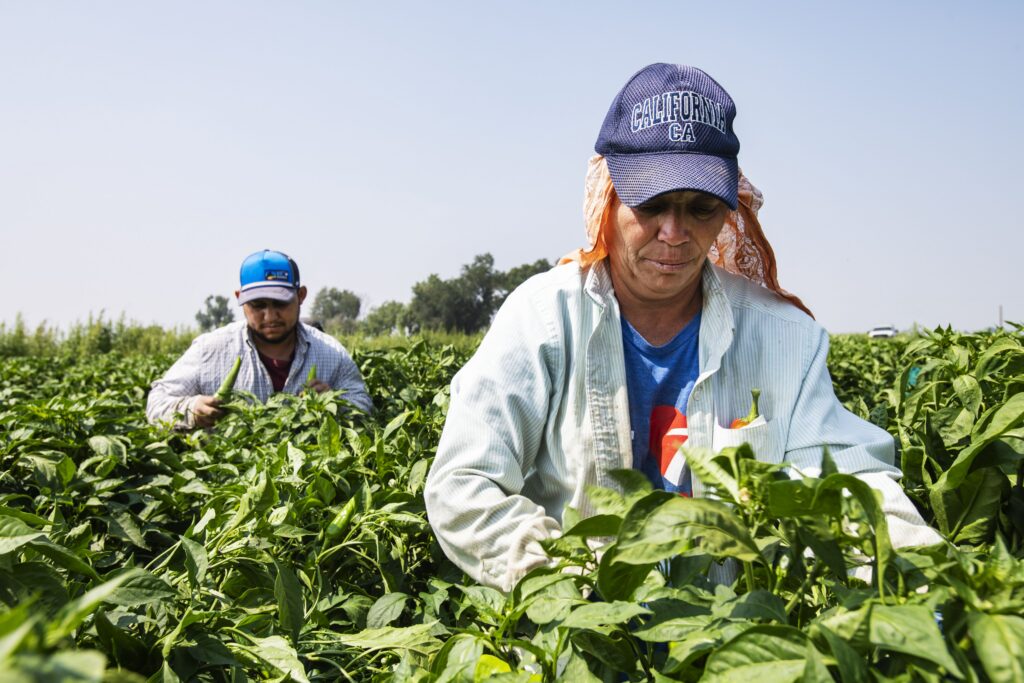
Colorado Senate committee advances bill increasing overtime threshold for farmworkers
Marianne Goodland
marianne.goodland@coloradopolitics.com
Updated 1 day ago
The struggle to balance farmworker protections with the survival of Colorado’s family farms took center stage Thursday as senators debated two competing overtime bills. The Senate Business, Labor and Technology Committee held a rare double-bill hearing that led to a...

Colorado bill to fund mental health by raising alcohol taxes defeated in House committee
Marissa Ventrelli
marissa.ventrelli@coloradopolitics.com
Updated 2 hours ago
Colorado legislators on Wednesday narrowly rejected a second measure that would raised taxes on alcohol products in order to fund mental health care treatment in the state. Proponents said the new revenue is necessary to help pay for mental health...