

Colorado Supreme Court rules police-guided text messages from victim’s father did not coerce defendant
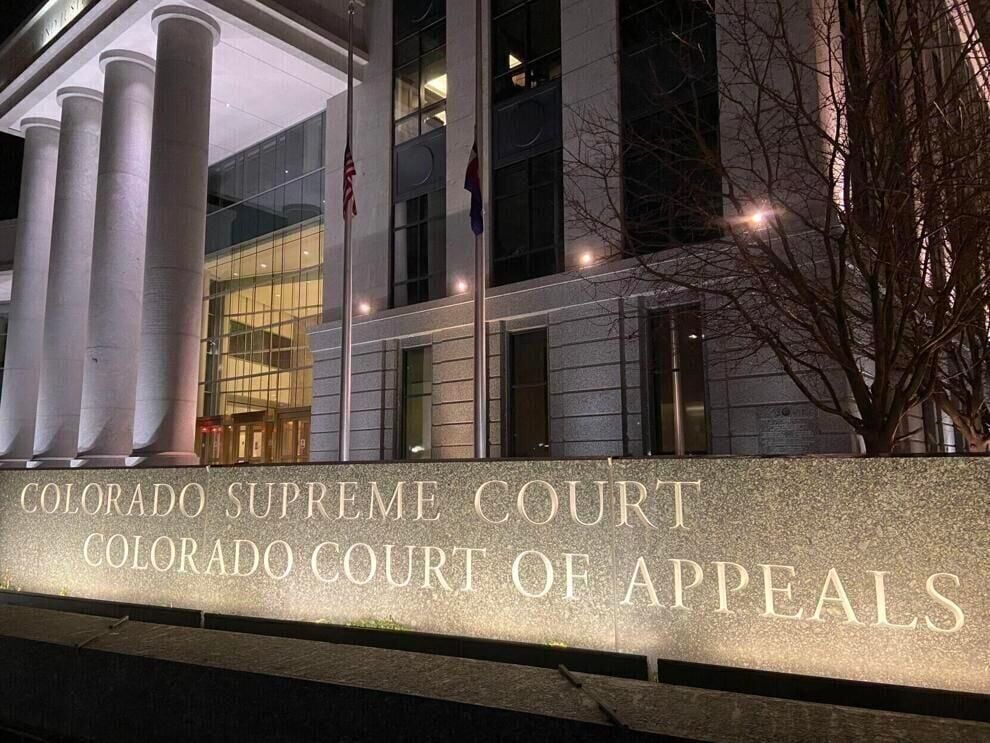
The Colorado Supreme Court ruled on Monday that a text message exchange between the father of an alleged child sex assault victim and the defendant was not coercive, even though a sheriff’s investigator was guiding the accusatory texts.
Patrick Nkongolo stands accused of five counts of sexual assault on a child. His alleged victim told a therapist that Nkongolo molested her beginning at age 11, which the therapist in turn reported to Arapahoe County.
As part of the investigation, a sheriff’s employee had the girl’s father initiate a text message conversation with Nkongolo. “Pretext calls,” as they are known, allow victims to talk with a suspect under the supervision of police, with the aim of uncovering incriminating information without the suspect being aware of law enforcement’s involvement.
On Nov. 15, 2023, the father texted Nkongolo with the sheriff’s investigator present. Among other things, the father said his daughter had made allegations that were sexual in nature. Nkongolo responded the contact amounted to “a hug” and “jokes.”

The father then wrote, “Tell me exactly what happened. We have to keep it in the family. But if you only tell me that you only kiss (her) once I don’t think I trust what you’re telling me. I can’t keep this in the family. I need the truth to see what we can do to keep this in the family.”
The father continued to raise specific allegations and demanded confirmation from Nkongolo. Nkongolo acknowledged giving the girl “a little friendly kiss,” but otherwise denied engaging in further contact. The father ended by implying he would speak with law enforcement.
After prosecutors brought charges, the defense moved to exclude the text exchange as evidence, arguing the father was acting as an agent of police and obtained Nkongolo’s statements through coercion.
Following a hearing, District Court Judge David Karpel agreed with the defense. In particular, he found “on several occasions, there were promises made” — specifically, the father’s statements that “we have to keep it in the family.”
That “is at least an implied promise that ‘If you tell me what happened, we won’t go to law enforcement’,” Karpel said. “I find that based on those factors, his will was overborne to the extent to make the text exchanges on that date involuntary.”
The district attorney’s office appealed directly to the Supreme Court, suggesting pretext conversations will “rarely, if ever” be coercive because the suspect does not know the other person is working with law enforcement.

“The law forbids coercion, not the strategic deception of taking advantage of a suspect’s misplaced trust,” wrote Deputy District Attorney Laura Wood. Moreover, “Nkongolo never admitted to the alleged conduct or indicated he was willing to say more than he had previously said,” suggesting there was no coercion.
The defense responded that Nkongolo did admit to some physical contact, if not to the allegations made by the victim. Moreover, his attorney urged the court to reject the prosecution’s assertion that pretext calls will “rarely, if ever” be coercive.
“Any holding from this Court expressing such invites opportunities for abuse by police to obtain potentially inculpatory statements from suspects by using an intermediary to engage in conduct that would be illegal if law enforcement personnel directly did so,” wrote Adam M. Tucker.
In its May 12 opinion, the Supreme Court declined to adopt that broad principle. Instead, it nodded to Karpel’s finding that there was a promise made to Nkongolo during the pretext conversation, but believed the promise was not coercive.
“An officer’s repeated exhortations for a suspect to be honest don’t necessarily overbear a defendant’s free will,” wrote Justice William W. Hood III. “And Nkongolo never changed his story, maintaining throughout the conversation that he had just been joking around. So, it’s clear that neither (the) implied promises, nor the circumstances as a whole, overbore Nkongolo’s will or induced him to speak.”
The case is People v. Nkongolo.

10th Circuit orders lawyer to pay $1,000 for faulty AI citations
Michael Karlik
michael.karlik@coloradopolitics.com
Updated 11 hours ago
The Denver-based federal appeals court ordered a lawyer on Monday to pay $1,000 to the opposing side for submitting a legal filing with fake case citations generated by artificial intelligence. A three-judge panel of the U.S. Court of Appeals for...

Supreme Court finalists selected, federal judges slash backlogs | COURT CRAWL
Michael Karlik
michael.karlik@coloradopolitics.com
Updated 18 hours ago
Welcome to Court Crawl, Colorado Politics’ roundup of news from the third branch of government. Coloradans learned who the three finalists are for a state Supreme Court vacancy, and new data show that Colorado’s federal trial judges reduced their backlog...
Federal judge blasts government for violating court order, confiscating man’s property
Michael Karlik
michael.karlik@coloradopolitics.com
Updated 2 days ago
A federal judge gave the government three hours on Friday to return the property of a man released from immigration detention, which it allegedly retained in violation of her previous order. “At its most benign, this failure is an unforced...
DA’s withdrawal from veterans treatment court not judge’s problem, ethics panel says
Michael Karlik
michael.karlik@coloradopolitics.com
Updated 4 days ago
There are no ethical concerns from a judge continuing to participate in a specialty veterans treatment court if the district attorney’s office has withdrawn from the program, the Colorado Supreme Court’s ethics committee advised on Wednesday. Colorado law permits chief...
Divided appeals court orders insurance company to pay $35,600 for delayed disclosure of policy
Michael Karlik
michael.karlik@coloradopolitics.com
Updated 4 days ago
Colorado’s second-highest court concluded on Thursday that an insurance company violated state law when it refused to disclose an automobile policy to an injured motorist for nearly one year after she requested it. By 2-1, a three-judge Court of Appeals...
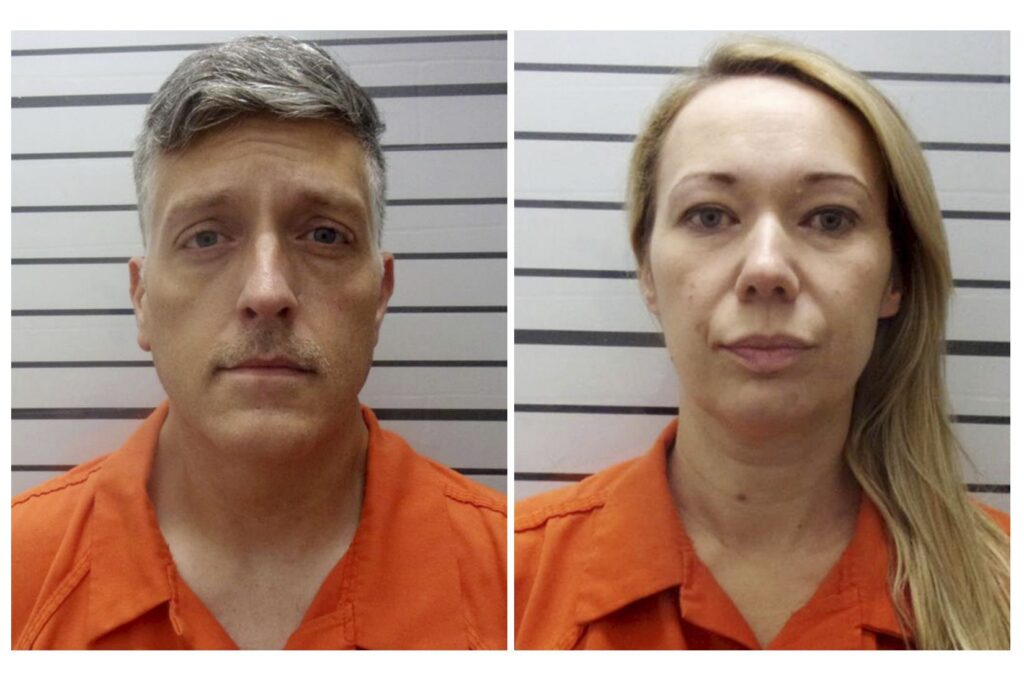
Judge expected to decide Monday whether to accept latest plea agreements for Hallfords
Mackenzie Bodell
mackenzie-bodell@coloradopolitics.com
Updated 4 days ago
An El Paso County judge is expected to decide Monday whether to accept new negotiations that would extend the prison sentence for Jon and Carie Hallford, coming on the heels of the court rejecting the original plea agreements for the...
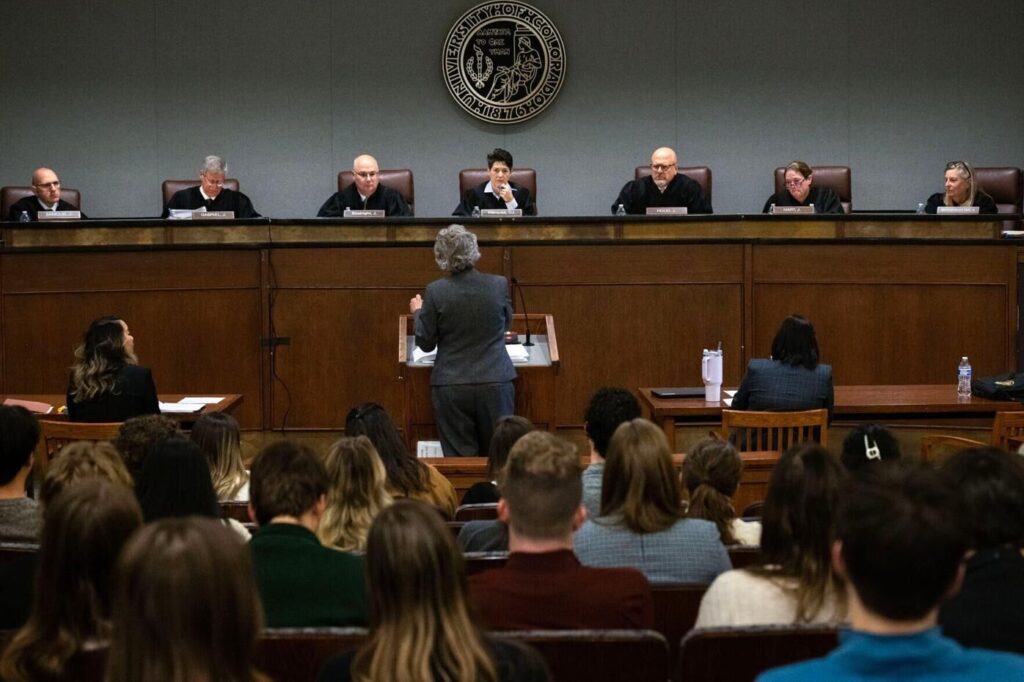
Who are the 3 finalists for the Colorado Supreme Court?
Michael Karlik
michael.karlik@coloradopolitics.com
Updated 5 days ago
A citizen-led nominating commission has chosen the finalists for a vacancy on the Colorado Supreme Court, the first opening in five years on the seven-member court. The vacancy arose after the unexpected resignation of Justice Melissa Hart, who formally departed...
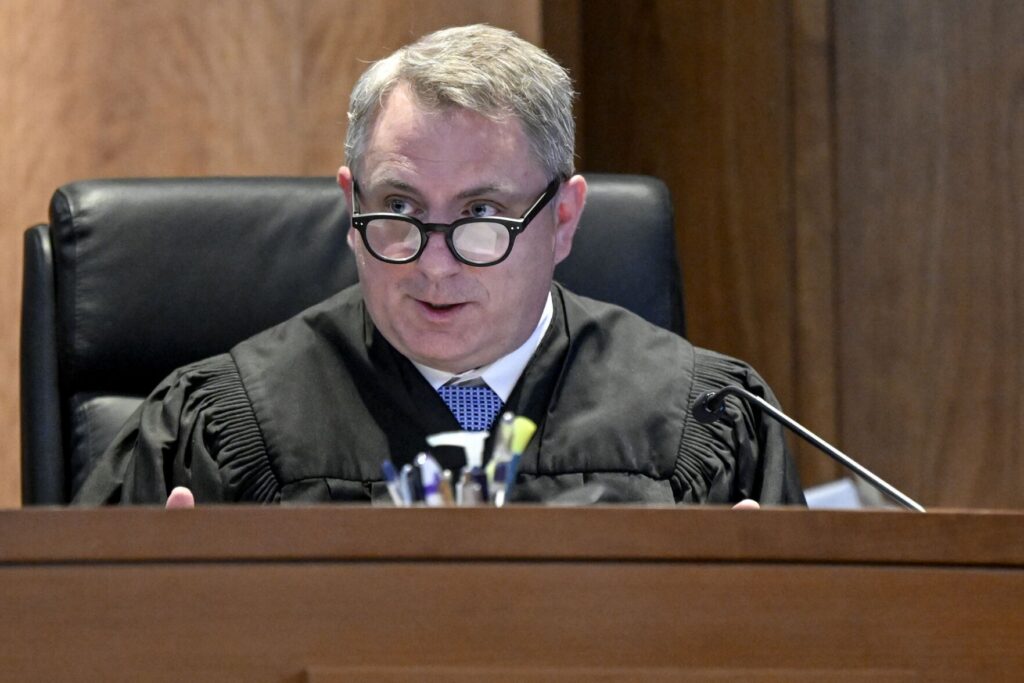
Christopher Zenisek, trial judge experienced with high-profile cases | SUPREME COURT FINALISTS
Michael Karlik
michael.karlik@coloradopolitics.com
Updated 5 days ago
After the Marshall fire burned through Boulder County in the final days of 2021 and wound up destroying more than 1,000 homes, the sprawling 4,000-plaintiff litigation was assigned to District Court Judge Christopher Zenisek of Jefferson County. Zenisek would go...
Andrea Wang, water and energy expert | SUPREME COURT FINALISTS
Michael Karlik
michael.karlik@coloradopolitics.com
Updated 5 days ago
When the late Chief Justice Mary Mullarkey authored a 2002 opinion in the complex and long-running Taylor Ranch case involving landowners’ claims to access a 77,000-acre tract in the San Luis Valley, she worked with her law clerk, Andrea S....
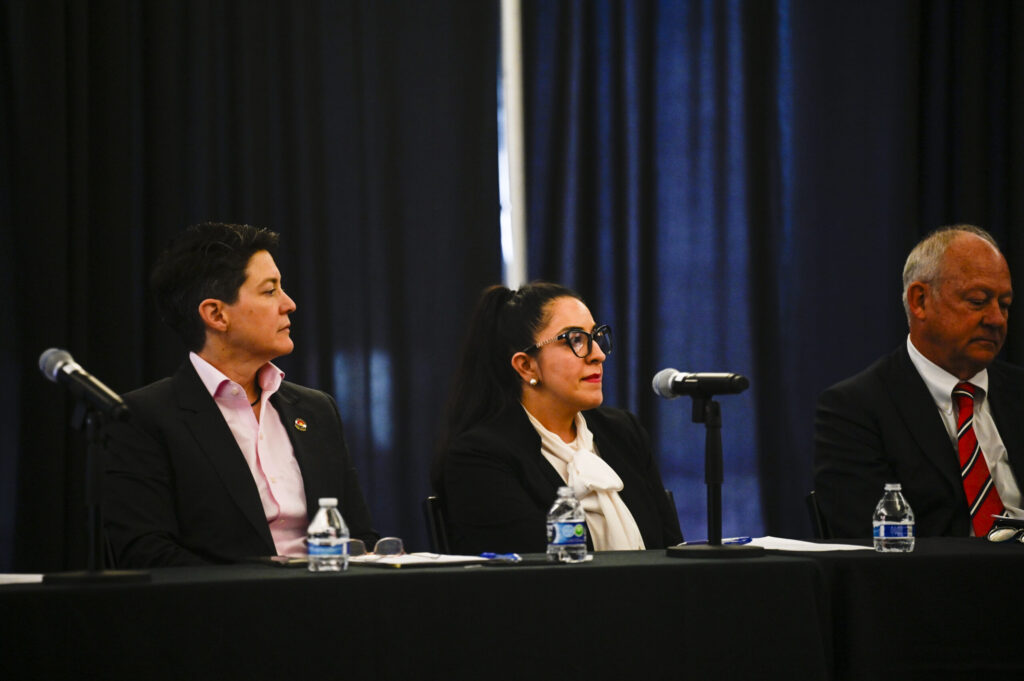
Susan Blanco, innovator in the judiciary | SUPREME COURT FINALISTS
Michael Karlik
michael.karlik@coloradopolitics.com
Updated 5 days ago
Less than 24 hours after her selection as a finalist for a Colorado Supreme Court vacancy, Chief Judge Susan Blanco was back on the bench in Fort Collins, moving methodically through the variety of complications she encountered. “Your goatee might...