

Colorado School of Mines students raising awareness of Israel-Hamas war
As the war between Israel and Hamas continues well into its second year, college protests have waned since the impassioned displays across the U.S. ranged from peaceful to violent and led to interventions from administration and law enforcement.
At the Colorado School of Mines, however, a group of students has remained steadfast in its public opposition to the ongoing conflict.
The school, noted for its academic rigor and career-minded, apolitical student body, has hosted various student-led events regarding the war since shortly after it began. Orediggers Against Apartheid became a registered student organization in the fall of 2024 to spread awareness and education about human rights issues and divestments from crimes against humanity.
Following some initial planning in the spring of 2024, students decided to form the organization in August as a response to what it felt was a lack of action across the campus for ongoing conflicts in the Palestinian territories, the Democratic Republic of Congo and Sudan.
“Most of our peers are too consumed with their overwhelming course loads that give Mines its statewide infamy to have extra free time to spare,” a news release stated. “We are all scientists and engineers; people who might be more comfortable talking about electrons than current events.
“We know that disruptive actions could impede students’ ability to complete schoolwork or compete in this hyper-competitive job market, potentially resulting in more antipathy than sympathy, more resistance to our movement than progress.”
With that in mind, the club’s members took a decidedly academic approach, backing up every public statement and presentation with multiple sourced citations that include Human Rights Watch, Amnesty International, Brown University, the United Nations Office for the Coordination of Humanitarian Affairs and the American Friends Service Committee.
A spokesperson for the School of Mines said that a registered student organization on campus must {!–StartFragment–}have at least 10 members, identify a faculty or staff adviser, create a set of bylaws and complete a training session offered by the Student Activities, Involvement and Leadership office.
On Jan. 28 and 29, the club displayed the exhibit, “Engineering Genocide,” on the Mines Maple Plaza during the school’s career fair. The exhibit included a 10-foot-tall and 16-foot-wide acrylic-on-wood mural highlighting “Palestinian culture, Israeli State terrorism, and the complicity of American corporations in the illegal occupation and now genocide of the Palestinian people.”
Roland Bennet, a student with Palestinian ancestry and PhD candidate in the school’s physics department, said that the model also physically represents the separation barrier in the Israeli-occupied West Bank, commonly referred to as the “apartheid wall” by Palestinians, that spans more than 400 miles.
Also depicted are the networks of fencing and checkpoints, and a naval blockade that have been in place since 2007 to limit access to and from Palestinian territory. Israel has stated the blockade’s purpose is to prevent the smuggling of weapons into Gaza and to pressure Hamas, but Bennett, along with other human rights groups, have called the blockade illegal since it restricts the flow of goods and limits the travel of Gazans.
“I think this is something that most Americans don’t know: that the occupation has hermetically sealed Gaza from the rest of the world,” he said.
Inspired by a similar structure at Harvard University, local representatives with the political activism nonprofit Future Coalition’s Youth Direct Action Fund originally wanted to erect a mural in Denver but failed to get approval. The solution was for nearby engineering students to construct the wall at the College of Mines.
Mines alum and former Youth Direct Action Fund program manager Jeeva Senthilnathan said that the grant has been used for student groups across the country.
“They’ve been doing the groundwork behind all the Gaza encampments that you’ve seen across the U.S. and it’s been quite a bit of a privilege and an opportunity to provide the very last of those funds to the Colorado School of Mines … to get engineers active on the front for Palestine,” she said.
Bennet’s father, a carpenter, and students from neighboring universities like CU Denver, CU Boulder and Regis University assisted the Mines students in the exhibit’s construction and painting, which was completed in 11 days.
The timing and placement of the mural to coincide with the college’s career fair was because of the presence of companies like Chevron and Lockheed Martin, who are often present to meet with graduating students.
Demonstrating the academic methods and considerations of the students, the exhibit also features resources for every statement and depiction illustrated on the wall that include jets and missiles developed by Lockheed Martin and energy provided by Chevron being used by Israel.
Other campus demonstrations across the country have received condemnation by local Jewish populations, with some leaders calling them “antisemitic rhetoric.”
Rabbi Jay Sherwood of Temple Shalom, the largest Jewish congregation in the Pikes Peak region, said he has personally heard from Jewish students in Denver, Boulder, Greeley, Colorado Springs and other college towns who said their campus life was disrupted by protesters during the 2023-24 academic year.
He added that these protesters have predominantly dismissed the actions of Hamas throughout the conflict.
“To say that there is a genocide in Gaza is a ridiculously stupid statement,” he said. “There is a war (going on there). Wars are terrible, people die, but let’s not forget that this war was started by Hamas terrorists that came into Israel and murdered thousands of people. … Israel is in a war against terrorists, and the people on the college campuses seem to have forgotten who started this war.”
Sherwood said that student protesters from that year “had no interest” in meeting with him and others who support Israel to discuss their differences.

Bennet said that the response to the exhibit was “primarily positive,” with many expressing interest in the art and message of the wall and few complaints. Senthilnathan added that students also came away learning more about alternative companies for employment.
“I think it was a good experience in terms of making a lot of students aware of what’s going on and also trying to veer them away from companies that are actively making unethical decisions,” she said.
Actions going forward
The career fair demonstration was one of many educational events organized by the club that include film screenings, panel discussions and lectures. The club looks to continue to put on events and bring in speakers from both Palestinian and Israeli heritage to discuss the cultural and historical implications of the war.
The club’s activities follow an executive order from President Donald Trump that looks to investigate campus demonstrations and revoke student visas for those deemed “Hamas sympathizers.”
Since then, more than 30 students across other Colorado universities have had their visas revoked, though it is unknown if this is related to past protests against the war. Senthilnathan said this has had an impact on how the organization has held demonstrations and that events have mostly been limited to film screenings and collaborations with the Colorado Palestine Coalition outside of the campus.
Visas revoked for UCCS, CU Boulder and Colorado State students
A School of Mines spokesperson told the Gazette that five Mines students have been impacted as of May 5 and that the school remains in communication with them as their status changes.
Sherwood said that he has heard of significantly less activity on campuses this year and that he encourages students to learn the entire history of the Middle East rather than just recent history when considering future demonstrations.
“Additionally, the violence that has been directed towards Jewish students across the country is not acceptable, taking over buildings is not acceptable, comparing Israelis to Nazis is not acceptable, calling for the death of Jews is not acceptable, blocking Jews from going to class on campus is not acceptable, interrupting classes because you disagree with a professor is not acceptable,” he said. “There’s a whole list of things that are not acceptable.”
Bennet said that the executive order should not impact the group’s planning going forward, given what he calls the group’s focus on highlighting the actions taken by Israeli leadership.
“Being against Zionism isn’t inherently anti-Semitic,” Bennet said. “As long as your focus is actually on Zionism … and not holding Jewish people collectively responsible for the crimes by the state of Israel, those are definitely important things to keep in mind.”
Bennet, in his fifth year at the school, said the plan is to continue the student club in the years after his graduation.
“I do not want to see progressive activism die at this school when I leave it,” he said. ”And I don’t think that will happen. We have a number of younger students who are involved.”

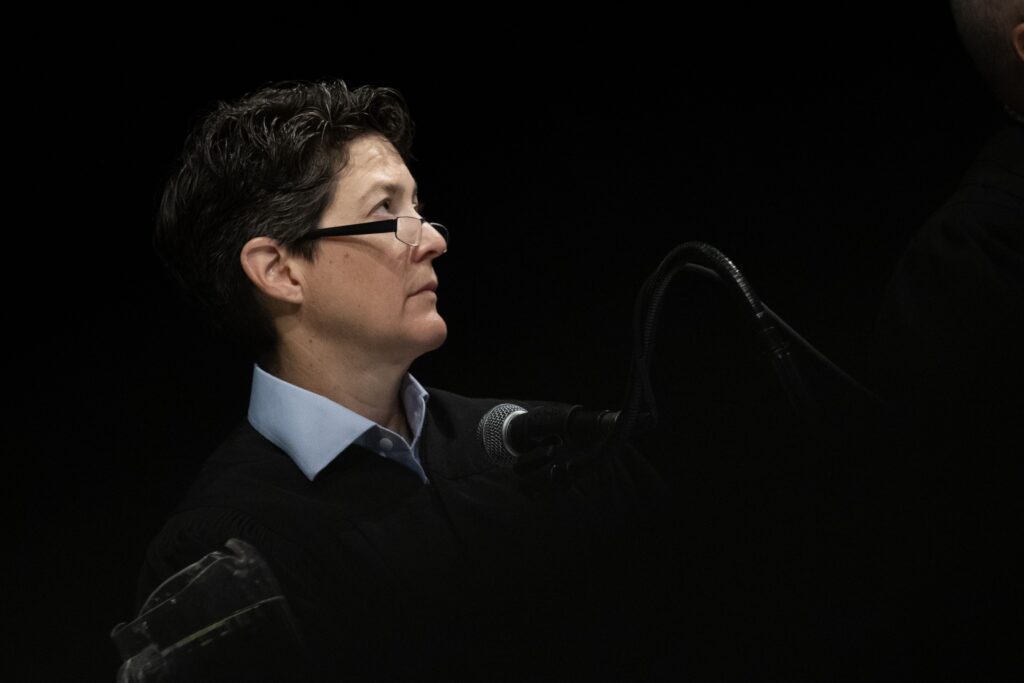
Colorado Supreme Court clarifies restraining order violations can always support burglary charge
Michael Karlik
michael.karlik@coloradopolitics.com
Updated 33 minutes ago
The Colorado Supreme Court’s majority ruled on Monday that a violation of a restraining order can also serve as a basis for finding a defendant guilty of burglary. Under state law, a person commits second-degree burglary by unlawfully entering or...

Big week ahead for major legislation to address housing affordability woes
Zach Halaschak, Washington Examiner
zach.halaschak.washington.examiner@gazetteedit.wpenginepowered.com
Updated 3 hours ago
The Senate is pushing ahead with a bipartisan bill to improve housing affordability, teeing up a critical week for housing on Capitol Hill and raising major questions about what provisions will be included. Senate Majority Leader John Thune (R-SD) filed cloture on legislation from the...

Macron goes nuclear with increases to French warhead arsenal
Timothy Nerozzi, Washington Examiner
timothy.nerozzi.washington.examiner@gazetteedit.wpenginepowered.com
Updated 3 hours ago
French President Emmanuel Macron is channeling the atomic spirit of his predecessor Charles de Gaulle with orders for the French military to “increase the number of nuclear warheads” in the nation’s arsenal. Macron announced the seismic shift in France’s defensive...
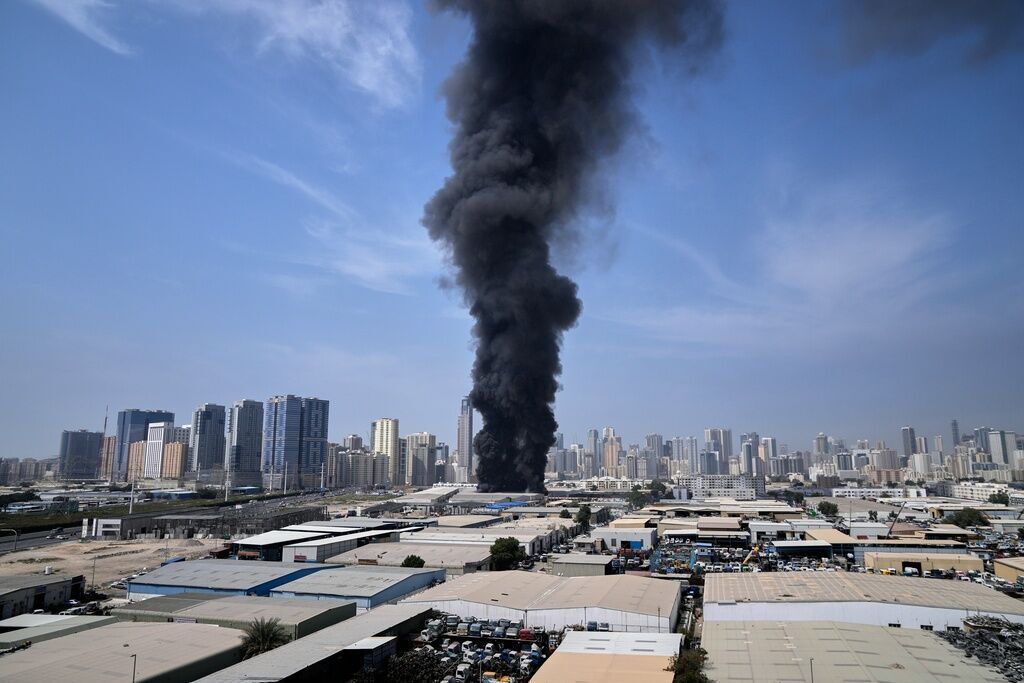
Who has been killed so far during US-Israel mission in Iran?
David Zimmermann and Keely Bastow, Washington Examiner
david.zimmermann.and.keely.bastow.washington.examiner@gazetteedit.wpenginepowered.com
Updated 3 hours ago
There have been numerous casualties on all sides since the joint U.S.-Israel strikes against Iran commenced over the weekend, with more lives expected to be lost as the campaign continues. The Islamic regime’s leadership is currently bearing the brunt of...
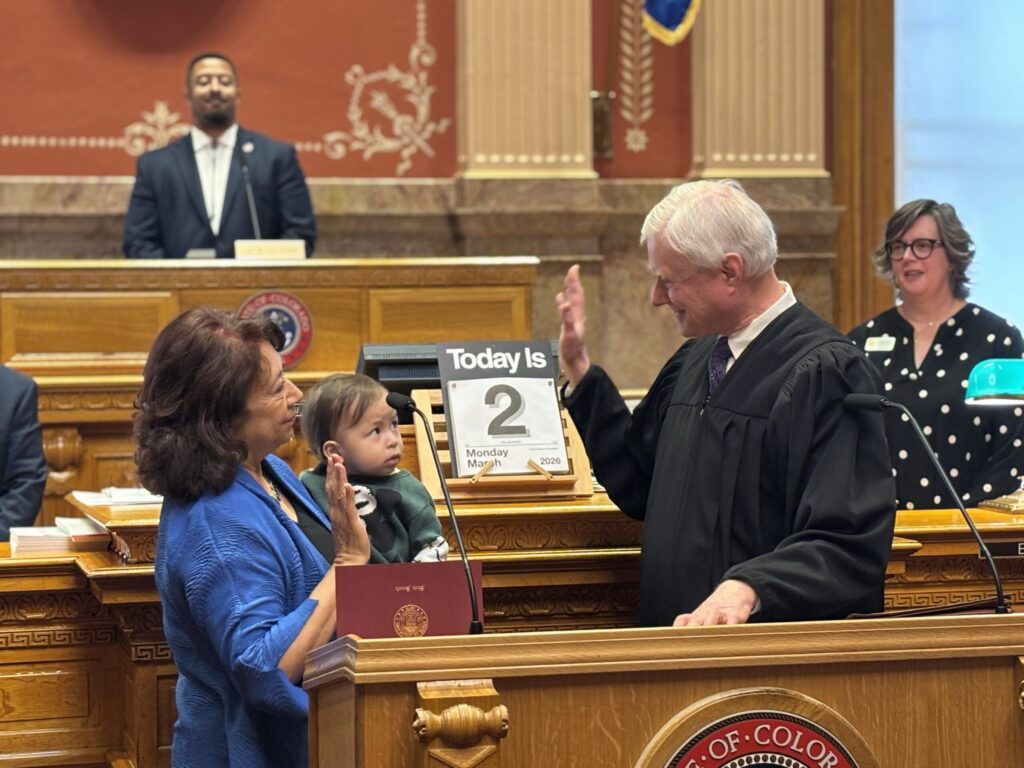
Colorado Senate swears in Adrienne Benavidez after district vacancy win
Marianne Goodland
marianne.goodland@coloradopolitics.com
Updated 3 hours ago
Sen. Adrienne Benavidez, a Democrat from Adams County, was sworn in Monday to the Colorado Senate, just four days after winning a vacancy election in District 21. She was sworn in by Colorado Court of Appeals Justice Lino S. Lipinsky...

10th Circuit judge creates vacancy, district court gets new chief judge | COURT CRAWL
Michael Karlik
michael.karlik@coloradopolitics.com
Updated 5 hours ago
Welcome to Court Crawl, Colorado Politics’ roundup of news from the third branch of government. A longtime member of the Denver-based federal appeals court will give the president a vacancy to fill, plus Colorado’s federal trial court will see a...
War in the Mideast widens as Trump says strikes on Iran could last several weeks
Jon Gambrell
jon.gambrell@associatedpress.com
Updated 5 hours ago
DUBAI, United Arab Emirates (AP) — The war in the Middle East spiraled further Monday as Israel and the United States pounded Iran in a campaign that U.S. President Donald Trump said would likely take several weeks. Tehran and its...

Denver mayor says his commute time tripled following ‘road diet’ change
Mark Samuelson Special to The Denver Gazette
mark.samuelson@denvergazette.com
Updated 2 hours ago
Mayor Mike Johnston is pushing back sharply against the claim by Denver councilmembers and bike activists that the city succumbed to lobbying pressure in revising a “road diet” plan for East Alameda Avenue, while noting that his own commute time...

Rural legislators, Colorado farmers defeat pollinator bill backed by Gov. Polis
Marianne Goodland
marianne.goodland@coloradopolitics.com
Updated 3 hours ago
A proposal to limit the use of neonicotinoid-coated crop seeds collapsed in the Senate Agriculture and Natural Resources Committee last week, as rural lawmakers, including two Democrats, joined Republicans to reject what they called an expensive, impractical mandate on farmers....

WATCH LIVE: Trump speaks on Iran
Dan Boniface
dan.boniface@denvergazette.com
Updated 8 hours ago
U.S. President Donald Trump is speaking live on Monday, March 2, 20026, about the conflict in Iran as he awards three U.S. soldiers the Medal of Honor.