

Colorado lawmakers consider live-streaming legislative committee hearings for first time
The public has been asking for it for years, and it looks like it will finally happen.
On Monday, the executive committee of the Legislative Council, comprised of six legislative leaders, looked at the cost of live-streaming videos of committee hearings at the Capitol. The discussion focused on a pilot program that would begin with the 2026 session. Should that move forward, Colorado would cease to be the only state in the nation that does not live-stream its legislative committee hearings.
For years, the lack of live video streaming has been a problem for governmental transparency advocates and other members of the public.
The cameras are already in the committee hearing rooms and used for remote testimony, so converting to live video streaming is a minor change.
According to Zack Wimberly, the senior information technology manager for the General Assembly, there will be some differences between Senate and House committee hearings. He pointed out that Senate cameras do not point at witnesses while testifying during hearings.
But the views were not unanimous. Senate Minority Leader Paul Lundeen, R-Monument, was against video livestreaming because of potential costs that he estimated could run in the millions.
“I’m a ‘no’ at this moment simply because I don’t think we need to open this door. Audio is fine,” Lundeen said.
Wimberly said it would cost about $70,000, including $20,000 for set-up and $50,000 to run the video for the first year.
House Speaker Julie McCluskie, D-Dillon, has supported the change, telling the committee Monday it is “a modest and reasonable expense,” given the public’s input in a December hearing regarding changes to the open meetings law. That meeting drew comments from the public that the legislature is not being transparent due to Senate Bill 24-157, which carved out exceptions to the open meetings law for the General Assembly.
A pilot program would be a significant first step, McCluskie told the committee Monday, adding the committee could be ready to move forward as soon as its June meeting.
Wimberly told the executive committee in February that the General Assembly has been set up for video for a long time. But the leaders need to consider several questions, such as who would do the work. Would it be the Colorado Channel or legislative staff, and could they do multiple committees?
Senate Majority Leader Robert Rodriguez, D-Denver, says more technology leads to more glitches.
According to Wimberly, that leads to concerns from the public that the legislature is “hiding something” when the video or audio stops working.
In March, Wimberly presented a series of options, ranging from not doing anything, streaming video through a paid vendor using a static camera, hiring a full-time video producer, using the current contractors who provide audio for committee hearings or using the Colorado Channel to expand their existing work.
Wimberly recommended going with Sliq Media Technologies on Monday, which already provides audio for committee hearings. According to the Colorado Freedom of Information Coalition, Sliq provides video service in four states.
“I’m encouraged,” said Jeff Roberts of the Coalition. He noted lawmakers have not stopped talking about it throughout the 2025 sessions. The Speaker and the House Republican caucus are in favor of it. It sounds like a groundswell of doing something, even as an initial first step,” he said.
Research from CFOIC shows Colorado is the only state that does not video livestream its committee hearings at all, although two states only broadcast their budget and appropriations committee hearings.
“It’s about time,” he told Colorado Politics, even if the video is not the best quality. Once people see how valuable video can be in following who’s talking, maybe they’ll find the money to make it useful for broadcast news, for example, he said. “It’s a needed step.”

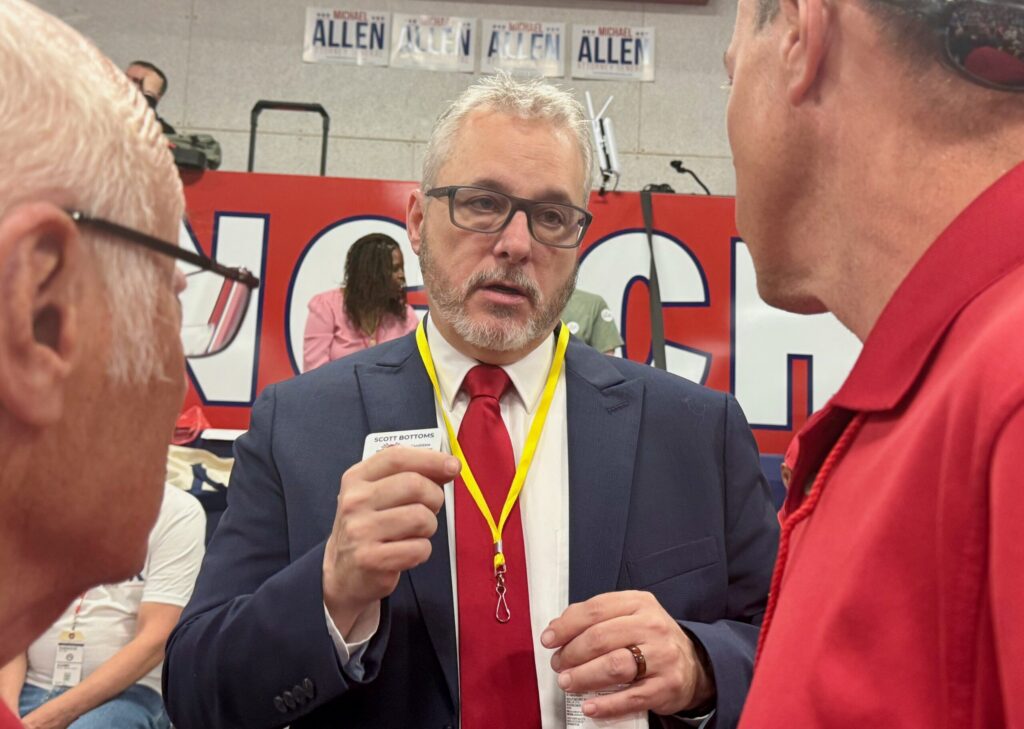
Pastors Scott Bottoms, Victor Marx win spots in Colorado GOP’s gubernatorial primary at party assembly
Ernest Luning
ernest.luning@coloradopolitics.com
Updated 7 hours ago
Two pastors from Colorado Springs qualified Saturday for the Republican gubernatorial primary ballot at the Colorado GOP’s state assembly in Pueblo in a party meeting that dragged late into the night. State Rep. Scott Bottoms, who is known as one...
Colorado House finishes work on 2026-27 state budget, finally
Marianne Goodland
marianne.goodland@coloradopolitics.com
Updated 13 hours ago
The House on Saturday, after four days of work – it usually takes two – finished up their work and voted on the $46.8 billion 2026-27 state budget, as contained in House Bill 1410 and 64 accompanying measures designed to...
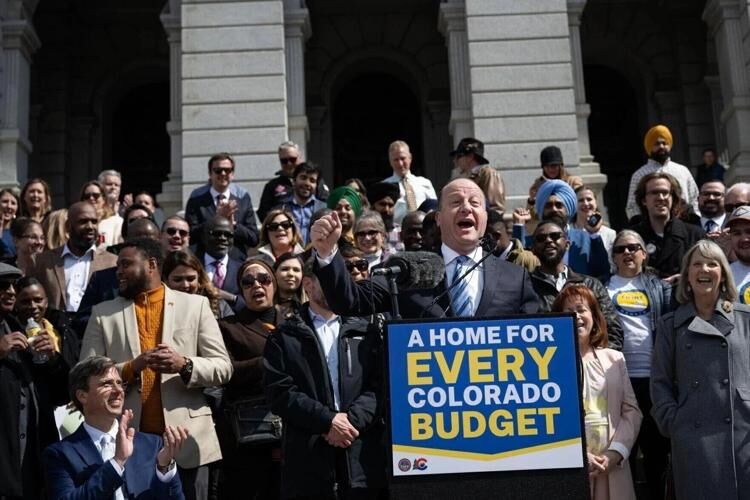
Home rule has protected Colorado cities for over 125 years | Cronin and Loevy
Tom Cronin Bob Loevy
tom-cronin-bob-loevy@coloradopolitics.com
Updated 14 hours ago
Colorado is currently gripped by a political struggle between the governor plus the legislature in Denver and populous home-rule city governments, mainly on the Front Range, such as Colorado Springs. In the past few years, the legislature has been passing bills that applied to city government policies, which...

Colorado Politics calendar Apr. 13-19
Rachael Wright, Special to Colorado Politics
rachael.wright@coloradopolitics.com
Updated 4 days ago
CoPo’s weekly political calendar will help you find political and public-policy events throughout Colorado. It includes candidate and issue campaign events, public policy meetings, court hearings, state and local party conventions, assemblies, debates, rallies, parades, speaking engagements, traveling dignitary appearances,...
Minority Leader Peña argues against oil and gas bill | A LOOK BACK
Rachael Wright, Special to Colorado Politics
rachael.wright@coloradopolitics.com
Updated 4 days ago
Forty-Five Years Ago This Week: “The Colorado House of Representatives had just given its final approval to House Bill 81-1152, which created $9 million in tax relief to oil and gas companies. But this came “at the expense of local...
A longshot, upset bid and a few quick takes | SONDERMANN
By Eric Sondermann
by-eric-sondermann@coloradopolitics.com
Updated 3 days ago
It is hard to keep up these days. The flow of news often seems overwhelming. Let’s focus today on an unusual congressional race before moving on to a few quick, supplementary observations. Since its creation 54 years ago, Congressional District...
An “-“ends tribute in a week full of “odds” | Capitol M | Week of April 11, 2026
Marianne Goodland
marianne.goodland@coloradopolitics.com
Updated 3 days ago
The lighter side of the Capitol, usually… The decision to read the budget bill — the long bill, which spans 661 pages this year — put a damper on the House’s already less‑than‑festive mood. So Capitol M decided to catch...
What you need to know about the Colorado legislature reading a 661-page bill aloud
Marianne Goodland
marianne.goodland@coloradopolitics.com
Updated 13 hours ago
A rarely used procedural move by a Republican legislator threw the Colorado House into an extended slowdown, after she invoked her right to have a nearly 700-page state budget bill read aloud in full. Once Rep. Brandi Bradley, R‑Roxborough Park,...
Literal reading of budget bill complicates Colorado legislators’ plans for GOP assembly
Marianne Goodland
marianne.goodland@coloradopolitics.com
Updated 19 hours ago
Republican Rep. Brandi Bradley’s decision to force the full reading of the state budget — called the “long bill” for its obvious length — has not only slowed House business to a crawl but also disrupted her colleagues’ plans for...
10th Circuit provides guidance on police searches of cloud-based data
Michael Karlik
michael.karlik@coloradopolitics.com
Updated 2 days ago
The Denver-based federal appeals court provided guidance to law enforcement agencies on Monday for ensuring that searches of cloud-based accounts comply with the Fourth Amendment’s requirements. A three-judge panel of the U.S. Court of Appeals for the 10th Circuit noted...