

Colorado House approves bill to revive condo market by addressing construction defects
The only bill left standing in the General Assembly dealing with “construction defects” — a measure aimed at reviving Colorado’s condo market — won preliminary approval from the House on Friday, but not before sponsors proposed a long list of amendments.
The amendments came from both sides of the debate — from backers of the bill and the Colorado Trial Lawyers, which opposed the measure.
The goal of House Bill 1272 is to address issues early, said Rep. Shannon Bird of Westminster, who sponsored the bill, along with Rep. Andrew Boesenecker of Fort Collins.
As introduced, HB 1272 requires a third-party, independent inspector to make periodic checks during the construction process. The inspector cannot be employed or affiliated with the condo builder. While the builder typically pays for the inspector, the standard practice is for the property or casualty insurer to choose the inspector.
The builder is tasked with responding to what the inspector identifies as a problem and with fixing it. In addition, the bill requires the claimant — the homeowner — to mitigate the defect and specify how the claim would be satisfied, as well as the consequences for failing to satisfy the claim.
A builder must provide the owner with an offer to settle the claims or, in lieu of that, a written response that identifies the standards applicable to the claim and explains why the defect does not require repair.
An amendment on Friday added additional language to the bill’s builder incentive program, establishing an offer and counteroffer process. The builder would send the claimant an offer to settle the claim by paying a specific amount of money, agreeing to remedy the defect and a written response that identifies the standards that apply to the defect construction and explains why the defect does not require repair or isn’t within the builder’s responsibility.
The claimant would then have the opportunity, within 30 days, to respond to the offer and to determine what happens next.
Another amendment requires a homeowners’ association to use any settlements with the builders first to address the defects.
The statute of limitations for filing claims would change under the measure to 10 years unless the builder provides a warranty that meets the requirement of the revised law. In that case, the statute of limitations is six years.
Also, the approval for a homeowners’ association to pursue a claim will increase to 65% from its current 50% plus one.
Finally, the bill includes a “rebuttable presumption,” which can be used in a lawsuit, that a property does not have a construction defect when a state agency or local government has issued a certificate of occupancy.
“Tough conversations take time,” Boesenecker said, applauding Bird for her multi-year effort, which included close to 100 meetings with opponents and backers. He said the bill is about fair and balanced reforms, ensuring that high-quality homes are built and problems are fixed, and high costs that deter development are reined in.
“This is a problem, which I believe firmly that we have a moral obligation to fix,” Bird told the House. She pointed out her generation could buy something and generate equity, savings that could be used to buy or borrow against.
“We’ve been able to have control over our own financial destiny,” he said. “When you have the financial security of owning your own home, you’re no longer at the whims of changing lease terms or increasing rents. We need to do better. Our state’s best answer cannot be more taxpayer-subsidized affordable housing.”
The debate was, at times, more of a celebration than a battle, with lawmakers on both sides of the aisle stepping up to support the compromise or at least not speaking against it.
That included House Majority Leader Jennifer Bacon, D-Denver, whose own bill on the issue was postponed last week in favor of negotiations with the backers.
She asked that lawmakers remember the homeowners who have been through defects issues.
“The purpose of this bill, on one hand, is to talk to the market on what they need to build, but it cannot be at the expense of the homeowner … trying to move into the middle market,” Bacon said.
Homeowners can now recover attorney’s fees, an amendment adopted Friday.
There are still outstanding questions, Bacon said, and she said she looks forward to striking a balance where builders can build but won’t leave homeowners in a place where they buy at their own risk.
“This is a critical fix that will move us in a positive direction,” Rep. Chad Clifford, D-Centennial, said. “It will enable insurers to cover contractors who want to build ownable housing.”
He noted that his city has had condo developments approved for years, but they have been held up because contractors can’t get insurance.
“This is a model piece of legislation,” he added, from what it looked like a year ago.
House Minority Leader Rep. Rose Pugliese, R-Colorado Springs, the bill’s first co-sponsor, called it an “incredible” first step. There’s probably more work to be done, but she indicated that she’s confident it will happen, she said.
The bill drew opposition from Rep. Steven Woodrow, D-Denver, who disputed the assertion that a primary reason the condo market has dried up was the high cost of construction liability insurance.
“The sponsors have bent over backward” to incorporate the amendments, he said, but his objection is to the presumption that the problem lies with “greedy” trial lawyers.
When the time came for the voice vote, not a single “no” could be heard. A final vote could take place as soon as Monday and, if adopted, the bill will head to the Senate.


Trump administration seeks to roll back protections for imperiled species | OUT WEST ROUNDUP
The Associated Press
the-associated-press@coloradopolitics.com
Updated 3 days ago
MONTANA Endangered species rollback sought BILLINGS — President Donald Trump’s administration moved on Nov. 19 to roll back protections for imperiled species and the places they live, reviving a suite of changes to Endangered Species Act regulations from the Republican’s...

Clash of the titans: Democratic race for governor pits two candidates similar in focus, but very different in style | Vince Bzdek
Vince Bzdek
vince.bzdek@gazette.com
Updated 8 hours ago
By Vince Bzdek The race for governor is shaping up to be a clash of Democratic titans, U.S. Sen. Michael Bennet and Attorney General Phil Weiser. They are two of Colorado’s highest profile politicians with deep track records who...

Calendar Dec. 8-14
Rachael Wright
rachael.wright@coloradopolitics.com
Updated 4 days ago
CoPo’s weekly political calendar will help you find political and public-policy events throughout Colorado. It includes candidate and issue campaign events, public policy meetings, court hearings, state and local party conventions, assemblies, debates, rallies, parades, speaking engagements, traveling dignitary appearances,...
GOP chair candidates circle Benson, statehouse candidate alleges SOS voter fraud | A LOOK BACK
Rachael Wright
rachael.wright@coloradopolitics.com
Updated 4 days ago
Thirty-Five Years Ago This Week: Although Colorado Republican Party Chairman Bruce Benson had told one of his predecessors that he hadn’t yet made up his mind as to whether he’d run for a third term, party insiders had already begun...
Dear Abby: A better answer to your question | SONDERMANN
Eric Sondermann
eric-sondermann@coloradopolitics.com
Updated 2 days ago
It was the beginning of October. I had been invited to speak to a class on political journalism at Colorado College, my old alma mater. The class was taught by none other than Vince Bzdek, the editor-in-chief of this paper...

Federal judge declines to order Denver to let police critic apply for review board
Michael Karlik
michael.karlik@coloradopolitics.com
Updated 5 hours ago
A federal judge declined on Friday to order that Denver permit a longtime police critic to apply to join the board tasked with reviewing officers’ use of force. Regan Benson sought to become one of the two community members on...
Flags lowered, colors raised: Colorado leaders and friends celebrate Sen. Faith Winter’s life
Marianne Goodland
marianne.goodland@coloradopolitics.com
Updated 2 days ago
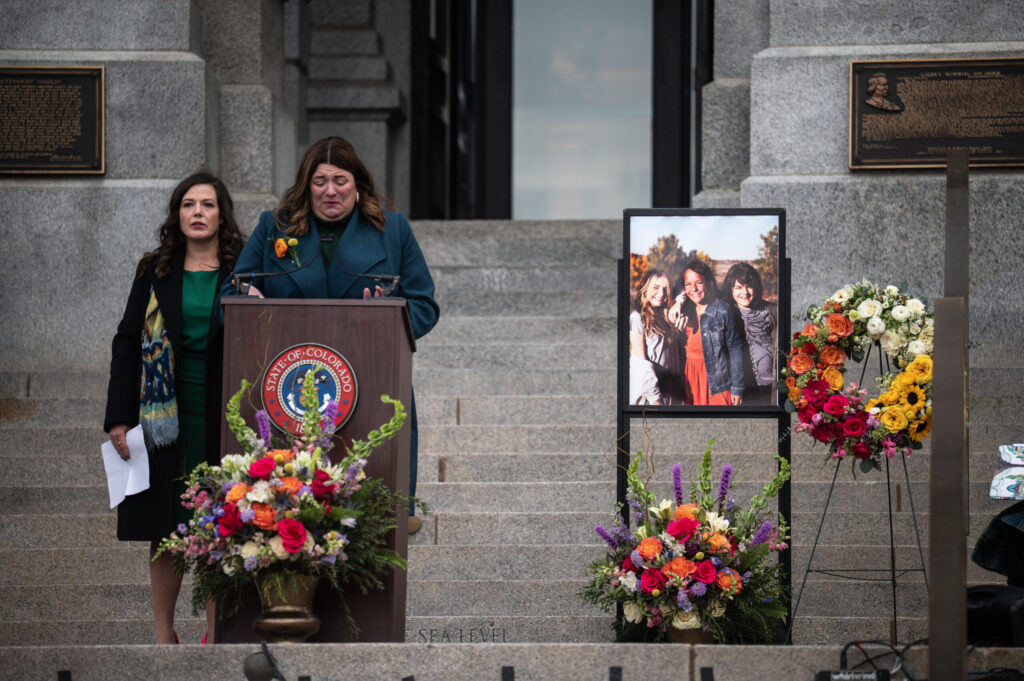
It was the colors that stood out as hundreds braved the cold on Friday to celebrate the life of Sen. Faith Winter, who died in a two-car crash on Nov. 26. Flags at the state Capitol flew at half-staff at...
Colorado Supreme Court to hear case on ballot measure disclosure requirements
Marissa Ventrelli
marissa.ventrelli@coloradopolitics.com
Updated 2 days ago
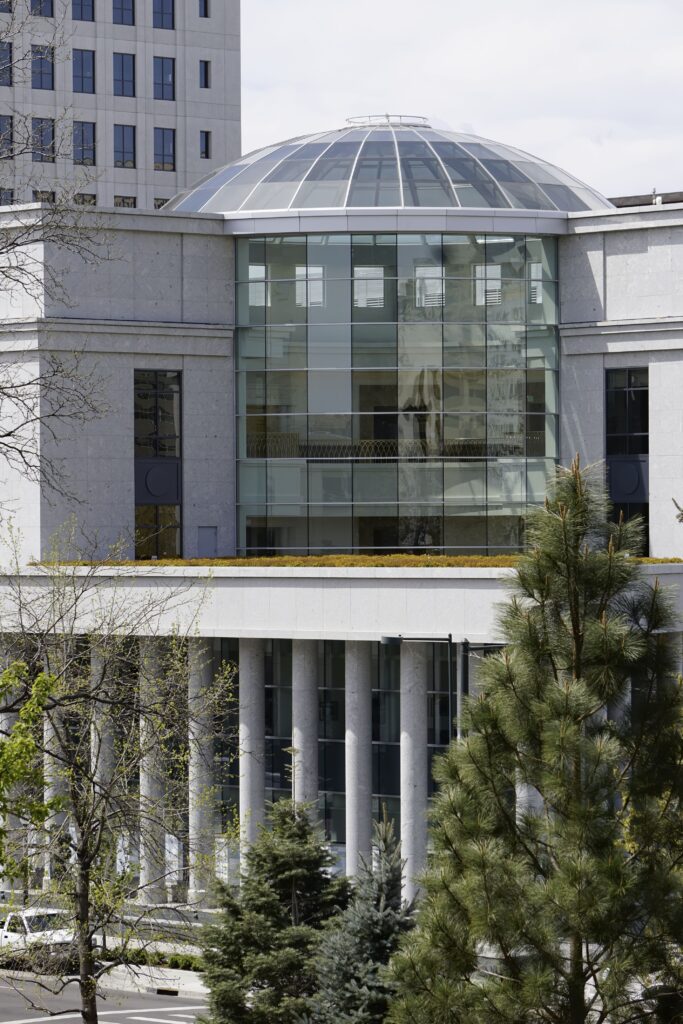
The Colorado Supreme Court has agreed to hear a case challenging whether the state can require ballot measure committees to disclose the names of their registered agents in election communications. The case stems from a complaint filed during the 2020...
Divided 10th Circuit orders pretrial release of defendant facing drug charges
Michael Karlik
michael.karlik@coloradopolitics.com
Updated 2 days ago
The Denver-based federal appeals court overturned a judge’s order keeping a defendant in custody pending trial on Friday, ruling 2-1 that she was entitled to release under the law. Erika Esmeralda Garcia stands accused of two charges related to the...

Trump finally gets his peace prize as FIFA hands him inaugural award at World Cup draw
Christian Datoc and Mabinty Quarshie, Washington Examiner
christian.datoc.and.mabinty.quarshie.washington.examiner@gazetteedit.wpenginepowered.com
Updated 2 days ago
President Donald Trump has long said he is unbothered by being snubbed for a Nobel Peace Prize. However, that did not stop his friend and FIFA President Gianni Infantino from handing him an award and a medal on Friday, seemingly created just...