

Appeals court clarifies no relief available for delay in providing judicial records
Colorado’s second-highest court clarified on Thursday that relief is only available when the judiciary denies access to certain public records, with no consequence if the records are simply delayed.
Although the Colorado Open Records Act is the state’s primary disclosure law, administrative records from the judicial branch are disclosed pursuant to a policy known as “PAIRR 2.” The state Supreme Court used the open records act as a guide when crafting the rule, but deviated “for clarity and to better serve the public.“
Among other things, PAIRR 2 allows a person to file a petition in court if they are denied access to records. The question presented by Jonathan Warnick’s petition in Jefferson County, however, was whether a person could mount a court challenge if the judicial branch delayed its disclosure of the requested information.
No, said a three-judge Cout of Appeals panel.
“PAIRR 2 allows for an action only when a person has been denied inspection of a record,” wrote Judge Karl L. Schock in the Jan. 16 opinion.
The panel had previously issued its decision in Warnick’s case in October. However, the Colorado Attorney General’s Office asked the court to reissue its ruling as a “published” decision — meaning one that sets a precedent for trial judges to follow.
Because the Court of Appeals had never addressed what happens when a judicial records request is delayed, the “opinion provides direct, specific guidance on this issue, and would be an important resource for litigants and courts,” argued the office.
The court agreed and re-released the opinion, adding more background information in the process.
Jeffrey A. Roberts, executive director of the Colorado Freedom of Information Coalition, expressed concern about the potential delays a person may encounter when requesting records from the judicial branch.
“Colorado public records rules and laws are weaker if there’s no way to enforce the response deadlines built into them. If there are no consequences, there’s nothing to stop records custodians from delaying the production of records by days, weeks or months even,” he said. “That’s something we’d like to see changed.”
In the underlying case, Warnick sought transcripts from hearings in his domestic relations case. In September 2023, he requested the dates that the transcriptionist received the audio recordings. He argued a delay in receiving the transcripts had affected his ability to appeal.
The records custodian for the First Judicial District indicated she was researching Warnick’s issue, although the government acknowledged she had a “misunderstanding” of the request.

The Jefferson County Administration & Courts Facility in Golden, known as the “Taj Mahal.” (iStock)
In October, one month after his initial request, Warnick filed a complaint seeking access to the records. Eventually, the judicial district sent documents to Warnick and notified the court in late January that “all responsive documents” were handed over.
On Feb. 20, 2024, District Court Judge Todd L. Vriesman dismissed Warnick’s complaint.
There is “no claim for damages or delay in responding to record inspection requests,” he wrote. Therefore, because there was no denial of access to the records, Warnick had no claim.
Representing himself, Warnick pointed the Court of Appeals to language in PAIRR 2 requiring records to be made available at “reasonable times,” with responses to be given in three business days.
“The language does not provide a choice to delay and hope it goes away,” he argued.
Schock, in the appellate panel’s opinion, reiterated that Warnick’s request was never “denied,” although he waited four months to receive the files.
“Even in his complaint, Warnick alleged only that the First Judicial District had refused to respond to his request, not that it had denied it,” Schock wrote. “Thus, when all responsive records have been made available, the rule does not provide for any additional relief.”
The case is Warnick v. Court Administration of 1st Judicial District et al.


Judge rules that Colorado law makes it too hard for parties to bar unaffiliated voters from primaries
Ernest Luning
ernest.luning@coloradopolitics.com
Updated 2 hours ago
A federal judge ruled in favor of the Colorado Republican Party late Tuesday, saying that a portion of the state law that allows unaffiliated voters to cast ballots in party primaries is unconstitutional because it imposes an unrealistic burden on...

10th Circuit upholds regulator’s methodology for Tri-State exit fees
Michael Karlik
michael.karlik@coloradopolitics.com
Updated 4 hours ago
The Denver-based federal appeals court upheld a regulatory agency’s methodology for calculating the fee owed by entities seeking to withdraw from Tri-State Generation and Transmission Association last week. Tri-State is a Westminster-based cooperative that provides and transmits electricity to member...
Federal judge proposes sanctions against Mike Lindell’s lawyers for continued fake citations
Michael Karlik
michael.karlik@coloradopolitics.com
Updated 5 hours ago
A federal judge is once again pursuing sanctions against lawyers for MyPillow CEO Mike Lindell for continuing to cite to court cases that do not exist, likely based on the faulty output of artificial intelligence tools. Last year, a jury...
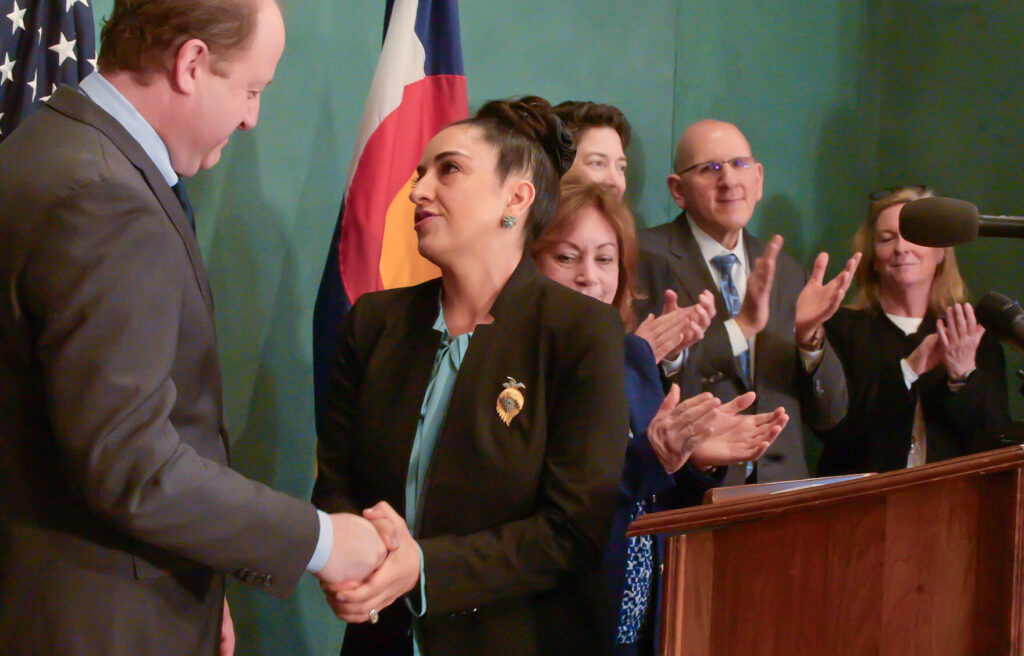
Susan Blanco signals views on role of appellate courts in first opinion as Colorado justice
Michael Karlik
michael.karlik@coloradopolitics.com
Updated 9 hours ago
Justice Susan Blanco’s first solo opinion as a new member of the Colorado Supreme Court made clear her view of the guardrails that keep the state’s highest court tethered to the issues it is asked to decide. On Monday, the...

Colorado leaders weigh next steps after Supreme Court rejects state ban on ‘conversion therapy’
Marissa Ventrelli
marissa.ventrelli@coloradopolitics.com
Updated 1 day ago
Colorado leaders said they are weighing next steps after the U.S. Supreme Court on Tuesday rejected the state’s ban on “conversion therapy” for children, as critics and supporters cheered or lambasted the ruling. The court’s near-unanimous decision called the Colorado...
Federal judge dismisses U.S. government lawsuit against Colorado, Denver’s ‘sanctuary’ laws
Michael Karlik
michael.karlik@coloradopolitics.com
Updated 1 day ago
A federal judge dismissed the U.S. government’s lawsuit against Colorado and Denver on Tuesday, which alleged that various local policies impermissibly infringed on federal immigration enforcement. U.S. District Court Judge Gordon P. Gallagher followed the lead of judges in Illinois...

Federal judge finds DOJ adequately searched for, disclosed records related to Bidens
Michael Karlik
michael.karlik@coloradopolitics.com
Updated 1 day ago
A federal judge determined on Friday that the U.S. Department of Justice adequately searched for and disclosed records to a Colorado attorney in response to his request for documents related to former President Joe Biden’s son and brother. In November...
10th Circuit warns lawyers after finding fake case in filing
Michael Karlik
michael.karlik@coloradopolitics.com
Updated 24 hours ago
The Denver-based federal appeals court warned attorneys to be more careful last month after discovering one lawyer cited a fake case in his arguments. In recent months, federal and state judges in Colorado have begun cautioning lawyers explicitly about the...

10th Circuit rules cognitively impaired man’s risk of lobotomy, mistreatment in Mexico not ‘torture’
Michael Karlik
michael.karlik@coloradopolitics.com
Updated 2 days ago
The Denver-based federal appeals court concluded last month that a man’s risk of mistreatment or forced lobotomy in his native Mexico did not amount to “torture” that should shield him from deportation. A three-judge panel of the U.S. Court of...
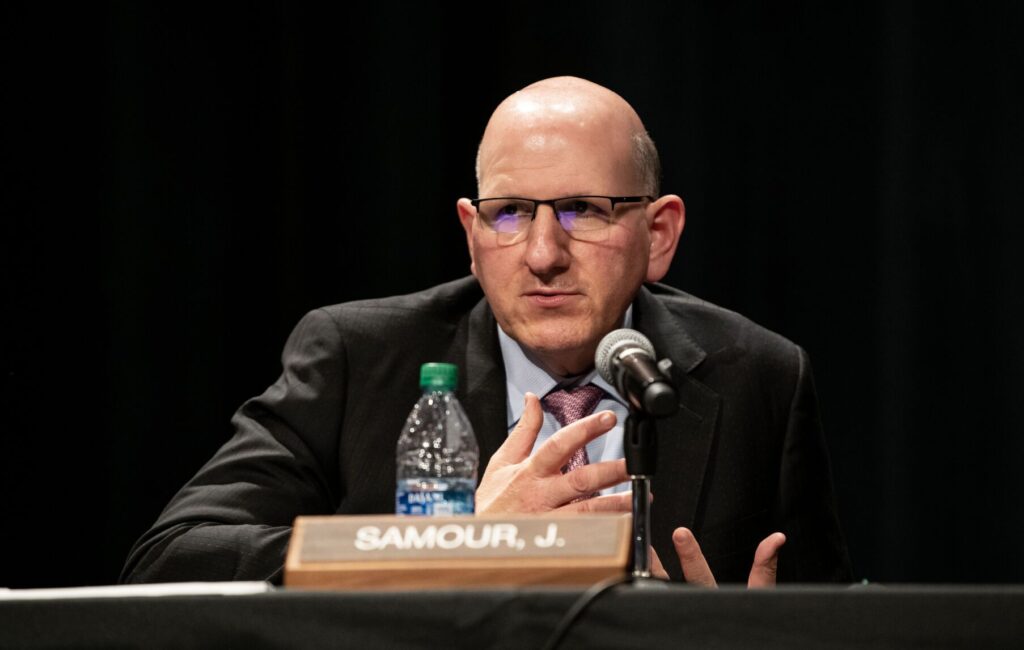
Colorado justices side with news organizations for disclosure of high-level child abuse data
Michael Karlik
michael.karlik@coloradopolitics.com
Updated 1 day ago
The Colorado Supreme Court ruled on Monday that the state must disclose the number of child abuse reports at individual group living facilities in response to an open records request, as the addresses are already in the public domain. The...